A deload is a short period of training, usually about a week, when you shift your focus away from hard, progressive workouts and toward recovery. Rest, sleep, and proper nutrition become the priority. Most people still lift during a deload, but they modify their training so fatigue can come down.
I don’t think enough lifters use recovery effectively. The “go hard or go home” mentality can be useful for getting yourself to train, but it misses something important: the adaptations you’re training for happen when you recover.
When progress stalls, the answer isn’t always to add more sets or push harder. Sometimes, a temporary reduction in training stress is exactly what lets you move forward.
Key Takeaways
- Deloads reduce accumulated fatigue so you can return to more productive training.
- A taper cuts volume while maintaining heavy loads before a strength test.
- A standard deload reduces sets and keeps training farther from muscular failure.
- Planned deloads every four to eight weeks are a common approach for experienced lifters.
Why Deloads Work: The Fitness-Fatigue Model
In most sports, athletes and coaches recognize that lighter training and rest have a place in improving long-term performance. Bodybuilding and strength training shouldn’t be exceptions.
The reasoning comes down to the two-compartment fitness-fatigue model. Training produces two things at the same time:
- Fitness: the positive adaptations you want, including greater strength and muscle size.
- Fatigue: the temporary costs of training, including muscle damage and nervous system fatigue.
Your performance reflects the interaction between the two. You can have improved fitness but still perform poorly because fatigue is hiding that improvement.
Think about maxing out on Monday, then trying to max out again on Tuesday. You’ll probably be weaker the second day. That doesn’t mean Monday’s workout somehow erased your gains. It means you haven’t recovered enough to express your strength.
As fatigue dissipates, those improvements become easier to demonstrate. A well-timed deload applies that same principle over a longer training block: reduce the fatigue you’ve accumulated so you can return ready to train productively.
That’s why I see deloading as useful for both powerlifters and bodybuilders. Strength athletes benefit from being able to express their strength, while bodybuilders benefit from recovering enough to keep performing quality, progressive training. For more background, this fitness-fatigue model overview explains the underlying framework.
The Three Main Ways to Deload
Not every deload needs to look the same. The best approach depends on whether you need a complete break, want to peak for a max, or simply want to recover between productive blocks of training.
1. Take a Full Week Off
The simplest option is to stop lifting for a week. Plenty of old-school bodybuilders used this approach during the offseason.
A week off won’t kill your gains. The research review on muscular hypertrophy cited here discusses evidence that substantial losses generally don’t occur until longer periods without training, often at least two to three weeks.
Still, a full week off isn’t my default recommendation. My main concern is momentum. Personally, I find that the weights can feel unusually heavy during my first week back after doing no lifting. When I keep training with a modified approach, I tend to feel better prepared when normal training resumes.
That doesn’t make a complete break a bad choice. It can make perfect sense when:
- You’re on vacation without access to a gym.
- You want a mental break from structured training.
- A week away fits your life better than trying to force in modified sessions.
The point is that taking a week off is an option, not something you need to fear.
2. Use a Taper Week Before a Max Test
A taper is the approach I regularly use with powerlifters. The goal is to reduce fatigue while keeping you accustomed to handling heavy weights.
Cut training volume substantially, but keep the loads relatively heavy. In practice, that usually means performing roughly half your normal sets and sharply reducing accessory work.
For example, suppose you want to test your squat one-rep max in week 10:
- Week 8: Perform eight weekly squat sets and your usual squat accessory work.
- Week 9: Reduce to four weekly squat sets, remove or substantially reduce accessories, and keep squat loads relatively heavy.
- Week 10: Test your max after the reduced workload has given fatigue time to subside.
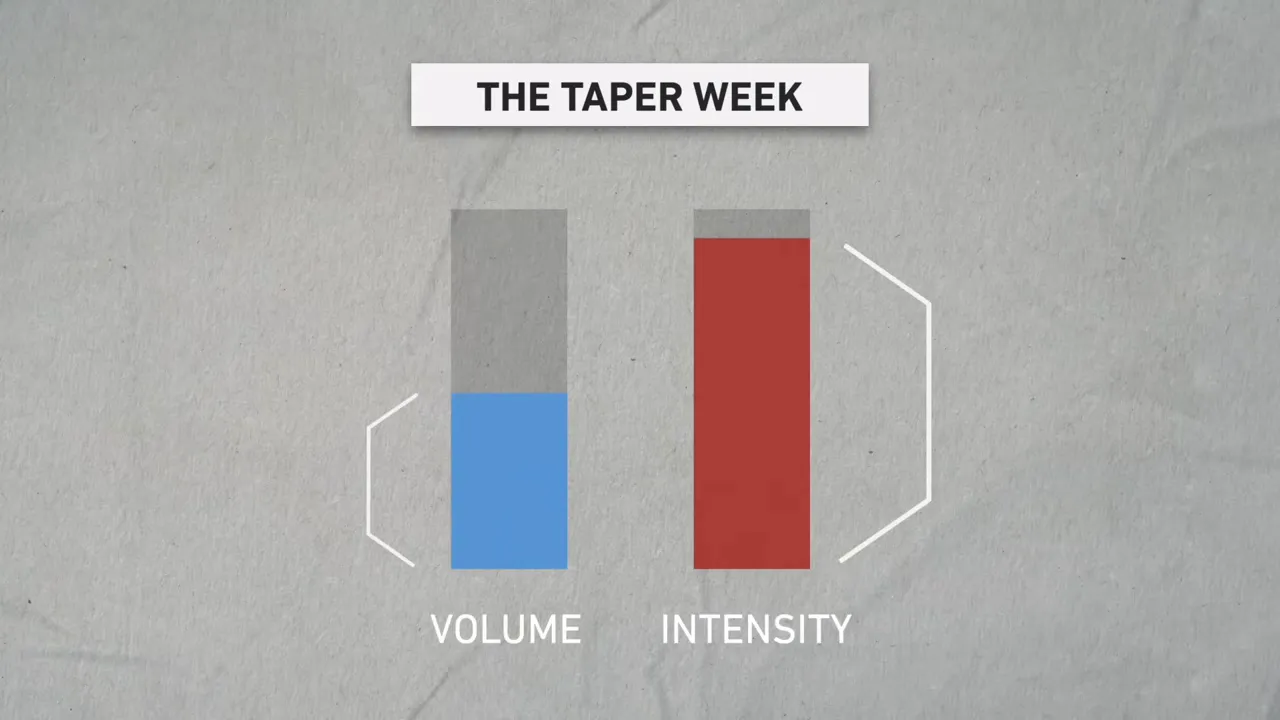
My Powerbuilding Phase 3 plan uses this general structure: a strength-focused build-up that finishes with a taper before testing.
For a bodybuilder who isn’t trying to peak for a one-rep max, though, maintaining heavy loads isn’t necessarily the priority. That’s where a standard deload makes more sense.
3. Use a Standard Deload for General Recovery
With a standard deload, I reduce both the amount of work and how hard the sets are.
My usual target is to reduce training volume by roughly 30 to 50 percent. That often works out to removing one or two sets per exercise, depending on your starting workload. If you normally perform three or four sets, a lighter week might involve two or three sets.
I also bring effort down moderately. If normal training falls around an RPE of 8 to 10, I’ll generally aim for an RPE of 6 to 8 during the deload. RPE means rating of perceived exertion; here, the practical difference is stopping farther from muscular failure.
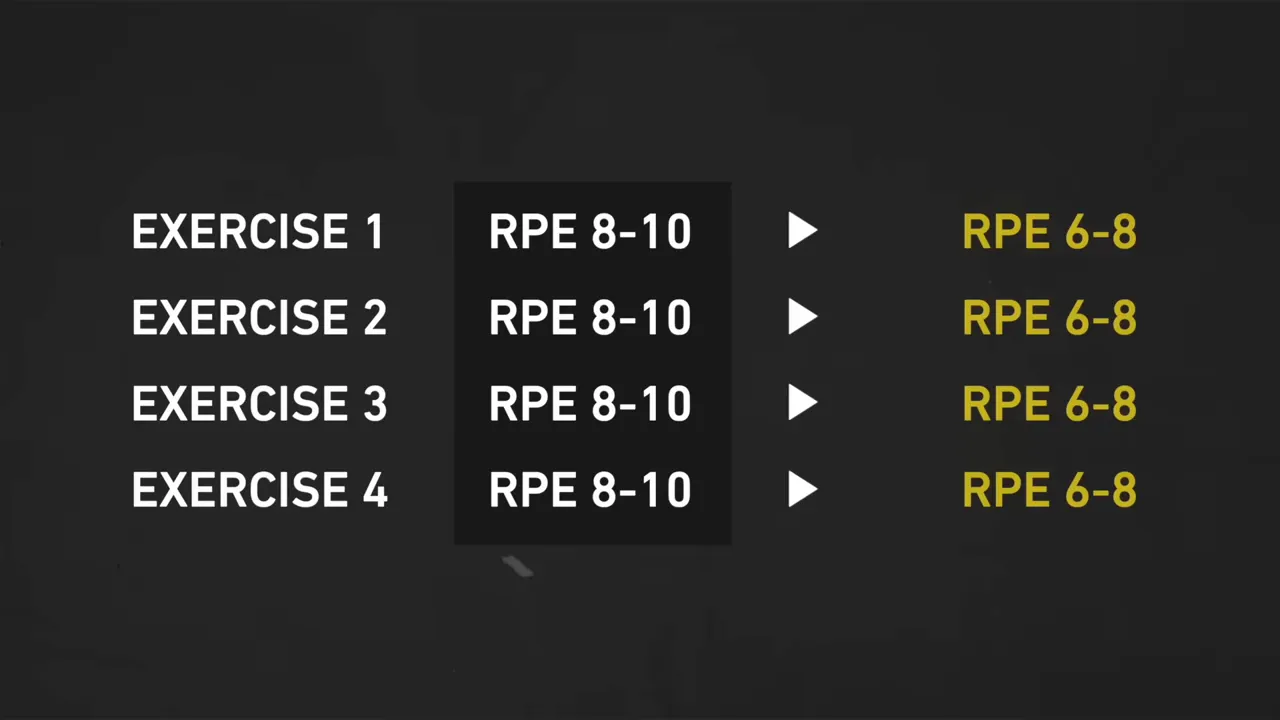
There’s an important distinction here: in a taper, maintaining intensity means keeping the weight relatively heavy. In this standard deload example, the RPE reduction describes how demanding each set feels. You’re backing away from your usual limit, not following a mandatory percentage reduction in weight.
If you don’t track RPE or micromanage your training numbers, that’s perfectly fine. A simple version is:
- Do one fewer set per exercise.
- Stop each set a few reps farther from failure than usual.
- Treat it as a genuinely lighter week rather than another opportunity to push your limits.
You don’t need perfect arithmetic to meaningfully reduce training stress.
Make Your Deload a Technique Week
A deload shouldn’t be an excuse to go through the motions. It’s a chance to redirect your attention.
Some coaches call deloads “technique weeks,” and I like that framing. You’re not taking a step backward. You’re temporarily changing the purpose of your training.
With lighter loads and fewer sets, you can focus more closely on:
- Your setup: getting into a consistent, well-controlled starting position.
- Your execution: refining how you perform each repetition.
- Your mind-muscle connection: paying attention to the target muscle as it stretches and contracts.
Rather than judging the session by how exhausted you feel afterward, judge it by how deliberately you performed the work. Keep the training habit while giving recovery more room.
How Often Should You Deload?
There are two main approaches: schedule deloads ahead of time, or take them when you feel you need them.
Proactive Deloads: Plan Them in Advance
A common proactive schedule is one deload every four to eight weeks.
Generally, more advanced lifters may benefit from deloading more frequently because the training required to keep progressing can generate more fatigue. That doesn’t mean everyone needs an identical calendar, but training experience and workload should influence your plan.
I generally prefer this approach because it makes recovery part of the program rather than something you only consider after things start going wrong.
Reactive Deloads: Adjust Based on How You Feel
A reactive approach is autoregulated: you deload only when you think you need one.
The argument makes sense. If your lifts are progressing and motivation is high, why interrupt that just because the calendar says it’s time for an easier week?
My concern is that recognizing when you need a deload is harder than it sounds. Feeling good doesn’t necessarily tell you everything about the stress accumulating in your tissues.
For example, this review of tendon innervation discusses how nerve supply differs across tendon structures. The practical concern is that discomfort isn’t a perfect gauge of accumulated tissue stress. I wouldn’t assume that the absence of pain means recovery demands are being fully met.
That’s why I usually schedule deloads proactively, unless I’m working with a very experienced lifter who knows their own responses extremely well. Reactive deloading can work, but it asks more of your judgment.
Who Probably Doesn’t Need a Formal Deload?
Deloads can be valuable, but they aren’t automatically necessary for everyone who picks up a weight.
Early Beginners
During roughly your first year of lifting, I generally wouldn’t make formal deloads a major concern. You can make excellent progress by learning proper technique, becoming consistent, and understanding what hard training actually feels like.
As you move into the late-beginner or early-intermediate stage, often after one to two years, planned deloads start making more sense.
People Who Aren’t Training Hard or Consistently
The other exception is what I’d call the “lazy lifter” category: people whose training isn’t demanding or consistent enough to generate much fatigue in the first place.
If every week is already an easy week, you probably don’t need another one.
Regardless of how many years you’ve had a gym membership, the priority is to establish diligent, productive training. Once that’s in place, you can plan recovery around the demands you’re actually creating.
The Bottom Line: Recovery Is Part of Progress
For an intermediate or advanced lifter, a deload can be one of the most useful tools for breaking through a plateau. The goal isn’t to avoid hard training. It’s to recover well enough that hard training keeps working.
Use a taper when you’re preparing to express maximum strength. Use a standard deload when you want to reduce fatigue while maintaining your routine. Take a full week off when a complete break makes sense.
Train hard when the plan calls for it, and give recovery the same level of intention. More work isn’t always the answer. Sometimes, doing a little less now is what lets you do better work next.
Sponsor: Build Your Creative Skills With Skillshare
I’ve handled my own editing for years, and I think learning creative skills yourself gives you more control over your work, even if you eventually outsource parts of it. Skillshare offers classes in areas such as editing, animation, writing, music, web development, marketing, and productivity. Its beginner filmmaking classes cover formats ranging from travel content and product reviews to short-form social videos, with more advanced classes available as your skills develop.
|


