When my brother Brad started his fitness journey, he was at 36% body fat. At 28 years old, he was dealing with prediabetes, joint pain, low confidence, and social anxiety that sometimes kept him inside for months. Physical activity wasn’t part of his life.
Then he started lifting.
During our first yearlong experiment, we spent most of the year bulking. Brad added about 10 pounds of lean mass. I added 2.7 pounds, despite already having 15 years of lifting under my belt when that experiment began.
For the next challenge, the goal was different: lose fat while holding onto as much muscle as possible. Brad wanted to get below 20% body fat, and I didn’t want him doing his first cut alone. So I joined him, with a goal of reaching 9%.
We gave ourselves 100 days. That eventually became 122 days for our main check-in, followed by extra time for Brad. And honestly, the most important result wasn’t the number either of us got from a body scan.
Key Takeaways
- Low-volume, high-effort training helped us maintain muscle and much of our strength while cutting.
- Different meal schedules helped each of us manage hunger and follow our calorie targets.
- Brad’s glucose markers normalized even though he didn’t reach his body fat goal.
- Lasting training habits mattered more than reaching an arbitrary body fat percentage by a deadline.
Table of Contents
- The Starting Point: Two Very Different Fat Loss Goals
- How We Measured Progress Beyond the Scale
- Our Fat Loss Diet, Training, and Cardio Plan
- The First Month: Easy Momentum, Then Hunger
- The Diet Break Helped, but We Let It Drift
- Consistency Got Boring, Which Was a Good Thing
- Getting Leaner Had a Different Mental Cost for Each of Us
- My Final Results: 9% Body Fat With Muscle Maintained
- Brad’s Results: The Health Win Was Bigger Than the Body Fat Number
- The Extra Weeks Revealed Something We Missed
- The Final Number Was Still Around 26%. The Outcome Was Still a Success.
- What This Fat Loss Challenge Actually Taught Us
The Starting Point: Two Very Different Fat Loss Goals
Before getting our starting measurements, we guessed our body fat percentages. I put myself at 11.5%. Brad guessed 26% for himself and, somewhat disrespectfully, 13% for me.
The DEXA results settled it:
- Brad: 156 pounds at 5 feet 6 inches tall, with 30.5% body fat. His target was 19%.
- Me: 11.9% body fat, which we rounded to 12%. My target was 9%.
That distinction matters. Brad’s original 36% measurement came from the beginning of his fitness journey, not the beginning of this cut. He had already made progress before our fat loss challenge started.
For me, around 12% was a lean, comfortable level I could maintain fairly easily. Getting into single digits meant pushing below that comfortable range. Brad had more total fat to lose, but also a much larger gap between his starting point and his target.
How We Measured Progress Beyond the Scale
I wanted to know more than whether we looked leaner. Were we losing muscle? Getting stronger? Feeling better? What was happening to our hormones and our relationship with food?
We used five main assessment tools:
- DEXA scans: To estimate body fat percentage, fat mass, and lean mass.
- Blood work: To track changes in testosterone, cortisol, and health markers.
- Strength tests: Max-effort bench press and leg extension testing at the beginning and end.
- Muscle ultrasound: Measurements of muscle thickness to help assess muscle retention.
- Standardized psychological evaluations: To assess appetite, mood, body image, and disordered eating indicators.
We also recorded physique comparisons using the same lighting and poses.
No single measurement tells the whole story. A DEXA lean-mass reading isn’t a direct measurement of muscle tissue alone, so I wanted strength, ultrasound, and physique comparisons alongside it.
Our Fat Loss Diet, Training, and Cardio Plan
Calories and protein
We started with the same nutrition targets:
- Five days per week: 1,800 calories.
- Two refeed days per week: 2,200 calories.
- Protein: 170 grams per day.
Those calories might sound low, but our estimated maintenance intakes were both around 2,200 calories. Neither of us had a particularly active job. That put us in roughly a 400-calorie deficit on most days, with the two higher-calorie days around maintenance.
These were our starting numbers, not a universal prescription. The useful principle is setting intake relative to your own maintenance needs, rather than copying someone else’s calories.
Low-volume, high-effort lifting
Our main training split included two upper-body days, two lower-body days, and an extra arms-and-delts day.
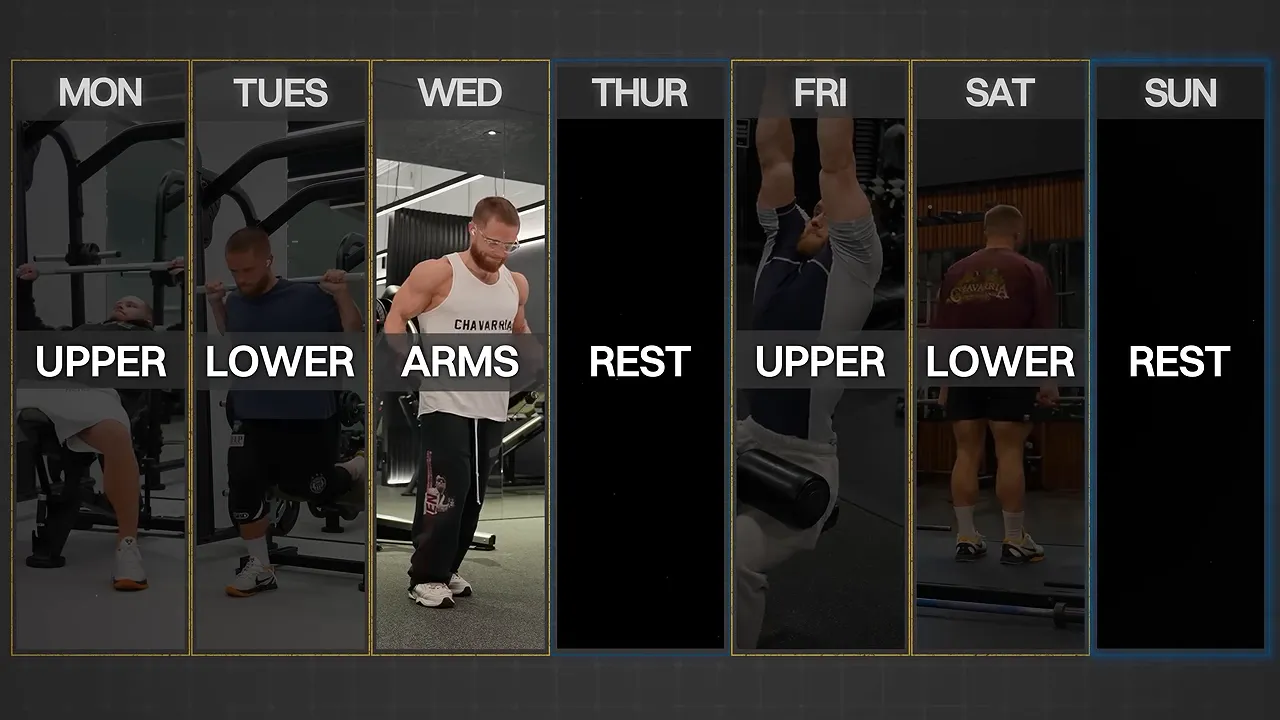
After a few lighter warm-up sets, we performed just one or two very hard working sets per exercise. The idea was to keep effort high without piling on a ton of volume while calories were lower.
I’m not anti-volume. Higher-volume training can work great during a bulk or recomp. But for this cut, I thought a lower-volume approach would let us put more into the sets that mattered while keeping the workload manageable.
We followed Min-Max Phase 1 and Min-Max Phase 2, two 12-week programs built around low-volume, high-intensity training. Most workouts take about 45 to 60 minutes, with Phase 2 adding exercise variety and new intensity techniques.
Moderate cardio and daily movement
We didn’t start with a massive cardio commitment:
- Two low-intensity cardio sessions per week, lasting 30 minutes each.
- A daily target of roughly 8,000 to 10,000 steps.
I usually used my treadmill in the morning or played some basketball. Brad generally did his cardio after lifting in the evening.
The First Month: Easy Momentum, Then Hunger
The first week felt surprisingly easy. Doing the challenge together probably helped, and both of us liked the lower-volume training. With fewer sets, we could bring more effort to each one.
I lost about three pounds in that first week. Most of that early drop was probably water weight, but the visual change was noticeable. When you’re already fairly lean, a small weight change can make a bigger difference in how much muscular detail you see.
Brad’s changes were subtler at first, although his back and shoulders were starting to show more shape. We also established a performance goal: take him from three bodyweight pull-ups to eight.
I switched to three larger meals
By about day 10, hunger started showing up for me.
On previous cuts, I’d followed the classic bodybuilding approach of four or five meals per day. But research on meal frequency gave me a reason to try fewer, larger meals when calories were low.
I switched to three bigger meals per day. The question wasn’t whether three meals had some magical fat-burning advantage. It was whether I’d feel more satisfied and find the diet easier to follow.
Brad tried intermittent fasting
Brad had a different problem: he kept using up his calories before the time of day when he was hungriest.
His solution was his own idea. He wanted to eat within a five-hour window, starting around 5 p.m. and finishing around 10 p.m.
That’s an aggressive eating window, and it wasn’t something I told him he needed to do. But because his hunger was concentrated later in the day, he wanted to see whether it helped.
By the end of the first month, it seemed to be working. He was consistently hitting his macros, getting his steps, and tracking his workouts.
The day-33 DEXA check-in
I thought I might already be close to 9%, so we added an early scan.
- My body fat: Down from 11.9% to 10.3%.
- Brad’s body fat: Down from 30.5% to 27.3%.
- Brad’s estimated fat loss: About six pounds.
- Brad’s measured lean mass: Up about 2.2 pounds.
Brad’s result was exciting. He was losing fat while his scan showed more lean mass, which was encouraging evidence that our low-volume approach was doing its job.
My scan, however, indicated some lean-mass loss. That didn’t automatically mean I’d lost that much muscle, but it concerned me enough to make an adjustment.
The Diet Break Helped, but We Let It Drift
We planned a two-week diet break at maintenance calories. Protein and fat stayed roughly the same, with the extra calories coming mainly from carbohydrates.
A diet break is a structured period out of the deficit, not permission to eat without limits. There’s a body of research on diet breaks, but our immediate aim was practical: improve training energy and muscle fullness, and take a breather.
We kicked it off with sushi and continued logging our food.
Within a few days, my pumps were noticeably fuller. I had more energy, particularly toward the end of hard sets when the reps started slowing down.
Then my discipline slipped a little. By the second week, I was doing more breaking than dieting. Travel stretched the planned two-week break into three weeks.
Both of our weights went up a few pounds. Still, my strength and pumps improved, and Brad appreciated the breather. He probably didn’t need a diet break at that point, but I can’t say I regretted taking it.
We returned to the deficit and added three weeks to the timeline rather than rushing to make up lost time. Our main final assessment ended up happening on day 122.
The lesson wasn’t that diet breaks are bad. It was that a useful break still needs boundaries.
Consistency Got Boring, Which Was a Good Thing
Just over halfway through the cut, Brad moved from Vancouver to Toronto and joined me full-time as a director. Being in the same city made training together much easier.
I also started noticing changes that had nothing to do with his waistline. His confidence and leadership were improving. He was taking ownership of his work, his training, and his health.
For the next stretch, the process became pretty uneventful:
- Cook meals that fit the plan.
- Get daily steps.
- Complete the scheduled workouts.
- Try to add a little weight or another rep when possible.
During this stretch, we were both losing around a pound per week. Nothing extreme. I generally prefer a slower approach when muscle retention is a priority.
Meals were often simple: chicken breast with vegetables, cauliflower rice, mushrooms, onions, zucchini, or asparagus. We still had flexibility, but repeatable meals removed a lot of daily decision-making.
Making room for the film festival
Around day 95, we had the opportunity to attend the Toronto International Film Festival. We weren’t going to stop enjoying life just because we were cutting.
Instead, we adjusted the plan. We temporarily switched to a full-body split to create more rest days, aiming to keep workouts under 45 minutes. One took 46 minutes. Close enough.
We also shopped for convenient foods that helped us meet our targets, including rotisserie chicken, egg whites, and cauliflower rice.
This time, flexibility didn’t turn into whatever. We kept each other accountable and stayed on track while still enjoying the week.
Getting Leaner Had a Different Mental Cost for Each of Us
Brad started asking more questions about his health. He became more active outdoors and even added running on his own. Before lifting, his social anxiety had sometimes kept him home for months. Now he was getting out and doing things again.
His wearable’s cardiovascular estimates were also trending positively. Those aren’t a medical diagnosis, but they were another encouraging piece of feedback.
Meanwhile, my strength was still improving, but food was taking up more mental space.
My old binge-eating impulses started resurfacing
I have a history of binge eating, and getting very lean has brought those urges back in the past.
Toward the end of this cut, I started craving the feeling of being completely stuffed. Not just satisfied. Uncomfortably full.
Brad didn’t relate to that feeling. Large meals, especially after fasting, could make him feel sick. That difference was a reminder that two people can follow similar calorie targets and have very different psychological responses.
Three larger meals helped my hunger overall. I occasionally added a small snack of sunflower seeds. But near the end, I think some increase in cravings was going to happen regardless of meal timing.
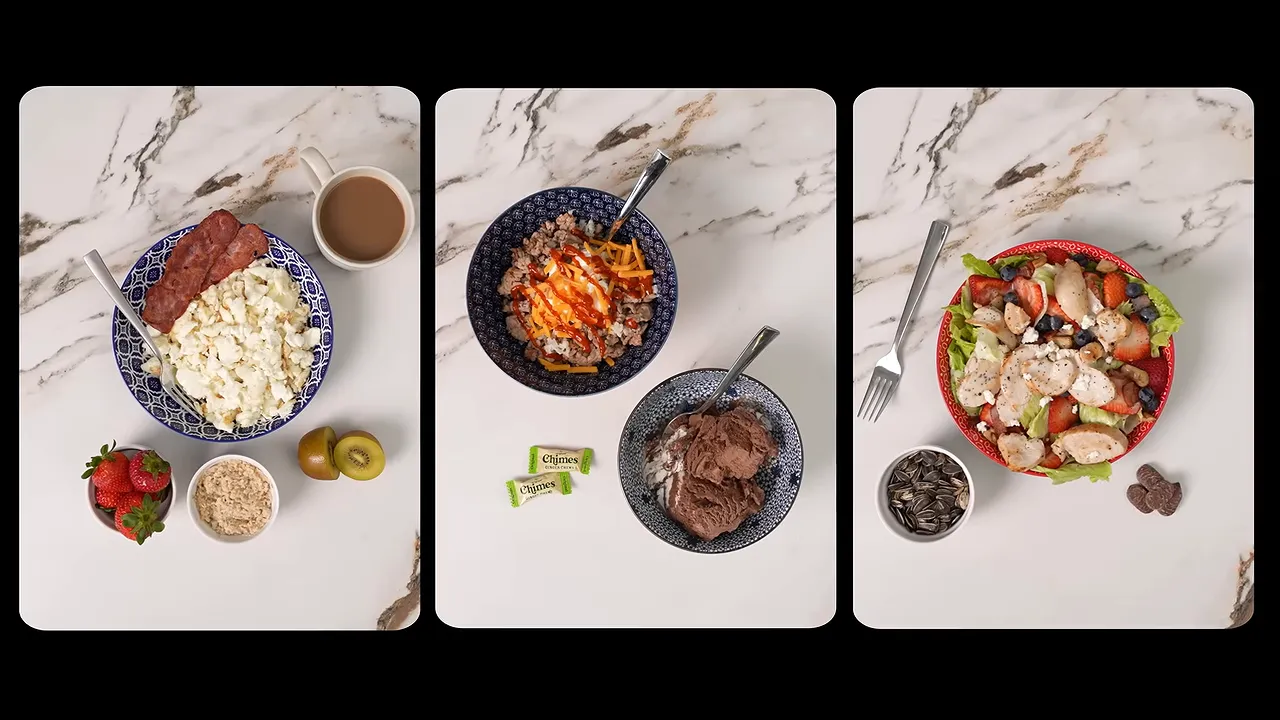
I even started doing Sudoku between meals to keep my brain occupied instead of thinking about snacks. That was my personal distraction strategy, not a treatment for disordered eating.
Brad, meanwhile, stuck with his intermittent fasting schedule for the entire cut. After the first week or so, he found it manageable and even enjoyed training fasted.
The meal schedule that helps you stay consistent may look completely different from someone else’s.
My Final Results: 9% Body Fat With Muscle Maintained
At our day-122 check-in, my DEXA result came back at exactly 9.0% body fat.
I know it’s just a number, and I shouldn’t put too much stock in one measurement. Still, hitting the target was a huge relief.
Going from roughly 12% to 9% doesn’t sound dramatic. It felt like a much bigger project than those three percentage points suggest.
Strength and muscle retention
- Smith machine bench press: 330 pounds at the start and 330 pounds at the end.
- Single-leg maximum leg extension: Increased from 145 to 160 pounds.
- Biceps and quadriceps ultrasound: Strongly supported muscle maintenance.
Together with the physique comparisons, those results made me much more confident that I had held onto my muscle, despite that earlier lean-mass reading.
Psychological results
My standardized evaluations showed no significant changes in appetite, depression, stress, or anxiety. Body image improved, and eating-disorder indicators remained stable within the normal range at both assessments.
That doesn’t erase the cravings I experienced. It means the overall assessment was reassuring, even though there were challenging moments.
I think taking our time, staying flexible, enjoying life, and stopping at this level of leanness all helped. Every previous time I’d been this lean, I’d felt worse.
Testosterone and cortisol
Despite maintaining or improving strength, my testosterone dropped by 21%.
Looking more muscular and performing well doesn’t automatically mean testosterone is higher. Pushing below a comfortable level of leanness can come with a hormonal cost.
Brad’s testosterone moved in the opposite direction. Our starting points were different, so the same general activity, losing weight, didn’t produce identical results.
Hormone readings need context, including symptoms and whether levels fall within an appropriate testosterone reference range. Small fluctuations alone aren’t a reason to panic.
I expected cortisol to rise, but mine decreased. Brad’s was broadly stable with a slight decrease at the end, and both remained within the normal range.
Brad’s Results: The Health Win Was Bigger Than the Body Fat Number
At the main check-in, Brad’s body fat came back at 26.6%. He was down about nine pounds during the cut, but he hadn’t reached 19%.
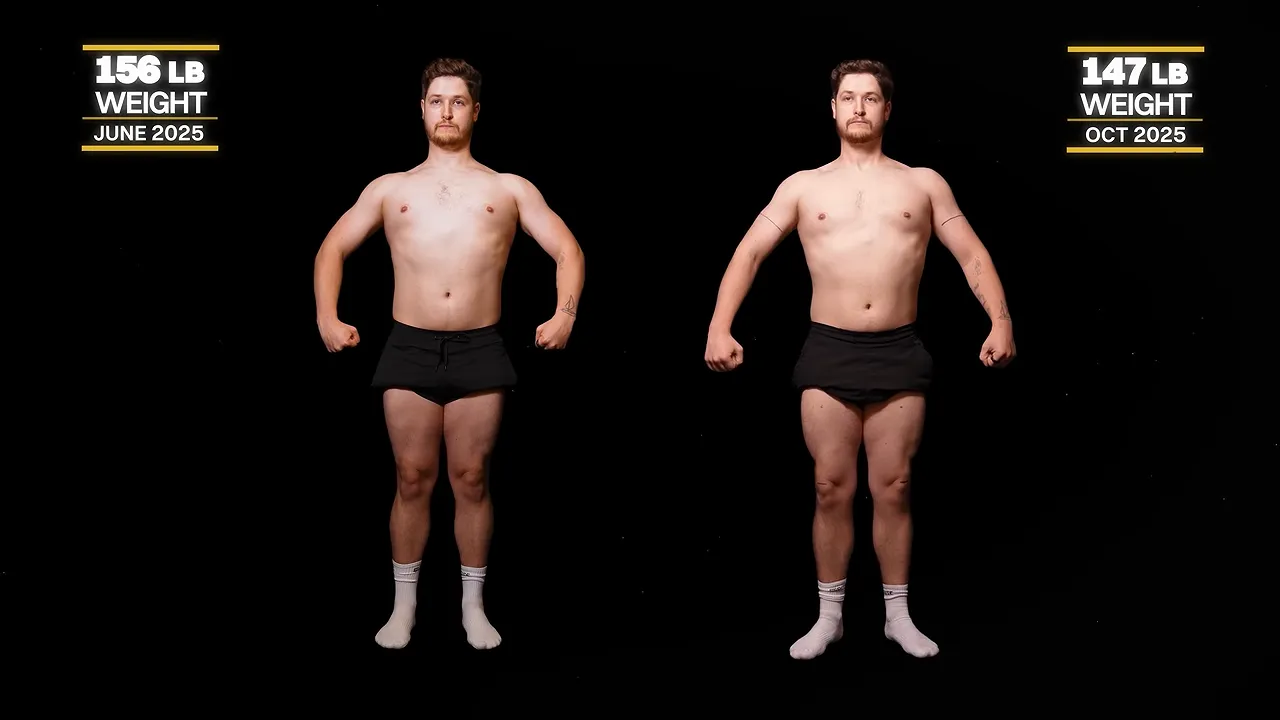
His bench press strength dipped a little, but his quadriceps strength improved and his training log contained plenty of personal records. Ultrasound measurements also supported solid muscle retention.
The biggest result came from his blood work. At the beginning of the cut, his glucose markers were in the prediabetic range. By the end, they had moved into the normal range.
That was an enormous improvement, and far more meaningful than whether his scan started with a one or a two.
Across his broader journey, he was down about 32 pounds. Physically and mentally, he had come a long way. But I could tell he still wanted to reach that original target.
The Extra Weeks Revealed Something We Missed
I told Brad he could keep going while I worked on other projects, and we could do another check-in when he felt ready.
He kept training hard, often alone at night, and continued dieting. But after several weeks, his weight loss stalled and his motivation started slipping.
A higher weigh-in could derail his mood. At one point, he worried that a two-pound increase meant he’d gained two pounds of fat. In the context of his diet, that wasn’t a reasonable conclusion from one scale reading.
Then we uncovered something I wish I’d recognized much earlier: Brad was only sleeping four or five hours per night.
He had a sleep disorder and went to a doctor for help. His sleep improved, and that helped his strength, but his weight still wasn’t moving the way he wanted.
I can’t quantify how much the sleep problem affected his fat loss. But it was clearly something that deserved attention, rather than simply asking him to eat less or do more cardio.
He kept lifting even when motivation dropped
This was the part that impressed me most. Brad was frustrated with the diet, but he still wasn’t skipping workouts. His effort remained high.
His technique had improved, too. He was controlling the weight from the first rep to the last, rather than losing control as sets got difficult.
We also revisited old footage of his Pendlay rows from the beginning of his lifting journey. Seeing how far he’d come gave him a confidence boost. Eventually, he felt ready for another scan.
The Final Number Was Still Around 26%. The Outcome Was Still a Success.
Before that last check-in, I asked Brad how much he cared about the result on a scale from zero to 10.
He gave it about a one.
His mobility was better. His sleep was improving. He felt healthier and more comfortable in his body. So much else had changed that the body fat percentage no longer carried the same importance.
The final scan was still around 26%, essentially unchanged from the previous check-in. There was some disappointment, understandably. But the comparison between us wasn’t exactly fair: I got to celebrate reaching my goal after losing roughly three percentage points, while Brad had lost about four and was supposed to feel like he’d fallen short.
That’s a problem with judging progress entirely by an arbitrary finish line.
And remember the pull-up goal?
At the start of his fitness journey, Brad couldn’t do one. Early in this challenge, he could manage three. By the end, he completed eight bodyweight pull-ups.
Goal hit. Huge PR. And as his brother, I couldn’t have been prouder.
What This Fat Loss Challenge Actually Taught Us
This wasn’t a controlled study. It was two brothers following a structured plan, measuring what happened, and adjusting along the way.
Low-volume, high-effort lifting worked well for maintaining our muscle and much of our strength. Different meal schedules helped each of us manage hunger. A diet break improved my training, but also showed how easily structure can slip. And Brad’s sleep problem reminded me that progress isn’t just about calories and effort.
Most importantly, a deadline doesn’t determine whether a transformation counts.
Give yourself 100 days to build useful habits, not to prove your worth with a body fat percentage. You might not reach your ideal shape in that time. But you can become someone who trains consistently, pays attention to nutrition, and takes a genuine interest in health.
Then be patient and let those habits do the work.
This describes our personal experience, not individualized medical advice. Consult a physician before starting an exercise program, particularly if you have an existing health condition.
|