If I could pick just 25 exercises to build a complete physique, these would be the ones. Out of the hundreds of movements I’ve tried, these combine my favorite muscle builders, foundational strength lifts, and isolation exercises for muscles that are easy to overlook.
This isn’t a ranking based only on what looks optimal on paper. Equipment availability, comfort, ease of progression, and how motivated you are to get stronger all matter. An amazing exercise doesn’t do much for you if you can’t access it or never push it hard.
To put the list to the test, I also challenged myself to beat a personal record on as many of these exercises as possible. Some results surprised me. Others were a pretty clear reminder that fatigue adds up, and knowing when to stop is part of being a good lifter.
Key Takeaways
- Build your exercise selection around squats, hip hinges, presses, rows, and vertical pulls.
- Use isolation exercises to train muscles and regions that compound lifts leave underdeveloped.
- Track weights and reps while keeping technique consistent so progression reflects genuine improvement.
- Choose effective variations that suit your equipment, comfort, and motivation to train hard.
Table of Contents
- 25 to 21: The Muscles That Complete Your Physique
- 20 to 11: Elite Isolation Exercises and Strength Fundamentals
- 10 to 6: The Isolation Exercises I Would Keep
- The Top 5 Exercises for Building Muscle
- What Makes These Exercises Work: Track, Progress, and Keep the Test Honest
25 to 21: The Muscles That Complete Your Physique
25. Machine Lat Pullover
The machine lat pullover is an iconic bodybuilding exercise, popularized by six-time Mr. Olympia Dorian Yates. I recently added a vintage Nautilus machine from the 1990s to the Muscle Lab, and I’ve been using it every week.
What makes it special is the combination of lat isolation and serious loading potential. There aren’t many back exercises that let you focus on the lats this directly while still moving substantial weight.
It would rank higher if more gyms had one. Availability is really what holds it back. Because the movement is still new to me, beating my previous performance was also one of the easier PRs of the challenge.
24. Dumbbell Shrug
Big upper traps make a huge difference in how muscular you look, yet plenty of lifters barely train them directly.
I like dumbbell shrugs because they’re simple. There’s no barbell to load and no machine to set up. Grab a pair of dumbbells and shrug.
I managed 23 reps during the challenge, although the final reps got a little loose. I still controlled the lowering phase, but that’s an important distinction to keep in mind: pushing hard shouldn’t turn into dropping the weight through every negative.
23. Standing Calf Raise
Your calves are on display whenever you wear shorts. They deserve more than a few rushed sets at the end of leg day.
Research comparing standing and seated calf raises found substantially greater growth with the standing, straight-leg variation. That makes standing calf raises my main choice for calf development.
The practical takeaway is straightforward: if you’re choosing one main calf exercise, prioritize a straight-leg calf raise and work on progressing it.
22. Dumbbell Wrist Curl and Extension
Forearms are basically the calves of the upper body. In a T-shirt, they’re always visible, and a well-developed pair makes it immediately obvious that you lift.
There’s nothing complicated about the setup:
- Brace your forearm against a bench.
- Use wrist curls to train wrist flexion.
- Use wrist extensions to train the opposite movement.
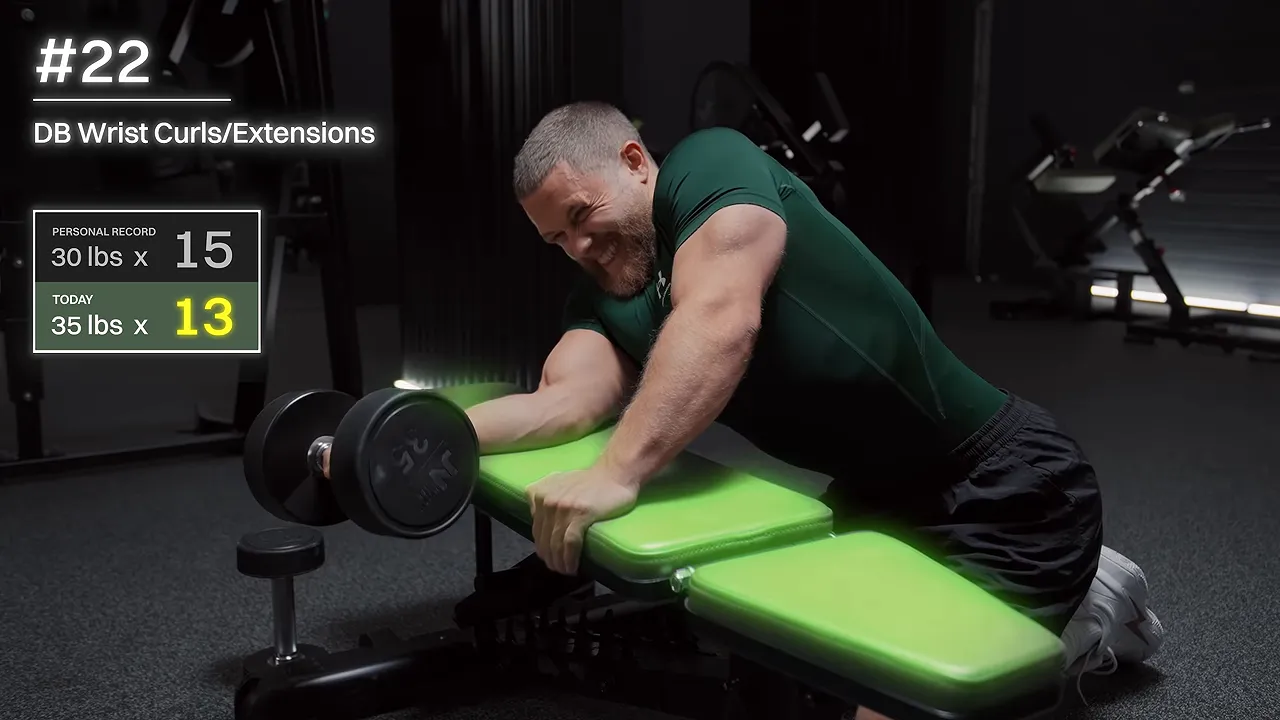
I superset the two exercises and can finish three sets of each in about five minutes. That’s a small time investment for a commonly neglected muscle group.
21. Neck Curl and Extension
Like your calves and forearms, your neck is visible in normal clothes. Adding some thickness there can make your entire physique look more muscular.
Direct training matters. Research on neck resistance training supports using specific neck exercises rather than expecting conventional lifting alone to do the job. Heavy deadlifts and shrugs aren’t a replacement.
My basic recommendation is plate-weighted neck curls supersetted with head-harness neck extensions, twice per week, for 10 to 15 reps. If you’re new to neck training, approach it conservatively rather than chasing heavy weights.
There’s also research suggesting neck strengthening can help with certain headaches and neck pain, with potential relevance to impact tolerance. That doesn’t make it a guaranteed treatment or protection against injury.
As for concerns about sleep apnea, I’m not aware of evidence showing that neck training causes it in natural lifters. More recent research has highlighted tongue fat as an important factor. That’s different from proving that every increase in neck size is harmless.
I hadn’t been training my neck consistently before this challenge, so I stopped short of trying to force a PR. This is not the place to let your ego take over.
20 to 11: Elite Isolation Exercises and Strength Fundamentals
20. Cable Crunch
Cable crunches solve a problem with a lot of ab exercises: they’re easy to progressively overload.
Your abs respond to training like other muscles. Developing them can create a more prominent six-pack once you’re lean enough for it to show. With a cable stack, you can gradually add weight rather than endlessly adding unweighted reps.
For the challenge, I got 25 reps with the maximum stack on the machine, compared with my previous best of 20. Progress doesn’t always mean another plate. More reps with the same load and technique count too.
19. Machine Pec Deck
For chest isolation, the pec deck is tough to beat. The seat supports your torso, so you can focus on moving through the pecs instead of stabilizing your whole body.
On the setup I use, the arm position and line of pull favor the pecs while putting the front delts in a less favorable position to contribute. The result is a very direct chest stimulus.
I beat my previous best by three reps, but there was an important detail: I would normally attempt that load later in the workout. Performing an exercise while fresher can improve the number on the page without necessarily representing the same amount of new strength.
18. Reverse Pec Deck
The reverse pec deck is one of my favorite rear-delt exercises. The standard version is completely fine, but I like sitting sideways and training one arm at a time.
That setup lets the arm travel farther across the body, increasing the range of motion in the lengthened portion of the movement. In my setup, it’s roughly twice the range of the standard variation.
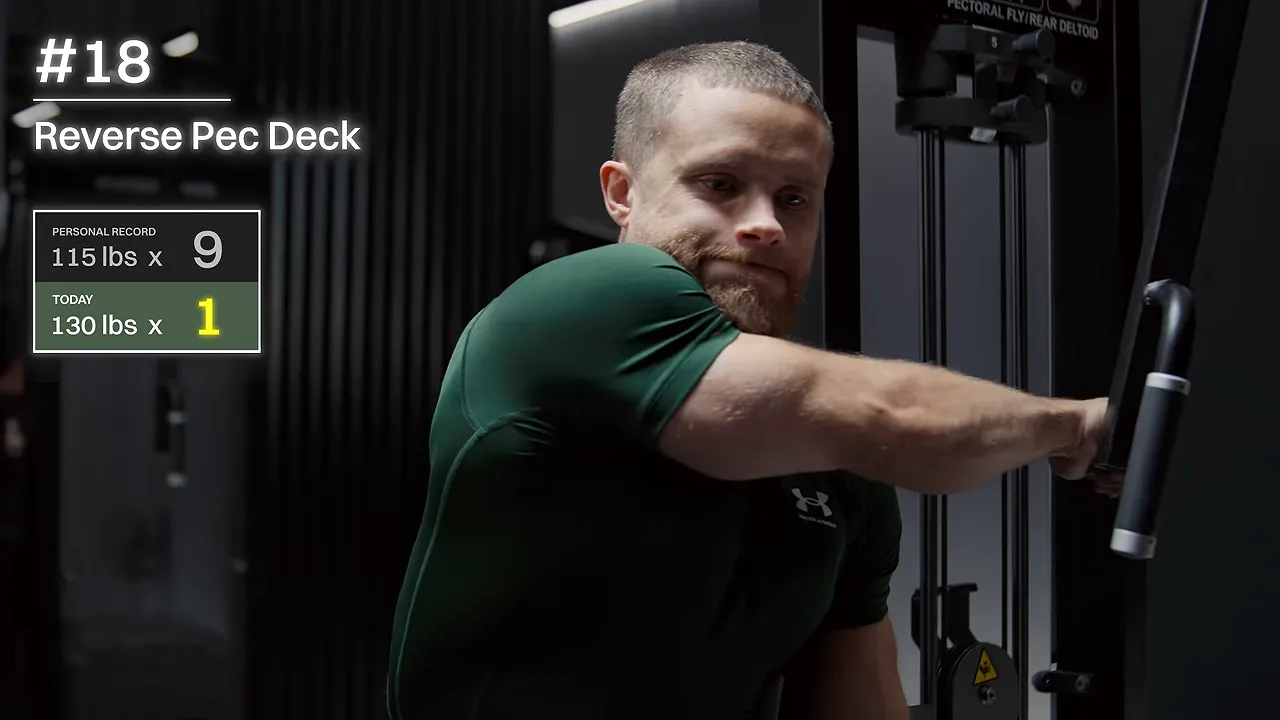
This exercise also brings up my biggest rule for tracking PRs: keep your technique consistent. The lowering phase doesn’t need to be extremely slow, but it should be controlled. If you add weight by shortening the movement or throwing it around, you’ve changed the test.
17. Weighted Dip
Dips are an incredible mass builder for the pecs, front delts, and triceps. They’re easy to load progressively, and they can allow a deeper range of motion than pressing movements.
Once you can perform about five to 10 clean bodyweight reps, gradually add weight using a belt.
The reason dips don’t rank higher is shoulder comfort. Some people find that frequent dips make their shoulders cranky. If you feel pinching, try leaning forward a little more and limiting your depth to what feels comfortable. Don’t force extra range just because someone else goes deeper.
16. Nautilus Glute Drive
The glute drive lets you heavily load the gluteus maximus without asking your quads to do much work. That makes it useful when you want more glute stimulus without more quad fatigue.
A barbell hip thrust is a good substitute. I simply find the machine more comfortable on my hips and easier to settle into.
There’s a substantial body of research supporting hip thrusts for glute growth, including research comparing hip thrust and squat training. Limited machine availability and the discomfort some people experience with a barbell keep this one from ranking higher.
15. Bayesian Cable Curl
I have a soft spot for the Bayesian curl. I’ve been doing it for about a decade, and even with its increased popularity, I still think it’s underrated.
With the cable behind you and your upper arm positioned behind your torso, you train the biceps at a long muscle length while maintaining substantial tension throughout the movement.
That combination is what keeps it in my rotation. It’s not just about feeling a stretch. It’s about loading the muscle meaningfully through the range of motion.
14. Deadlift
This might be controversial in a muscle-building list, but the deadlift deserves a place. It’s a fundamental strength movement: pick something heavy up off the floor.
Conventional and sumo are both valid options. They train broadly similar muscle groups, and both are excellent ways to develop strength and power.
Yes, deadlifts create a lot of fatigue. And no, I don’t think they’re necessarily the best exercise for pure hypertrophy. They don’t need to appear in every bodybuilding program.
But I do think learning to deadlift and getting reasonably strong at it is valuable. My all-time best is 545 pounds from my powerlifting days. Since that’s not my current focus, I didn’t pretend I was going to beat it during this challenge.
13. Overhead Press
The overhead press earns its place for a similar reason. Even if another exercise might be easier to optimize for hypertrophy, pressing a barbell overhead is a fundamental movement worth learning.
As a coach and lifter, I’m especially impressed by a strong overhead press because I know how difficult it is to progress.
This was another exercise where I didn’t hit a PR. That doesn’t change its value. Not every worthwhile lift is the one that gives you the fastest short-term improvement.
12. Walking Lunge
There isn’t as much direct muscle-growth research on lunges as I’d like, but my personal and coaching experience puts them very high for glute training. One hard set can be absolutely brutal, especially if you haven’t done them recently.
I prefer dumbbells, although a barbell works too. If space is limited, a stationary Smith machine lunge is a practical alternative.
You can also adjust the emphasis:
- More glutes: Take a longer step.
- More quads: Use shorter steps with more forward knee travel.
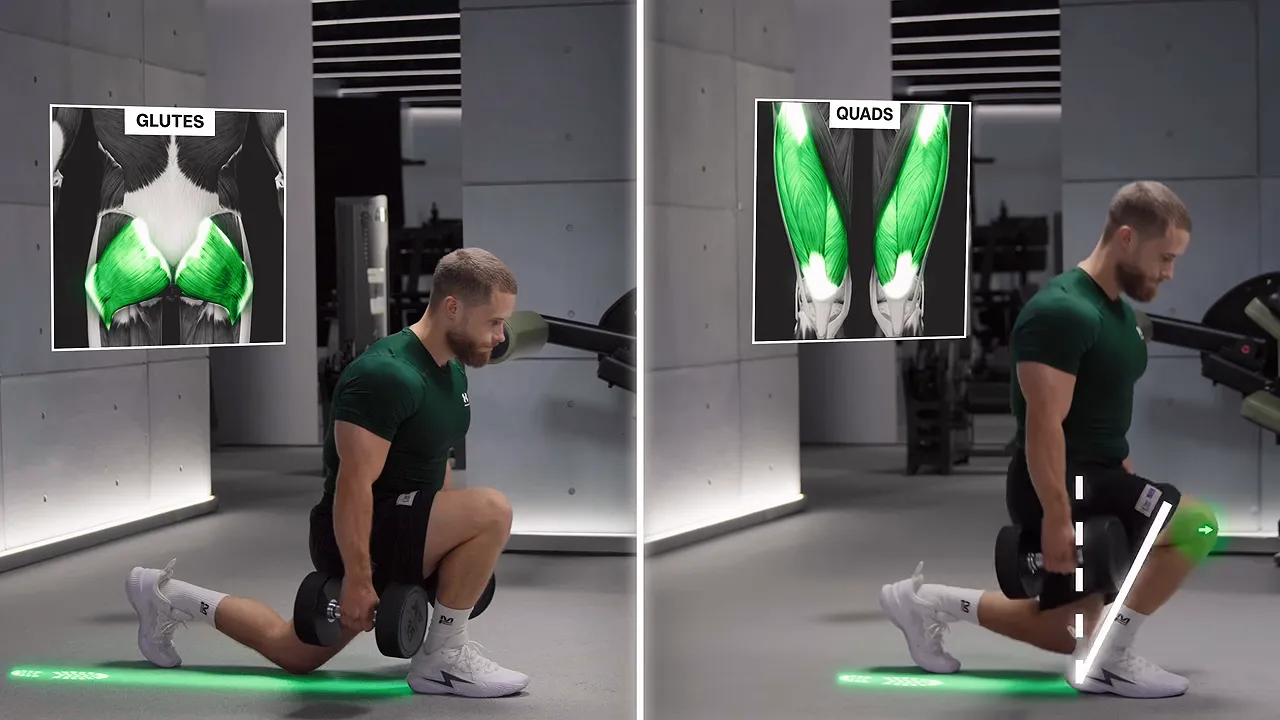
My previous best was 24 reps with the dumbbells I used. This time I got 30. Sometimes getting genuinely locked in reveals that you have more available than you thought.
11. Bench Press
I love the bench press. I attribute a lot of my chest development to gradually building up to a 365-pound bench at 165 pounds of bodyweight, and eventually 390 pounds at 180 pounds.
There’s also research showing a strong relationship between bench press strength and pec size. It may not be the ideal chest exercise for everyone, but it’s another basic lift I think is worth getting strong at.
A few technique details can help:
- Try a slightly wider grip if it suits your build.
- Get secure and stable on the bench.
- Set your shoulder blades down.
- Press the bar up and slightly back rather than forward.
But the biggest difference-maker is being intentional about progression. Doing the same weight for the same three sets of 10 every week is not a long-term plan.
As rough benchmarks, many men can work toward a bodyweight bench within their first year or two, while many women can work toward half their bodyweight in their first year. Those are general targets, not deadlines everyone must meet.
10 to 6: The Isolation Exercises I Would Keep
The first 15 selections mix personal favorites with important strength fundamentals. My top 10 answer a more specific question: If I could use only 10 exercises to build a physique, which would I choose?
10. Seated Leg Curl
The hamstrings account for a large share of your thigh musculature, roughly 40% in the estimate I’m using here. Training them directly matters for both development and knee function.
A 12-week study comparing seated and lying leg curls found about 50% greater hamstring growth with the seated variation. That gives seated leg curls the edge for me.
If your gym doesn’t have a seated machine, lying leg curls still get the job done. Nordic hamstring curls are another option. The point is to include direct knee-flexion work, not to skip hamstrings because your preferred machine is missing.
9. Leg Extension
The leg extension is one of the easiest, most accessible ways to isolate your quads. And the quads deserve that attention: recent anatomical research suggests they may be the largest muscle group in the body, larger than the glutes or lats.
Reverse Nordics and sissy squats are alternatives, but many people find them awkward, less stable, or harder to progressively overload.
Reclining the seat can also help you target the rectus femoris, the long quad muscle that compound exercises like squats don’t train as effectively.
I’ve done leg extensions twice a week for more than a decade. Contrary to their reputation, the knee-loading evidence doesn’t justify treating them as inherently dangerous. Warm up and choose loads you can move with good form.
8. Overhead Cable Triceps Extension
This may seem high for a triceps isolation exercise, but it gives you a huge triceps stimulus without making your chest, delts, or core do much additional work.
In a 12-week comparison with cable pressdowns, overhead extensions produced about 40% greater overall triceps growth.
A likely explanation is that raising your arms overhead lengthens the triceps’ long head. For a simple, direct arm exercise, that’s a compelling combination of practicality and evidence.
7. Preacher Curl
If I had to pick one biceps exercise today, I’d choose the preacher curl.
Compared with the Bayesian curl, it’s easier to execute and harder to mess up. Your biceps aren’t stretched as much at the shoulder, but the bench angle creates high tension near the beginning of the rep, where the elbow is extended and the biceps are still relatively lengthened.
The pad also locks your upper arm in place, making it much harder to swing the weight. Get progressively stronger with clean reps in the six to 12 rep range, and you have a solid way to develop your biceps and the other elbow flexors.
6. Lateral Raise
From a bodybuilding perspective, the side delts might be one of the most important muscles you can train. They create that broad-shouldered appearance from both the front and back.
Presses train them to some extent, but the front delts can take over much of the work. That’s why I think direct side-delt training is crucial.
Dumbbells, machines, and cables are all good options. Research comparing cable and dumbbell lateral raises suggests similar growth, so you don’t need to get hung up on one implement.
I personally prefer cables with a higher pulley position. That gives me more tension when the side delt is lengthened and a smooth resistance profile that helps me feel the target muscle. Whichever version you choose, push it hard.
The Top 5 Exercises for Building Muscle
If I had to narrow my exercise selection to only five movements across my lifting career, these would be my picks.
5. Chest-Supported T-Bar Row
Any good horizontal row could fit here, but the chest-supported T-bar row is my favorite for the midback.
The chest pad keeps your lower back from becoming the limiting factor and makes cheating harder. That makes progression easier to interpret: more weight or reps with the same form is a useful sign that your back is getting stronger.
Keep your elbows at roughly a 45-degree angle to train a mix of mid traps, rhomboids, lats, and rear delts.
If you don’t have a T-bar machine, use another chest-supported row machine or dumbbells while lying against an incline bench. Kelso shrugs are another useful variation, especially for more advanced lifters, but I’d get strong at a basic row first.
4. Romanian Deadlift
I think every program needs a hip hinge: a movement where you bend forward through the hips on the lowering phase and extend them as you lift.
Conventional deadlifts, 45-degree back extensions, and good mornings all fit that category. My favorite is the Romanian deadlift.
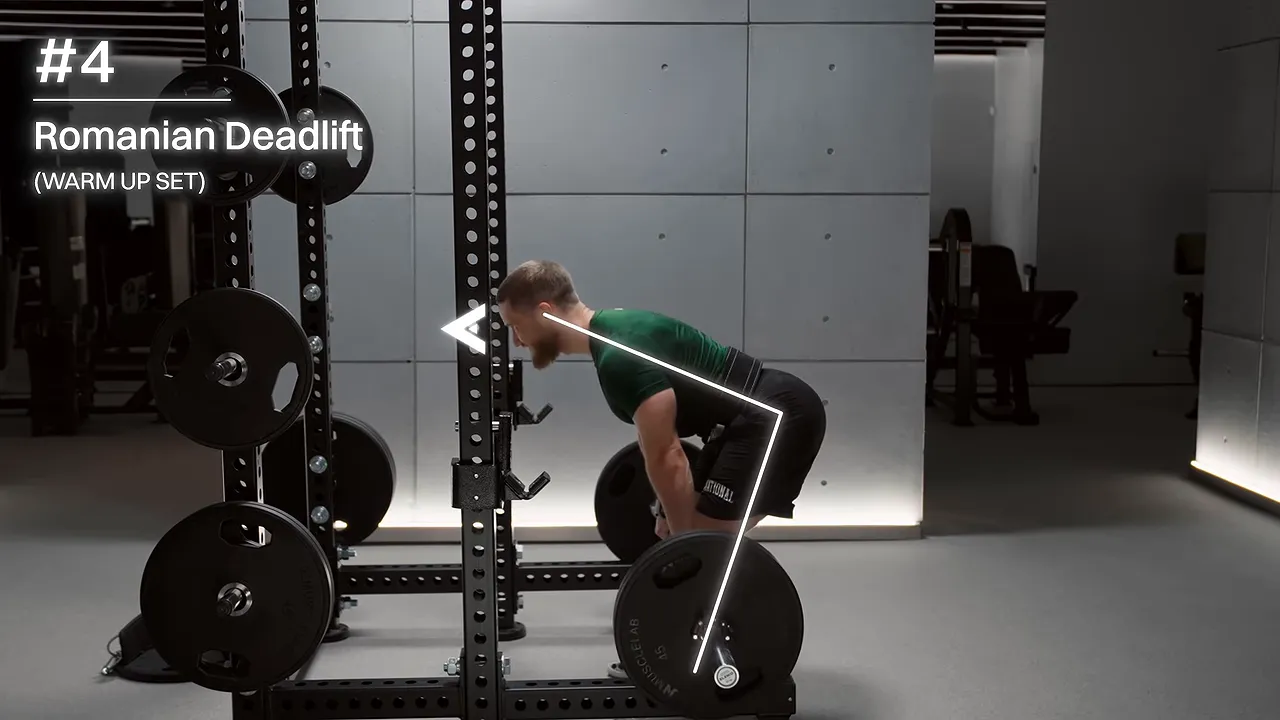
Here’s why:
- Compared with conventional deadlifts: I find it less fatiguing for a similar, or potentially greater, stimulus to the glutes, hamstrings, and spinal erectors.
- Compared with back extensions: It’s easier to progressively overload.
- Compared with good mornings: I find it easier to learn and smoother to perform.
The exact variation matters less than having a basic hinge you can perform well and gradually get stronger at.
3. Incline Bench Press
The incline press is my go-to pressing movement because it combines elements of horizontal and vertical pressing. You get substantial chest work alongside front-delt involvement.
Some research comparing incline and flat bench training has found greater upper-pec growth with incline pressing without sacrificing growth in the middle or lower regions.
Most studies use an incline around 45 degrees, but I like the broader range of 20 to 45 degrees. Find an angle that feels good, stick with it, and build strength before constantly changing the setup.
A barbell, dumbbells, a Smith machine, or a chest press machine can all work. Lately, I’ve used the Smith machine and focused on adding weight in the six to eight rep range.
I didn’t set a PR on this one during the challenge. After dips and other pressing, I simply didn’t have it. Exercise order and accumulated fatigue matter.
2. Pull-Up
Over the previous year, I built up to bodyweight plus 75 pounds for six clean pull-ups, and I think my back looked the best it ever had.
That’s an anecdote, not proof that pull-ups are superior to pulldowns. A big part of the benefit for me is motivation: I care a lot about hitting a new pull-up PR, so I’m diligent about progressing them.
Pull-ups also require very little equipment, and a full rep gives you a fairly clear performance standard. Start with assistance if you need it. Most people do.
Once you can perform eight to 10 clean bodyweight reps, begin adding weight with a belt.
Lat pulldowns are still excellent. I use both, and I put both in my highest tier for back training. Choose the option you’ll consistently execute well and progressively overload.
1. Squat
If you told me you only had time for one exercise, I’d tell you to squat.
MRI research on muscle-mass distribution puts more than half of the body’s muscle mass in the lower body, roughly 55% in men and 58% in women. That’s a strong reason for my number-one choice to be a lower-body movement.
Squats can also develop back strength and total-body power. In my experience, getting stronger at squatting often carries over to deadlifting, even without much deadlift practice.
But there isn’t one universally best squat for muscle growth. My current favorite is the pendulum squat. Smith machine squats, hack squats, and Bulgarian split squats are all excellent too.
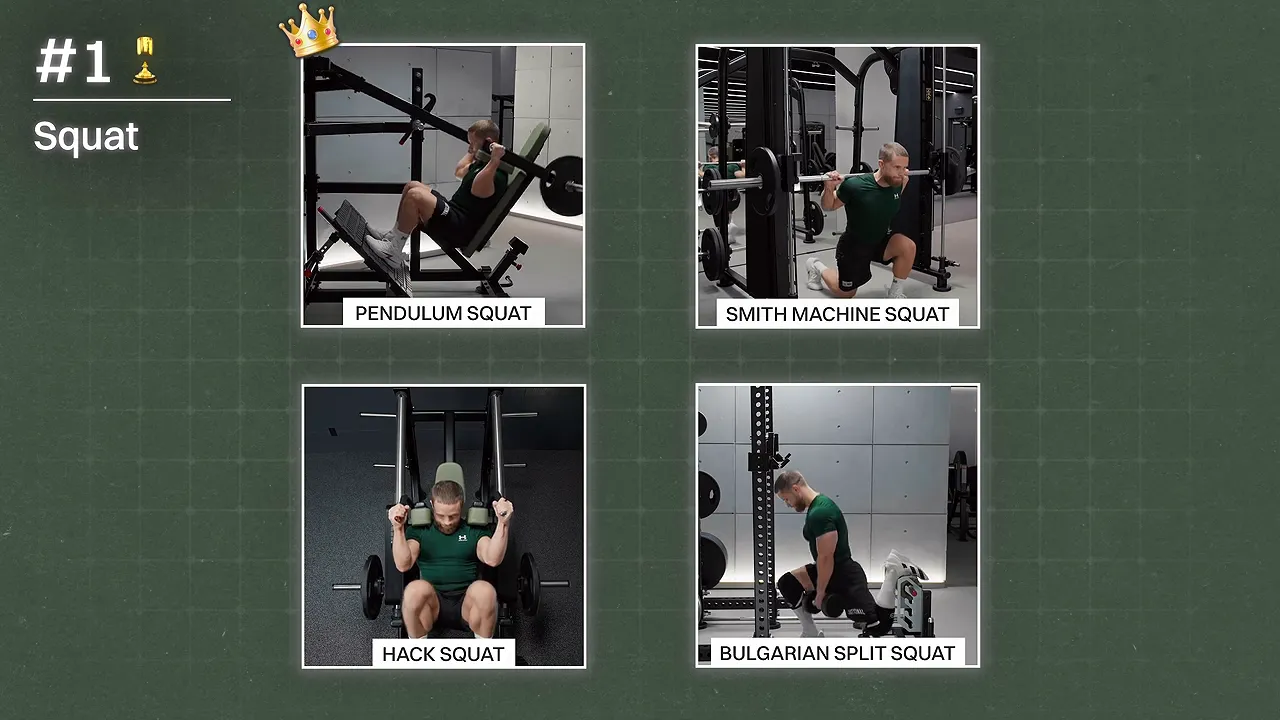
These movements load the quads and glutes in a deep position where both muscles are lengthened. They’re also well suited to progressive overload, provided you’re actually recording your performance.
Squats aren’t perfect. They don’t train the hamstrings particularly well, and they don’t develop the rectus femoris as effectively as leg extensions. That’s exactly why leg curls and leg extensions made the top 10: they fill important gaps.
My all-time squat PR is 500 pounds, set at Canadian Nationals during my powerlifting career. I knew I wasn’t in a position to beat that during this challenge, so I left it alone. You can train hard without ignoring your limits.
What Makes These Exercises Work: Track, Progress, and Keep the Test Honest
The challenge finished with 17 PRs across the 25 ranked exercise slots. I was genuinely surprised by how much a focused effort could improve some of my performances.
But the lesson isn’t to test every exercise to failure or chase an all-time record every session. I deliberately backed off on some lifts, and fatigue clearly affected others.
The useful principles are much simpler:
- Record your training. Know the weight and reps you performed last time.
- Keep execution consistent. Compare similar ranges of motion, control, and technique.
- Aim for gradual progress. An extra rep can be just as meaningful as more weight.
- Put performance in context. A fresh first set isn’t the same test as a fatigued final set.
- Respect your current training. Old powerlifting records don’t need to dictate today’s bodybuilding session.
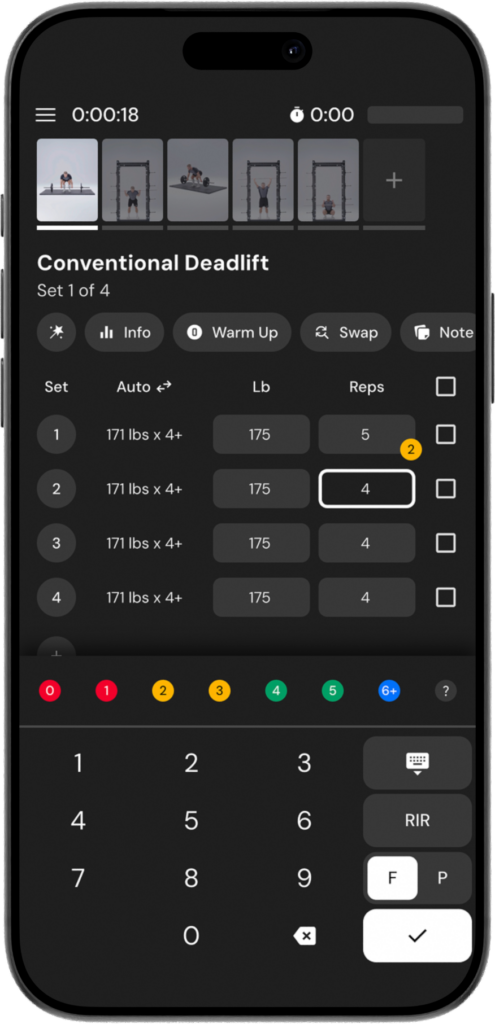
A notepad or notes app can handle the basics. I helped build MacroFactor Workouts to make the process more organized and motivating, with fast logging, plate-loading guidance, and progress and volume analytics.
You can use it to track your own workouts or generate a program based on your goals. Its coaching algorithms update that program weekly based on your performance. It also includes more than 500 exercise demonstrations, supports logging partial reps, drop sets, supersets, and reps in reserve, and can import supported releases of my programs.
The Workouts and nutrition apps also sync, including bodyweight information that helps put movements like weighted pull-ups and dips into context.
Ultimately, the best exercise list is only useful if you do something with it. Choose movements that fit your equipment and feel good, train them hard with consistent form, and give yourself a clear path to getting stronger.
|