Building muscle does not always mean pushing the scale higher. Right now, my goal is to roughly maintain my body weight while getting stronger in the gym and, ideally, adding a little muscle along the way. I think of this as maingaining, a type of body recomposition.
After an extended bulk from about 160 pounds to just over 180 pounds, I’m spending a few months at maintenance before starting a formal fat loss phase. That gives me an opportunity to dial in my training and build consistent nutrition habits without immediately jumping into a cut.
Here’s how I set up that approach, what my five meals look like, and why I make these food choices.
Key Takeaways
- Maingaining aims to maintain body weight while improving strength and ideally adding some muscle.
- Set calories around your own maintenance needs rather than copying someone else’s intake.
- Prioritize adequate daily protein before fine-tuning meal timing or protein digestion rates.
- Flexible meals and approximate macro targets can still support a consistent nutrition routine.
Table of Contents
- What Maingaining Actually Means
- How I Set My Calories and Macros
- Meal 1: Breakfast Potato Hash
- Meal 2: A Quick Turkey and Rice Bowl Before Training
- During Training: A Little Fast Energy
- Meal 3: A Post-Workout Shake and Banana
- Meal 4: A Loaded Chicken Burrito
- Meal 5: Greek Yogurt, Peanut Butter, Honey, and Popcorn
- Keeping the Plan Flexible
- How I Use MacroFactor to Track My Nutrition
What Maingaining Actually Means
The basic idea is simple: maintain body weight, progress your training, and give yourself the opportunity to build muscle.
I first heard the term from the Team 3DMJ guys, probably Alberto Nuñez, around nine or ten years before this phase. In natural bodybuilding, it described a transition toward the end of an offseason: an opportunity to squeeze out a little more progress without continuing to accumulate body fat.
That is different from trying to stay absolutely shredded while simultaneously making substantial muscle gains. I don’t think that is the best way to approach maingaining.
My preference is to do it at a moderate to slightly higher body fat percentage, roughly:
- Men: about 12% to 20% body fat.
- Women: about 20% to 30% body fat.
The reasoning is that building muscle requires energy, and having some stored body fat gives your body an energy reserve. How much muscle you can realistically add also depends on how close you are to your genetic ceiling. The more advanced you become, the more useful dedicated bulking phases may be for adding size.
You might also look a little tighter at the beginning of a maingaining phase. I often find that being more intentional with nutrition leads to some water loss and possibly a little fat loss before body weight settles.
Although I’m using this as a bridge between bulking and cutting, that sequence is not mandatory. If your strength is improving and you’re happy with your body composition, you can keep maingaining. You only need to prioritize a cut when you actually want to prioritize fat loss.
How I Set My Calories and Macros
My setup comes down to three priorities:
- Eat around maintenance calories.
- Keep protein relatively high.
- Focus on progressing in the gym.
For this day, my approximate targets are:
- Calories: 3,000.
- Protein: 200 grams.
- Fat: 90 grams.
- Carbohydrates: 350 grams.
These numbers are specific to my body size, metabolism, activity, and habits. Don’t copy my calorie target just because your goal is also maingaining. The relevant target is the intake that roughly maintains your own body weight.
Protein: High, but Not Necessarily This High
I’ve set protein at about 1.1 grams per pound of body weight, or 2.4 grams per kilogram. Personally, I’ve found slightly higher protein helpful during recomp phases.
That does not mean everyone needs this much. Around 0.7 to 1 gram per pound, or 1.6 to 2.2 grams per kilogram, appears to be plenty for maximizing muscle growth for most people. A meta-analysis of protein intake and resistance training supports that general range.
I also try to spread protein reasonably evenly across the day rather than saving most of it for one meal.
Fat and Carbs: A Flexible Starting Point
As a general setup, I’ll often allocate around 20% to 25% of calories to fat and fill the remaining calories with carbohydrates. This particular day is a little higher in fat, which is fine. That percentage is a starting point, not a rule every meal plan has to match perfectly.
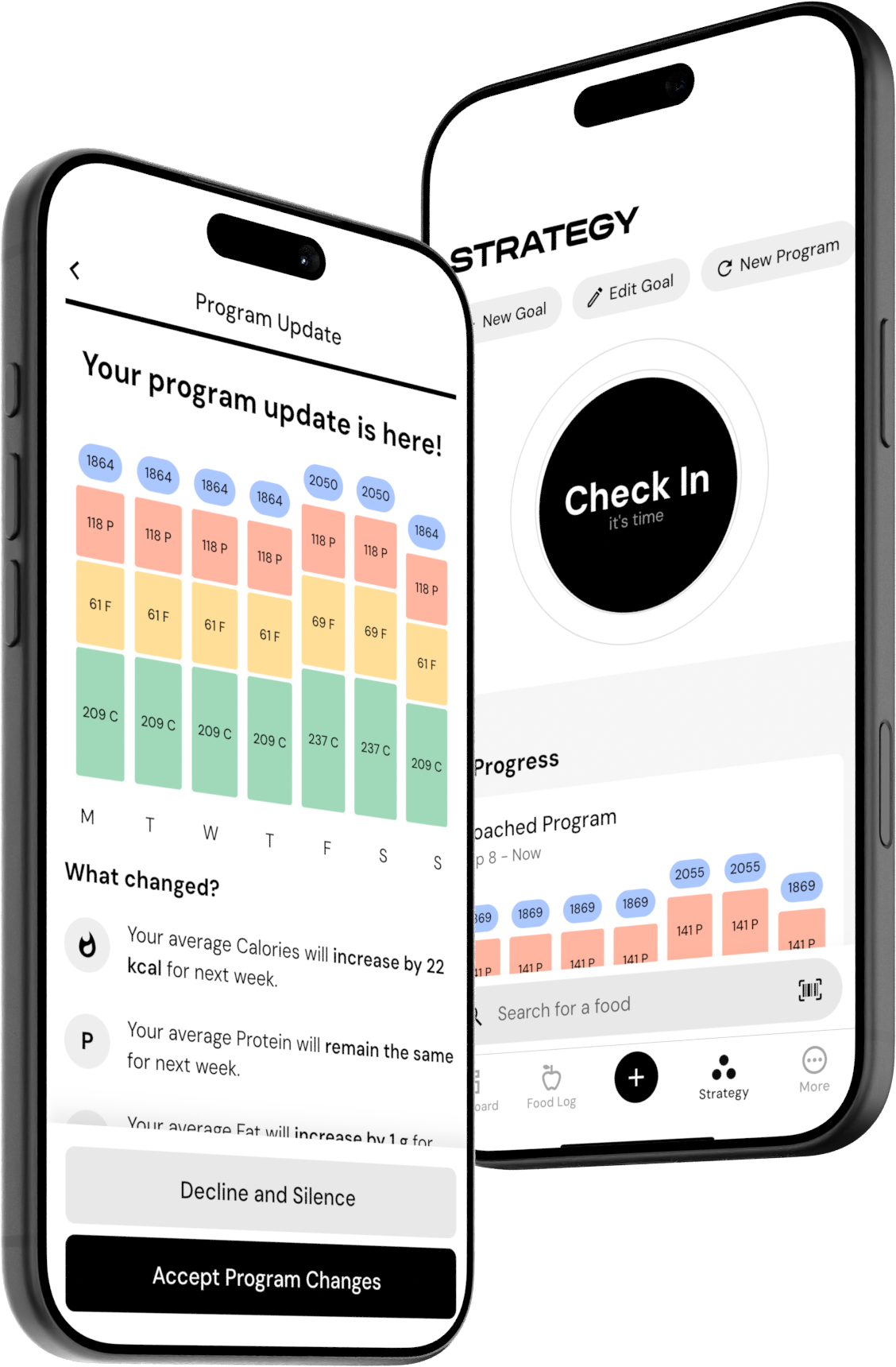
I use MacroFactor to organize my nutrition and track on the days I log my food. But the food choices themselves are fairly ordinary: potatoes, eggs, rice, turkey, chicken, fruit, yogurt, and a few ingredients that make everything taste better.
Meal 1: Breakfast Potato Hash
This is a substantial breakfast with a lot going on: crispy potatoes, vegetables, turkey bacon, plant-based sausage, eggs, and goat cheese. It takes a little preparation, but the flavor makes it worth it.
How I Make It
- Prepare the potatoes. Dice four or five mixed baby potatoes into cubes. Coat with olive oil spray or a small drizzle of olive oil, then season with ground cumin, salt, and parsley.
- Give them a head start. Microwave the potatoes for about three minutes while preparing the other ingredients.
- Cook the vegetables and protein. Slice onion and mushrooms, press or chop one clove of garlic, and cook them in a nonstick pan. Add turkey bacon and Beyond Meat sausage, followed by diced red and green peppers.
- Crisp the potatoes separately. Once the peppers start to soften, transfer the mixture to a bowl. Add the potatoes to the pan and let the edges brown.
- Bring everything together. Return the vegetable mixture to the pan. Add two whole eggs and two egg whites, beaten with a drop of milk, and stir until cooked.
- Finish with cheese. I like goat cheese, but shredded cheese works too. You can also leave it out for a lower-fat version.
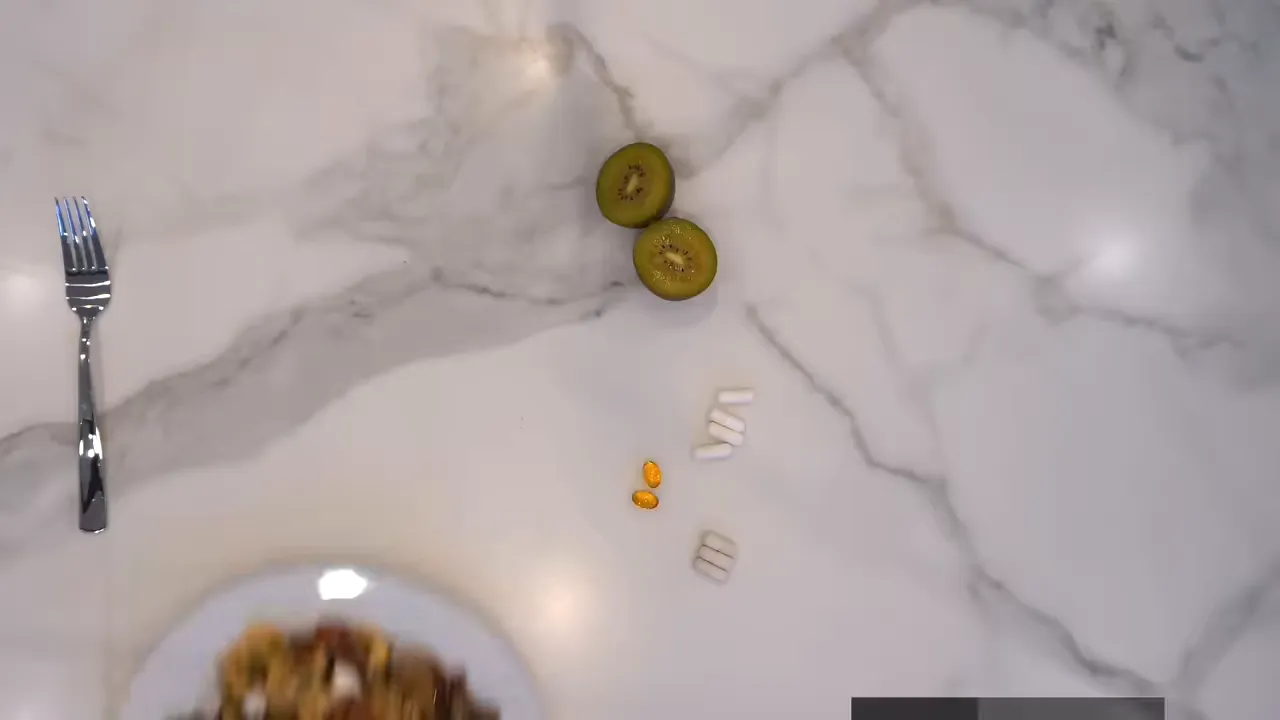
On the side, I have a SunGold kiwi. I also take my creatine, multivitamin, and fish oil with this meal. That is simply where these supplements fit into my routine, not an essential part of making the hash.
Meal macros: 42 grams of protein, 25 grams of fat, and 40 grams of carbs.
Meal 2: A Quick Turkey and Rice Bowl Before Training
For the next meal, convenience is the main priority. The turkey is already cooked, and I use microwaveable Minute Rice, so there’s virtually no cooking involved. You could absolutely batch-cook your own rice instead.
Here’s what goes into the bowl:
- Microwaveable rice.
- 100 grams of cooked ground turkey.
- A generous helping of sour cream, roughly three tablespoons.
- 30 grams of shredded cheese.
- Plenty of sriracha.
I mix that together and serve it with about 100 grams of mixed berries, including blackberries, raspberries, and blueberries, plus 100 grams of cantaloupe. The cantaloupe also contributes vitamins A and C.
I’m using full-fat cheese because I have room for it in my macros and prefer the taste. During a cut, I’d be more likely to choose a lower-fat option.
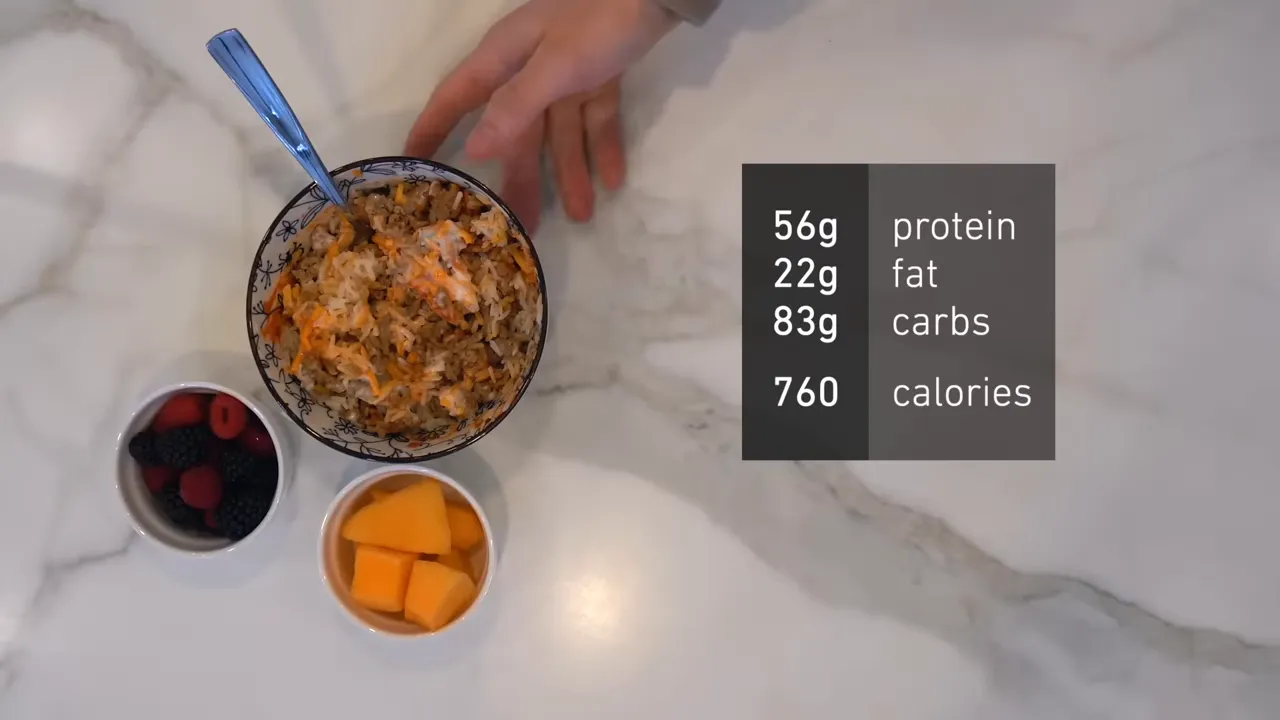
Meal macros: 56 grams of protein, 22 grams of fat, and 83 grams of carbs.
Why I Eat This Before a Workout
I eat this meal about an hour before training. Around half an hour after eating, I have my pre-workout, then start training roughly half an hour later.
For my pre-workout meal, I aim for approximately 1 gram of carbohydrate per kilogram of body weight. At around 80 kilograms, that means roughly 80 grams of carbs.
The 22 grams of fat is slightly higher than I might otherwise choose close to training. But I personally prefer lifting with a fuller stomach rather than an empty one. That part is a matter of comfort and preference, not something everyone needs to replicate.
During Training: A Little Fast Energy
This day’s session is a full-body workout from my Powerbuilding 2.0 program, including a set of 10 squats with 350 pounds. Nutrition supports the training, but the training still needs to provide a reason for your body to adapt.
My workouts usually last about an hour and a half, sometimes longer. During this session, I sip a Gatorade that provides 23 grams of carbohydrates as a quick source of energy.
This isn’t an exact science, and I’m not treating a sports drink as mandatory for every workout. It’s simply useful when I feel like I could use some fuel during a longer session.
Because I have protein before and after training, I don’t worry about adding intra-workout amino acids, especially when I’m eating at maintenance or in a surplus.
Meal 3: A Post-Workout Shake and Banana
I’m usually not very hungry immediately after training. It often takes an hour or two before I want a proper meal, so a protein shake is an easy way to get some nutrition in without forcing down solid food.
I mix a whey and casein blend with milk and have a banana alongside it.
The appeal of the blend is that whey digests relatively quickly, while casein provides a slower release. I use PEScience Select Protein, with mint cookie being a favorite flavor. I’m sponsored by the company and receive the product for free, but you do not need that particular brand to put together this meal.
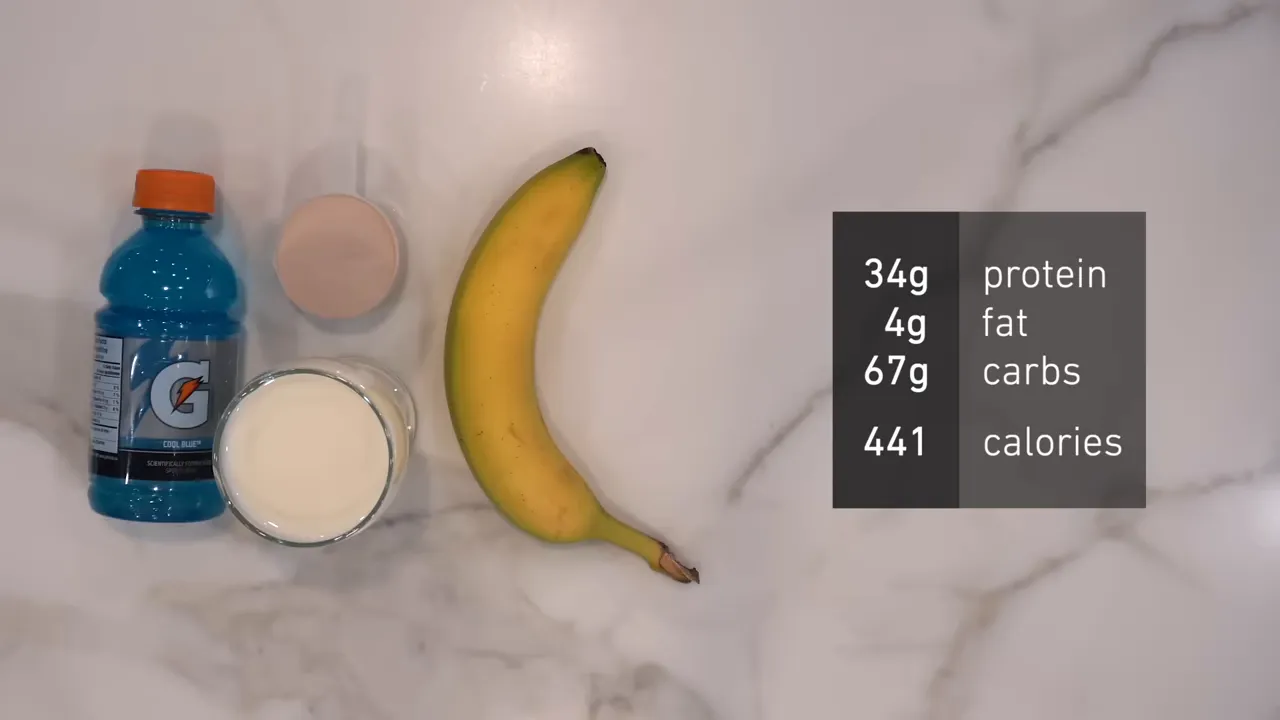
Meal macros, including the intra-workout Gatorade: 34 grams of protein, 4 grams of fat, and 67 grams of carbs.
Meal 4: A Loaded Chicken Burrito
This is my first substantial whole-food meal after training and the biggest meal of the day. The filling includes chicken, peppers, onion, black beans, rice, cheddar, guacamole, and salsa. There’s a lot in there, so a large tortilla helps.
You have two options for the chicken. The easiest is to cook it in an air fryer. The slightly more involved option is to marinate it first and then pan-fry it, which gives it a really good flavor and browned exterior.
The Chicken Marinade
Mix together:
- ½ tablespoon olive oil.
- Juice from ½ lime.
- About ½ teaspoon salt.
- About ½ teaspoon chili powder.
- About ½ teaspoon garlic powder.
- ¼ teaspoon cumin.
- A small sprinkle of oregano.
Butterfly the chicken so it is thin, coat it in the marinade, cover, and refrigerate for about an hour. That gives you time to do some work or prepare the vegetables.
Cooking and Assembly
- Cook the chicken. Pan-fry it in a nonstick pan until cooked through, allowing the spices to develop a browned exterior.
- Cook the vegetables. Slice onion and red and green peppers, then cook them until the peppers begin to soften. For an easy food-safety approach, reserve some marinade before it touches raw chicken and use that portion for the vegetables.
- Fill the tortilla. Add chicken, vegetables, black beans, rice, a little cheddar cheese, guacamole, and salsa.
- Roll and toast. Fold in the sides, roll the burrito, and return it to the pan to toast the outside and help seal it.
If you reuse marinade that has touched raw chicken, it needs to be brought to a boil before reuse, as explained in the USDA’s chicken handling guidance. Keeping a separate portion for the vegetables avoids that issue.
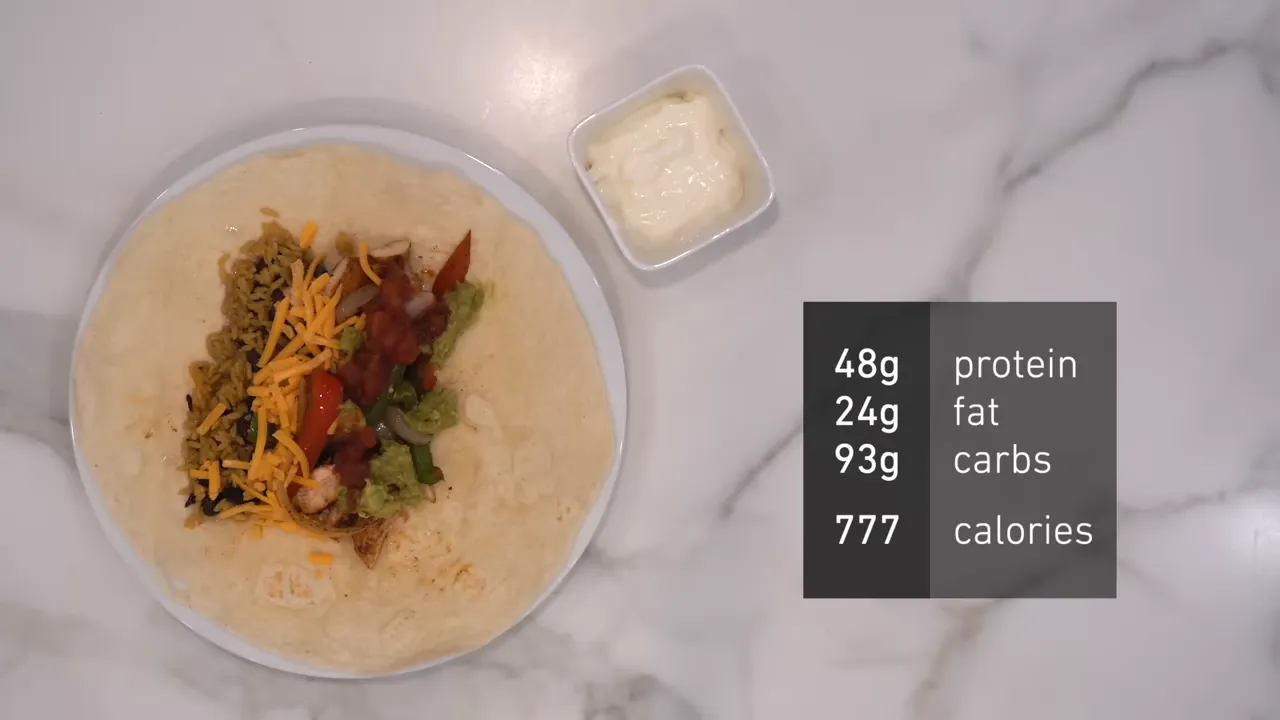
I have a little sour cream for dipping. If there’s rice or peppers left over that won’t fit inside the tortilla, I eat them separately. The tortilla does not get to decide how much food fits my nutrition plan.
Meal macros: 48 grams of protein, 24 grams of fat, and 93 grams of carbs.
An Alternative Dinner: My Mom’s Chili
Another dinner I have fairly often is my mom’s best chili. It’s a high-fiber, filling option and a useful alternative when I don’t feel like putting together a burrito.
Meal 5: Greek Yogurt, Peanut Butter, Honey, and Popcorn
The last meal is a simple Greek yogurt concoction with popcorn on the side. It’s easy to make, gives me a good volume of food, and works well as an evening snack.
I mix together:
- ¾ cup Greek yogurt, providing about 16 grams of protein in the product I use.
- About a tablespoon of honey.
- About 15 grams of peanut butter.
- Roughly ¾ of a packet of Splenda, adjusted to taste.
Then I microwave some popcorn to go with it.
One practical point: a tablespoon of peanut butter is not an enormous, heaped spoonful. It is easy to underestimate this portion. If you want a clearer idea of what you’re eating, weighing it occasionally can be helpful even if you usually eyeball it.
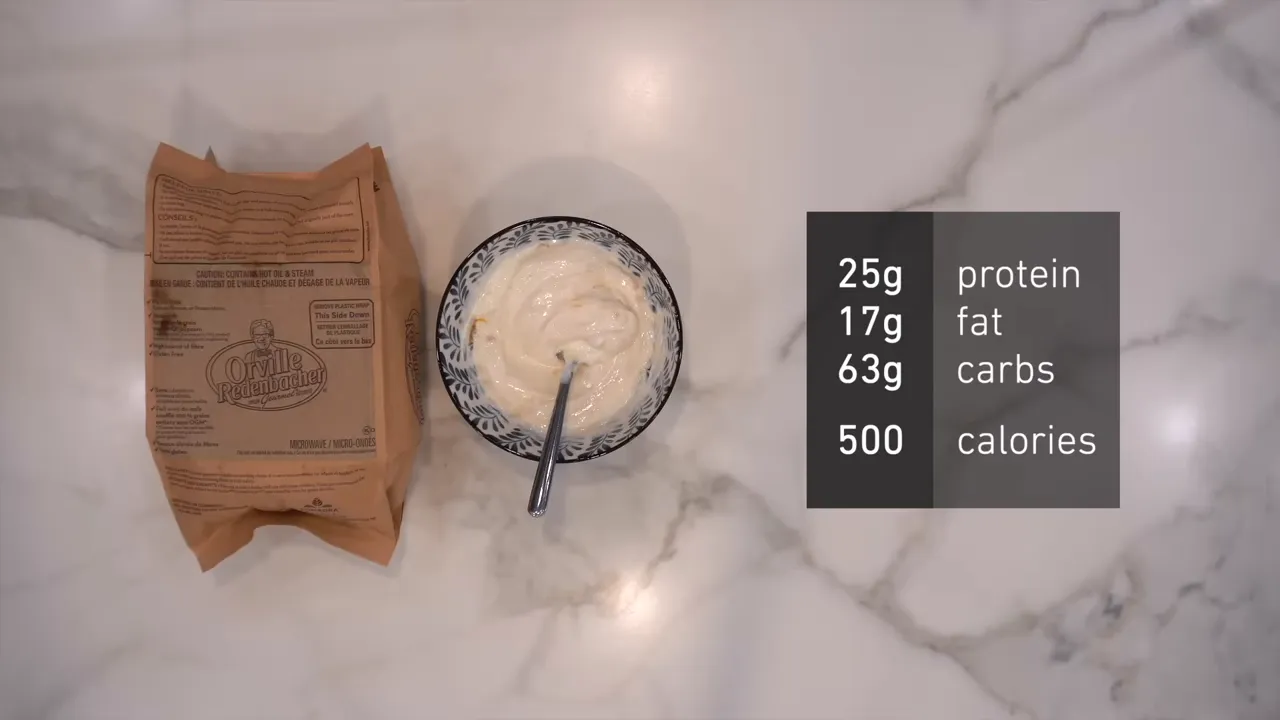
Meal macros: 25 grams of protein, 17 grams of fat, and 63 grams of carbs.
Why I Like Protein Before Bed
Dairy is a convenient option before bed because its casein content makes it relatively slow-digesting. Greek yogurt and cottage cheese both work well.
If you don’t eat dairy, you can slow the digestion of a protein-containing meal by adding fat or fiber. Nuts are one option, and the popcorn adds fiber to this meal. The general idea is to provide a more sustained supply of amino acids overnight.
Still, total daily protein matters more than getting your bedtime meal perfect. I see pre-bed protein as an opportunity to optimize an already solid diet, not something to stress about if you miss it.
Keeping the Plan Flexible
Adding the five meals together gives approximately 205 grams of protein, 92 grams of fat, and 346 grams of carbs, which is close to my targets. That’s the level of precision I’m aiming for: the right ballpark, not a perfect score.
I don’t eat these exact meals every day, and I don’t track every single day either. Sometimes I combine the macro allowance for meals four and five and order sushi or Thai food instead.
That flexibility is part of making the approach sustainable. You can have consistent nutrition habits without insisting that dinner always comes from the same recipe.
The main priorities stay the same: enough protein, calories around maintenance, and productive training. The individual foods can change.
How I Use MacroFactor to Track My Nutrition
On the days I track, I use MacroFactor. I’ve followed its development since before the beta version and have used it since its initial release.
One reason an adaptive nutrition setup is useful is that calorie needs do not stay fixed. They can change as you gain or lose weight, change your activity, or experience changes in metabolism and non-exercise activity, often called NEAT.
You can track those changes and adjust your intake yourself, work with a nutrition coach, or use an app to help manage the process. I also like being able to check micronutrients, such as vitamins and minerals, from time to time rather than looking only at protein, carbs, and fat.
Whatever tracking method you choose, the goal is the same: build a nutrition routine that supports your training and is enjoyable enough to keep doing.
|