Turkesterone, often shortened to “turk,” has been hyped as the next big muscle-building supplement. Some of the claims go well beyond a small performance boost, comparing this plant compound to powerful anabolic steroids.
That sounds exciting. But before I open my wallet, I want to know whether the evidence actually supports it.
The key question isn't whether someone got stronger while taking turkesterone. It's whether turkesterone produces better results than the same training and nutrition without it. Once we separate those two questions, the case becomes a lot less convincing.
Key Takeaways
- Turkesterone and ecdysterone are related compounds, but research on one does not directly establish benefits for the other.
- The 2006 human trial found no ecdysterone advantage for fat-free mass, strength, or measured hormone outcomes.
- The positive 2019 study raises questions about body-composition measurements, supplement labeling, and the need for replication.
- Testimonials cannot reliably separate supplement effects from changes in training, nutrition, motivation, and expectations.
What Is Turkesterone?
Turkesterone belongs to a family of compounds called ecdysteroids, which occur in plants and insects. A rough way to understand the comparison is that humans produce steroid hormones such as testosterone, while insects produce ecdysteroid hormones, and plants produce related compounds.
Turkesterone and testosterone share some structural similarities. Since testosterone is anabolic, meaning it can promote tissue growth, it's reasonable to ask whether a related plant compound might also help build muscle.
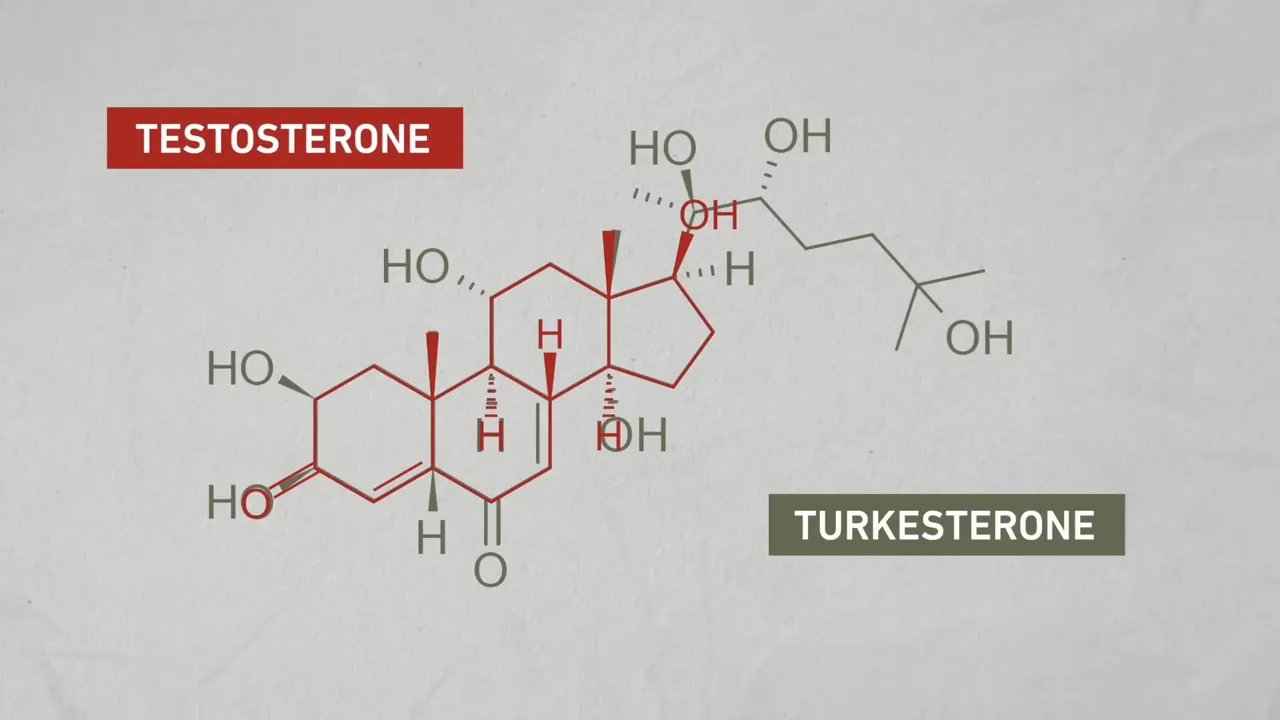
But structural similarity isn't evidence of equivalent effects in humans. It's a starting point for research, not a reason to assume that a supplement will deliver steroid-like gains.
There's also an important terminology issue: turkesterone and ecdysterone are different compounds within the same broader family. Research on one can help inform questions about the other, but the names aren't interchangeable. That distinction matters because much of the human evidence used to promote turkesterone actually concerns ecdysterone.
The Early Research: Interesting, but Far From Human Muscle Growth
Interest in turkesterone goes back decades. A Russian paper published in 1978 reported that turkesterone stimulated protein synthesis in mouse liver.
That might sound like the result we're looking for, but there's a fairly big catch: liver protein synthesis is not muscle protein synthesis. A response in rodent liver doesn't establish that taking a capsule will help a person grow bigger biceps.
I tried to investigate the full paper, but the material I tracked down was a 145-page document with poorly rendered Russian text about rodent liver metabolism. That limited how confidently I could evaluate the details beyond the abstract.
Other research from the 1970s, 1980s, and 1990s examined protein synthesis in animals and insects, including beetles, mice, and quail. Those studies provide background, but their short-term designs and distance from actual human resistance training make them a weak basis for supplement recommendations.
What we really need is controlled research in people who lift weights.
The 2006 Human Study: No Advantage Over Placebo
A 2006 study involving 45 resistance-trained men, with Dr. Bill Campbell among the researchers, put that question to a more useful test.
The men were assigned to four groups:
- An ecdysterone group.
- A methoxyisoflavone group.
- A sulfated polysaccharide group.
- A placebo group receiving a pill without an active supplement.
Again, the ecdysteroid tested was not turkesterone itself. It was a related compound, so this wasn't a direct test of turkesterone. Still, it was relevant human evidence for the broader supplement category.
Why the placebo matters
The participants didn't know which supplement they were receiving. That's important because expectations can change behavior.
If you believe you're taking a powerful muscle builder, you might approach your workouts with more confidence, effort, or consistency. Without a blinded placebo comparison, it becomes difficult to separate the compound's effect from the effect of believing it works.
All groups followed a four-day-per-week upper/lower training split for eight weeks. At the end, the researchers found no significant differences between groups in:
- Fat-free mass.
- One-repetition maximum strength.
- Free testosterone.
- Total testosterone.
- The testosterone-to-cortisol ratio.
In other words, the ecdysterone supplement didn't outperform the placebo on these outcomes.
The International Society of Sports Nutrition's 2018 review subsequently concluded that ecdysterones were not recommended for improving training adaptations or performance. That was the state of the evidence before the study that really helped fuel the hype.
The 2019 Study: Better Muscle Gains, but Important Questions
A 2019 human study produced a different result. It involved 46 men with approximately one year of training experience and a 10-week training program.
The researchers used a commercial product called Peak Ecdysone, which was labeled as containing 100 milligrams of ecdysterone per capsule. The two supplementation groups took different amounts:
- Ec1: Two capsules per day.
- Ec2: Eight capsules per day.
This time, the ecdysterone groups showed significantly greater gains in estimated muscle mass than the placebo group.
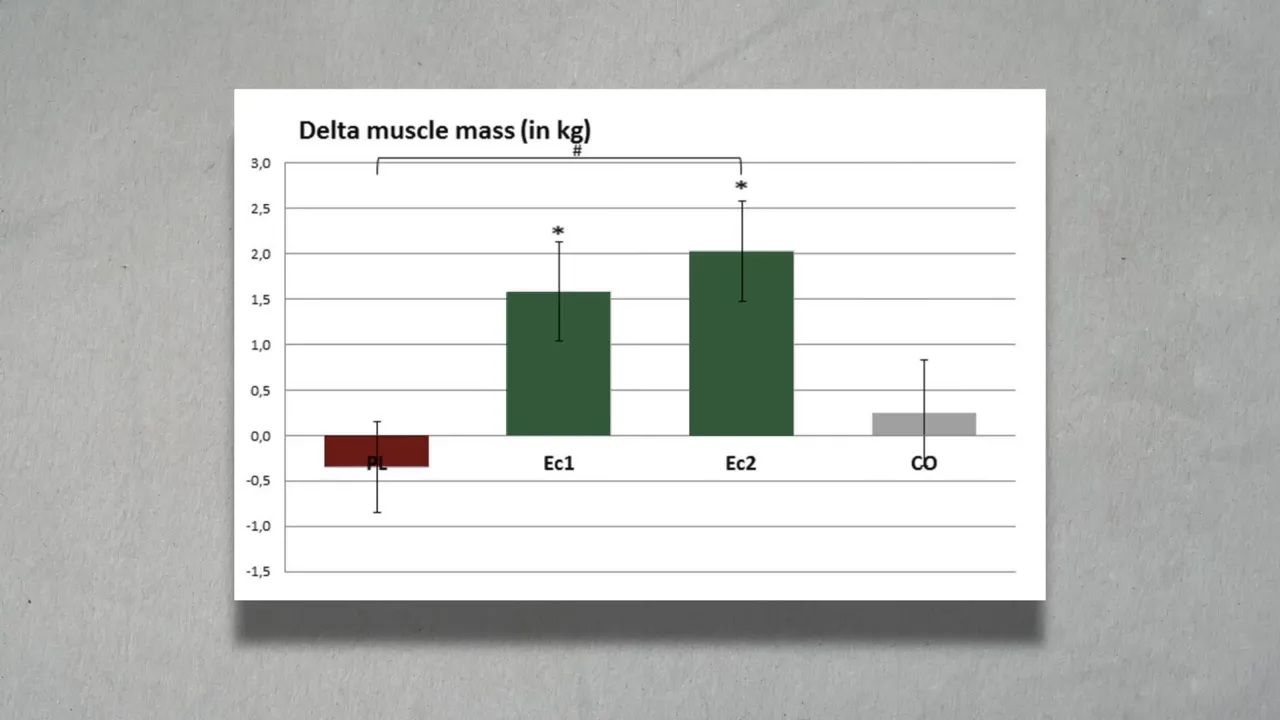
That's worth investigating. It isn't something we should dismiss simply because an earlier study found no benefit. But several details make me hesitant to treat it as convincing evidence.
1. The placebo group lost muscle mass
On average, the placebo group showed a decrease in muscle mass. That's possible, but it's an unusual result for relatively inexperienced lifters following a structured 10-week training program.
One potential explanation is measurement error. The study used single-frequency bioelectrical impedance to estimate body composition, a method that can be unreliable for detecting changes accurately.
That matters because the apparent supplement benefit depends on the accuracy of those measurements. The 2006 study used DXA, which provides a stronger basis for assessing body composition than the impedance method used here.
2. The capsules contained only 6% of the labeled ecdysterone
The researchers analyzed the supplement and found approximately 6 milligrams of ecdysterone per capsule, not the advertised 100 milligrams.
That's only 6% of the label claim. Based on that analysis, the two-capsule group received approximately 12 milligrams per day, while the eight-capsule group received approximately 48 milligrams.
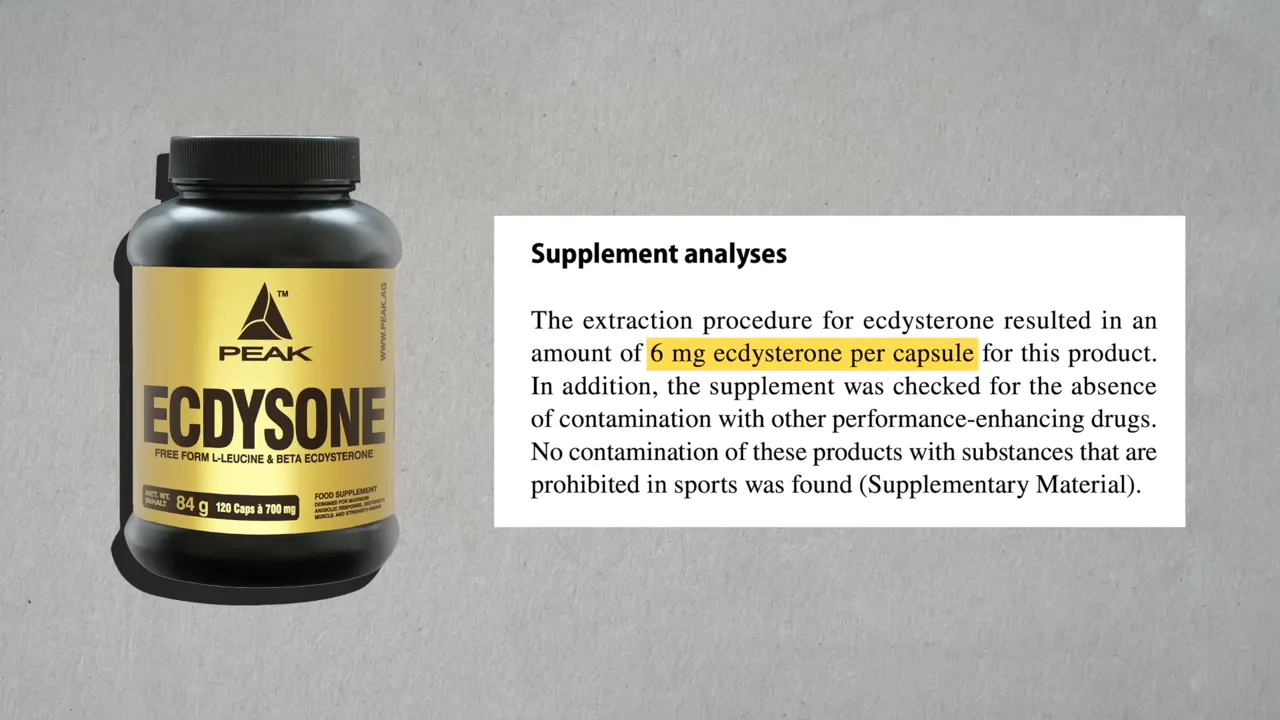
The mismatch doesn't, by itself, prove that the muscle-gain result was false. But it raises a substantial product-quality concern and makes the findings harder to interpret. A bottle's label clearly wasn't a reliable account of what the participants received.
3. Contamination was considered, but not demonstrated
My first thought was that perhaps another anabolic substance had found its way into the capsules. Undeclared substances are a legitimate concern with muscle-building supplements.
However, the study's supplementary materials showed that the researchers collected blood and urine samples to test for the use of prohibited substances. Nothing showed up in those tests.
So it would be wrong to claim that the product was proven to contain a hidden anabolic drug. An untested substance remained a possible explanation, but it was speculation, not an established finding.
4. A false positive is also possible
I discussed the result with supplement researcher Dr. Eric Trexler, who emphasized that false-positive findings aren't some bizarre impossibility.
Small groups can differ in meaningful ways even after random assignment. For example, one group might happen to include several people who respond exceptionally well to training. Sampling variation and imperfect measurements can then contribute to an apparent effect.
That doesn't mean we know this study was a false positive. We don't. It means that one statistically significant finding needs replication, especially when other aspects of the study raise questions.
Independent studies help us determine which findings are typical and which might be unusual. Until those results accumulate, confidence should remain limited.
And even if we accepted the result at face value, we'd still have the same basic problem: this was an ecdysterone study, not a turkesterone study. I wouldn't use it as strong evidence to sell turkesterone.
Why Turkesterone Testimonials Don't Settle the Question
If the research isn't convincing, what about the people reporting great results?
I don't think anecdotes are automatically worthless. But supplement anecdotes are particularly difficult to interpret because starting a new supplement rarely happens in isolation.
Someone might start taking turkesterone at the same time they:
- Train harder or become more consistent.
- Improve their diet.
- Begin following a more structured program.
- Feel more motivated because they expect the new supplement to work.
They might also be relatively new to lifting and would have made substantial gains anyway.
The progress can be real while the explanation is wrong. If several things changed at once, how do we know which change caused the result?
That's why controlled studies matter. Multiple participants, comparison groups, and attempts to control confounding variables give us a much better chance of identifying the supplement's actual contribution.
A personal success story doesn't provide that same separation.
My Verdict: The Hype Is Ahead of the Evidence
Based on the research examined here, I don't think turkesterone has earned the label of a science-based muscle-building supplement.
The early animal work doesn't establish muscle growth in humans. The 2006 human trial found no advantage for a related ecdysteroid. The positive 2019 study has important measurement and interpretation issues, and it didn't test turkesterone in the first place.
That's not the same as proving turkesterone can never work. If better research demonstrates a meaningful benefit, and the safety evidence is reassuring, I'll change my mind. Being evidence-based means being willing to update your position.
But the possibility of future evidence isn't a convincing reason to spend money now. For me, the evidence reviewed here isn't strong enough to justify the purchase.
For a deeper discussion of turkesterone, supplement claims, and the problems with trying to get ahead of the science, I explored these questions in my full interview with Dr. Eric Trexler.
Sponsor: Skillshare
Skillshare offers classes in creative and business skills, including photography, video production, graphic design, marketing, and productivity. I've used it to develop skills for my own online work, and I found Thomas Frank's productivity course helpful for balancing creative work with getting things done.
Even when you outsource parts of a business, understanding the basics helps you make better decisions about what you want to create. The promotion offered a one-month free trial to the first 1,000 people using the sponsor link.
|


