A supplement can have thousands of positive reviews, a convincing explanation for how it works, and a muscular person promoting it, yet still do very little for your results.
Five popular examples are testosterone boosters, turkesterone, BCAAs, fat burners, and beta-alanine. But they do not all belong on this list for the same reason. Some lack convincing human evidence. Others have serious quality-control questions. And one actually works, just not particularly well for typical muscle-building workouts.
The useful question is not simply whether a supplement does something. It is whether it produces a meaningful benefit for your goal.
Key Takeaways
- Popular testosterone boosters lack convincing evidence of meaningful benefits for people with normal testosterone levels.
- Turkesterone's hype outpaced direct human evidence, while laboratory testing raised serious quality-control questions.
- Adequate total protein and consistent nutrition matter more than BCAAs or fat-burner blends.
- Beta-alanine benefits longer high-intensity efforts rather than most conventional muscle-building sets.
Table of Contents
- 1. Testosterone Boosters: Small Effects, Big Expectations
- 2. Turkesterone: Hype Plus Quality-Control Questions
- 3. BCAAs: Essential Nutrients, Usually Unnecessary Supplements
- 4. Fat Burners: Plausible Mechanisms, Disappointing Results
- 5. Beta-Alanine: It Works, but the Exercise Has to Fit
- Give Your Training the Credit
1. Testosterone Boosters: Small Effects, Big Expectations
An analysis of five popular testosterone boosters sold on Amazon revealed an immediate problem: three did not disclose the amount of each individual ingredient. Instead, they listed proprietary blends.
That is a red flag. An ingredient appearing on a label does not tell you whether the product contains an effective dose. Without individual amounts, you cannot meaningfully compare the formula with the research.
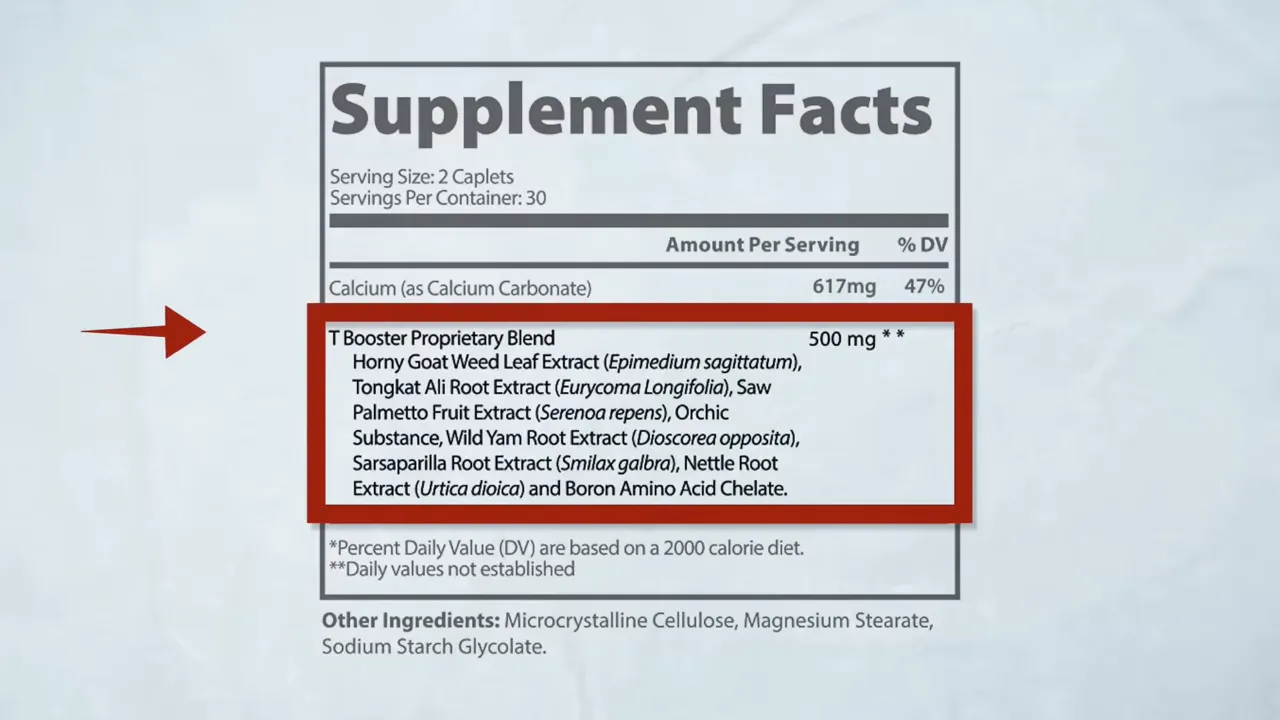
Most ingredients do not have convincing support
The formulas included familiar ingredients such as horny goat weed, boron, saw palmetto, fenugreek, and ashwagandha. Across the ingredients examined, half had no human studies showing a positive effect on testosterone.
Even some ingredients with positive findings had more studies showing no effect:
- Saw palmetto and boron: Each had two positive studies, compared with six showing no effect.
- Fenugreek: Four studies reported positive effects, while three had indeterminate findings.
- Ashwagandha: This looked more promising, with several studies suggesting a testosterone increase.
These counts give us a general sense of the evidence, but they are not a substitute for evaluating study quality. A small, poorly controlled study should not carry the same weight as a stronger trial. And even when an ingredient raises testosterone, the size of that increase matters.
For fenugreek, the Examine research summary consulted for this review described limited evidence for an increase, with more evidence arguing against one. That makes it something to investigate further, not a reliable muscle-building purchase.
A modest increase is not a steroid-like effect
To put the scale into perspective, a testosterone dose-response study found that subjects receiving 600 mg of testosterone enanthate reached testosterone levels of roughly 2,370 ng/dL, up from about 630 ng/dL. That is an increase of approximately 1,740 ng/dL.
By comparison, one ashwagandha study reported an increase of about 96 ng/dL.
This is not a head-to-head comparison, and it is certainly not a recommendation to use steroids. It simply shows why a natural supplement producing a modest hormonal change should not be expected to deliver anything resembling the same effect.
I have personally taken 600 mg of ashwagandha daily, mainly for its potential effects on stress, cortisol, and other health outcomes. Any testosterone benefit would be a bonus, rather than the reason I would expect it to build muscle.
Focus on the basics first
Before spending money on a testosterone booster, I would prioritize:
- Getting seven to eight hours of sleep each night.
- Maintaining a healthy body weight.
- Eating enough dietary fat.
- Addressing potential micronutrient deficiencies, including zinc, magnesium, and vitamin D.
The distinction is correcting a deficiency, not assuming that more of a nutrient will keep pushing testosterone higher. If your testosterone is already normal or high, products marketed as testosterone boosters are unlikely to provide meaningful benefits.
Why do the reviews look so good?
Despite the weak evidence, the five popular products analyzed averaged around 4.5 out of five stars.
That illustrates why customer reviews cannot establish effectiveness. When someone buys a supplement, they may also start training harder, eating better, and taking their routine more seriously. They make progress, then credit the pills.
Expectations and changes in behavior are plausible explanations. The reviews themselves cannot tell us which factor caused the improvement.
2. Turkesterone: Hype Plus Quality-Control Questions
Turkesterone became popular long before there was convincing human evidence to justify the marketing. At the time of the research reviewed here, there were no human studies directly demonstrating its muscle-building effects.
Some of the excitement came from research on related compounds called ecdysteroids. But evidence for a related compound is not direct evidence that turkesterone works.
The promising ecdysterone study had a catch
A 2019 study by Isenmann and colleagues reported greater muscle gains in participants taking an ecdysterone supplement than in those taking a placebo.
That is interesting. However, laboratory analysis found that the pills contained only about 6 mg of ecdysterone per capsule, rather than the advertised 100 mg. In other words, the measured amount was just 6% of the label claim.
The positive result deserves consideration, but the discrepancy also raises an obvious concern: how confidently can you buy and dose a supplement if the contents do not match the label?
The turkesterone testing controversy
Separate testing by supplement company Nootropics Depot raised further questions. In its published laboratory findings, the company reported:
- Approximately 0.7 mg of turkesterone per capsule in the tested Turk Builder product, far below the advertised amount discussed in the controversy.
- Less than 1% of the claimed turkesterone amount in the tested Gorilla Mind product.
- No detectable turkesterone in some other products.
Those findings need context. Nootropics Depot also sells supplements, so it has a potential commercial conflict of interest. There was substantial public back-and-forth about the results, including technical questions about distinguishing chemically similar ecdysteroids.
With my biochemistry background, I found the chemistry presented by the testing lab convincing. But I also recognize that I was already skeptical of turkesterone, and the analytical debate should not be ignored.
Either way, that uncertainty is not a reassuring reason to buy. You have a product category with limited direct evidence for muscle growth and unresolved questions about what is actually in the bottle.
Being a late adopter is an advantage
I understand the appeal of trying the newest supplement. When I started lifting, an ad in a bodybuilding magazine could be enough to convince me that a product was worth buying.
Sometimes I would take it and get results. What took longer to recognize was that I was the one producing those results through hard training and consistent eating.
As Dr. Eric Helms has emphasized, even effective supplements such as creatine and caffeine make relatively small contributions compared with the fundamentals. Waiting a year or two for better evidence on a new product is unlikely to cost you meaningful progress.
You do not need to be an early adopter to build an impressive physique.
3. BCAAs: Essential Nutrients, Usually Unnecessary Supplements
BCAA stands for branched-chain amino acid. The three BCAAs are leucine, isoleucine, and valine.
To understand why the supplement is usually unnecessary, it helps to separate three ideas:
- Proteins are made from amino acids.
- Nine amino acids are essential, meaning your body cannot make enough of them and you need to get them from your diet.
- The BCAAs are only three of those nine essential amino acids.
Leucine plays a particularly important role in triggering muscle protein synthesis. Think of it as the key that starts a car. But starting the engine is not enough if there is no fuel.
The other essential amino acids supply the materials needed to build new muscle protein. Taking only BCAAs does not provide the full set.
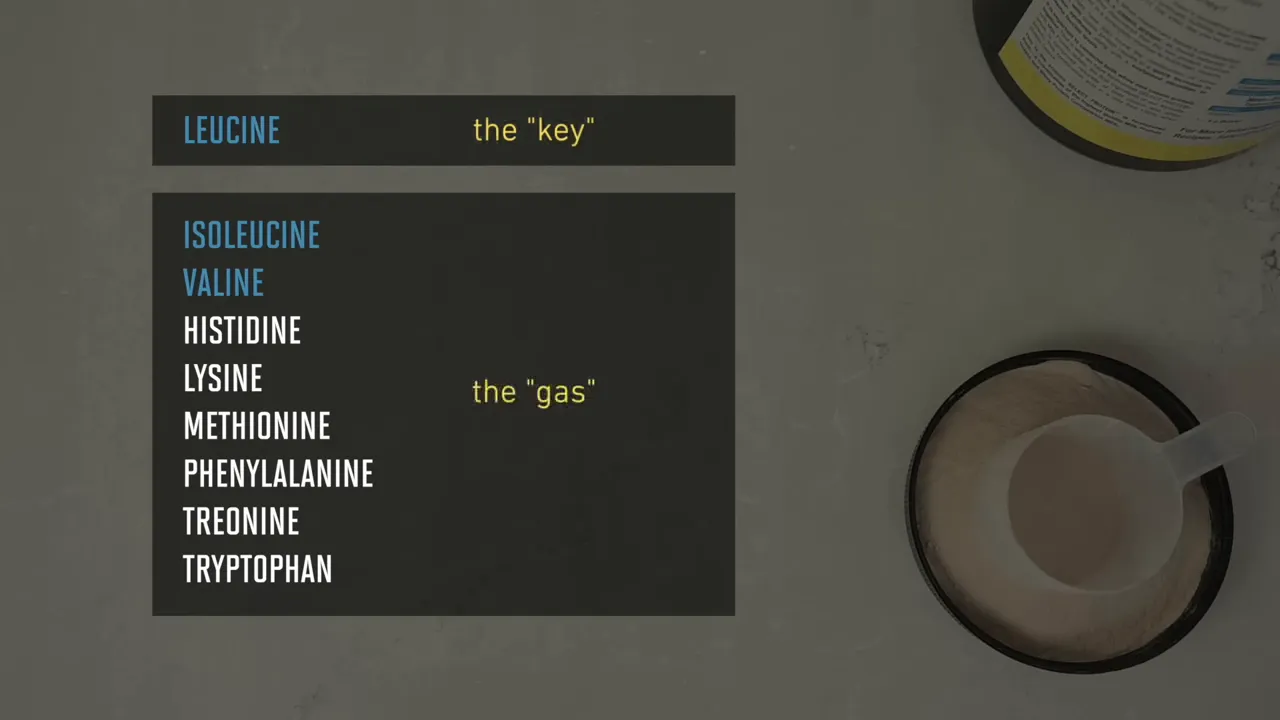
Why include isoleucine and valine?
One reason they are combined with leucine is that taking leucine alone can reduce circulating concentrations of isoleucine and valine. Both are still needed to make new muscle tissue, even though they do not have leucine's same triggering role.
But that does not solve the larger issue. You also need the other six essential amino acids.
BCAAs are absolutely important nutrients. That does not mean isolated BCAA supplementation is a useful addition to an already adequate diet.
What does the research show?
A systematic review analyzing 12 studies found no benefit of BCAA supplementation for performance, strength, or muscle mass.
My practical recommendation is straightforward: focus on getting enough total protein rather than buying isolated BCAAs.
Are essential amino acid supplements different?
Yes. An EAA supplement provides all nine essential amino acids, not just the three BCAAs. There are a few situations where I might consider one:
- A vegetarian meal with a limited amino acid profile: EAAs could improve the meal's profile, although a vegan protein shake is another straightforward option.
- Late in a demanding diet: A very lean person might consider EAAs around training as extra nutritional insurance, particularly when training fasted.
Those are possible niche uses, not reasons everyone needs an amino acid supplement. For most people, sufficient dietary protein is the more useful priority.
4. Fat Burners: Plausible Mechanisms, Disappointing Results
Fat burners generally promise to help through one of two pathways:
- Reduce appetite: Make it easier to eat fewer calories.
- Increase energy expenditure: Produce a thermogenic effect so you burn more calories.
Both mechanisms make sense on paper. The problem is that a plausible mechanism does not guarantee a meaningful real-world outcome.
The meta-analysis of fat burners and thermogenic supplements reviewed here found no indication that adding these products was more effective than exercise, or a combination of diet and exercise.
Caffeine and green tea extract can have small effects on energy expenditure. But those effects are small enough relative to diet and activity that their practical importance is questionable.
Caffeine can be useful without being a special fat burner
I do think caffeine can be a useful pre-workout supplement because it reliably improves training performance. If it also results in a few extra calories burned, fine.
That is different from combining caffeine with a collection of ineffective or poorly supported herbs and selling the mixture as a special fat-loss formula.
A useful performance ingredient does not automatically make the finished fat-burner product worth buying. I would put the effort into diet and exercise rather than expecting a thermogenic blend to make a meaningful difference.
5. Beta-Alanine: It Works, but the Exercise Has to Fit
Beta-alanine is the important exception on this list. It is not simply an ineffective supplement. It can improve performance, but its strongest use case does not line up well with typical resistance-training sets.
Its benefit involves helping muscles buffer acidity during hard exercise, potentially allowing you to sustain effort for longer.
That sounds ideal for lifting. However, acidity is unlikely to be the main factor limiting a short set lasting less than roughly 30 seconds. Many conventional muscle-building sets, such as eight to 12 repetitions, do not last long enough for this mechanism to provide much help.
Duration matters more than the supplement label suggests
A 2012 meta-analysis of beta-alanine found benefits for exercise lasting one to four minutes, but no benefit for efforts lasting less than 60 seconds.
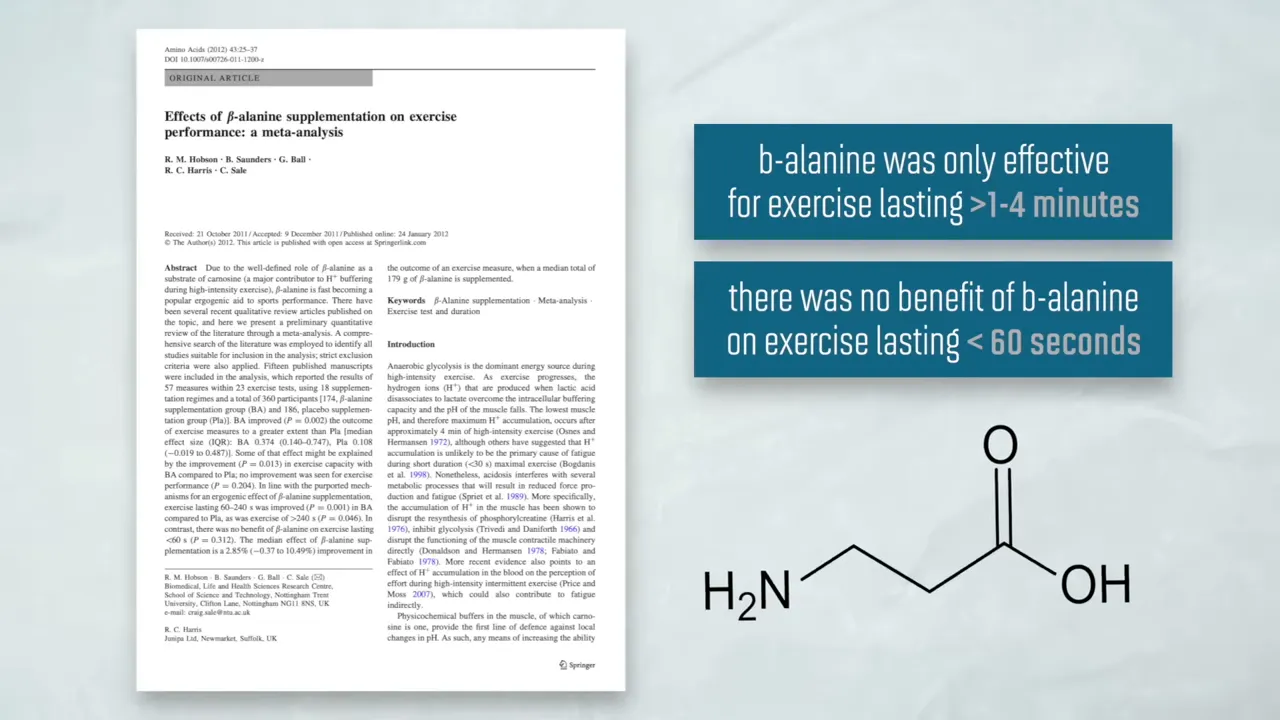
Rep count is only an approximation of duration because tempo and exercise selection affect how long a set takes. Still, conventional sets below roughly 20 to 30 reps are unlikely to be the best setting for beta-alanine's benefits.
It may make more sense for:
- Sustained, high-intensity efforts lasting around one to four minutes.
- Very high-repetition sets.
- Circuit-style workouts combining resistance exercise and cardiovascular demands.
For someone mainly doing conventional hypertrophy work, much of it around six to 15 reps, beta-alanine would not be a priority. Its effectiveness in one type of exercise does not establish that it will improve muscle growth in another.
Give Your Training the Credit
The common thread is not that every supplement is useless. It is that marketing frequently outruns the evidence, and small or context-specific effects get presented as major muscle-building advantages.
Testosterone boosters generally underdeliver. Turkesterone came with both an evidence gap and quality-control concerns. BCAAs are usually unnecessary when protein intake is adequate. Fat burners offer little compared with diet and exercise. Beta-alanine has a legitimate role, but that role is not a great match for most conventional lifting sets.
Train hard, eat appropriately, get enough protein, and take recovery seriously. If you are making progress while taking a flashy new supplement, do not automatically give the bottle the credit. Your consistency is probably doing far more of the work.
For a complete nutrition resource, my Ultimate Guide to Body Recomposition includes more than 250 pages covering calories, protein, cardio, supplements, sleep, and sample meal plans, including the supplements I do recommend.
|


