Some nutrition mistakes are almost a rite of passage in the gym. You eat far more than you need because you want to get big. You expect a supplement to transform your physique. You push protein higher and higher, then stress over whether you’re eating often enough.
I’ve made these mistakes myself. And I wish I’d understood them when I started lifting, because getting nutrition right doesn’t have to involve so many unnecessary challenges.
The common thread is simple: more isn’t always better. More calories, more supplements, more protein, and more meals all have limits to what they can accomplish. Understanding those limits can help you make better gains with a diet that’s easier to sustain.
Key Takeaways
- A larger calorie surplus can add substantially more fat without substantially increasing muscle growth.
- Creatine, caffeine, and protein powder can help, but their benefits deserve realistic expectations.
- Aim for sufficient protein rather than assuming ever-higher intakes will produce more muscle.
- Choose meal frequency for adherence, with three to six protein-containing meals a sensible muscle-building target.
Table of Contents
- 1. Thinking You Can Force-Feed Muscle Growth
- 2. Overestimating What Supplements Will Do
- 3. Thinking You Need a Super-High-Protein Diet
- 4. Misunderstanding Meal Frequency
- Build Your Nutrition Plan Around the Fundamentals
1. Thinking You Can Force-Feed Muscle Growth
It’s easy to see a professional bodybuilder eating 5,000-plus calories per day and conclude that you need to eat huge amounts of food to build huge amounts of muscle.
There may be a kernel of truth to “eat big to get big” for some lifters. But professional bodybuilding anecdotes aren’t a reliable way to determine your own calorie needs. Those athletes often have exceptional genetics, a decade or more of training behind them, and substantial anabolic steroid use. You can’t isolate their food intake from everything else contributing to their results.
More importantly, overfeeding research shows that a large calorie surplus can produce disproportionately more fat gain, even when people are lifting weights.
What Happens When You Bulk More Aggressively?
A 2013 study by Garthe and colleagues divided 47 elite athletes into two groups. One group ate a relatively large calorie surplus, while the other ate a smaller surplus. On average, the larger-surplus group consumed 621 more calories per day.
Both groups followed the same resistance-training program for 10 weeks. At the end:
- The larger-surplus group gained more total body weight.
- They gained slightly more lean mass, but the difference wasn’t statistically significant.
- They gained substantially more fat.
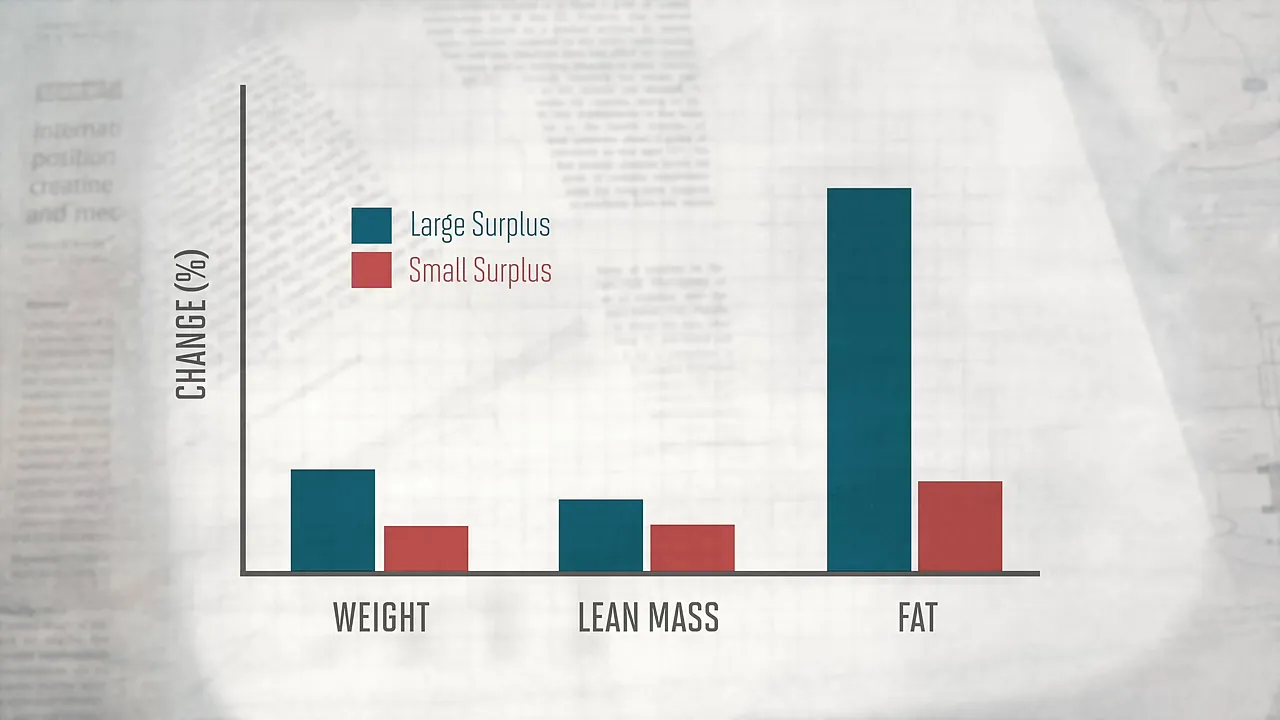
A later 2019 study reported a similar basic pattern. Extra calories didn’t translate into a proportionate increase in muscle growth.
This is why nutrition is often described as having a permissive role in building muscle. Your diet supplies what’s needed for growth, but training provides the stimulus.
Think of muscle building like constructing a building. Your training program is the blueprint and construction crew. Nutrition provides the building materials. Delivering far more materials than the crew can use doesn’t make construction happen infinitely faster. The excess just piles up. In the body, that excess energy can become stored fat.
Choose a Calorie Target That Fits Your Goal
Your maintenance calories are the amount you need to maintain your body weight. From there, I’d generally choose among these approaches:
- For a leaner bulk: Eat about 5 to 10 percent above maintenance.
- For a more aggressive bulk: Eat about 10 to 20 percent above maintenance, accepting more fat gain.
- To prioritize fat loss while attempting to build muscle: Use a slight calorie deficit.
That doesn’t mean an aggressive bulk is automatically a bad decision. In my coaching experience, more aggressive bulking can support greater strength gains over the long term. It can also help you achieve that bigger, “bear mode” look if that’s what you want.
But that’s a trade-off, not free muscle. More fat gained now can make your next cut more difficult. For most people I’ve coached, pushing the surplus very high simply hasn’t been worth it.
2. Overestimating What Supplements Will Do
Some supplements work. Creatine, caffeine, and protein powder are at the top of my shortlist. I personally use all three, and I think they can be worthwhile for serious lifters who have room in their budget.
But even within the science-based lifting community, I think people sometimes overestimate how much muscle these supplements will actually add.
Creatine: Effective, but Not a Dramatic Transformation
Creatine is one of the most extensively researched and effective sports supplements available. The problem is that hearing that repeatedly can make a newer lifter expect a steroid-like boost.
The research gives us a more modest picture. Studies discussed here suggest roughly 2 to 3 pounds of additional lean mass compared with placebo:
- An eight-week resistance-training study found about 1.1 kilograms, or roughly 2.4 pounds, more lean mass in the creatine group.
- A meta-analysis of 22 studies in older adults found about 1.4 kilograms, or roughly 3 pounds, more lean mass with creatine. The studies ranged from seven weeks to a year.
Those are meaningful differences. Given the relatively low cost of basic creatine monohydrate, I think it’s worth taking. But a few pounds of additional lean mass is a very different expectation from the much larger changes associated with anabolic steroid use.
Creatine works. It just doesn’t replace years of productive training.
Caffeine: Better Performance Doesn’t Guarantee Huge Muscle Gains
Caffeine has substantial research supporting its effects on strength, power, and muscular endurance. A review of caffeine and exercise performance provides useful context for those benefits.
I find that caffeine gives me a mental boost and often helps me have better workouts. Still, the evidence is less exciting when the question is specifically how much additional muscle caffeine helps you build.
There’s also an important distinction between a performance effect and a behavioral effect. If pre-workout caffeine is what gets you off the couch and into the gym, its indirect impact could be substantial. If you’re already training consistently, the extra muscle attributable to caffeine alone probably won’t be enormous.
Protein Powder: Convenient Food, Not Magic
Protein powder can make hitting your daily protein target much easier. That convenience is its main selling point.
If you already get enough protein from food, adding a shake on top won’t automatically produce more gains. It’s another way to get high-quality protein, not a separate muscle-building requirement.
The right question isn’t “Am I taking protein powder?” It’s “Am I getting enough protein overall?” As you move beyond these three supplements, the case for additional muscle-building benefits generally becomes less promising.
3. Thinking You Need a Super-High-Protein Diet
I used to recommend somewhat higher protein intakes than I do now. I’ve adjusted that position as the research has developed.
The intuition behind extremely high protein intake is understandable: muscle contains protein, so eating more protein should mean building more muscle. But that relationship doesn’t keep increasing indefinitely.
Eating protein causes relatively short-lived increases in muscle protein synthesis. Resistance training produces a much more prolonged elevation. Both matter, but piling on protein doesn’t substitute for the training stimulus that drives new growth.
How Much Protein Should You Eat?
For building muscle in a calorie surplus, my recommended daily range is:
- 0.7 to 1 gram per pound of body weight.
- 1.6 to 2.2 grams per kilogram of body weight.
For most people, I’d choose a target around the middle of that range. Going above it isn’t expected to produce additional gains.
When you’re in a calorie deficit, shifting protein slightly higher can help protect muscle mass and, in some circumstances, support muscle gain:
- 0.8 to 1.2 grams per pound of body weight per day.
- Approximately 1.8 to 2.7 grams per kilogram per day.
You don’t need to default to the upper limit. During my own cut, I was eating about 150 grams of protein at 165 pounds of body weight. That’s roughly 0.9 grams per pound, comfortably within the range without pushing it to the maximum.
I generally reserve the upper end for someone who is already very lean and at a particularly high risk of muscle loss.
The Protein Target Isn’t an All-or-Nothing Threshold
A systematic review and meta-analysis by Morton and colleagues found that gains tended to increase with protein intake up to a breakpoint around 0.7 grams per pound per day. Beyond that point, the average relationship largely leveled off.
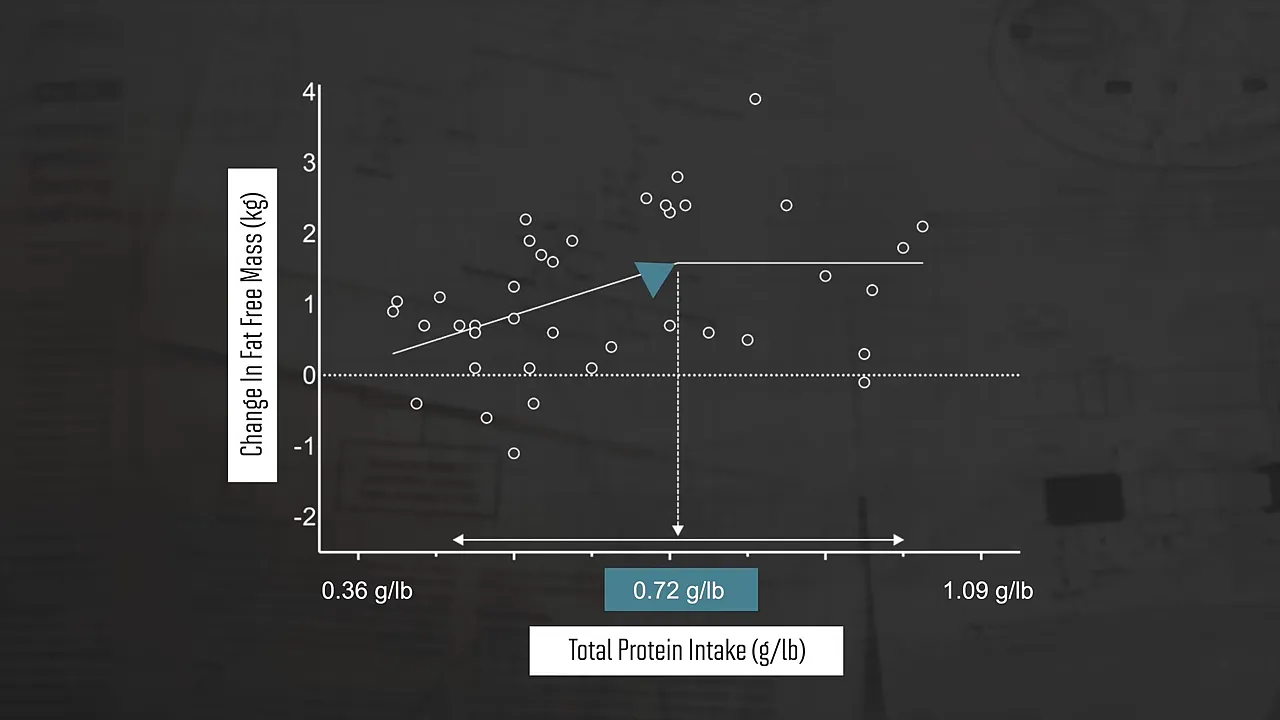
That doesn’t mean muscle growth suddenly becomes impossible below 0.7 grams per pound. Someone eating around 0.5 grams per pound can still build muscle, even if that intake may not maximize their rate of progress.
If a higher-protein diet is too expensive or simply doesn’t suit you, don’t assume your training is wasted. An optimal target is not the same as a minimum requirement for making any progress. And the amount needed to optimize gains is still lower than many traditional bodybuilding recommendations suggest.
4. Misunderstanding Meal Frequency
How many meals should you eat each day? For fat loss, the answer is largely whichever pattern makes it easiest to manage calories and stick to your diet.
That isn’t quite the same as saying meal frequency never matters. It can matter a lot to your hunger, energy, and consistency. It just doesn’t have the magical metabolic effects people often claim.
For Fat Loss, Prioritize the Pattern You Can Sustain
Some people find that one or two larger meals within a restricted eating window make it easier to reduce their daily calorie intake. For them, intermittent fasting can be a useful structure.
Other people feel worse with a short eating window. They may have less energy or find their hunger harder to manage. Four, five, or six smaller meals may work much better for them.
When calories and protein are matched, research doesn’t show a consistent fat-loss advantage for one meal frequency over another. A systematic review of meal frequency helps put those claims into perspective.
So there’s no need to grind through six to eight meals because you think it speeds up your metabolism. It doesn’t. And there’s no need to struggle with intermittent fasting because you think it specifically burns more belly fat. It doesn’t.
Choose your meal schedule for adherence, not for a supposed fat-burning advantage.
For Muscle Growth, Three to Six Protein-Containing Meals Is a Sensible Target
Meal frequency may have a small effect on muscle growth, but probably less than many lifters assume.
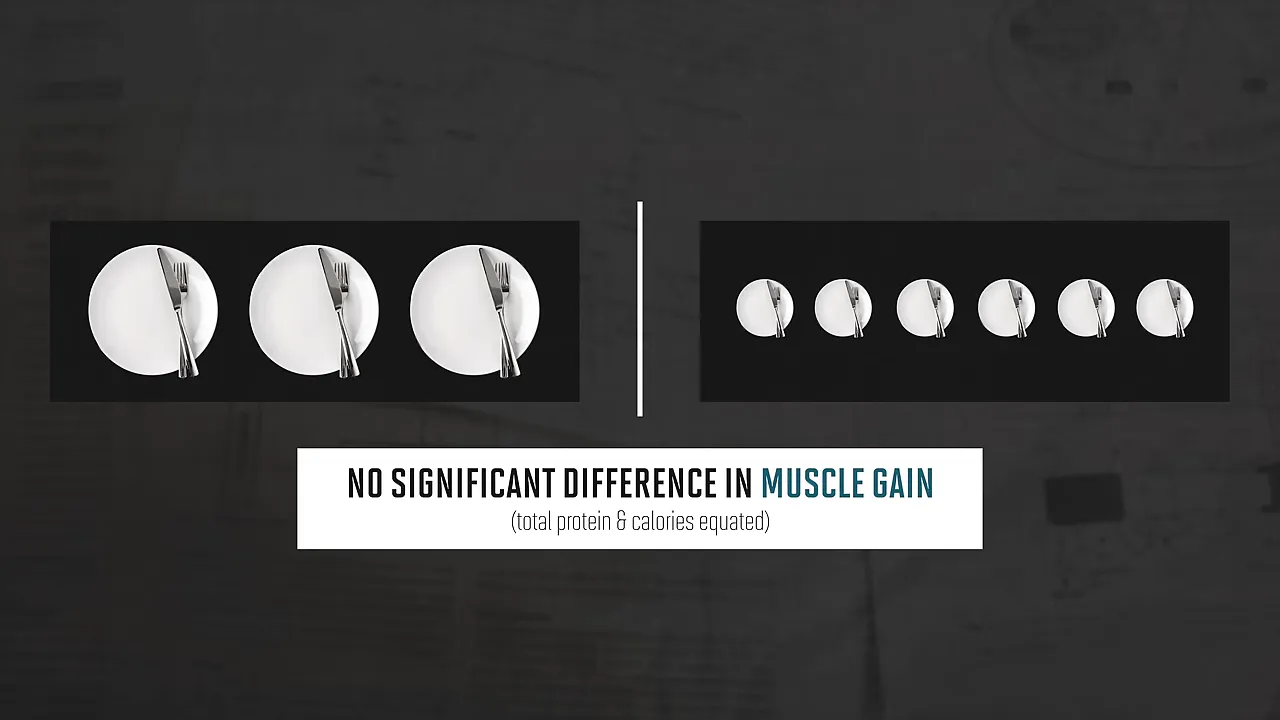
A 2021 study comparing three and six meals per day found no significant difference in muscle gain. That supports a fairly flexible approach within that range.
A 2020 protein-distribution study suggested a possible advantage to spreading protein across three meals rather than concentrating it into two. The difference in muscle growth had a fairly large effect size, but it did not reach statistical significance, so I wouldn’t treat it as definitive.
My practical recommendation is:
- For fat loss: Anywhere from one to six meals per day can work.
- For maximizing muscle growth: Three to six protein-containing meals per day is probably a slightly better bet than just one or two.
The lower-frequency group still made gains. This is a potential refinement, not a reason to believe your entire diet is failing because you only ate twice.
Build Your Nutrition Plan Around the Fundamentals
Effective bodybuilding nutrition isn’t about force-feeding calories, finding a magic supplement, eating as much protein as possible, or following a perfect meal schedule.
The two biggest priorities are consistently hitting a calorie target appropriate for your goal and eating enough protein to support muscle mass. Supplements and meal distribution can support that foundation, but they shouldn’t distract from it.
Your calorie and macronutrient needs can also change as your training habits, body composition, and energy expenditure change. A useful nutrition plan needs feedback and adjustment rather than a target you set once and follow forever.
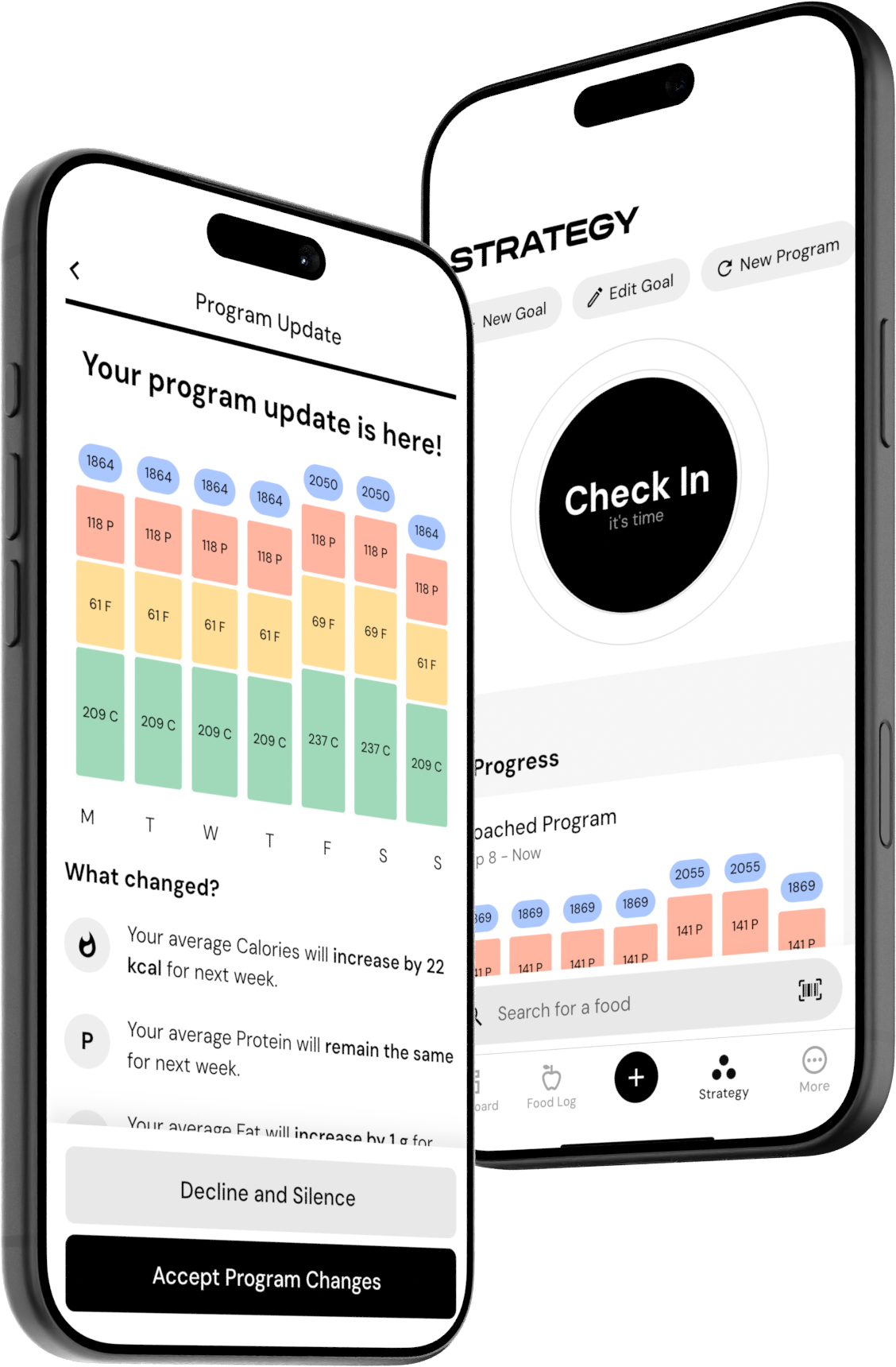
That’s part of why I helped develop MacroFactor, a nutrition app I co-own. It uses your individual response to your plan, a weight-trend tool, and weekly check-ins to guide calorie and macronutrient adjustments. The goal is to make those decisions less confusing, whether you’re trying to avoid turning a cut into a crash diet or a controlled bulk into excessive weight gain.
Its Facebook group and subreddit also provide places to ask questions, share updates and recipes, and find accountability. But whichever tools you use, the principle stays the same: give your training enough nutritional support, assess your progress, and adjust without assuming that more is always better.
|