Cardio can help you lose fat, improve your health, and make your lifting sessions feel a lot less brutal. But it can also become a huge time investment that delivers less fat loss than you expected, especially if you use it to compensate for your diet.
I’m a big fan of cardio in the right context. The goal isn’t to avoid it. It’s to get the benefits without setting unrealistic expectations or compromising your weight training.
That means understanding what cardio can actually do for fat loss, how to schedule it, and how much you can recover from.
Key Takeaways
- Use cardio to supplement a calorie-controlled diet rather than drive fat loss on its own.
- Schedule demanding cardio after lifting or separately to limit interference with strength training.
- Match cardio intensity and volume to your recovery capacity, lifestyle, and preferences.
- Fasted cardio has no established fat loss advantage over exercising after eating.
Table of Contents
- Why Cardio Still Deserves a Place in Your Routine
- Mistake 1: Expecting Cardio to Be as Effective as Diet for Fat Loss
- Mistake 2: Timing Cardio Poorly Around Weight Training
- Mistake 3: Falling Into the High-Intensity Trap
- Mistake 4: Doing Too Much Cardio Overall
- Mistake 5: Banking on Fasted Cardio for Extra Fat Loss
- How Much Cardio Should You Do for Fat Loss?
- A Note on Building Creative Skills
Why Cardio Still Deserves a Place in Your Routine
Before getting into the mistakes, it’s worth separating cardio’s value for health from its usefulness as a fat loss tool.
Cardiorespiratory fitness is essentially your body’s ability to deliver oxygen to your muscles when they need it. It’s also a major predictor of health outcomes. A 2009 meta-analysis on cardiorespiratory fitness found that higher fitness was associated with lower risks of all-cause mortality and coronary heart disease or cardiovascular disease.
Better cardio can also improve your work capacity and recovery between sets. Think about three sets of eight on the squat. If your conditioning is poor, you might need what feels like an entire afternoon between sets. With better conditioning, getting through that same training volume can become much more manageable.
Finally, physical activity matters after a diet ends. Research on long-term weight maintenance shows that people who stay more active tend to be more successful at keeping lost weight off.
So cardio has plenty going for it. The problems start when we ask it to do something it isn’t particularly good at.
Mistake 1: Expecting Cardio to Be as Effective as Diet for Fat Loss
Cardio should assist your diet, not replace it as the main driver of fat loss.
At the most fundamental level, fat loss depends on the difference between the calories you consume and the calories you expend. Cardio increases expenditure, but burning calories takes much more effort than eating them.
For someone weighing 170 pounds, or about 77 kilograms, burning 1,000 calories could take roughly three hours of brisk walking. Eating 1,000 calories can happen in minutes, or even less if you really try.
Fitness model Steve Cook illustrated this imbalance when he attempted to burn 10,000 calories in a day in response to the 10,000-calorie food challenge. Despite being extremely fit and spending much of the day exercising, he finished at just over 7,000 calories burned, exhausted and aching. It’s an extreme example, but the lesson is pretty straightforward: trying to out-train a high-calorie diet is a losing strategy.
Why the calorie math often overestimates weight loss
There’s another complication. When people add cardio without deliberately changing their diets, the resulting weight loss can be substantially less than the exercise calorie totals would suggest.
Research discussed in this review of exercise and weight loss compensation suggests that average weight loss may amount to only about 20% to 50% of what a simple calculation predicts.
For example, suppose you expend an additional 2,500 calories over a week through cardio, perhaps through five hour-long treadmill walks. Basic calorie math might predict about 0.7 pounds of weight loss. Applying that research estimate gives only about 0.14 to 0.36 pounds.
That isn’t a precise forecast for every person. It illustrates why adding up exercise calories doesn’t always tell you how much weight you’ll actually lose.
Two forms of compensation help explain the gap:
- Compensatory eating: Adding cardio can lead you to eat more without realizing it, reducing the deficit you created.
- Reduced energy expenditure elsewhere: Your body may conserve energy outside your workouts, potentially through less spontaneous daily movement.
That second point includes NEAT, or non-exercise activity thermogenesis. This is the energy you expend through activities that aren’t formal exercise: fidgeting, moving around at your desk, carrying groceries, and similar everyday tasks.
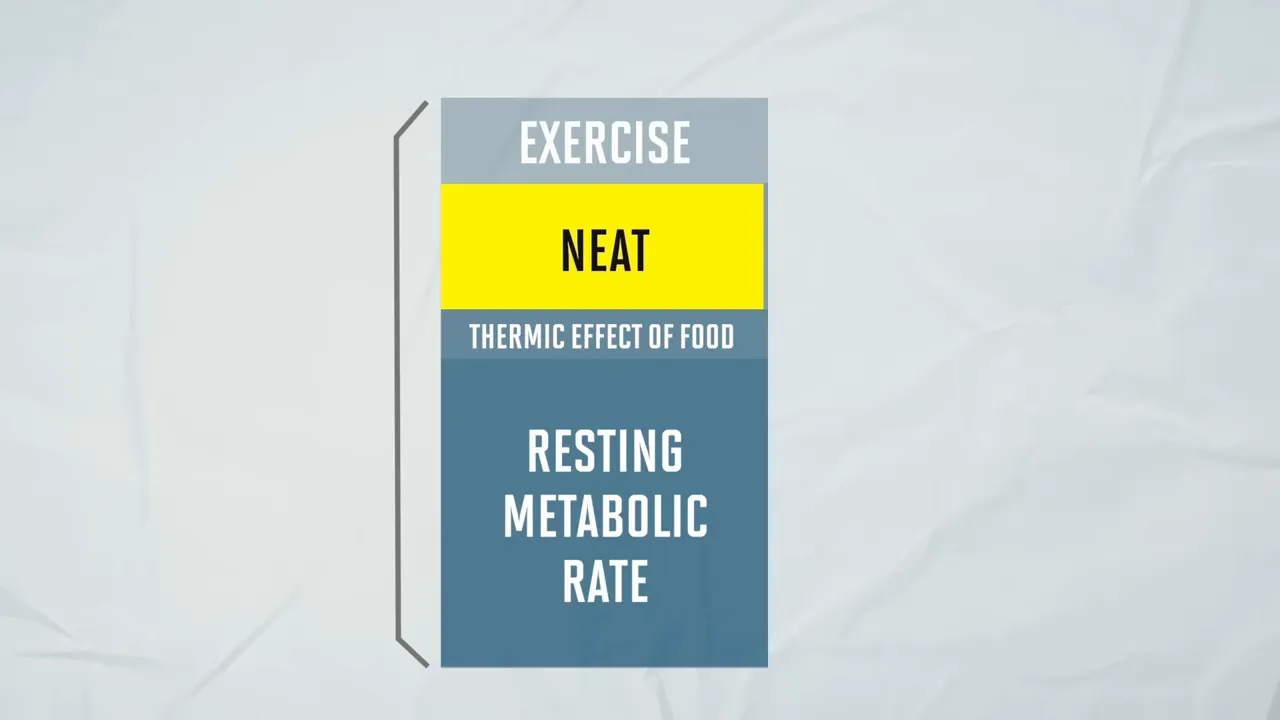
If adding exercise leaves you moving less during the rest of the day, the net increase in calorie expenditure becomes smaller than the workout total suggests. The exact contribution of each metabolic component isn’t perfectly clear, but reduced NEAT is one plausible contributor.
This doesn’t mean cardio makes you gain fat or that compensation inevitably cancels out your workout. If you’re making an honest effort to regulate your food intake, completely eating back the exercise expenditure is less likely. And reductions in NEAT aren’t a reason to think cardio itself will cause weight gain.
The practical point is simply that relying more and more on cardio can produce diminishing returns. Build your fat loss plan around a manageable diet, then use cardio as a supplemental tool.
Mistake 2: Timing Cardio Poorly Around Weight Training
If maintaining strength and muscle is a priority, you need to consider whether your cardio is interfering with your lifting.
This is often called the interference effect. The idea that cardio automatically kills your gains is overblown, but endurance training and resistance training can conflict under some conditions. Fatigue and competing training adaptations make the way you combine them important.
The simplest adjustment is to lift first and do your formal cardio afterward.
A short warm-up is different. I’ll often do five to 10 minutes on the StairMaster or another cardio machine before lifting. A brief general warm-up can help subsequent performance. That isn’t the same as doing an exhausting endurance session before your squats.
How much separation do you need?
A 2017 systematic review and meta-analysis of concurrent training, which included 13 studies, found worse improvements in one-rep-max strength when endurance exercise immediately preceded resistance training.
The authors also noted that strength performance can remain compromised for at least six to eight hours after endurance training. Of course, the size of that effect depends on how long and how hard the cardio session was. An easy walk isn’t equivalent to a hard endurance workout.
When realistic, the authors suggested separating endurance and resistance sessions by 24 hours as a strategy to reduce acute interference and optimize adaptations.
Training experience matters, too. A 2021 meta-analysis examining training status found no significant impairment in strength development among untrained and moderately trained people, but did find impairment among well-trained individuals.
- For convenience: Combine lifting and cardio in one session, but do the cardio last.
- For advanced lifters: Consider more separation, such as lifting in the morning and doing cardio in the evening.
- When scheduling allows: Put demanding cardio and lifting on separate days.
You don’t need a perfect schedule to make progress. You do want your cardio placement to support, rather than repeatedly undermine, your best lifting sessions.
Mistake 3: Falling Into the High-Intensity Trap
Cardio is often divided into two broad categories:
- Low-intensity steady-state cardio, or LISS: Continuous activity at a relatively easy, steady pace, such as walking on an incline treadmill. Moderate-intensity steady-state cardio is sometimes called MISS.
- High-intensity interval training, or HIIT: Short bursts of very high effort alternated with easier recovery periods.
A typical HIIT setup might involve 20 to 30 seconds of very hard work, followed by two to three minutes at an easy pace, repeated for five or six intervals.
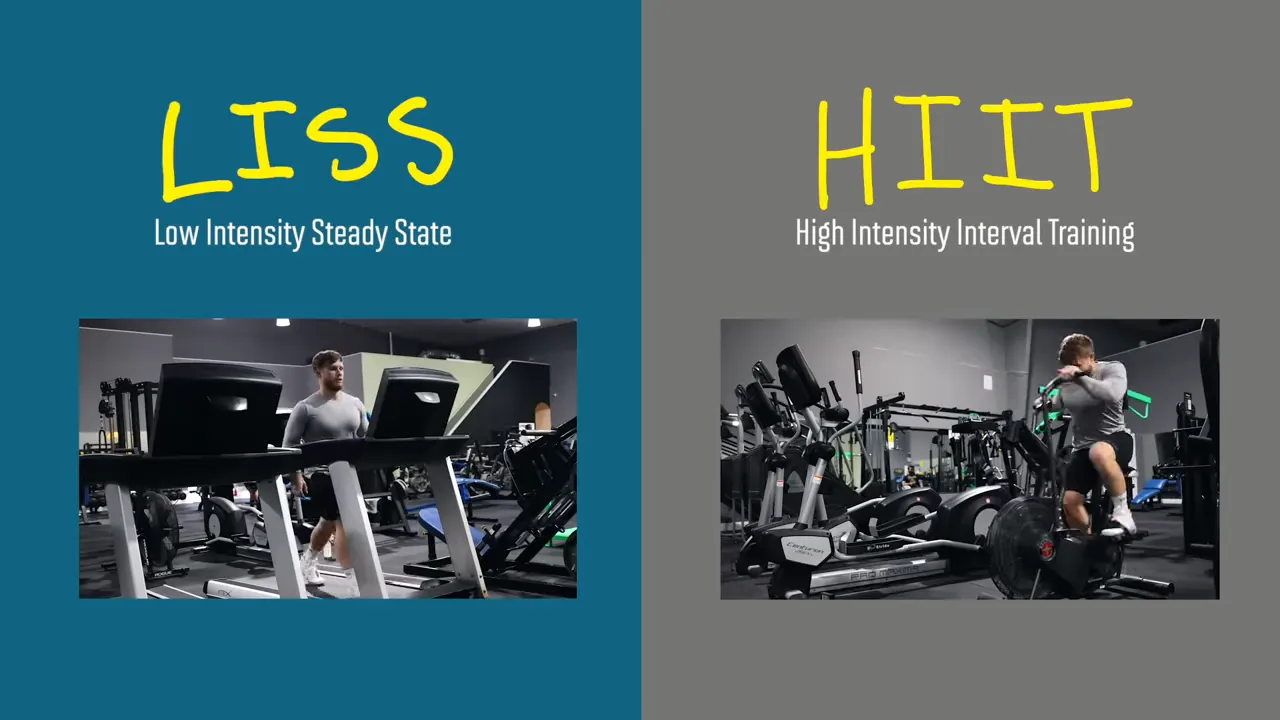
The mistake is assuming that the harder option must be better for fat loss.
The afterburn effect is real, but often exaggerated
After exercise, energy expenditure can remain elevated during recovery. This is known as excess post-exercise oxygen consumption, or EPOC, and it tends to be higher after harder exercise.
But a real physiological effect doesn’t automatically translate into a major practical advantage.
One example discussed in this explanation of EPOC research involved 80 minutes of cardio at about 80% of maximum heart rate. The additional energy expenditure afterward was only around 80 calories.
A systematic review comparing interval and continuous training also concluded that the afterburn effect was unlikely to explain any apparent advantage in fat loss.
HIIT saves time, but costs more recovery
HIIT does have legitimate advantages. Depending on the protocol, it can produce comparable calorie expenditure in substantially less time, sometimes around 40% of the time commitment. Some people also find intervals much less boring than steady-state cardio. Enjoyment is a perfectly sensible reason to choose them.
The trade-off is recovery. HIIT tends to create more fatigue and can interfere more with weight training.
It also overlaps somewhat with the effort pattern of lifting. During a moderate- to high-rep set, you might work hard for 20 to 30 seconds, rest for two or three minutes, and repeat. That doesn’t make lifting and HIIT identical, but it does reduce how much unique value another hard interval session might add.
I don’t fully agree with the claim that lifting gives you all the benefits of HIIT. In my experience, intervals generally raise heart rate more and create a greater cardiovascular challenge than typical weight training. Still, the overlap is worth considering when you’re managing fatigue.
If you use HIIT, use it selectively. In my coaching experience, I rarely prescribe more than one or two HIIT sessions per week, and often include it only when the person prefers it.
Mistake 4: Doing Too Much Cardio Overall
Even with sensible timing and intensity, cardio volume can become excessive relative to your ability to recover.
A meta-analysis on concurrent endurance and resistance training found a trend toward smaller muscle growth adaptations as cardio frequency increased into the three- to four-day-per-week range. It also reported negative relationships between endurance session duration and improvements in hypertrophy, strength, and power, with more interference as sessions extended beyond roughly 30 minutes.
Those findings need context. The frequency relationship wasn’t especially strong, and neither number should be treated as a universal cutoff. Your muscle isn’t going to melt away because you did cardio four times this week.
More importantly, walking your dog and running repeated all-out sprints are not comparable recovery demands.
Cardio frequency and duration only make sense alongside intensity, exercise mode, and your lifting workload. Rather than enforcing an arbitrary limit, monitor whether your strength and recovery remain compatible with your goals.
Mistake 5: Banking on Fasted Cardio for Extra Fat Loss
Fasted cardio can increase the amount of fat you burn during the session. That doesn’t necessarily mean it increases the amount of body fat you lose over time.
This is the key distinction: burning fat for fuel during a workout is not the same as reducing stored body fat over weeks and months.
A 2011 study found that greater fat use during the exercise session could be offset by lower fat use over the following 24 hours. Looking beyond individual workouts, a systematic review of overnight-fasted exercise found no meaningful advantage for weight loss or changes in lean and fat mass.
A sustained calorie deficit matters much more than whether you ate before getting on the treadmill.
What about very lean physique athletes?
A review by Escalante and Barakat considered fasted cardio specifically for competitive physique athletes trying to reach very low body fat levels.
The authors acknowledged that there was no conclusive evidence showing fasted cardio was superior. However, because direct research in physique competitors was lacking, they left open the possibility that circumstances near the final stages of contest preparation could differ.
They also discussed protein-enhanced cardio, involving protein before the session, as a potentially useful option in some advanced situations. Around 25 grams beforehand was one practical amount discussed. This remains a nuance, not an established fat loss advantage.
For most people, the decision is much simpler: do cardio at the time you can stick with most consistently. If that’s before breakfast, fine. If it’s after a meal, that’s fine, too.
How Much Cardio Should You Do for Fat Loss?
My practical approach is to add cardio as needed to support the desired rate of weight loss while keeping lifting performance and recovery in mind.
A general target is to lose around 0.5% to 1% of body weight per week. If diet and weight training alone allow you to do that, formal cardio isn’t required specifically for fat loss.
Still, I almost always include some activity because it can allow slightly higher calorie intake, improve work capacity when kept manageable, and establish habits that help with weight maintenance afterward.
Choose volume based on your lifestyle
Someone with a desk job may need a very different cardio prescription from someone doing strenuous physical work all day.
Illustrative estimates of occupational NEAT range from around 300 calories per day for chair-bound work to as much as 2,300 calories per day for strenuous work such as agriculture. These are not total daily calorie expenditure figures or precise predictions for every worker. They show how widely activity outside the gym can vary.
Depending on the person, my prescription might range from zero to five low-intensity steady-state sessions per week, lasting about 20 to 40 minutes each. Throughout that process, I’m monitoring strength and recovery in the gym.
Use these ranges as options, not quotas
- HIIT, if included: Generally one or two sessions per week, lasting roughly 15 to 30 minutes per session.
- Low-intensity cardio: Add as needed, potentially zero to five sessions per week of 20 to 40 minutes.
- Timing: Place formal cardio after lifting or at a separate time, especially when the cardio is demanding.
- Adjustment: Consider fat loss progress together with lifting performance and recovery, rather than chasing more exercise for its own sake.
Favor lower-impact options, unless you prefer something else
I generally favor walking, cycling, swimming, and the elliptical over higher-impact options such as running on pavement because they tend to be easier to integrate with lifting.
But preference matters. I enjoy basketball, and that enjoyment can justify choosing a more demanding activity. You can balance it by adjusting the other variables: frequency, duration, intensity, and proximity to weight training.
The best cardio plan isn’t the one that burns the most calories in a single session. It’s the one that helps you maintain a manageable deficit, supports your health, and leaves you able to train well consistently.
A Note on Building Creative Skills
Skillshare sponsored this material. When I first started producing educational fitness content, I spent a couple of years struggling to make it engaging. Learning to brainstorm stronger ideas, capture useful supporting footage, set up lighting, and edit in Final Cut Pro made a major difference.
Skillshare offers classes taught by fellow creatives across those skills, as well as photography, business, finance, and lifestyle topics. Marques Brownlee’s course on creating successful YouTube content is one I recommend. The original promotion offered a one-month free trial to the first 1,000 people using the offer link.
|


