After 15 years of natural training, I spent another 365 days pushing for measurable progress. I gained 2.7 pounds of lean mass measured by DEXA, improved my chest, shoulders, and back, and even added some biceps peak measured by ultrasound.
This was the upper body workout I used throughout that year. Seven exercises, a mix of free weights and cables, and a serious commitment to progressive overload. The exercise selection mattered, but so did the details: consistent technique, controlled negatives, and sets that were genuinely hard.
Here is why I chose each movement, how I performed it, and the mistakes I worked to avoid.
Key Takeaways
- Progressive overload is meaningful only when your technique and range of motion stay consistent.
- Combine free-weight compounds with stable isolation exercises rather than relying exclusively on either approach.
- Weighted pull-ups were a major contributor to my back growth during the year.
- Cables and dumbbells produced similar side delt growth, making execution and effort more important than equipment.
Table of Contents
- The Upper Body Workout at a Glance
- 1. Incline Barbell Bench Press: My Main Chest Builder
- 2. Seated Cable Fly: Put the Tension on the Pecs
- 3. Weighted Pull-Ups: The Biggest Contributor to My Back Growth
- 4. High Cable Lateral Raises: Build the Side Delts
- 5. Deficit Pendlay Rows: A Demanding Full-Back Movement
- 6. Cable Overhead Triceps Extensions: My One-Exercise Pick
- 7. Bayesian Cable Curls: My Preferred Biceps Finish
- What Made This Workout Productive
The Upper Body Workout at a Glance
This session was the upper day of my upper/lower/push/pull/legs split, not my entire weekly upper body training. I trained these muscles again on my push and pull days, sometimes with different exercises.
- Incline barbell bench press: 3 sets of 6 to 8 reps.
- Seated cable fly: 2 sets of 10 to 12 reps.
- Weighted pull-up: 3 sets of 6 to 8 reps.
- High cable lateral raise: 2 to 3 hard sets of 8 to 10 reps.
- Deficit Pendlay row: 2 sets of 6 to 8 reps.
- Cable overhead triceps extension: 2 sets of 8 to 10 reps.
- Bayesian cable curl: 2 sets of 8 to 10 reps.
One rule stayed consistent throughout the experiment: I took the last set of each exercise to failure. That describes how I ran this experiment, not a requirement that everyone needs to copy regardless of experience or setup. For heavy barbell pressing, properly positioned safety bars were essential. I did not use assisted reps to keep the bar moving after I could no longer lift it myself.
1. Incline Barbell Bench Press: My Main Chest Builder
If I had to pick the exercise that contributed most to my pec growth this year, it would be the incline barbell bench press.
It primarily trains the chest and front delts, with substantial help from the triceps. The side delts also contribute to stabilizing the bar against forward and backward movement. That was part of my reason for choosing a free barbell rather than a Smith machine.
Why I chose a barbell
Dumbbells are great, but once you get strong enough, they become bulky and awkward to get into position. A barbell makes long-term loading straightforward: you can keep adding small amounts of weight without dealing with increasingly unwieldy dumbbells.
I like machines, too. But I think the trend toward choosing only the most stable machine version of every exercise has gone a little too far. Free-weight compound lifts still have plenty of value, even when muscle growth is the main goal.
Why a 45-degree incline?
A 45-degree incline gives me a time-efficient middle ground between flat pressing and vertical pressing. For this workout, I did not need a separate exercise for each pressing angle.
There is also direct hypertrophy research behind the choice. In a study comparing incline and flat bench pressing, the incline press produced similar growth in the middle and lower pec measurement sites, with greater growth at the upper pec site. That is a good reason to take incline pressing seriously as a chest builder, rather than treating it as an accessory that only trains the upper chest.
The technique cue that helped most
This year, I used a slightly narrower grip. It increased my range of motion and gave the triceps a little more work without taking the chest out of the exercise.
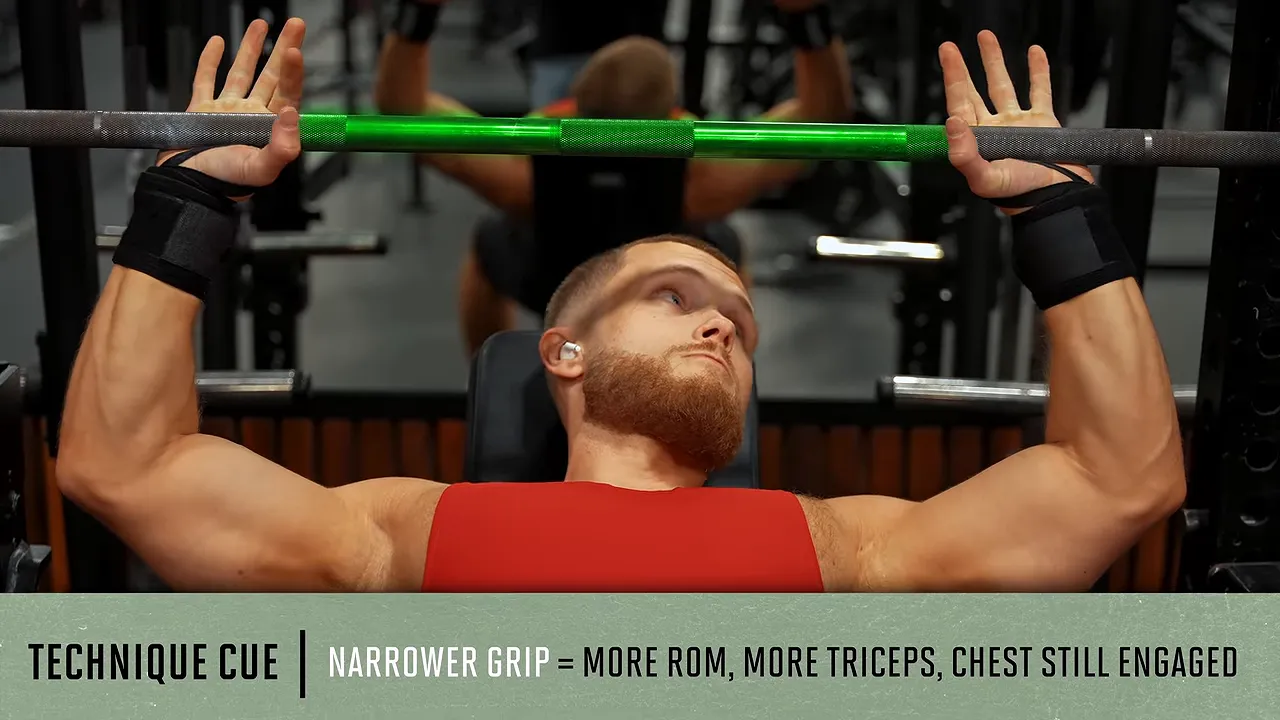
My pressing checklist was simple:
- Lower the bar under control.
- Pause briefly on the chest rather than bouncing.
- Press up and slightly back.
- Keep the same execution as the load increases.
Progressive overload only means something when your technique stays consistent. Adding weight while introducing a bigger bounce is not the same as getting stronger at the movement you started with.
On the final set, I pressed until I could not complete another rep, with the rack safeties positioned to catch the bar. If you intend to train a barbell press to failure, establish a safe way to end the set before you start.
2. Seated Cable Fly: Put the Tension on the Pecs
After the heavy press, I wanted an exercise where I could slow down and focus more directly on the pecs. The seated cable fly also let me move into a deeper chest stretch than I could achieve on the press.
I chose cables over a pec deck because I can usually get a little deeper with this setup. I chose seated over standing because the bench reduces the stabilization demands on my ankles and lower back. Here, the goal was pectoral isolation.
Set up without getting pulled backward
- Position a bench well in front of the cable machine.
- Take both handles and hold them close to your chest.
- Walk forward to the bench.
- Ease into the seat while keeping the handles close.
- Press the handles forward to establish the starting position.
From there, begin with a controlled negative. Open your arms as far as your shoulders comfortably allow, then bring the weight forward using your pecs.
The cue I like is to bring your elbows together, not just your hands. That helps keep the movement focused on the chest instead of turning it into more of a press.
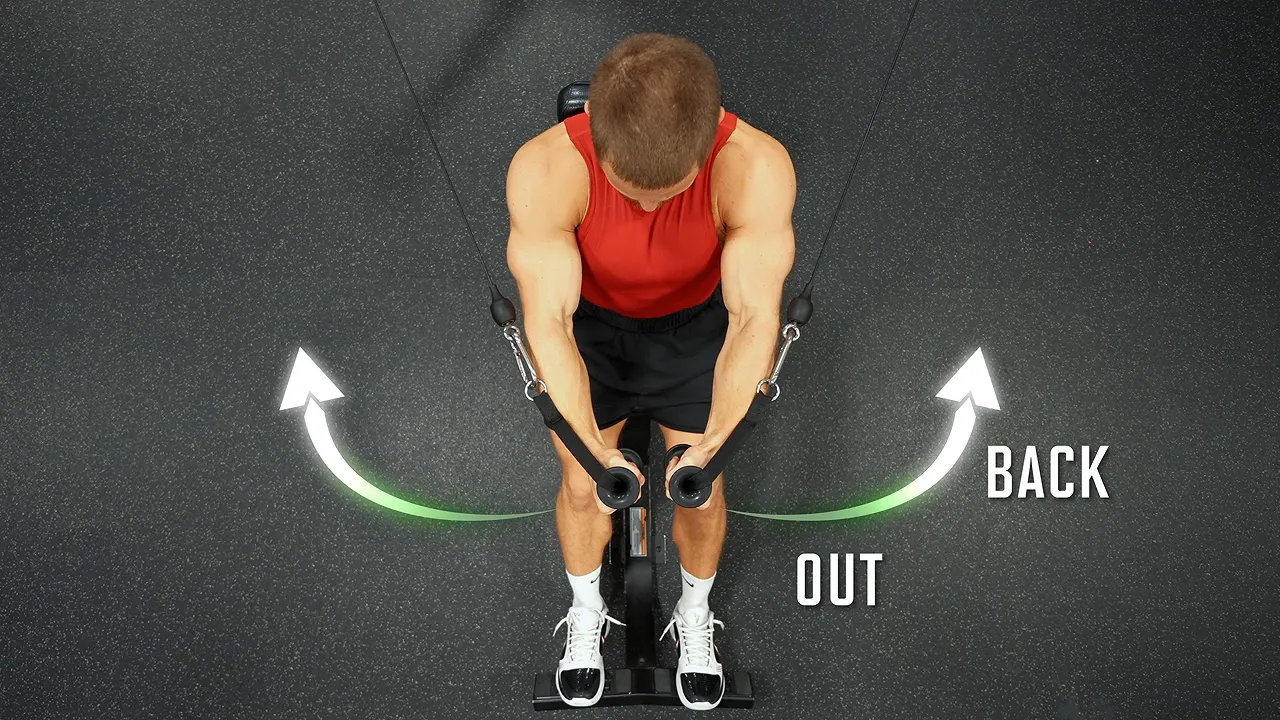
Avoid letting the elbows drop
The most common mistake is allowing the elbows to sink too low. That changes the line of pull and puts the pecs in a less favorable position for this movement.
Keep the elbows up and imagine wrapping your arms around a large tree. On the negative, reverse that motion through a wide arc. Cover space rather than simply moving your hands backward.
3. Weighted Pull-Ups: The Biggest Contributor to My Back Growth
My back probably made the biggest improvement of the year, and I give weighted pull-ups a lot of the credit. After previously ranking them in A tier, I am comfortable moving them into S tier based on how well they worked for me.
Pull-ups train much more than the lats:
- Lats: Help bring the upper arms down through shoulder extension.
- Mid traps and rhomboids: Contribute as the shoulder blades retract.
- Biceps and brachialis: Bend the elbows.
- Core and lower back: Help stabilize the body.
I chose them over pulldowns partly because I wanted to embrace challenging exercises. I also found them easier to standardize as I got stronger. Heavy pulldowns can gradually turn into a lot of rocking back and forth. Weighted pull-ups, especially with a pause at the bottom, made it easier for me to keep that under control.
That does not mean pull-ups are universally better than pulldowns. Both have strengths. Pull-ups were simply a very productive choice for this experiment.
Two cues worth remembering
First, think about bringing your chest toward the bar, rather than doing whatever it takes to sneak your chin over it.
Second, treat your arms as connectors and focus on driving your elbows down and in. Your elbow flexors will still work, but this cue helps direct your intent toward the back.
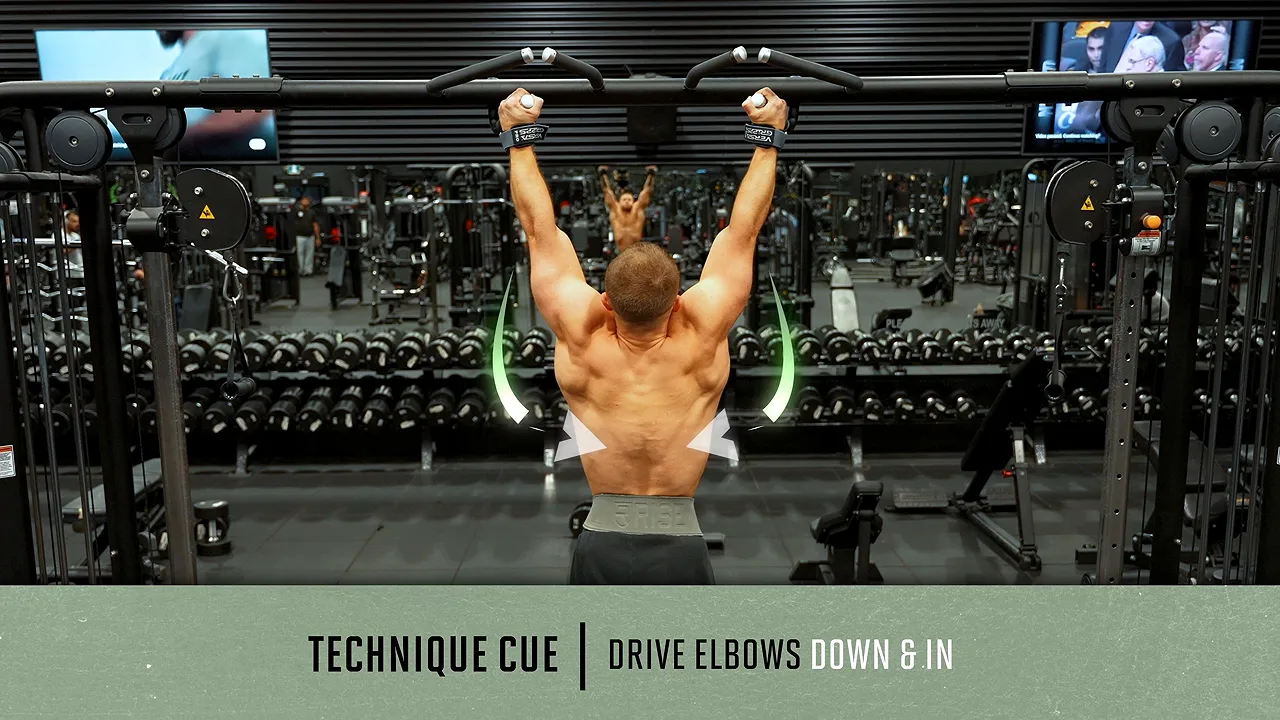
I used liquid chalk and straps so grip strength would not cut the set short. My preferred handles put my hands between a fully pronated wide grip and a neutral grip. That felt comfortable on my shoulders, but all of those grip options can work.
Do not chase the perfect lat sensation
Oddly enough, one mistake is worrying too much about feeling the lats. Pull-ups are a demanding compound exercise. They do not need to produce an amazing isolation-style sensation to be effective.
Pull yourself up, lower under control, and improve over time. I started the experiment doing six reps with 30 pounds added. By the end, I was doing six reps with 60 pounds added. That is the kind of clear progression I wanted.
If weighted pull-ups are not there yet
Start with band-assisted or machine-assisted pull-ups and gradually reduce the assistance. Eccentric-only pull-ups are another useful option: use a box to reach the top position, lower yourself slowly, then reset and repeat.
4. High Cable Lateral Raises: Build the Side Delts
My side delts also improved, and high cable lateral raises were a big part of that. I only did two or three sets of 8 to 10 reps, but I pushed those sets hard.
The side delts are especially important for creating a wider, more tapered physique. When lateral raises are performed well, they let you train those fibers directly.
Why set the pulley higher?
Compared with dumbbells, cables provide resistance at the bottom of the movement, where dumbbell lateral raises offer very little. Raising the pulley also shifts the hardest portion earlier in the range of motion, when the side delt is more stretched.
The key relationship is the angle between your arm and the cable. The rotational demand is greatest when they form a 90-degree angle. With a higher pulley, that happens earlier in the rep.
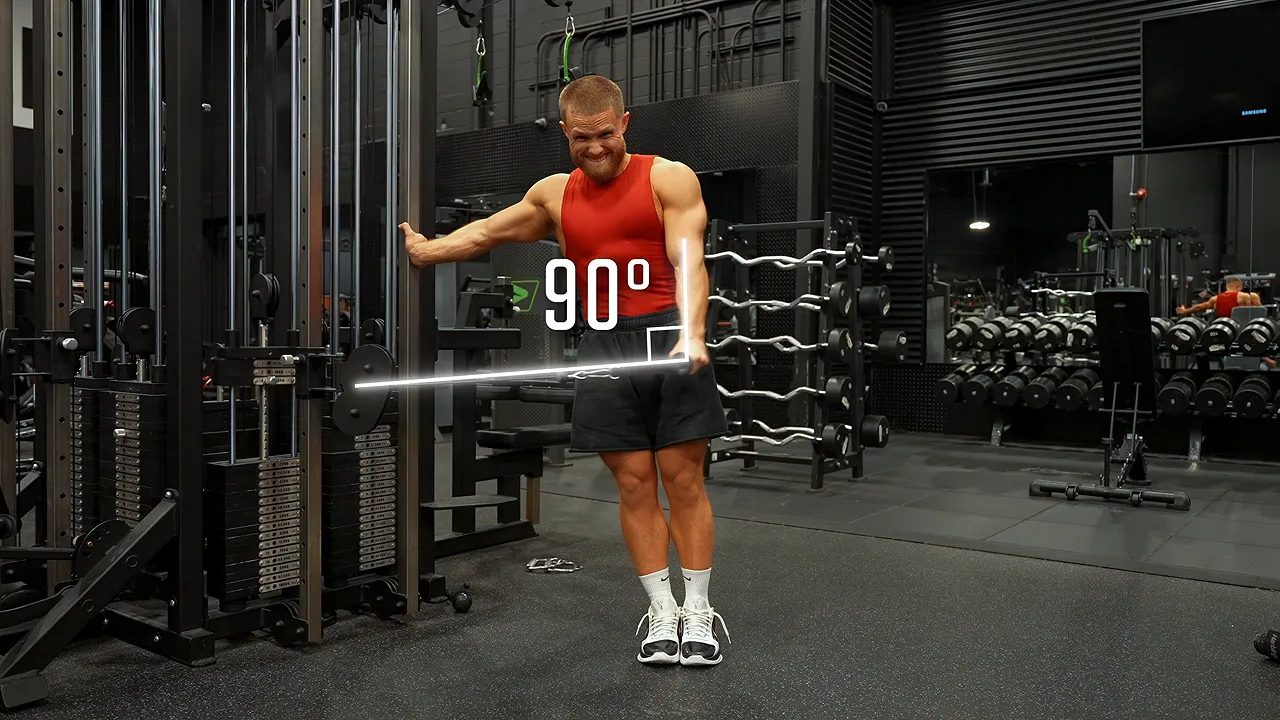
I also sweep the working arm across my body at the bottom to use the extra range of motion cables allow.
Are cables actually better than dumbbells?
A study comparing cable and dumbbell lateral raises had participants train one arm with cables and the other with dumbbells. They trained twice per week, performed five sets per session, and took every set to failure.
After eight weeks, both exercises produced similar side delt growth.
One limitation is that the cable condition stopped with the arm at the side rather than sweeping across the body the way I do. That leaves a question about the potential benefit of the extra range, but it is not evidence that my version is superior.
Based on these results, I doubt cables versus dumbbells is a game changer. I still use cables on upper day and dumbbells on push day. Choose a variation you can perform well, feel in your side delts, and push hard.
Think out, not up
The mistake I see most often is shrugging the weight upward. That shifts more work toward the upper traps instead of keeping the emphasis where I want it.
Think about sweeping the arm outward. If that intention is hard to find, stand beside a wall and gradually press the back of your forearm sideways into it. You should feel your side delt engage. Bring that same outward-pushing intention to your lateral raises.
5. Deficit Pendlay Rows: A Demanding Full-Back Movement
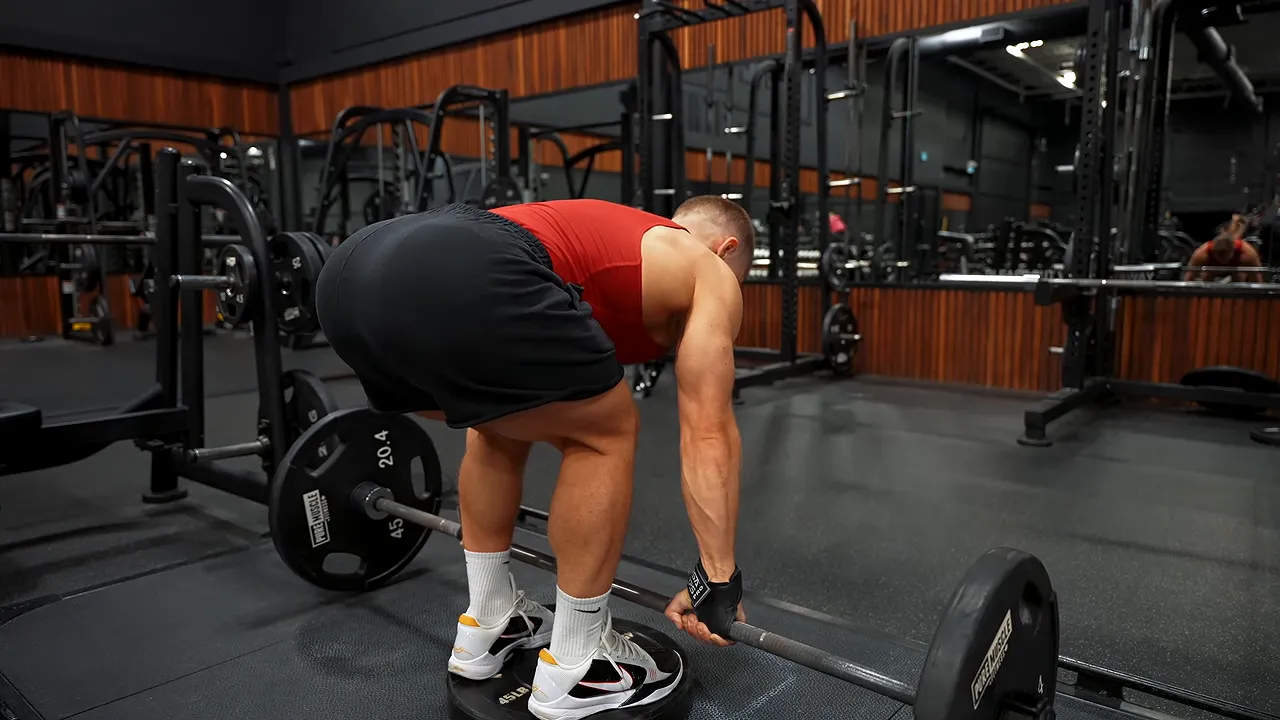
The deficit Pendlay row was another major back builder. It combines rowing with the challenge of holding your torso near horizontal.
The mid traps help retract the shoulder blades, the upper and lower traps contribute to scapular stabilization, and the lats help move the upper arms backward. Meanwhile, the spinal erectors work isometrically to maintain your torso position.
What the deficit changes
I stand on a bumper plate to increase the range of motion. That lets the bar travel farther below my feet and gives me a deeper stretch at the bottom than a floor-level row.
I also modify the usual Pendlay execution for hypertrophy. Rather than pulling explosively and letting the bar drop quickly, I keep the strong upward pull but control the negative.
Keep the torso horizontal
A more upright barbell row is not automatically wrong. It is simply a different execution.
For this exercise, I wanted my torso parallel to the floor so gravity would pull directly against the scapular retractors. That makes the mid traps and rhomboids work hard without needing the heavier loads I might use with a more upright row.
I also used straps, or at least chalk. If grip gives out before the back, it limits what I am trying to accomplish here.
Where I used lengthened partials
On the final set, once I could no longer complete the full range of motion, I added roughly three or four partial reps in the stretched portion.
I still like lengthened partials in selected places, and this is one of them. When I could no longer finish the squeeze at the top, I could still produce controlled movement in the bottom portion. The point was to extend the work there, not to turn the set into uncontrolled torso movement.
6. Cable Overhead Triceps Extensions: My One-Exercise Pick
If I only had time for one direct triceps exercise, I would choose the cable overhead extension.
The research comparison I used to guide this choice found greater growth from overhead extensions than pushdowns: approximately 50% more growth in the long head, 40% more in the lateral and medial heads, and 40% more in the triceps overall.
Those are relative differences between the exercises in that study, not a promise that your triceps will grow by those percentages. Still, they make a compelling case for including an overhead movement.
Fix the setup before the set starts
The biggest mistake often happens before the first rep. Setting the pulley too low can force you to spend a lot of energy twisting and maneuvering the attachment overhead.
Instead:
- Move the pulley higher.
- Squat underneath the attachment.
- Use your legs to help bring the weight into position.
- Take a step or two forward and establish your stance.
That gets me ready to train without wasting energy on an awkward setup.
7. Bayesian Cable Curls: My Preferred Biceps Finish
I finished upper day with Bayesian cable curls, a variation that positions the upper arm behind the torso and loads the biceps in a lengthened position.
That combination of long muscle length and substantial tension in the stretched portion is why I like them. But the newer research deserves a fair reading.
A comparison of Bayesian and preacher curls found trends favoring the Bayesian curl, but no statistically significant difference. The study included only 15 participants and lasted 10 weeks. It may have been too small to detect a meaningful difference, or the exercises may simply produce similar growth.
I still suspect Bayesian curls may have a slight edge based on the biceps growth research as a whole, but that is a preference informed by the evidence, not a settled conclusion.
To cover my bases, I used Bayesian curls on upper day, then preacher curls and hammer curls on pull day. I did not need to declare one curl the winner and abandon everything else.
What Made This Workout Productive
The lesson from this year was not that every exercise needs to be a cable exercise, a machine exercise, or the most stretched variation imaginable.
I used free-weight compounds where I valued overload potential and the broader muscular demands. I used more stable isolation movements where I wanted to focus on a particular muscle. I kept the exercises consistent enough to measure progress, controlled the lowering phase, and pushed the final sets hard.
Most importantly, I did not confuse moving more weight with making progress. The goal was more weight or more reps with the same quality of execution. Going from 30 pounds to 60 pounds added on pull-ups for the same six reps meant something because the movement stayed controlled.
That is the foundation I would keep: choose productive exercises, make your reps repeatable, and give yourself enough time to get meaningfully stronger at them.
|


