The leanest I have ever been was a few weeks before the California Natural Muscle Mayhem, where I won the lightweight class, the overall, and earned my natural bodybuilding pro card. I like how that physique looked. I understand why people want to get shredded.
But getting shredded and staying shredded are very different goals.
When you see fitness influencers maintaining an extremely lean physique year-round, it is tempting to make that your standard. What you cannot see in a photo is how they feel, what they sacrifice, or whether their body responds anything like yours.
There are three harsh realities worth understanding before you chase that look, plus a more practical way to build a lean physique you can actually maintain.
Key Takeaways
- Extreme leanness can look impressive in photos while making you appear smaller in everyday life.
- Getting leaner does not guarantee better body image or greater satisfaction with your physique.
- Contest-level dieting can disrupt hormones, sleep, mood, hunger, and menstrual function.
- Aim for your own sustainable level of leanness rather than copying someone else’s body-fat target.
1. You May Look Bigger in Photos but Smaller Everywhere Else
At very low body fat, you can look your biggest and most muscular under good lighting, while flexing, or during a workout. A good camera helps, too. The extra definition can create an impressive illusion of size.
For the rest of the day, though, you may look smaller and more depleted than you did at a higher body weight.
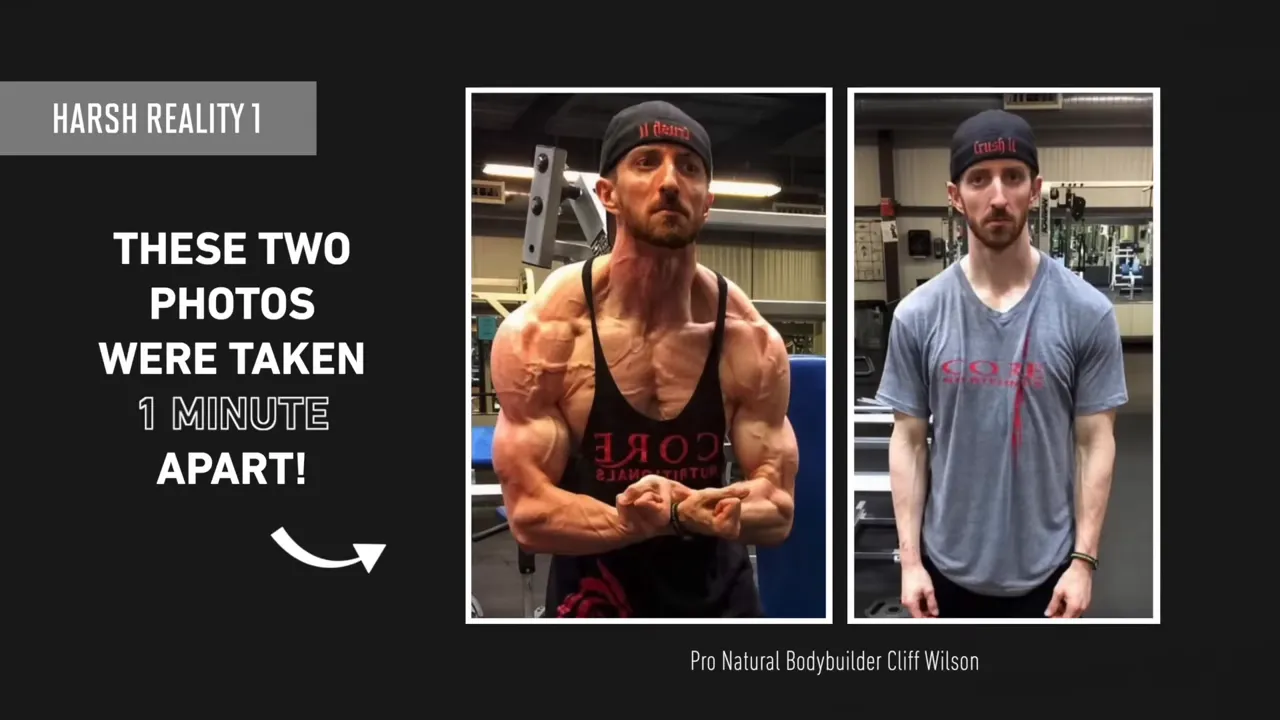
At my leanest, I weighed about 150 pounds, or 68 kilograms, at 5 feet 5 inches tall. In a pose, I looked more jacked than usual. Just walking around, I looked considerably less jacked than usual.
This is the idea behind the informal “natty triangle”. For most people, there is a trade-off among being big, shredded, and natural:
- Shredded and natural: You probably will not look especially big in everyday situations.
- Big and natural: You probably will not maintain competition-level leanness.
- Big and shredded: That combination is much harder to achieve naturally.
This is a rule of thumb, not a scientific test of whether someone uses drugs. Exceptional genetics exist. But for most of us, expecting all three at once is not a realistic starting point.
2. Your Best Physique May Not Come With Your Best Body Image
You might assume that reaching your leanest condition will finally make you happy with your body. In my coaching experience, confidence and body image often improve as people lose fat, but only up to a point.
Once they move beyond what I would call “beach lean” and push toward stage conditioning, that relationship can reverse. Instead of appreciating the definition they have gained, they become increasingly focused on every remaining bit of fat.
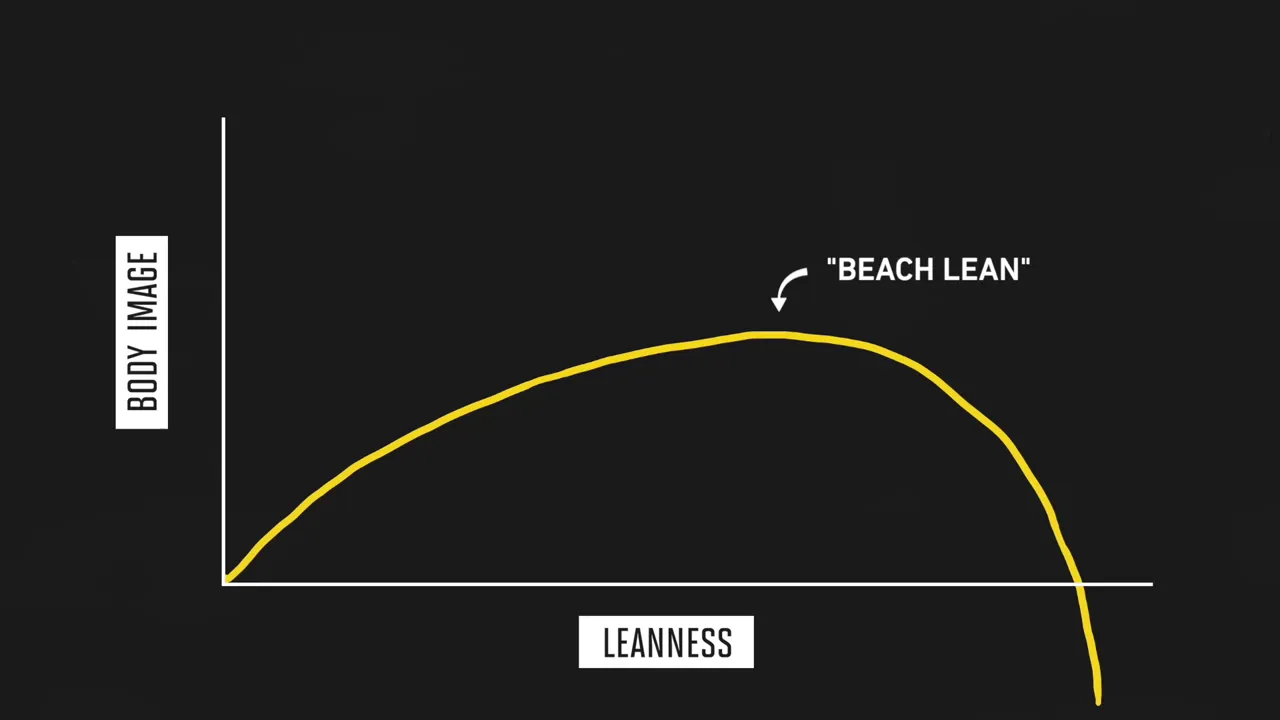
Body-image concerns can become more intense, and it gets harder to assess your own physique objectively. This is not the same as saying everyone who gets shredded develops a clinical body dysmorphic disorder. It is an observation that extreme leanness can come with more scrutiny rather than more satisfaction.
I have experienced that disconnect myself. Looking back at old progress photos, I can recognize how lean I was far more easily than I could at the time.
That is a pretty frustrating outcome: you work incredibly hard to achieve a look, then struggle to appreciate it once you get there.
3. Getting Shredded Can Come With Real Health Costs
Being drug-free does not make extreme contest preparation harmless. Prolonged dieting to very low body fat can affect hormones, hunger, mood, sleep, and reproductive function.
Hormones, hunger, and mood in a natural male bodybuilder
A 2013 natural bodybuilding case study followed a male competitor through 26 weeks of contest preparation. Over roughly six months, he lost about 30 pounds and went from 14.8% to 4.5% body fat, as measured by DXA.
He achieved the kind of conditioning bodybuilding rewards: visible glute striations, very little lower-back fat, and highly defined shoulders. But the physiological cost was substantial:
- Testosterone fell from 922 to 227 ng/dL: His final value was roughly one-quarter of baseline and clinically low.
- Ghrelin increased and leptin decreased: These changes were consistent with a stronger drive to eat.
- Cortisol approximately doubled: His stress-hormone profile changed markedly during preparation.
- Total mood disturbance increased by 617%: His questionnaire score rose from 6 to 43.
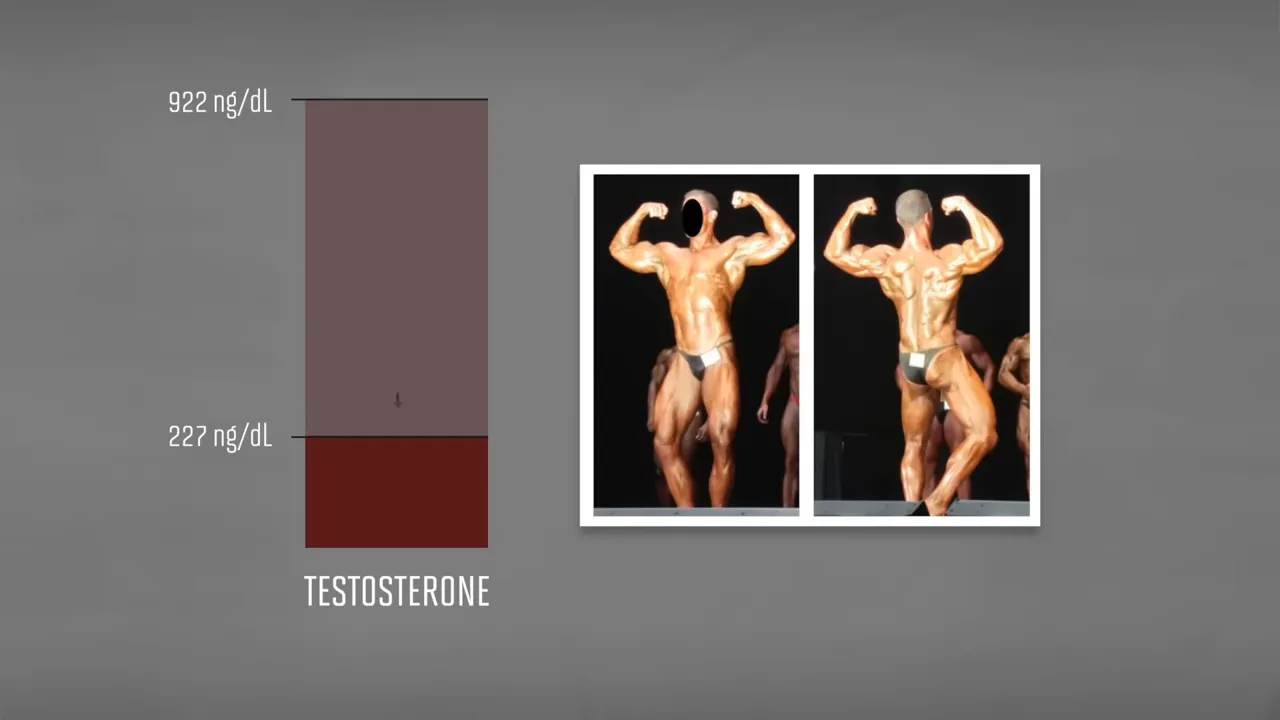
A case study cannot tell us exactly what will happen to everyone. It does show why looking exceptionally fit is not necessarily the same as functioning at your healthiest.
Sleep disruption is another common complaint during extreme contest preparation. In my experience, it is one of the most brutal parts. You are exhausted, you want to sleep, and hunger makes it difficult to stay asleep.
Menstrual disruption and recovery in female competitors
Research on female physique athletes shows similar concerns, with the additional issue of menstrual-cycle disruption. The hormonal disturbances associated with losing a period can affect fertility and bone health.
In a case study of a drug-free figure competitor, menstruation still had not returned 1.5 years after competition.
Recovery is not identical for everyone. Another study of female fitness competitors reported menstrual recovery in 72% of the relevant competitors after roughly three to four months.
Some variability may reflect the different conditioning demands of bikini and figure competition, as well as how much healthy body weight competitors regain afterward. The important point is that recovery should not be assumed to happen immediately after the show.
Food fixation and some genuinely strange side effects
Extreme dieting can also change how much mental space food occupies. Competitors may spend hours consuming food-related media, follow eating challenges, or stockpile cupboards full of treats for after the diet.
At the more bizarre end, some report ammonia-like body odor during severe energy restriction. Increased amino-acid breakdown can contribute to an ammonia smell. That is not a useful badge of dieting success.
And then there are the extreme hunger anecdotes. One bodybuilder described becoming hungry from the smell of dog food and, even more disturbingly, while cleaning up after his dog. That is an anecdote, not a universal symptom, but it captures just how strange food deprivation can get.
The point is not that every shredded person feels this way. It is that the visible result can hide a pretty ugly experience.
Why Do Some People Seem to Stay Shredded So Easily?
There are several possible explanations, and you cannot reliably distinguish them from a social-media photo.
- They may be struggling more than they admit. Maintaining a particular look might be worth the sacrifice for their business or personal goals.
- They may use performance-enhancing drugs. These can make some aspects of maintaining muscle and leanness easier, but they do not remove all the consequences of extreme dieting.
- They may naturally tolerate a lower body-fat level. Your difficult-to-maintain condition might be much more comfortable for someone else.
David Laid is an example I would speculate may naturally tolerate a relatively lean physique, based partly on how lean he appeared as a teenager. But estimates such as 6% to 8% body fat, or assumptions about how comfortable someone feels, are guesses. Photos cannot establish either one.
The useful lesson is not to identify the secret behind one person’s physique. It is to stop assuming their sustainable level of leanness must also be yours.
Think in Terms of a Body-Fat Range, Not One Perfect Percentage
Body-fat set-point theory proposes that your body defends a particular level of body fat. Drop sufficiently below it, and hunger increases while energy expenditure can fall. Move above it, and appetite and energy expenditure may shift in the opposite direction.
The idea has roots in research dating back to the 1950s. It is a useful introduction, but a single fixed point is probably too simple a picture.
The dual intervention point model offers another way to think about it. Instead of defending one exact body-fat percentage, the body has lower and upper boundaries, with a range between them where biological resistance is less pronounced.
- Below the lower boundary: Hunger, lethargy, reduced energy expenditure, and other negative effects can become much more aggressive.
- Within the range: Different body-fat levels may be maintainable without the same degree of resistance.
- Above the upper boundary: Appetite suppression and increased energy expenditure may resist further weight gain.
For me, pushing below an estimated 8% to 9% body fat brings a sharp increase in negative effects. At the other end, trying to bulk beyond roughly 25% can bring lower appetite, more sweating, and resistance to further gain. Those are personal observations, not universal thresholds or a prescribed healthy range.
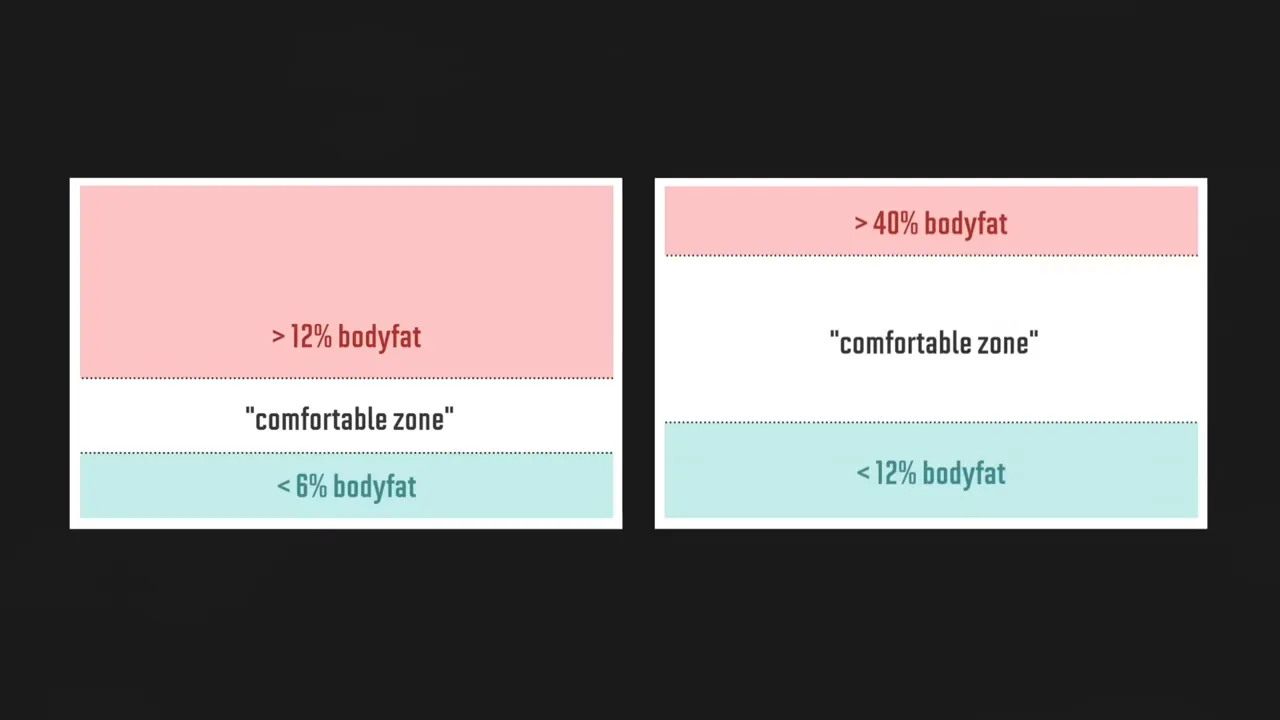
One person might tolerate a very low body-fat level relatively well. Another might experience severe hunger and fatigue at a considerably higher percentage. The model helps explain why copying someone else’s target can go badly.
A Better Goal: Find Your Sustainable Lower Boundary
If you want to maintain a lean physique, my suggestion is to aim near the lower end of your own sustainable range, rather than pushing below it simply because a lower number sounds better.
That does not mean you can never get leaner for a competition. It means treating extreme conditioning as a temporary condition, with a plan to move out of it afterward, rather than as your permanent baseline.
There are two other reasons to be conservative:
- Progress can stall. Staying extremely lean can make it harder to gain muscle and strength.
- Rebound risk can rise. Prolonged hunger and restriction can make binge eating and substantial weight regain more likely.
Ironically, trying to maintain your absolute leanest physique can leave you sustaining a less lean physique than if you had chosen a slightly more moderate goal from the beginning.
My own approach to cutting is to reach the low end of my sustainable range and maintain there for a while, rather than automatically chasing contest condition.
Know the difference between challenging and all-consuming
Some hunger, cravings, and even some strength loss can happen during an ordinary cut. Fat loss does not have to feel effortless to be reasonable.
But there is a difference between a challenging diet and a diet that takes over your life. If food dominates your thoughts, sleep is badly disrupted, or your health and day-to-day functioning are deteriorating, that is a reason to reassess rather than just push harder. Menstrual disruption or other significant symptoms deserve medical attention.
The best long-term physique goal is not necessarily the leanest body you can achieve. It is a physique you can maintain while still feeling and functioning well.
Sponsor: Learn a Creative Skill With Skillshare
Outside the gym, I use Skillshare to develop skills such as lighting, photography, and improving my creative workflow. The platform offers classes across animation, writing, web design, business, and other subjects, along with a community of people learning similar skills.
My mom has also used its interior-design classes at home. One beginner option I recommended is Demetrius Robinson’s Explore Interior Design, which includes six projects to work through.
|


