Protein advice can get confusing fast. One person recommends a gram per pound of body weight. Another says that is way too much. Someone else insists you need a shake within 30 minutes of training or you have wasted your workout.
The science gives us a much more useful way to think about it: get your total daily protein right first, then consider how you distribute it, where it comes from, and when you eat it.
Those details are not equally important. Understanding the difference can save you a lot of unnecessary meal planning, supplement spending, and stress.
Key Takeaways
- Total daily protein matters more for muscle growth than precise meal size, protein quality, or timing.
- Aim for 0.7 to 1 gram per pound when bulking and 0.8 to 1.2 when cutting.
- Spreading protein across three to five meals is a practical approach to optimizing intake.
- Vegan lifters can prioritize higher protein targets and high-quality plant protein sources.
Table of Contents
- How Much Protein Do You Need Per Day?
- How Much Protein Can You Absorb in One Meal?
- What Are the Best Protein Sources for Muscle Growth?
- Does Post-Workout Protein Timing Matter?
- Should You Eat Protein Before Bed?
- Is a High-Protein Diet Safe?
- Put Your Protein Priorities in the Right Order
How Much Protein Do You Need Per Day?
A general-health recommendation of about 0.8 grams per kilogram of body weight, or 0.36 grams per pound, works out to roughly 65 grams per day for an 80-kilogram person.
That is not particularly difficult to reach on a typical Western diet. A ground turkey and rice bowl with a glass of milk can supply about 65 grams of protein in one meal.
But meeting a general-health recommendation is not the same thing as maximizing muscle growth. That baseline does not account for the demands of resistance training, and researchers have argued for higher intakes given the potential benefits. For lifters, the most useful target depends on whether you are bulking, cutting, or trying to do a body recomposition.
The following ranges apply to both men and women and are informed by the research on protein supplementation and resistance training.
When Bulking: 0.7 to 1 Gram per Pound
When you are eating in a calorie surplus, your body has plenty of energy available. Carbohydrates and fats can cover its fuel needs, so there is less pressure to break down muscle tissue for energy.
For that reason, you generally need less protein when bulking than when cutting:
- 1.6 to 2.2 grams per kilogram of body weight per day
- 0.7 to 1 gram per pound of body weight per day
For someone weighing 180 pounds, that is approximately 125 to 180 grams of protein daily.
The classic one-gram-per-pound rule holds up pretty well here. It is simply at the high end of the useful range, rather than a minimum everyone must reach.
When Cutting: 0.8 to 1.2 Grams per Pound
During a cut, you are supplying less energy through food. As the diet progresses, you may also have less stored body fat and glycogen available. That makes preserving muscle a bigger concern.
A higher protein intake helps address that risk:
- 1.8 to 2.7 grams per kilogram of body weight per day
- 0.8 to 1.2 grams per pound of body weight per day
Now the one-gram-per-pound rule sits comfortably in the middle of the range.
Where should you land? If you are already very lean and training hard, I would lean toward the upper end. If you have more body fat and train more recreationally, the lower end will generally be plenty.
For Body Recomposition: Start With the Bulking Range
Body recomposition means building muscle and losing fat at the same time, typically with calories set around maintenance.
For most people, I would start with the same protein range used for bulking: 1.6 to 2.2 grams per kilogram, or 0.7 to 1 gram per pound daily. At maintenance, the risk of muscle loss is relatively low as long as your training is on point.
There may still be a reason to go a little higher if you are more advanced or your recomp involves a slight calorie deficit.
In the past, I used a sliding model based on lean body mass rather than total body weight. That can make the recommendation more individualized, especially for people carrying more body fat. The downside is that you first have to estimate body fat and subtract it from your weight, which adds complexity.
A simpler alternative, suggested by researcher Eric Helms, is useful here: if you are overweight or obese, aim for roughly one gram of protein per centimeter of height per day.
For example, someone who is six feet tall, or about 183 centimeters, would aim for approximately 183 grams daily. It is a practical shortcut that avoids scaling protein intake directly to a higher body weight.
How Much Protein Can You Absorb in One Meal?
The short answer is essentially all of it. Your digestive system can absorb a very large amount of protein from a meal, more than you would probably find comfortable to eat.
But absorption and muscle building are different things. Absorption simply means nutrients pass from the small intestine into the bloodstream. It does not mean every gram is being used to build new muscle.
The better question is: how much protein in a meal can contribute to an anabolic response?
Why 20 to 25 Grams Is Not a Universal Limit
Early research suggested that about 20 to 25 grams of protein was enough to maximize the muscle protein synthesis response under the conditions tested. That became a much broader claim that anything above that amount was wasted.
I am skeptical of that interpretation.
On the anecdotal side, plenty of people practicing intermittent fasting have built impressive physiques while eating only one or two meals daily, sometimes with 50 to 100 grams of protein per meal. That does not prove an optimal meal size, but it makes the idea that most of their protein is useless hard to accept.
More importantly, research has challenged a fixed 20-gram ceiling:
- A study following full-body resistance exercise found a greater muscle protein synthesis response to 40 grams of whey than to 20 grams.
- A study comparing meals containing 70 versus 35 grams of protein found a greater whole-body anabolic response with the larger serving.
These findings do not establish one perfect upper limit for every person and every meal. They do show why a rigid cutoff is not very useful.
Your protein intake per day matters much more than hitting an exact amount at every meal.
Spread Protein Across Three to Five Meals When Practical
For optimization, spreading protein across three to five meals per day is a sensible approach. It can make larger daily intakes easier to digest and provides repeated opportunities to stimulate muscle protein synthesis.
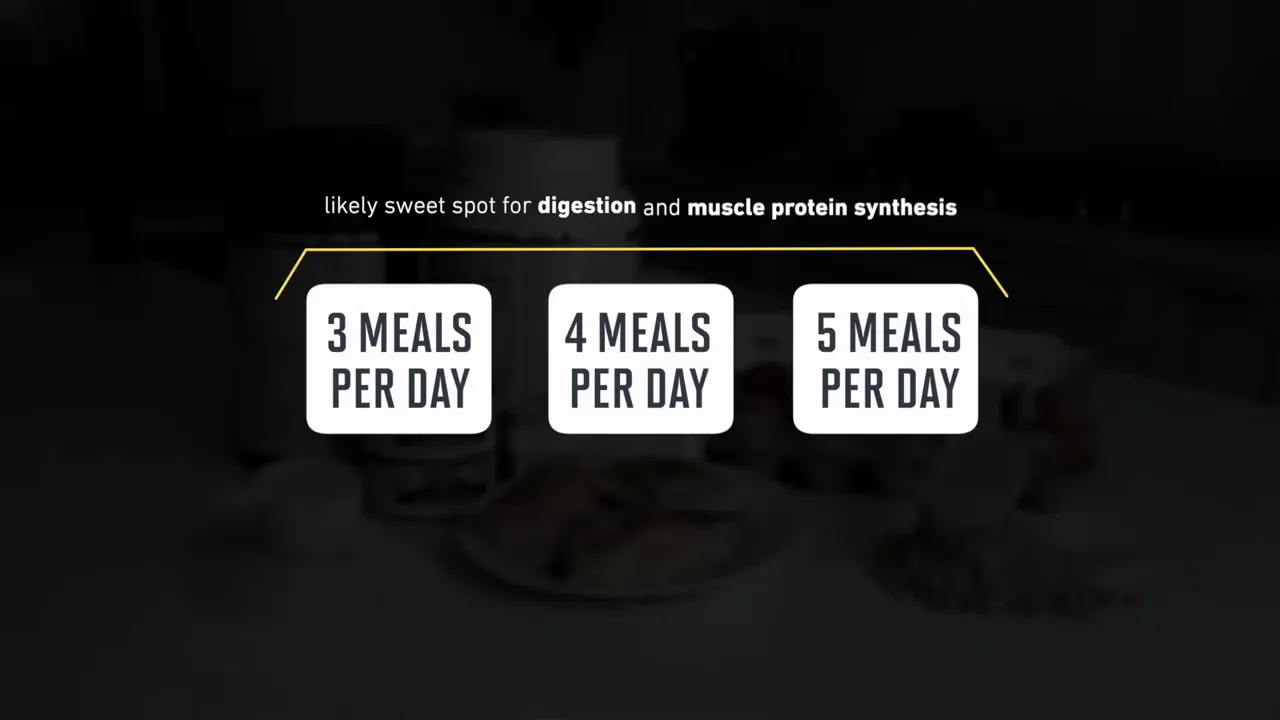
That does not mean two meals or six meals will stop you from building muscle. You can still make progress with either approach if you consistently reach your daily protein target. I just suspect that three to five feedings is a better default when maximizing results is the goal.
What Are the Best Protein Sources for Muscle Growth?
Protein quality matters, but it is easy to make it a bigger issue than it needs to be. Two useful concepts are leucine content and essential amino acid availability.
Leucine Helps Trigger Muscle Protein Synthesis
Leucine is an essential amino acid that helps activate mTOR, a signaling pathway involved in stimulating muscle protein synthesis. Think of it as part of the signal that tells your body to start building.
Around three grams of leucine in a meal is a useful ballpark for a strong anabolic response. Different protein sources deliver that amount with very different calorie costs:
- Whey: About 29 grams of protein from whey can provide three grams of leucine for roughly 145 calories.
- Chicken breast: About 40 grams of protein can provide three grams of leucine for roughly 200 calories.
- Whole-wheat bread: Reaching the same leucine amount would require more than 2,000 calories of bread.
This is not an argument against bread. It illustrates why a food containing some protein is not necessarily an efficient primary protein source.
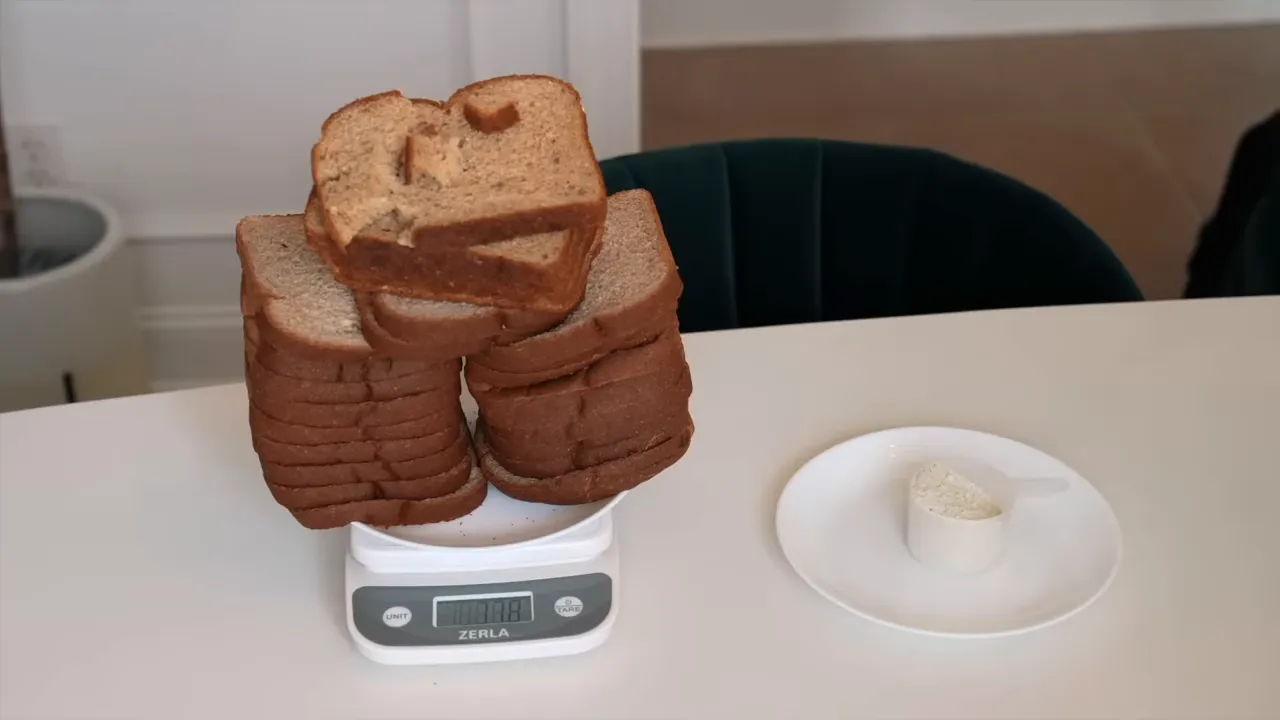
Animal proteins generally supply more leucine per calorie than many whole-food plant sources. However, that gap becomes much smaller with plant protein isolates. Soy, pea, and brown rice protein powders can also supply around three grams of leucine for fewer than 200 calories.
You Still Need All Nine Essential Amino Acids
Leucine helps initiate the process, but it cannot build muscle by itself. You also need the other eight essential amino acids to provide the necessary building material.
One way researchers assess protein quality is the digestible indispensable amino acid score, or DIAAS. It considers how well a protein supplies digestible essential amino acids relative to a reference requirement. Dairy and other animal proteins tend to score highly.
The important caveat is that protein-quality comparisons often assess individual foods in isolation. Real diets contain combinations of foods. If you eat enough total protein from a varied diet, meeting your leucine and essential amino acid needs becomes much less of a concern.
That is why I do not personally nitpick every protein source. It is also why leucine, BCAA, and EAA supplements usually are not necessary when total protein intake is sufficient.
Vegan Lifters Should Be a Little More Strategic
If you eat a vegan diet, two practical options are to:
- Aim toward the higher end of the daily protein ranges.
- Use a high-quality, leucine-rich plant protein powder when helpful.
A pea and brown rice protein blend, sometimes marketed as “vegan whey,” combines complementary amino acid profiles to create a profile more similar to whey. The point is not that every vegan lifter needs a supplement. It is that a well-chosen powder can make the target easier to reach.
Does Post-Workout Protein Timing Matter?
You do not need to race for a protein shake within 30 minutes of finishing your workout. Missing that narrow window does not erase the training session.
A more practical guideline is to keep your protein-containing pre-workout and post-workout meals within roughly four to six hours of each other. That is the interval between the two meals, not a requirement to wait four to six hours after training.
The main exception is fasted training. If you have not eaten before your workout, try to get some protein reasonably soon afterward rather than extending the fast unnecessarily.
For most people, though, protein timing around exercise is a secondary consideration. Your daily intake still comes first.
Should You Eat Protein Before Bed?
Pre-sleep protein is an interesting feeding opportunity because sleep creates a long stretch without food.
Research on pre-sleep protein suggests that roughly 40 grams before an overnight fast can improve overnight muscle protein synthesis. That is personally what I aim for.
However, an increase in overnight muscle protein synthesis does not automatically mean better long-term muscle growth compared with eating the same protein earlier.
Two studies comparing slow-digesting casein consumed before bed versus in the morning found no significant differences in outcomes after eight to ten weeks. Participants were already consuming high daily protein intakes, around two grams per kilogram or more.
Once again, that points to the same hierarchy: when daily protein is sufficient, precise timing becomes much less important. A pre-bed serving may be useful, especially with a long overnight fast, but it is an optimization tool rather than a requirement.
Is a High-Protein Diet Safe?
For healthy, exercising individuals, the available evidence supports the safety of the protein ranges discussed here.
The International Society of Sports Nutrition position stand on protein and exercise reports that controlled research has not demonstrated health risks from higher protein intakes in this population.
Studies have even examined intakes as high as 4.4 grams per kilogram, or about two grams per pound, without reporting harmful effects in the healthy participants studied. That is well above what I recommend for building muscle, and it is not a reason to assume more protein will produce more growth.
The scope matters: these findings concern healthy people. They should not be treated as individualized medical advice for someone with an existing health condition. Consult a physician before making changes that may affect your care.
Put Your Protein Priorities in the Right Order
The smartest protein strategy is not the most complicated one. I would prioritize it like this:
- Total daily protein: Choose an intake appropriate for bulking, cutting, or recomping.
- Protein distribution: Spread it across three to five meals when that fits your routine.
- Protein quality: Get a useful mix of essential amino acids, with a little more planning for vegan diets.
- Protein timing: Refine workout and pre-bed timing after the basics are consistent.
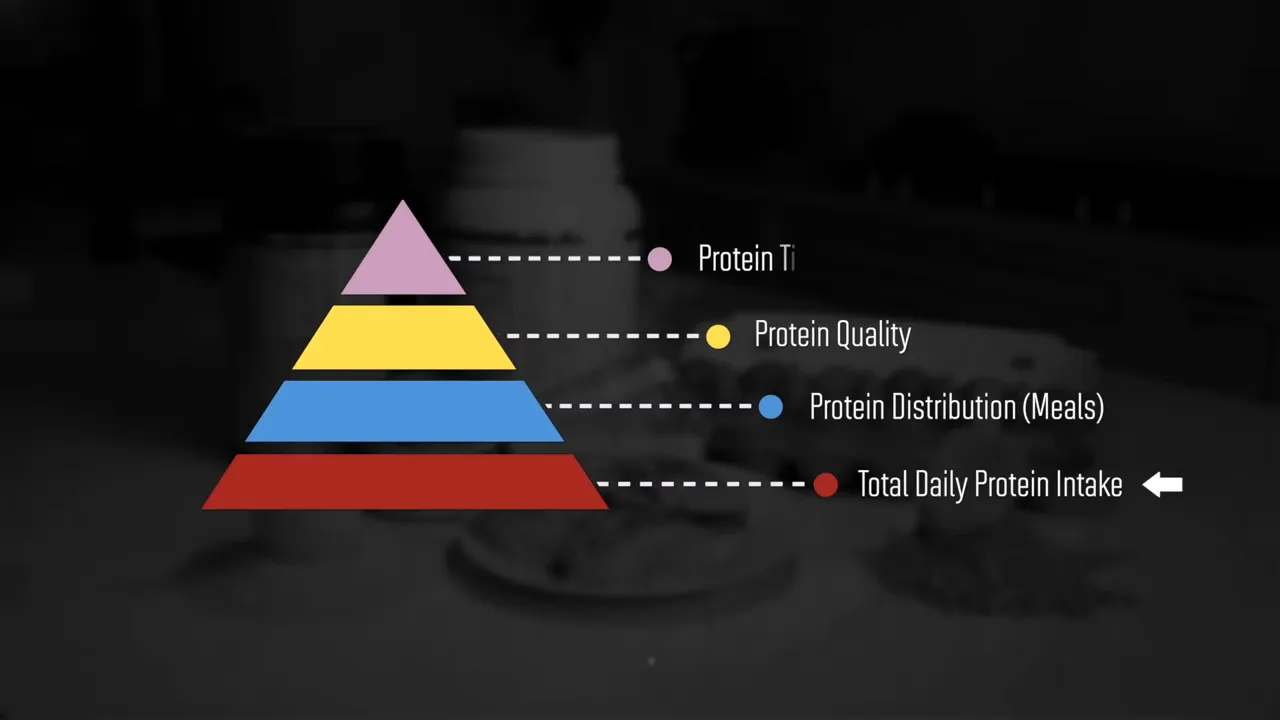
I think daily intake and sensible distribution account for the vast majority of the potential benefit. Quality and timing can help you refine the plan, but they should not distract you from getting enough protein consistently.
For a more complete nutrition framework, my Ultimate Guide to Body Recomposition covers muscle gain, fat loss, and strategies for pursuing both together. The 267-page guide includes sample meal plans and examples for male and female lifters, along with guidance on macros, cardio, supplementation, and sleep.
|


