A great triceps exercise needs to do more than give you a hard squeeze. For muscle growth, I want high tension, a movement that feels good, and a straightforward way to keep progressing.
Those criteria put some popular exercises near the top and knock a few gym staples down a tier. But “less effective” doesn’t mean useless. Even my lowest-ranked movements can have a place in the right situation.
Here’s how I rank 20 popular triceps exercises for building muscle, including my pick for the best overall movement and the one I’d usually replace.
Key Takeaways
- Overhead cable extensions are my top pick for overall triceps growth.
- Pressing alone probably won’t maximize triceps development, especially for the long head.
- Combine overhead isolation work with pressdowns or cable kickbacks to train different shoulder positions.
- Choose exercises that provide high tension, feel comfortable, and allow consistent progression.
Table of Contents
- What Makes a Triceps Exercise S Tier?
- Triceps Pressdowns: Bar vs. Rope vs. Reverse Grip
- Overhead Triceps Extensions: The Strongest Overall Category
- Skull Crushers and JM Presses
- Triceps Kickbacks: Cables Make a Difference
- Dips: Great Overload Potential, Mixed Comfort
- Close-Grip Presses and Push-Ups
- How to Use These Rankings for Better Triceps Growth
What Makes a Triceps Exercise S Tier?
I’m judging these exercises on three main criteria:
- High tension, especially in the stretched position. An exercise gets extra credit when it challenges the triceps at longer muscle lengths.
- Comfort and a smooth resistance profile. It shouldn’t cause pain, and the resistance should let you focus on your triceps rather than fighting the movement.
- Simple progression. You should be able to add a little weight or another rep over time without turning the setup into a project.
The rankings reflect muscle-building potential, not just how much weight you can move:
- S tier: My favorites. Do them if you can.
- A tier: Strongly recommended.
- B tier: Useful in certain contexts, although there may be better options.
- C tier: Usually replaceable, but still valuable in some situations.
- D tier: Probably not a great choice for most people.
- F tier: Generally not recommended.
Comfort is individual, so some of these placements reflect my experience. An exercise that bothers my elbows or shoulders might feel great to you. That matters when choosing what actually belongs in your program.
Why shoulder position matters
The triceps have three heads: the lateral head, medial head, and long head. The lateral head contributes to that familiar horseshoe shape, the medial head adds to the arm’s overall shape, and the long head gives the back of the upper arm a lot of its size.
All three heads straighten the elbow. But only the long head crosses both the elbow and shoulder joints. It also helps perform shoulder extension, which means bringing your arm down. That’s why you can feel your triceps working during dumbbell pullovers alongside your lats and pecs.
This gives us an important distinction:
- Arms overhead: The long head is more stretched.
- Arms at your sides: The long head is relatively shorter.
- Arms behind your torso: The long head can reach a very shortened, strongly contracted position.
For proportional development, it makes sense to consider more than one shoulder angle rather than treating every elbow-extension exercise as interchangeable.
Triceps Pressdowns: Bar vs. Rope vs. Reverse Grip
Pressdowns train all three heads, but they probably do a better job growing the lateral and medial heads than the long head. Your attachment choice can also affect how stable the movement feels and how well you can overload it.
1. Rope Pressdown: B Tier
The rope’s main advantage is feel. Spreading the ends apart at the bottom helps some people connect with their triceps and feel a harder contraction.
However, much of that spreading motion happens at the wrists. I don’t think it adds much direct contractile benefit for the triceps themselves. It’s mostly a mind-muscle connection benefit.
The downside is stability. In a personal comparison using the same weight and keeping my technique consistent, I got 12 reps with the rope versus 16 with the bar. The less rigid attachment creates more stabilization demands through the hands and forearms, which can limit performance.
That isn’t a controlled study showing one attachment produces more growth. But it helps explain why I generally find the bar easier to overload. The rope pressdown earns B tier: perfectly usable, just not my first choice.
2. Bar Pressdown: A Tier
A bar feels much more locked in. That stability lets me direct more effort toward the triceps, and the cable gives the movement a relatively smooth resistance profile.
Progression is also simple. Add a rep or a little weight as you get stronger.
The only thing keeping it out of S tier is that it doesn’t put the long head into a particularly deep stretch. Still, this is an exercise I strongly recommend and use pretty much every week.
3. Reverse-Grip Pressdown: C Tier
Turning your palms upward doesn’t meaningfully change the triceps’ job, but it can reduce how much force you’re able to produce, especially if grip becomes the limiting factor.
In my comparison, I managed just 10 reps with the underhand grip, making it the weakest of the three variations.
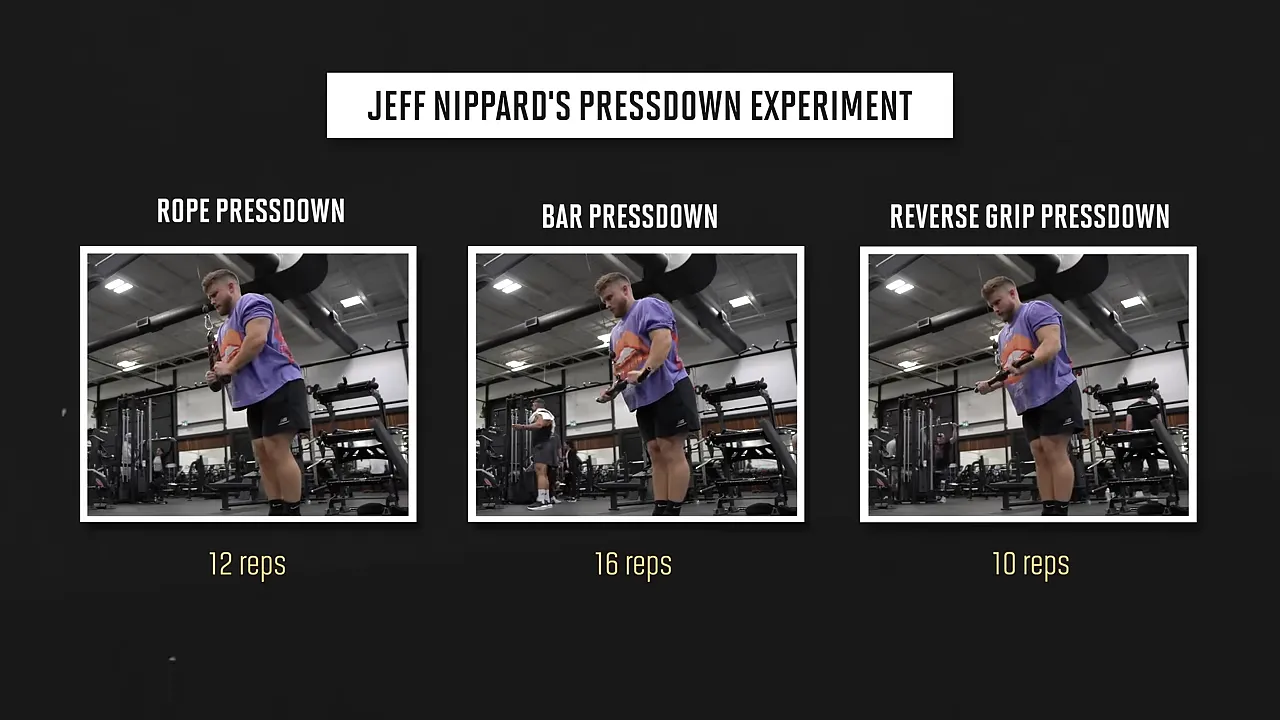
Some people do feel this version better, possibly because the underhand position changes how the forearm bones clear one another at the top. But I doubt that benefit outweighs the reduced overload potential for most people. C tier.
Overhead Triceps Extensions: The Strongest Overall Category
Moving the arms overhead changes the equation for the long head. Instead of simply bending and straightening the elbow with your arms down, you’re doing it with the long head in a much more lengthened position.
4. Overhead Cable Triceps Extension With a Bar: S Tier
This exercise combines a deep long-head stretch with substantial resistance in that stretched position. That combination is a big reason it earns my highest ranking.
A study comparing overhead cable extensions with neutral-arm extensions found roughly 40% greater whole-triceps growth with the overhead position. Getting the long head into a more lengthened position seems to be doing something important for hypertrophy.
The exercise also checks the practical boxes: it’s stable, the resistance feels smooth, and adding weight or reps is straightforward.
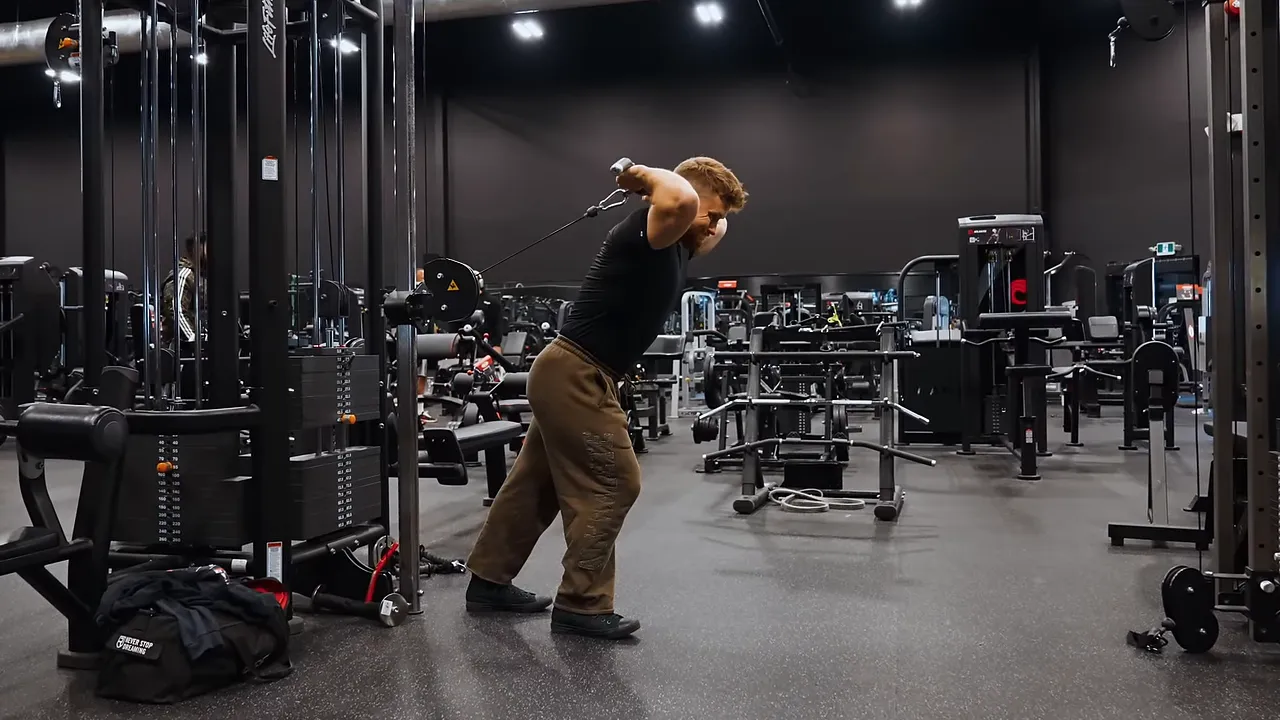
This is my best overall triceps exercise. It trains all three heads effectively while giving the long head something ordinary pressing movements don’t provide as well.
5. Overhead Cable Triceps Extension With a Rope: A Tier
Using a rope preserves the biggest advantage: training the long head in an overhead, lengthened position.
As with pressdowns, though, I find the rope slightly less favorable for overload than a rigid bar. I don’t expect that difference to be huge over the long term if you’re training hard and tracking progress, but I still prefer the bar.
The rope version is a strong A-tier option, not a movement you need to abandon if it feels better to you.
6. Katana Cable Triceps Extension: A Tier
The katana extension uses two cables crossed behind your head, with each hand holding the opposite side’s cable. The name comes from the sword-drawing motion.
There are two practical ways to get into position:
- Grab each cable with the same-side hand, turn around 180 degrees, and cross your arms overhead.
- Start with the cables crossed in front of you, then duck underneath and step through.
Set the pulleys around waist height or slightly higher. Your upper arms should end up roughly 30 to 40 degrees forward of directly out to your sides. This is the scapular plane, which feels comfortable for a lot of people.
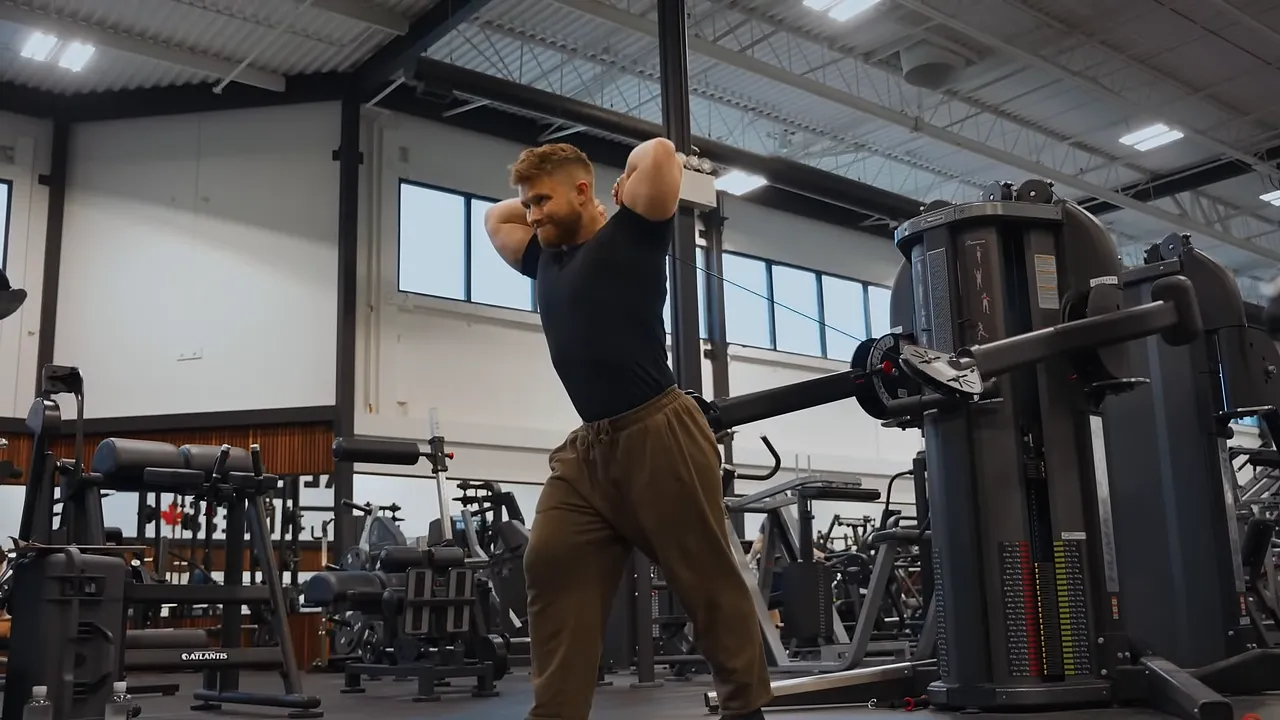
A nice bonus is that each arm works independently, but you still train both at once. That can help address left-right imbalances without doubling the time required.
These are a personal favorite and could easily be S tier based on feel. The extra setup and learning curve bring them down to A tier overall.
7. Dumbbell French Press: B Tier
The two-handed dumbbell French press also gives the long head a big stretch, and it can be quicker to set up than cables. I prefer doing it seated because the extra stability makes it easier to focus on the triceps.
Unlike cables, the dumbbell’s resistance changes considerably through the movement. You get a lot of tension near the bottom and less near the top. That isn’t necessarily a major problem because the stretched portion appears particularly valuable, but I prefer the more uniform feel of cables.
My bigger issue comes as you get stronger. A large dumbbell can become bulky, awkward to handle, and uncomfortable on the wrists. I still use French presses periodically, but they land in B tier.
8. One-Arm Dumbbell Overhead Extension: A Tier
Training one arm at a time solves a few of those problems. You can choose an elbow angle that feels better on your shoulder, and the lighter dumbbell is less bulky and awkward.
You still don’t get the same smooth resistance as a cable, but this is an excellent option if dumbbells are all you have. A tier.
Skull Crushers and JM Presses
9. Barbell or EZ-Bar Skull Crusher: S Tier
Skull crushers check all three of my main boxes, especially when you lower the bar behind your head rather than stopping at your forehead.
That backward arc creates high tension while the triceps are stretched. An EZ bar can also reduce unwanted wrist strain, and progression is easy to track through small increases in weight or reps.
For a better resistance profile, start with your upper arms angled slightly back instead of pointing straight up. This puts some tension on the triceps immediately, before you lower the bar behind your head.
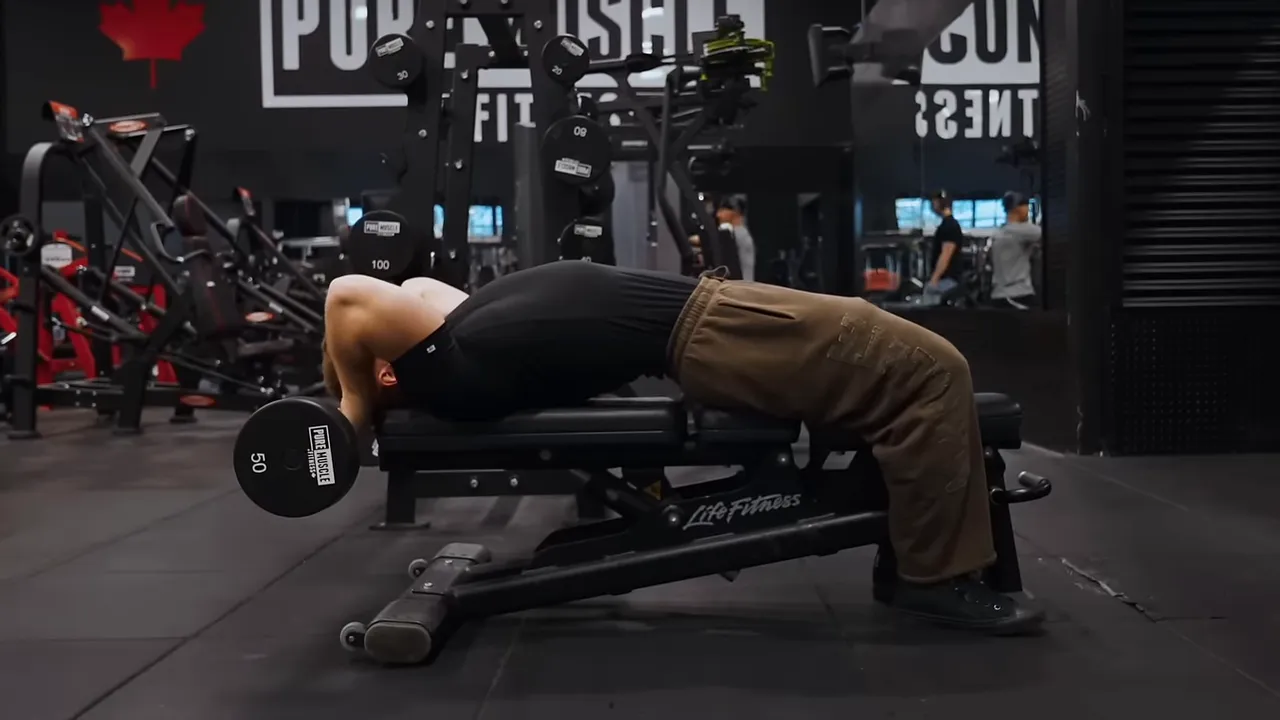
Some people find these less smooth than cables, but they’re my favorite free-weight triceps exercise. S tier.
10. Dumbbell Skull Crusher: A Tier
Dumbbells offer essentially the same movement while allowing each arm to work independently.
On paper, they have a strong case for S tier. In practice, I find the freely moving dumbbells harder to control in that lying overhead position. They feel a little more awkward to me than an EZ bar or straight bar.
That’s a personal comfort and control issue rather than a fundamental flaw. They’re still an A-tier exercise.
11. JM Press: B Tier
The JM press sits between a close-grip bench press and a skull crusher. Instead of bringing the bar to your chest or behind your head, you lower it toward your chin.
People who like this exercise really like it. Personally, I think it’s a little overrated as a pure muscle builder.
I’ve tried it for years and usually feel some elbow discomfort. It also doesn’t bring the upper arms as far back as a skull crusher, so the long head doesn’t get the same stretch.
If you already bench press and do an overhead extension, I’m not convinced you need a JM press. Still, it offers another shoulder angle and should have some strength carryover to your bench press. B tier for hypertrophy.
12. Smith Machine JM Press: A Tier
The Smith machine’s fixed path makes this variation feel better to me. I can focus on using my triceps rather than letting my pecs and delts contribute as much as they sometimes do with a free bar.
That added stability moves the Smith machine JM press up to A tier.
Triceps Kickbacks: Cables Make a Difference
13. Cable Triceps Kickback: A Tier
Kickbacks are one of the few exercises that train the triceps with the upper arm held behind the torso. That puts the long head in a very shortened position and allows a strong squeeze.
You don’t have to bend far forward to get this effect. A more upright position with the upper arm held back can create essentially the same shoulder position relative to the torso.
Although research favors training the triceps at longer muscle lengths, I don’t think the evidence is strong enough to throw out every shortened-position exercise. The lateral and medial heads can still experience a stretch as the elbow bends, and the cable offers a smooth resistance profile.
I like slightly higher reps here, focusing on a strong contraction. Cable kickbacks earn A tier as a complement to overhead work.
14. Dumbbell Triceps Kickback: C Tier
Switching to a dumbbell makes the resistance profile less favorable. When the forearm hangs down, there’s essentially no elbow-extension demand from gravity. Resistance increases as you straighten the arm and bring the dumbbell up.
That means the dumbbell loads the shortened portion most heavily and gives you very little challenge in the more stretched portion.
I don’t think this makes dumbbell kickbacks completely worthless. The movement already emphasizes the shortened position, so leaning into that isn’t an automatic deal breaker.
But if you have cables, I’d choose cable kickbacks. If you only have dumbbells, I’d usually put the weight overhead and do an extension instead. Dumbbell kickbacks are a little overhated, but they’re still C tier and my lowest overall pick here.
Dips: Great Overload Potential, Mixed Comfort
15. Close-Grip Dip: B Tier
Dips train the triceps with the arms behind the torso, allowing a strong long-head contraction without placing it in a deep overhead stretch.
The biggest advantage is progressive overload. You can add reps as you get stronger, then use a weight belt to keep increasing resistance.
On paper, that could justify A or even S tier. For me, though, dips can make my shoulders cranky if I do too much or go too heavy. I also find that my pecs and delts can take over.
Plenty of people do dips comfortably, so this isn’t a universal objection. But based on my experience, they land in B tier.
16. Bench Dip: C Tier
Bench dips use a similar shoulder position. I actually find it easier to connect with my triceps here because my pecs and delts contribute less.
The problem is progression. As you get stronger, body weight may stop being challenging within a normal rep range. You can have a partner place plates on your lap, but balancing them is awkward.
That practical limitation puts bench dips in C tier.
17. Machine Dip: B Tier
A good dip machine gives you a more locked-in version of the movement. The additional stability can make it easier to focus on the triceps.
However, machine design matters. On some machines, I still find my pecs and delts taking over. I generally prefer cable kickbacks for this role, although machine dips are a solid option worth revisiting. B tier.
Close-Grip Presses and Push-Ups
18. Close-Grip Bench Press: A Tier
The close-grip bench press has tremendous progressive-overload potential. You can gradually add weight as your triceps get stronger and continue progressing for a long time.
It also feels great to me. I can engage my triceps better here than on dips, and the movement provides a dependable, repeatable way to load them.
The limitation is the long head. Pressing trains the lateral and medial heads very well, but the long head’s two-joint anatomy complicates things: it lengthens at the shoulder while shortening at the elbow during the press.
As a result, I don’t expect the same long-head growth you’d get from overhead extensions. I want to put this exercise in S tier because it’s such a good overloading movement, but for complete triceps development, it lands in A tier.
19. Close-Grip Push-Up: C Tier
Close-grip push-ups have similar biomechanics, so they also emphasize the lateral and medial heads more than the long head.
The main drawback is loading. Beyond the beginner stage, you may need a lot of reps to make them challenging. Having someone load weight on your back can work, but it’s inconvenient.
They can still be useful, particularly when equipment is limited, but their progression limitations put them in C tier.
20. Diamond Push-Up: B Tier
Bringing the hands together into a diamond makes the movement considerably harder by narrowing the base of support. Many people also feel their triceps working harder with the elbow position this creates.
I like diamond push-ups as a finisher at the end of a workout, when you can push for as many reps as you can get. They’re harder than they look.
They still don’t match a close-grip bench press for progressive overload, but the extra difficulty makes them useful enough for B tier.
How to Use These Rankings for Better Triceps Growth
You don’t need every high-ranked exercise in the same program. The goal is to cover the important functions and shoulder positions with movements you can perform comfortably and progress consistently.
My main recommendations are:
- Keep pressing, but don’t rely on it alone. Presses grow the triceps, particularly the lateral and medial heads, but probably won’t maximize development by themselves.
- Include direct triceps isolation work. This is especially important if you want to give the long head enough attention.
- Prioritize an overhead extension. Loading the long head in a deep stretch is the biggest opportunity that pressing alone leaves on the table.
- Use more than one shoulder angle. Combine overhead work with an arms-at-your-sides movement, such as a pressdown, and/or an arms-behind-your-torso movement, such as a cable kickback.
A straightforward combination is an overhead cable extension plus a bar pressdown. A cable kickback is another strong complementary option if you enjoy training the shortened position.
If I have to crown one winner, it’s the overhead cable triceps extension with a bar. It combines a long-head stretch, high tension, smooth resistance, easy progression, and direct hypertrophy research supporting the overhead position.
My lowest pick is the dumbbell kickback, mainly because better alternatives are usually available. But notice that nothing here reaches D or F tier. These rankings are about making better choices for muscle growth, not pretending that every exercise below the top tier is a waste of time.


