A quad exercise can feel absolutely brutal and still be a mediocre choice for building muscle. Burning calories, testing your balance, and leaving you exhausted are not the same thing as putting high tension on your quadriceps.
I’m ranking 20 popular movements from S tier for super to F tier for fail, specifically for quad growth. These rankings combine research, biomechanics, and my experience with how the exercises actually feel. An exercise can be excellent for strength, power, or glute growth and still rank poorly here.
At the top, I want three things: a big quad stimulus, a movement that feels good, and a straightforward way to progress.
Key Takeaways
- Prioritize quad tension in a deep stretch, comfortable movement, and straightforward progressive overload.
- Hack squats earn the top spot by combining stability, strong quad loading, and practical progression.
- Leg extensions complement squats by training the rectus femoris with the hips held fixed.
- Instability and upper-body fatigue can limit an exercise’s value for quad growth.
Table of Contents
- What Makes a Quad Exercise Great?
- The Bottom Tier: Combo Exercises and Bosu Ball Squats
- Barbell Squats: Excellent, With a Few Trade-Offs
- Machine Squats: Some of the Best Quad Builders
- Leg Presses: Range of Motion Makes a Difference
- Leg Extensions and Reverse Nordics
- Lunges, Split Squats, and Other Squat Variations
- Useful Exercises That Aren’t Top Quad Builders
- The Best and Worst Quad Exercises Overall
What Makes a Quad Exercise Great?
- High quad tension, especially in the stretched position. The exercise should challenge your quads through a deep, useful range of motion.
- A movement that feels good. That means a smooth resistance profile and no knee pain, not a set that feels easy.
- Simple progressive overload. You should be able to add weight or reps over time as you get bigger and stronger.
These criteria also explain why your personal rankings might differ slightly from mine. If an otherwise excellent exercise feels awkward or causes pain, it loses some of its value for you.
A Quick Anatomy Check
The quadriceps have four commonly recognized heads:
- Vastus medialis: the teardrop-shaped muscle on the inside of the thigh.
- Vastus intermedius: a deeper head running down the middle.
- Vastus lateralis: the large head on the outside of the thigh.
- Rectus femoris: a long, relatively flat head running down the front, over the deeper musculature.
An anatomy paper describing a possible fifth head adds an interesting wrinkle, but it doesn’t meaningfully change how I’d train the quads.
All four heads perform knee extension, which means straightening your knee. The rectus femoris also performs hip flexion, bringing your leg forward. That second function becomes important when comparing squats with leg extensions.
The Bottom Tier: Combo Exercises and Bosu Ball Squats
Squat and Lunge Combinations: F Tier
A squat plus an overhead press or a lunge plus a curl might look efficient, but there’s a basic loading problem: your quads are much stronger than your shoulders and arms.
Your upper body will usually fatigue before your quads receive a sufficiently challenging stimulus. If quad growth is the goal, combining the movements compromises the part we’re trying to prioritize.
Bosu Ball Squats: F Tier
The instability is the problem, not the solution. Your ankles have to do so much stabilization work that the amount of tension you can put through your quads becomes severely limited.
There may be specific athletic contexts where unstable training has a place. For building bigger quads, though, a stable surface is a much better starting point.
Barbell Squats: Excellent, With a Few Trade-Offs
High-Bar Barbell Back Squat: S Tier
The classic high-bar back squat checks all three boxes. It puts high tension on the quads at the bottom, should feel good once you establish a consistent bar path, and offers excellent long-term overload potential.
Your spinal erectors do have to stabilize your torso, but that doesn’t automatically make your back the limiting factor. Your quads are still major drivers of the movement. You don’t have to spend much time around strong powerlifters to see that squats can build some monster quads.
The main anatomical caveat concerns the rectus femoris. As you stand up, it shortens at the knee while lengthening at the hip. That makes squats less straightforward for training this head than an exercise where the hips remain fixed.
Still, research on regional quad growth from back squats shows that rectus femoris growth can occur. More importantly, including leg extensions alongside your squats addresses this concern without forcing you to abandon an excellent compound lift.
Barbell Front Squat: A Tier
Front squats have most of the same benefits, with a more upright torso that can shift the demands further toward the quads. Moving the bar in front of your neck changes the mechanics and increases the knee-extension demand.
It also asks more of your upper back. Some coaches argue that the upper back becomes the limiting factor, but I don’t think that has to happen. Unless you’re going extremely heavy, you should generally be able to keep your elbows up and bring your quads close to failure.
The bigger issue is comfort. Plenty of people just hate the front-rack position. For bodybuilding, you don’t need to force one particular grip:
- Use a two-finger grip if that feels comfortable.
- Try a crossed-arm grip.
- Use straps to help support the bar.
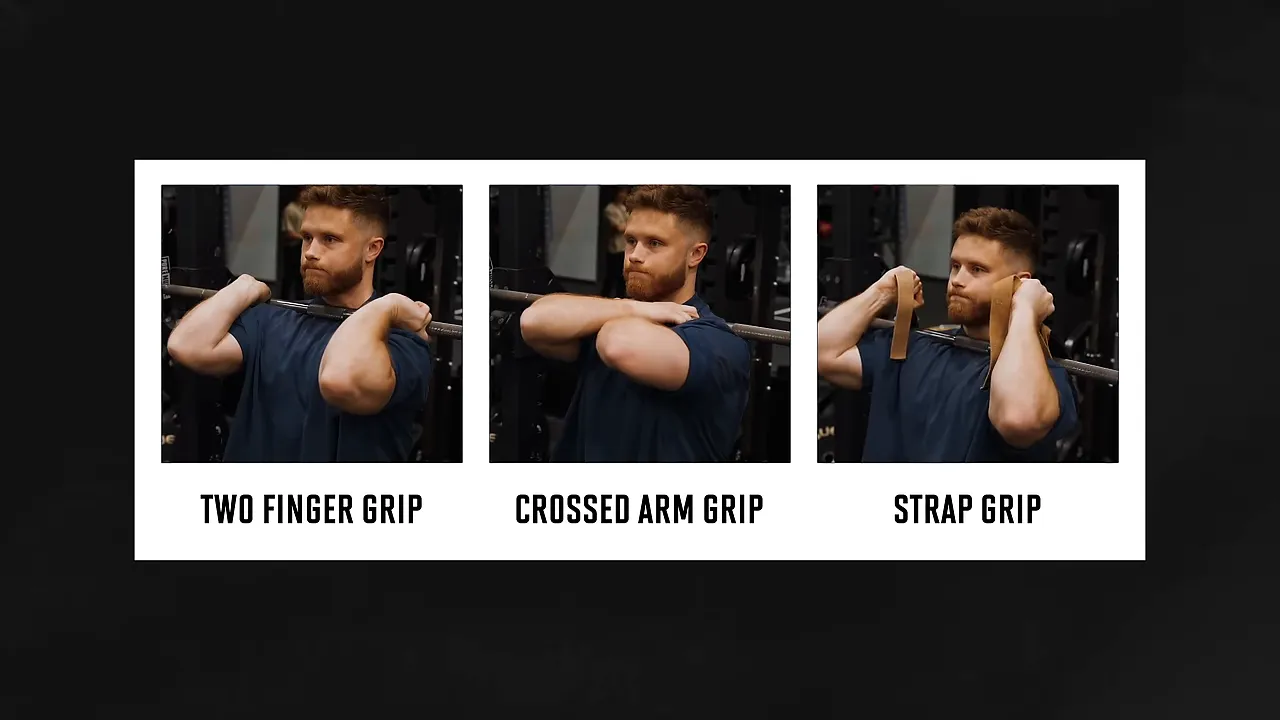
Keep your elbows up, squat down between your legs, and stand tall through your chest. I’m putting front squats in A tier because the modest mechanical advantage doesn’t outweigh the discomfort many people experience. If they feel great for you, moving them into S tier is completely reasonable.
Low-Bar Back Squat: A Tier
For a low-bar squat, the bar sits roughly two or three inches lower, across the rear delts rather than the upper traps.
Research comparing high-bar and low-bar squats supports a trade-off: low-bar positioning generally allows heavier loads, but shifts some demand away from the quads and toward the glutes.
That isn’t a deal-breaker. Quad involvement is still high when you squat to a reasonable depth. I just prefer the high-bar version when quad hypertrophy is the main priority.
Machine Squats: Some of the Best Quad Builders
Hack Squat: S Tier
The hack squat takes the major benefits of a barbell squat and adds a few practical advantages:
- Less setup: you can generally get through your sets a bit faster.
- More stability: the machine supports you, reducing stabilization demands.
- Flexible foot positioning: you can find a comfortable stance without having to balance a free bar.
Being more locked in may let you direct more effort toward your quads rather than maintaining your position.
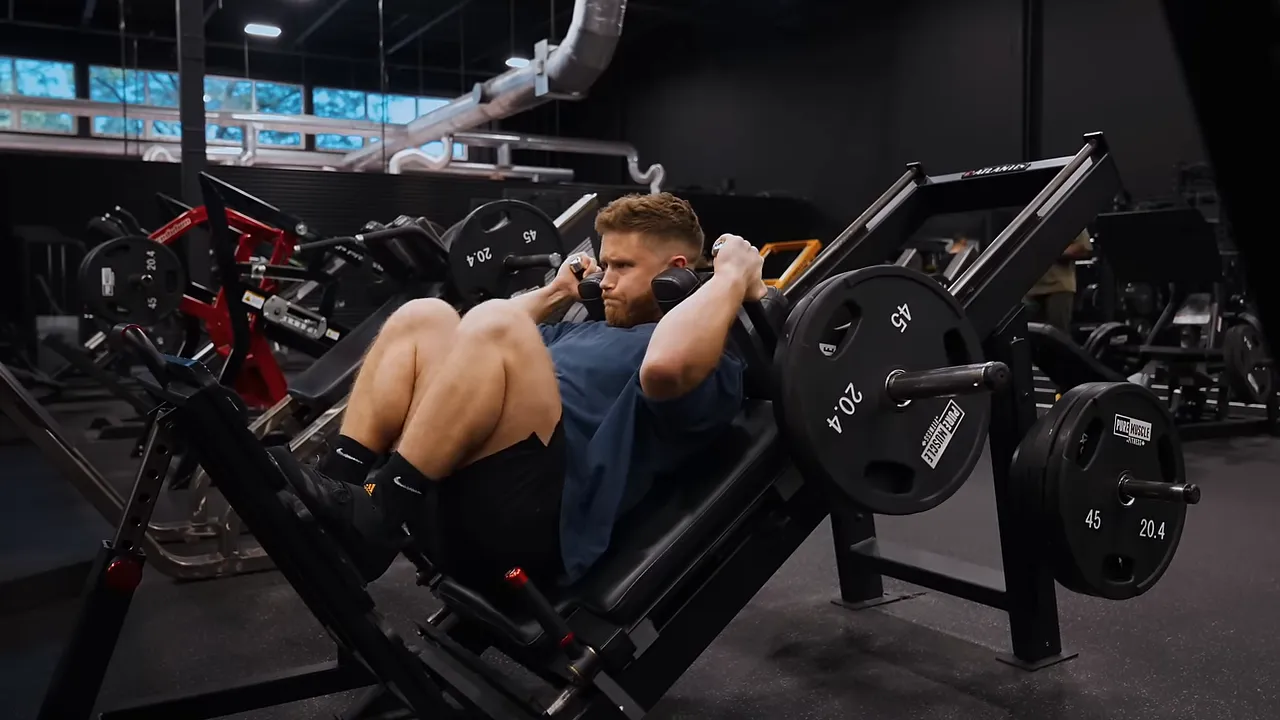
And no, using a machine doesn’t make the exercise inferior for muscle growth. A review comparing free-weight and machine-based training found broadly similar hypertrophy outcomes on average. Both can work very well when you push your sets hard.
Pendulum Squat: S Tier
A pendulum squat is similar to a hack squat, but the load travels in an arc rather than along a straight path. Personally, I find that arc feels even more natural.
It offers an excellent combination of stability, deep knee flexion, and a smooth movement. The main drawback is availability: most gyms simply don’t have one. That doesn’t change its quality as an exercise, so it belongs in S tier.
Smith Machine Squat: S Tier
The Smith machine squat has become more accepted in bodybuilding, and for good reason. You can take your quads close to failure, or to failure, without the same concern about losing your balance or dumping a free bar.
It reduces some stabilization demands, but the basic squat pattern remains. For hypertrophy, that extra support can be a benefit rather than a drawback.
Leg Presses: Range of Motion Makes a Difference
45-Degree Leg Press: A Tier
The 45-degree leg press can provide high quad tension, generally feels good, and is easy to progressively overload.
My main reservation is depth. On many machines, I can’t get as much knee flexion as I can in a deep squat. If the machine stops you well short of bringing your calves toward your glutes, you may miss some of the deep-stretch stimulus available from other options.
For quad hypertrophy, I place a lot of value on that deep position. A leg press with a generous, comfortable range of motion is an excellent exercise, but the variability between machines keeps it in A tier for me.
Horizontal Leg Press: C Tier
Horizontal leg presses often have an even more restricted range of motion. That makes it harder to challenge the quads in a deep stretch.
Many also use a weight stack that intermediate or advanced lifters can eventually max out. Once that happens, adding load is no longer a simple option. Limited depth plus limited overload puts these in C tier.
Leg Extensions and Reverse Nordics
Leg Extension: A Tier
Leg extensions are surprisingly controversial. The idea that they are inherently bad for your knees isn’t supported by convincing evidence that they cause more knee problems than other quad exercises.
That doesn’t mean you should ignore symptoms. If you have existing knee issues or the movement causes pain, go easy rather than forcing it.
The big advantage is that your hips stay fixed while your knees move. Unlike in a squat, the rectus femoris can change length through knee extension without simultaneous hip movement offsetting it. That makes leg extensions a valuable complement to squat-based training.
You can potentially improve the stimulus further by reclining the backrest. A study comparing leg extension seat angles, available as a preprint, found greater overall quad growth and especially greater rectus femoris growth with the seat-back position. Training that muscle at a longer length is the likely explanation.
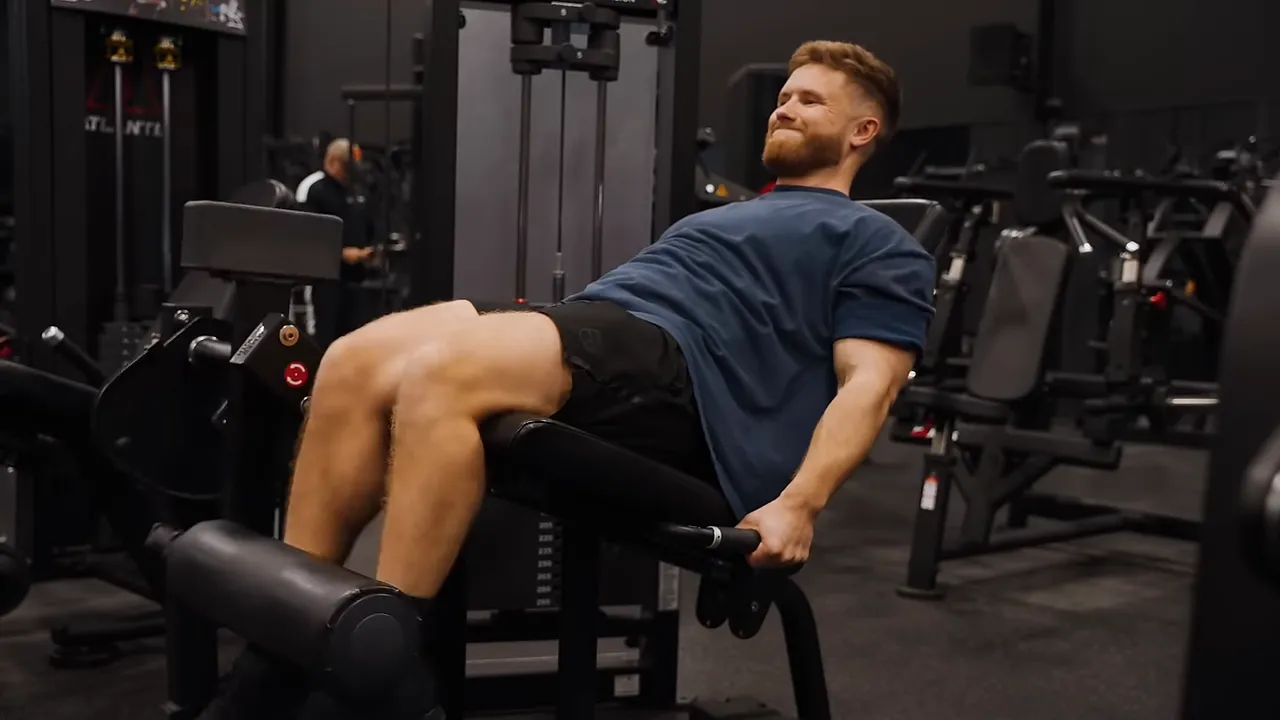
With a reclined position and a machine that challenges the quads well in the stretched portion, leg extensions earn A tier.
Why not S? Their overload potential isn’t quite on the same level as squats. Although short-term research comparing leg extensions and squats has found similar growth in some measures, I’m not convinced that leg extensions alone would match squats for long-term quad development. That’s my interpretation, not a settled long-term finding.
They’re still a staple in my leg training and absolutely worth including.
Reverse Nordic: A Tier
The reverse Nordic uses a similar basic knee-extension pattern without requiring a leg extension machine. From a kneeling position, you lean backward and then extend your knees to bring yourself upright.
The quad stretch can be enormous, and the accessibility is a big plus.
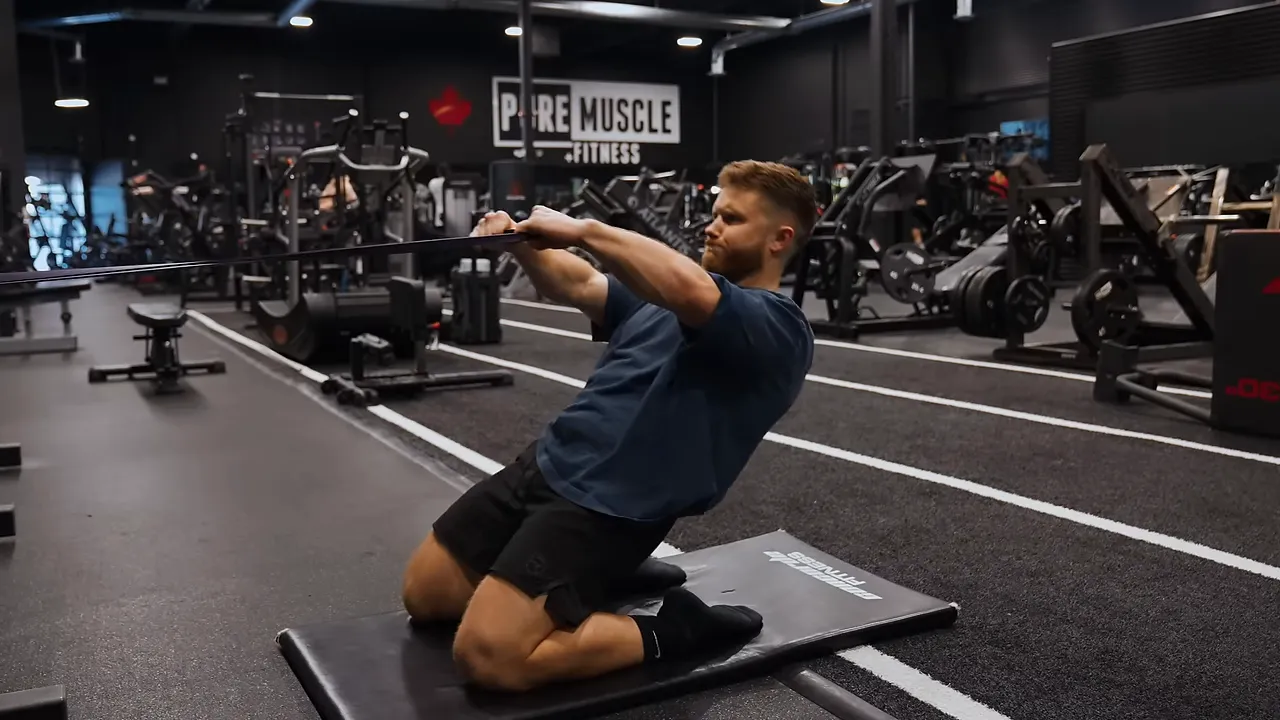
The downside is difficulty. Beginners may struggle, and adding external weight isn’t as straightforward as moving a pin on a machine.
You can still progress by adding reps or gradually increasing your range of motion. The excellent stretch and minimal equipment requirements earn A tier, though I’d drop them a tier or two for anyone who finds the movement particularly awkward.
Lunges, Split Squats, and Other Squat Variations
Lunge: B Tier
Lunges can grow both the quads and glutes, but I generally think of them as a better glute builder. In my experience, the glutes receive the more pronounced stretch and stimulus.
Taking shorter steps can bring the quads more into the movement, and there’s nothing wrong with using that variation. Still, for quad growth specifically, I’m putting lunges in B tier. On a glute-focused list, they could easily land in A or S tier.
Goblet Squat: B Tier
Goblet squats are mechanically similar to front squats, so they can train the quads very well. The problem is holding the dumbbell.
As your legs get stronger, you’ll be able to squat more weight than you can comfortably support in your hands. That tends to turn goblet squats into a high-rep-only option.
I mainly use them in two situations:
- Teaching beginners how to squat.
- Adding a high-rep finisher.
Those are useful roles, so B tier feels fair. They just aren’t my first choice for sustained overload as you become more advanced.
Jump Squat: F Tier
Jump squats can burn calories and help develop explosive power. That doesn’t make them a great hypertrophy exercise.
There are too many alternatives that offer greater quad tension and easier progressive overload. For building muscle, they go in F tier.
Bulgarian Split Squat: S Tier
Bulgarian split squats are brutal, but they work. You can get a huge quad stretch, and training one leg at a time can help address left-to-right muscular imbalances.
They’re also physically fatiguing and psychologically demanding. I usually program only two sets per workout.
They can leave your quads extremely sore, but soreness is not a direct measure of muscle growth. The case for this exercise is its strong quad stimulus and deep stretch, not simply how uncomfortable the stairs feel afterward.
Useful Exercises That Aren’t Top Quad Builders
Deadlift: C Tier
Deadlifts involve the quads, but much less than squats do. From the side, the knee movement looks more like a partial squat than a deep squat.
A sumo stance can increase quad involvement somewhat, but it still doesn’t make the deadlift competitive with squats for quad growth.
Deadlifts are excellent for overall strength and much better suited to a glute-focused role. For quadriceps hypertrophy, they land in C tier.
Step-Up: C Tier
Step-ups are about as unenjoyable as Bulgarian split squats, but I find them less effective for the quads. They offer less quad stretch and are less stable.
They can provide a solid glute stimulus, especially when you avoid pushing off the trailing foot. They have their place, but I wouldn’t make them a priority for bigger quads.
Pistol Squat: C Tier
A good pistol squat is impressive. It’s also limited by balance and the difficulty of adding load.
If you train at home or only have bodyweight exercises available, it can be a great option. With full gym access, though, there are plenty of exercises that make it easier to load the quads without stability getting in the way.
Sissy Squat: B Tier
Don’t let the name fool you. Sissy squats are seriously challenging and, like reverse Nordics, can create a huge stretch through the quads.
They also come with a learning curve. Rising onto your toes while allowing your knees to travel far forward can feel awkward, and external loading is less convenient than with most machine or barbell options. Progress often comes mainly from adding reps.
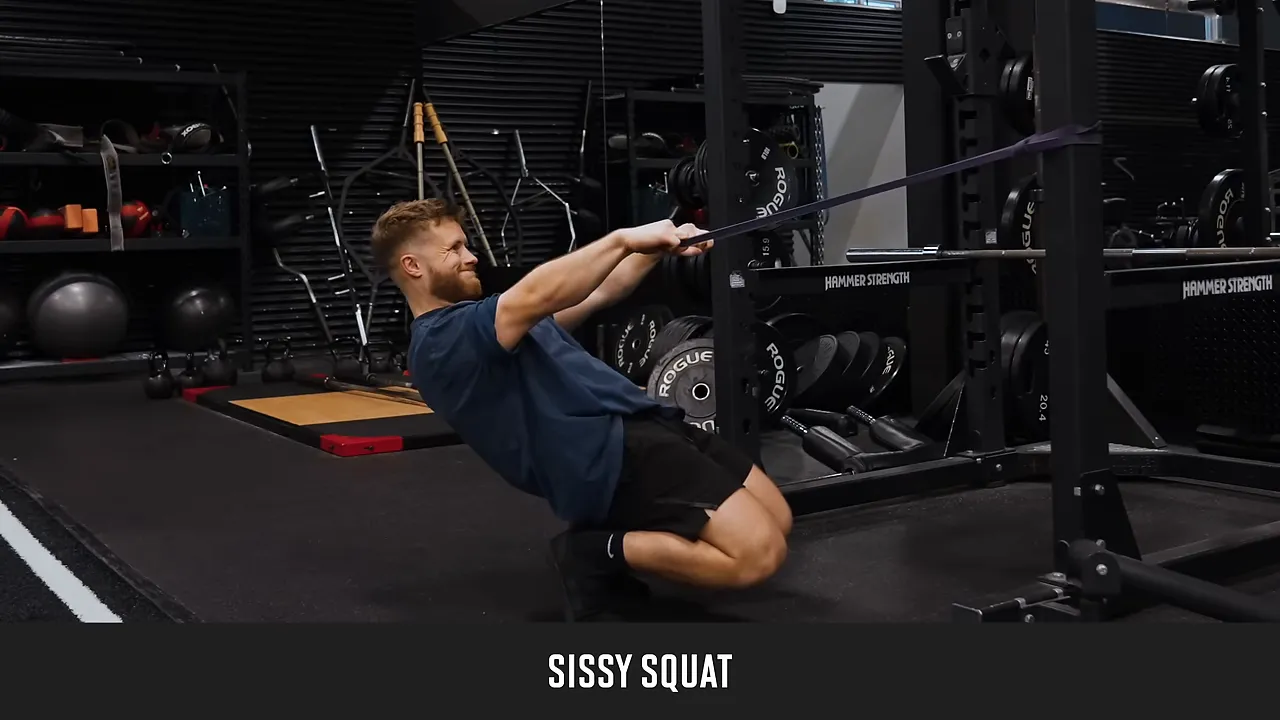
If you get comfortable with the technique, this may be one of the best squat variations for achieving a very deep quad stretch. The loading limitations and awkwardness keep it in B tier for me, although I can see the argument for A tier.
The Best and Worst Quad Exercises Overall
Best Overall: Hack Squat
If I have to pick one winner, it’s the hack squat.
I personally prefer the feel of a pendulum squat, but hack squats are more widely available. They combine high quad tension, stability, a deep stretch, and simple progression exceptionally well.
One machine-specific issue is that the sled can reach its stop before you reach full depth. A setup adjustment I use is placing yoga blocks between my shoulders and the shoulder pads to create more room to descend. Whether that works depends on the particular machine and setup.
If your gym doesn’t have a hack squat, my alternate number-one pick is the high-bar barbell back squat.
Worst Overall: Bosu Ball Squat
The Bosu ball squat takes the bottom spot. Remove the unstable surface and the exercise immediately becomes more stable and better suited to putting meaningful load through your quads.
The bigger lesson is simple: choose exercises that let your quads do the hard work. A stable squat you can load progressively, combined with leg extensions to complement the squat pattern, makes much more sense than chasing instability or combining unrelated movements.
You don’t need every exercise on this list. You need options that give you a strong stimulus, feel good for your body, and let you keep progressing.


