The best chest exercise is not necessarily the one that gives you the biggest pump. It is the one that loads your pecs effectively, lets you make progress consistently, and makes you want to keep training.
Below are my top 10 chest exercises, ranked from good to best, followed by three movements I would generally skip for chest growth. All 10 exercises in the main ranking are good options. The differences often come down to small advantages and personal preference. My number eight could easily be your number one, and an exercise being absent does not automatically make it bad.
Table of Contents
- How I Rank Chest Exercises
- 10. AMRAP Push-Up
- 9. Dumbbell Stretch Iso-Hold
- 8. Pec Fly Machine
- 7. Cable Crossover Ladder
- 6. Dip
- 5. Deficit Push-Up With Bands
- 4. Incline Dumbbell Press
- 3. Cable Press-Around
- 2. Machine Chest Press
- 1. Barbell Bench Press
- Three Chest Exercises I Would Generally Skip
- Use the Rankings to Build a Better Routine
How I Rank Chest Exercises
Each exercise gets a score out of five stars based on four criteria:
- Personal enjoyment: Do I actually like doing it?
- Tension potential: Does it effectively apply resistance to the pecs?
- Progressive overload potential: Can I reliably add weight, reps, or another measurable challenge over time?
- Convenience: Is the equipment accessible, and can I do it without a ridiculous setup?
This is not a purely scientific league table. Research informs the rankings, but so do comfort, equipment quality, and my own training experience. Those practical factors matter because even a theoretically excellent exercise is not much use if you hate doing it or cannot progress on it.
10. AMRAP Push-Up
Rating: 3 out of 5 stars
AMRAP means “as many reps as possible.” Here, that means taking a bodyweight push-up set to muscular failure.
The biggest advantage is obvious: you only need your bodyweight. I generally use these as a finisher, where they can challenge the pecs at the end of a chest workout without requiring more equipment.
The downside is that regular push-ups can become a very long set once you are strong enough. For me, reaching failure can take 50 reps or more. I may not really feel my chest working hard until rep 20 or 30, so the set becomes more cardio-intensive than I would like. That is a lot of effort before getting to the most challenging reps.
If a full push-up is currently difficult, there is nothing wrong with progressing from your knees. If regular push-ups are too easy, adding resistance can make them more efficient, as we will get to later.
With lightly loaded, high-rep push-ups, I recommend taking the set all the way to muscular failure. Stopping well short can leave the pecs underchallenged. Track your reps and try to beat your previous performance.
9. Dumbbell Stretch Iso-Hold
Rating: 3 out of 5 stars
This is a loaded hold in the bottom position of a dumbbell press, usually for around 60 seconds. You are keeping the pecs under tension in a stretched position rather than pressing through repeated reps.
My general starting recommendation is about 50% of your five-rep-max dumbbell press weight. If you can press 100-pound dumbbells for five reps, that would mean trying approximately 50-pound dumbbells for the hold.
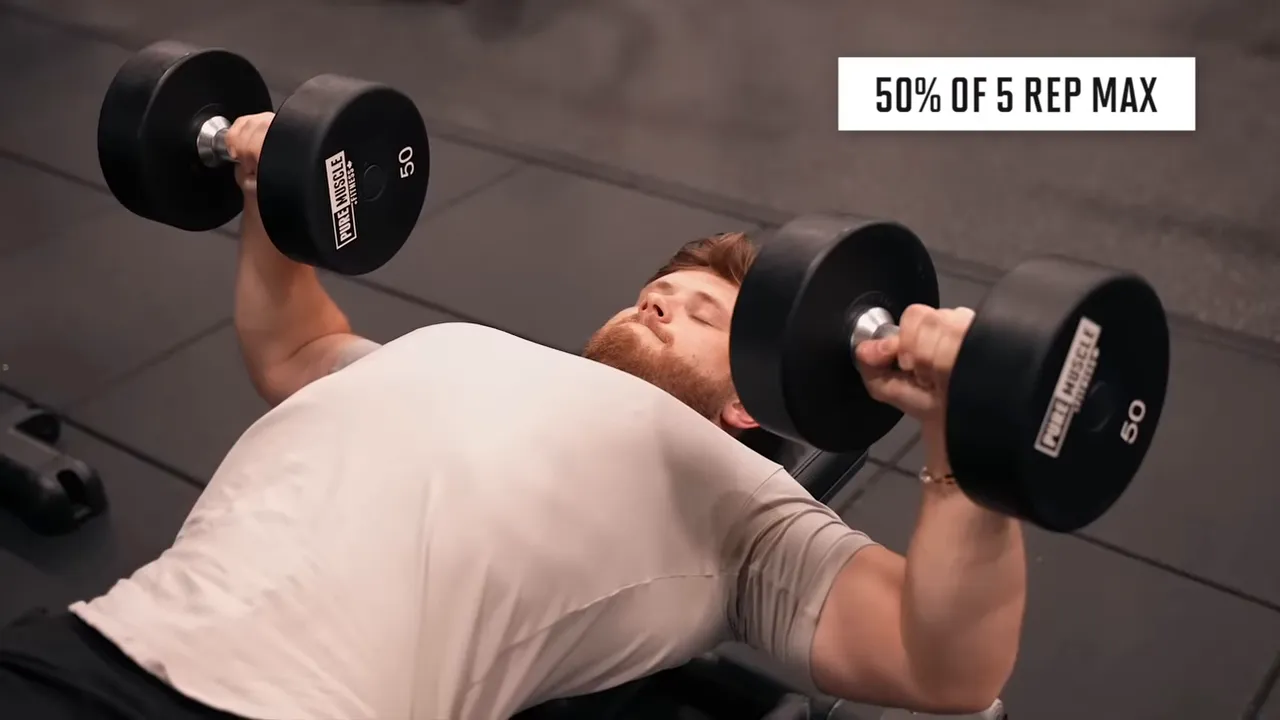
One interesting benefit is that you can directly progress the duration:
- Start with a hold of roughly 50 to 60 seconds.
- Keep the load consistent.
- Try adding about five seconds to the hold each week.
That gives you a measurable form of progressive overload beyond simply adding weight or reps.
The limitation is that this is an isometric exercise. You are not taking the muscle through the lifting and lowering phases of a full dynamic movement, so I would not use it to replace regular presses and flyes.
The research on loaded stretching is mixed, although it hints at a possible benefit. There is also evidence supporting isometric training at longer muscle lengths compared with shorter lengths. That makes the stretched position interesting, but it does not establish this exact chest exercise as superior to dynamic training.
I see it as an occasional addition, not a foundation. Put it at the end of the workout so the hold does not compromise your later working sets.
8. Pec Fly Machine
Rating: 3.5 out of 5 stars
Most gyms have some version of a pec deck. I personally prefer a slightly inclined fly machine for a little more upper-chest emphasis, but a standard pec deck accomplishes the same basic job.
A major advantage over dumbbell flyes is the resistance profile. With dumbbells, the pecs face substantial resistance near the bottom, but very little when the weights are directly above your shoulders. A good fly machine maintains resistance more evenly through the stretched and contracted portions of the movement.
Where it falls short for me is progressive overload. Past a certain point, adding more weight can make it harder to maintain clean form and keep the pecs doing the work.
Once I reach that point, I prefer to:
- Add reps at the same weight.
- Keep the movement controlled.
- Focus on the pec contraction rather than forcing another jump on the stack.
I do not treat the pec deck as my main heavy overload exercise anyway. It is a useful way to add chest volume without asking as much from the triceps and shoulders.
The weight stack also makes drop sets convenient. On the final set, I might reduce the load by about 50% and perform another 10 to 12 reps.
7. Cable Crossover Ladder
Rating: 3.5 out of 5 stars
The cable crossover ladder uses three sets, with a different cable height on each set. Instead of repeating exactly the same fly angle, you change the emphasis across the chest.
- Set one, low cables: Fly out and up for more upper-pec emphasis.
- Set two, chest-height cables: Fly straight out for more mid-chest emphasis.
- Set three, high cables: Fly out and down for more lower-pec emphasis.
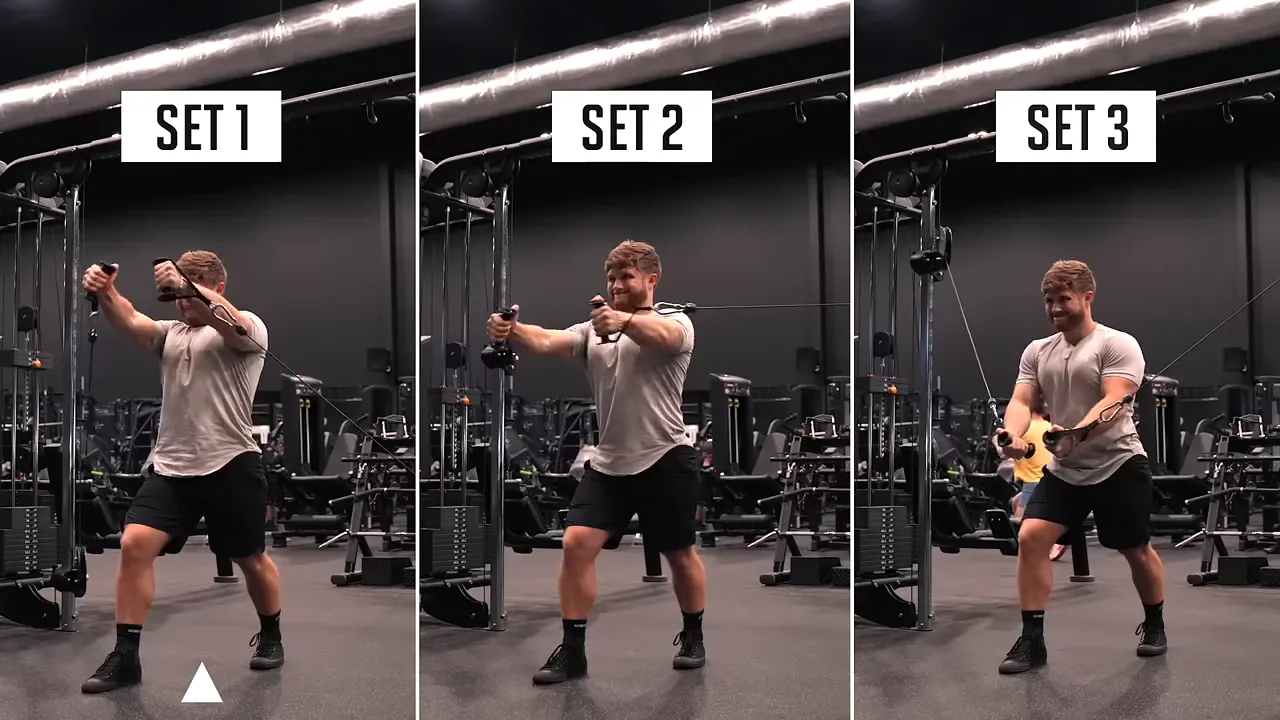
Cables provide resistance throughout the movement, and the changing angles make an otherwise fairly ordinary exercise more engaging for me.
Like the pec deck, this is not my first choice for pushing heavy progressive overload. It is a useful pump-style accessory that lets you train several chest regions with one piece of equipment.
6. Dip
Rating: 4 out of 5 stars
From a tension-generating standpoint, the dip is excellent. You get a substantial stretch at the bottom, a strong contraction toward the top, and a challenging movement through the range of motion.
It also lends itself well to progressive overload. That is why it remains a staple in many of my programs.
Its position here is mainly about personal enjoyment. Loading a dip belt can be annoying. Without enough added weight, I need a lot of reps to get close to failure. With heavy loading, my shoulders can start to feel uncomfortable.
That is not a reason for everyone to avoid dips. It is a good example of why an effective exercise might rank differently for different people. If dips feel great on your shoulders and are easy for you to progress, they could deserve a much higher spot on your list.
5. Deficit Push-Up With Bands
Rating: 4 out of 5 stars
This is one of the most underrated chest builders. It addresses two limitations of a regular push-up: the deficit gives you more stretch at the bottom, and the band adds resistance toward the top.
Here is how I set it up:
- Make two stable stacks of weight plates, one for each hand.
- Loop a resistance band around your back, just below your shoulder blades.
- Secure the band beneath your hands on the plates.
- Perform push-ups with a controlled tempo, allowing your chest to lower between the stacks.
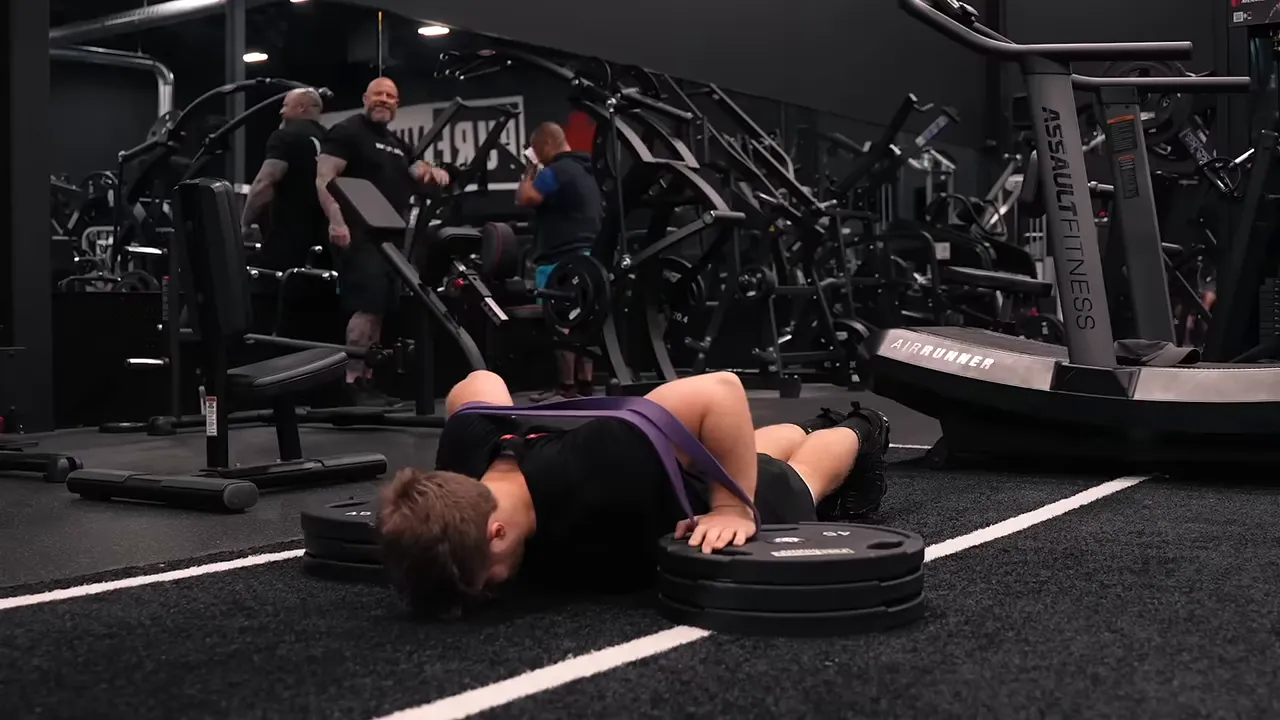
I usually use sets of 12 to 15 reps, although a heavier band can bring that lower.
If bodyweight deficit push-ups are already challenging enough, you do not need a band. Another option is having a partner place a weight plate on your back.
The setup takes some effort, but I find the stimulus well worth it. This variation challenges the chest hard without creating an excessive amount of fatigue.
4. Incline Dumbbell Press
Rating: 4 out of 5 stars
If you want more upper-chest emphasis, the incline dumbbell press is a strong choice.
For years, the case for incline pressing relied largely on biomechanics and muscle-activation measurements. A 2020 study comparing bench-press angles provided direct training evidence supporting greater upper-chest growth with incline pressing.
Dumbbells also allow a little extra range of motion at the bottom compared with a barbell, which could offer a small hypertrophy advantage.
My main complaint is getting heavy dumbbells into position. The setup itself can take a surprising amount of effort, especially over multiple heavy sets. I would rather spend that energy on the exercise than on wrestling the weights into place.
Still, that inconvenience does not outweigh the benefits. This is easily a four-star movement.
For the record, I give the flat dumbbell press the same four-star rating. It simply does not emphasize the upper pecs to quite the same extent.
3. Cable Press-Around
Rating: 4.5 out of 5 stars
The press-around, popularized by the N1 training crew, is essentially a single-arm low cable fly with a couple of useful refinements.
First, it lets you move the working arm farther across your body. In a normal two-arm crossover, people often stop when their hands meet, even though the pec can bring the arm farther across the torso.
You can cross your hands during a bilateral fly, but that can feel awkward. Your hands may collide, and you have to alternate which hand passes over the other. Working one side at a time removes that problem.
Second, you can brace your free hand against the cable machine. That gives you stability while allowing you to focus on one pec at a time.
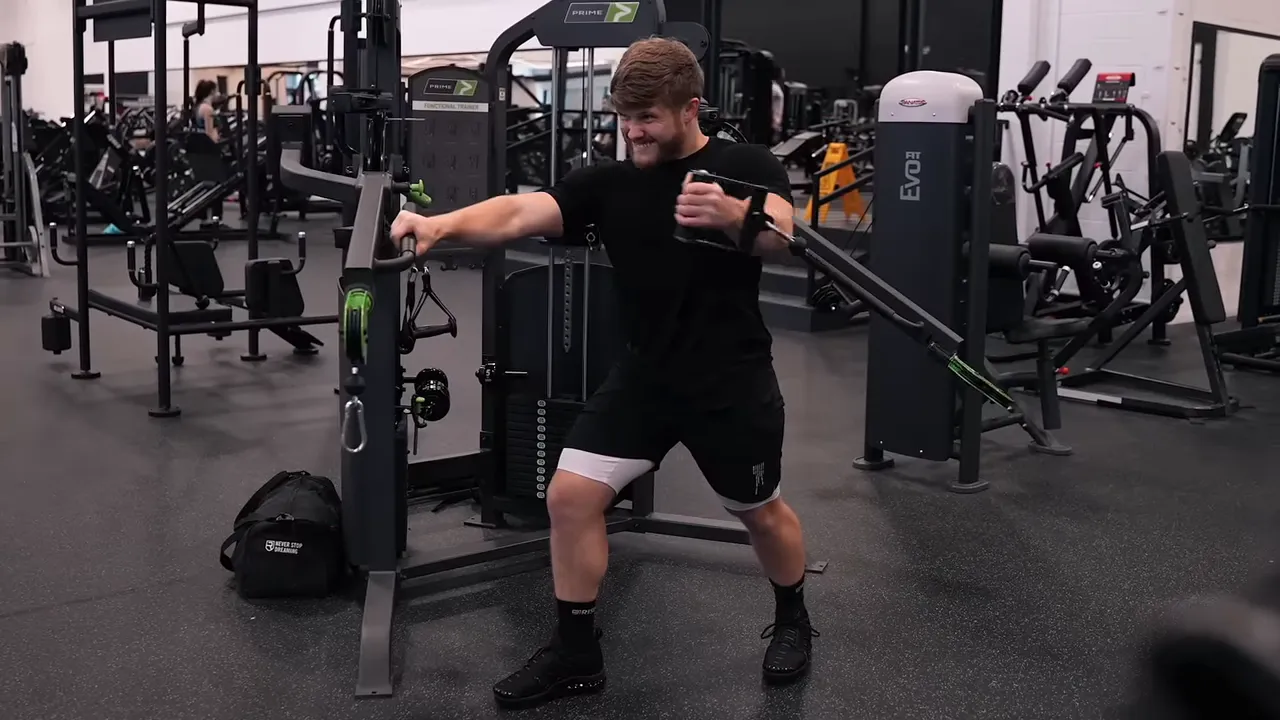
I generally perform these for 10 to 12 reps. They are an excellent way to accumulate extra pec volume without adding much fatigue to the triceps or delts.
2. Machine Chest Press
Rating: 4.5 out of 5 stars
A good chest press machine can be fantastic for muscle growth. The important word is good: it needs a smooth resistance profile, a full range of motion, and a movement path that fits your body.
One of the biggest benefits is stability. Because you do not have to balance the load, you can devote more attention to working the pecs. In my experience, a well-designed machine can create a better chest connection than almost anything else.
There is a trade-off. Less stabilization means the smaller stabilizing muscles are not challenged as much. But if your program combines machines with free weights, rather than relying exclusively on a machine press, I do not see that as a major problem.
The more important limitation is fit. A machine fixes your movement path more than free weights do. If that path does not suit your skeleton, it may not be a great exercise for you, regardless of how highly I rate it.
I generally like many Hammer Strength chest press machines, and there is a plate-loaded machine at my gym that I particularly enjoy. It lets me feel the pecs working while making consistent, efficient increases in load. When the machine fits you well, it is a top-tier chest builder.
1. Barbell Bench Press
Rating: 5 out of 5 stars
The bench press is probably my favorite exercise, period. It scores highly across all four of my criteria:
- Enjoyment: I genuinely look forward to benching.
- Tension: It loads the pecs heavily through a substantial range of motion.
- Progression: Adding five pounds or less makes gradual overload straightforward.
- Access: Almost every gym has a bench and a barbell.
Does the barbell limit chest growth?
The barbell does limit how far you can lower your hands compared with dumbbells. That criticism is fair, but I think its importance is often exaggerated, especially when considering the movement at the shoulder joint itself.
More importantly, the bench press is rarely the only chest exercise in a program. Pair it with a fly, deficit push-up, or press-around, and you can get the additional end-range work from those movements while keeping the bench press's overload advantages.
What if you do not get a big pump?
Some people feel a better pump from cables or machines. That can matter for enjoyment, but it does not automatically make those exercises better for growth.
Mechanical tension matters far more than chasing the biggest possible pump. A bench press set does not become ineffective simply because your chest feels less swollen afterward.
With my powerlifting background, I tend to favor the flat bench. I still include incline barbell pressing periodically when I want to put more emphasis on the upper chest.
Perhaps the most underrated advantage is motivation. Seeing your bench numbers increase is satisfying. For me, hitting a bench press personal record is more exciting than setting a record on most other exercises, and that enthusiasm makes consistent progressive overload more likely.
Three Chest Exercises I Would Generally Skip
These movements do not offer the same combination of pec loading, stability, and progression as the options above. That does not mean every rep is useless. It means I think there are better choices for the specific goal of building your chest.
Standing Plate Press: 1 out of 5 stars
The standing plate press has a basic resistance-direction problem: gravity pulls the plate down, but you press it horizontally.
That means much of the challenge comes from the shoulders holding the plate in front of you, rather than from resistance opposing the pecs' pressing motion. Squeezing the plate does not make it an efficient replacement for a proper chest press.
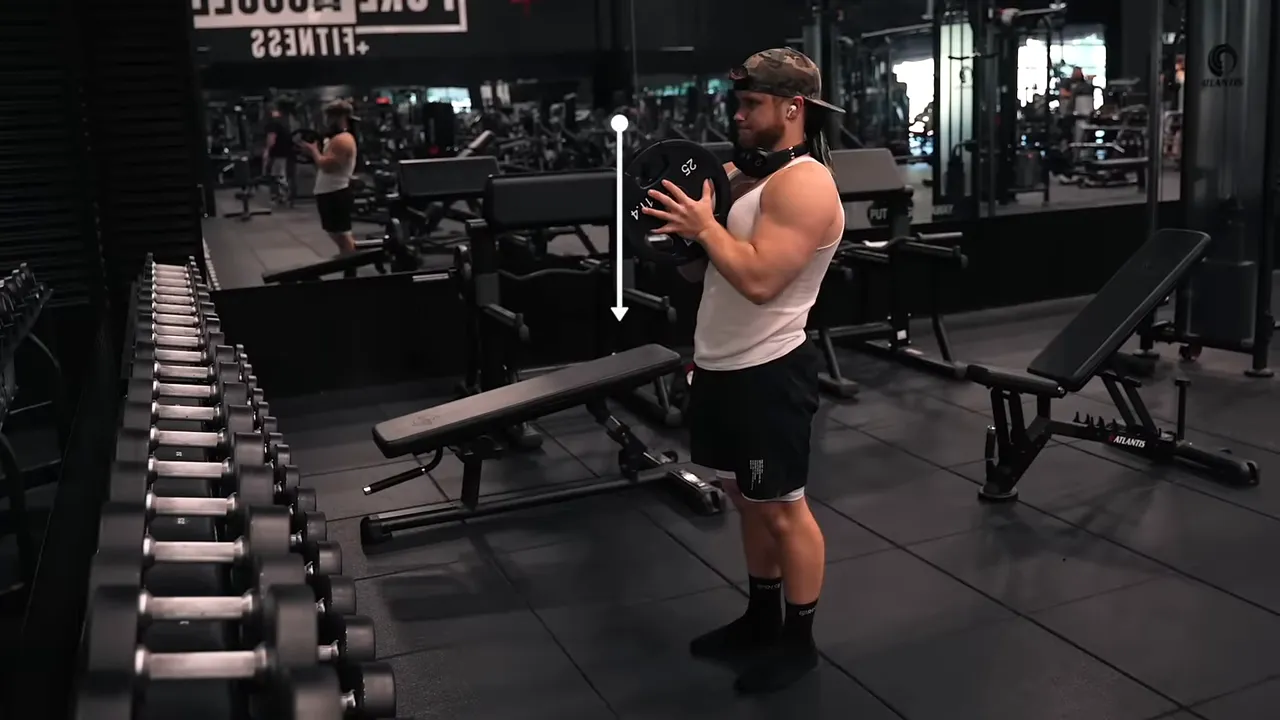
Lying down improves the resistance direction somewhat, but I would still choose dumbbells instead for better pec loading.
Alternating One-Arm Dumbbell Press: 1.5 out of 5 stars
This will train your chest, but the extra balance demand can limit how effectively you load the pecs.
Alternating sides also gives each pec a brief rest between reps. That is not necessarily detrimental if you take each side to or close to failure, but I do not see a compelling advantage for chest growth.
For that goal, I would generally use a standard dumbbell press and move both arms together.
Dumbbell Pullover: 1.5 out of 5 stars for Chest Building
I do not consider the dumbbell pullover a strong chest-focused choice. I view it primarily as a movement for the lats, triceps, and teres muscles rather than a reliable way to prioritize the pecs.
You may feel your chest contract when you squeeze at the top, but that alone is not enough for me to give it a high chest-building rating. This score is about its usefulness for pec growth, not a claim that the exercise has no place in training.
Use the Rankings to Build a Better Routine
A list of exercises is a starting point, not a complete chest program. Exercise order, rep ranges, and how the movements complement one another still matter.
The bench press gives you a convenient way to drive heavy progressive overload. Flyes and press-arounds add pec-focused volume without asking as much from the triceps. AMRAP push-ups and stretch holds are options I generally reserve for the end of a session.
You do not need to cram all 10 exercises into your routine. Choose movements that fit your body, work with your equipment, and give you a clear way to improve. The best combination is one you can perform well, enjoy, and progress consistently.
My complete training programs cover push/pull/legs, upper/lower, and full-body routines for different experience levels. If you are unsure which structure best fits your goals, my program selector can help narrow it down.
|


