A great shoulder exercise needs to do more than give you a pump. It should load the delts effectively, feel good on your joints, and give you a straightforward way to get stronger over time.
Those are the standards I’m using to rank the most popular shoulder exercises, from S tier for my favorites down to F tier for movements I generally wouldn’t recommend. These rankings are specifically about muscle-building potential, not which exercise produces the most impressive feat of strength.
And because your shoulders have three distinct heads, I’m picking a winner for the front, side, and rear delts, plus one overall champion.
Key Takeaways
- Prioritize shoulder exercises that offer stretch loading, comfortable resistance, and straightforward progression.
- The cable lateral raise is my best overall shoulder exercise for muscle growth.
- Machine presses and reverse cable crossovers are my top front-delt and rear-delt choices.
- Front raises are usually redundant when your program already includes substantial pressing.
Table of Contents
- What Makes a Shoulder Exercise Great?
- Dumbbell Lateral Raises: Convenient, but Not All Equal
- Overhead Presses: Great for Front Delts, Less Complete Than You Might Think
- Machine, Cable, and Band Lateral Raises
- Upright Rows: Better Than Their Reputation
- The Best and Worst Rear-Delt Exercises
- The Final Verdict: Best Overall and Worst Overall
- Go Deeper With The Muscle Ladder
What Makes a Shoulder Exercise Great?
To earn a spot in S tier, an exercise needs to check three boxes:
- High tension, especially in the stretched position. I want the target muscle working hard through a useful range of motion, not just at the top.
- A good feel. The movement should be comfortable on your shoulders and have a smooth resistance profile.
- Simple progression. You should be able to add reps or weight over time without turning the exercise into something completely different.
My tier system runs from S, my favorites, through A, which I strongly recommend, to B, which still has plenty of useful options. C means there are usually better choices, while D means the exercise probably isn’t a great fit for most people. F is reserved for movements I generally wouldn’t recommend. A plus indicates the upper end of a tier.
The three delt heads matter
- Anterior, or front delts: raise your arms in front of your body.
- Lateral, or side delts: lift your arms out to the sides.
- Posterior, or rear delts: pull your arms back.
For exercise selection, it helps to think of these heads almost as separate muscles. One excellent pressing movement doesn’t automatically give you complete shoulder development.
I also slightly favor side-delt exercises in these rankings. The side delts contribute a lot to that broad, tapered, X-frame look, while your front delts already get substantial work from chest pressing. For many lifters, the side and rear heads need more attention than the front.
One important caveat: although research on training at longer muscle lengths gives us good reasons to value the stretch, direct evidence specific to the shoulders is limited. These rankings combine the available research with biomechanics, progression, and practical experience. They aren’t proof that every A-tier exercise will outperform every B-tier exercise for every person.
Dumbbell Lateral Raises: Convenient, but Not All Equal
Standing dumbbell lateral raise: B tier
The standard dumbbell lateral raise might be the most time-efficient shoulder exercise available. Grab a pair of dumbbells and you’re ready. There’s no cable setup, and you can train both arms together.
The limitation is the resistance curve. With your arms hanging at your sides, the dumbbells create essentially no external torque at the shoulders. The movement becomes hardest around shoulder height, when the side delts are in a more shortened position.
That doesn’t mean dumbbell laterals don’t work. Plenty of bodybuilders have built huge side delts with them, and I still do them when I’m pressed for time. They’re effective, just not my top choice when better stretch-loading options are available.
Lean-in dumbbell lateral raise: A tier
Leaning your body into a support changes your shoulder’s orientation relative to gravity. That gives the side delt more loading near the bottom than you get from standing upright.
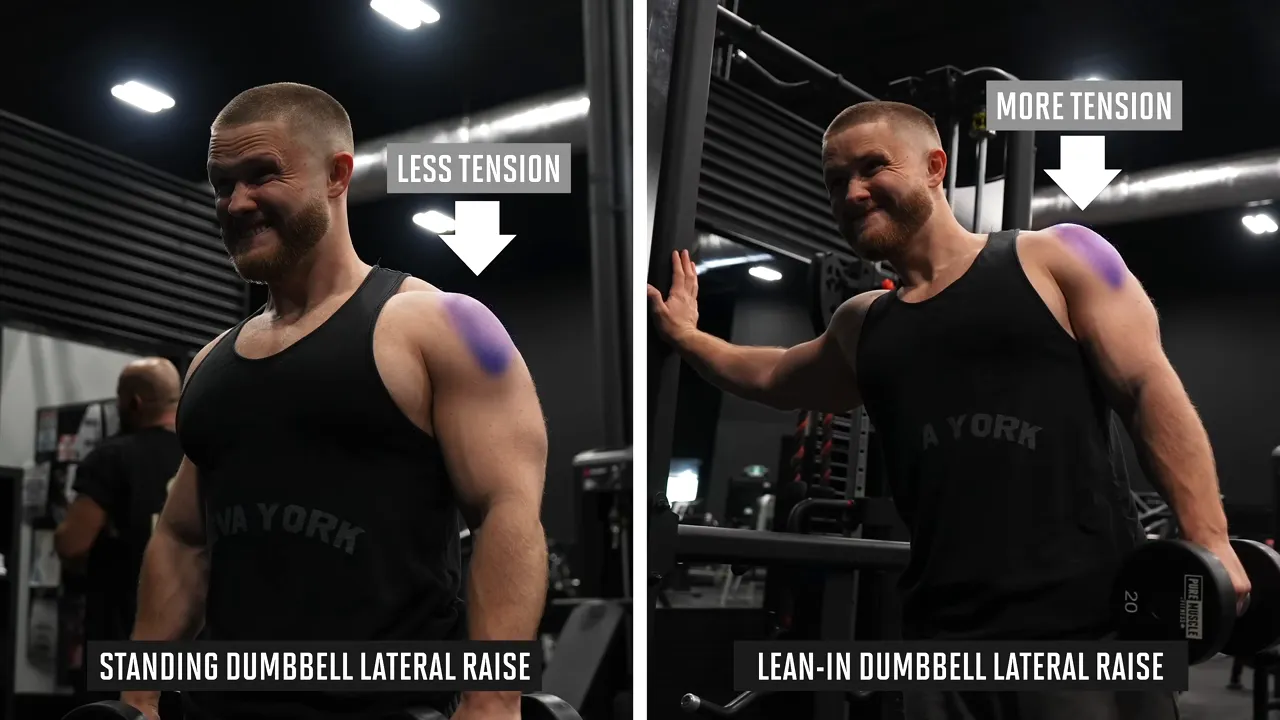
For me, this is the most effective way to perform a dumbbell lateral raise. It keeps the simplicity of dumbbells while improving the part of the resistance curve I care about most.
Lean-away dumbbell lateral raise: B tier
Leaning away from a rack may shift some emphasis from the rotator cuff toward the lateral delt, depending on how you interpret the research on shoulder position during lateral raises.
But it doesn’t solve the main problem: the stretched position still isn’t loaded particularly well. It’s a reasonable variation, but I’m keeping it in B tier.
Super-ROM lateral raise: B tier
The super-ROM lateral raise takes the dumbbells beyond shoulder height and up overhead. I picked this one up from Dr. Mike Israetel, and it absolutely lit my delts up.
I like that the extra range lets you reach a very strong side-delt contraction. Since we don’t have much direct shoulder research comparing the importance of the stretch versus the squeeze, I think this variation is worth trying.
Still, adding range at the top doesn’t fix the lack of resistance at the bottom. That keeps it in B tier.
Arnold-style side-lying dumbbell raise: A tier
This one looks unusual, but I really like it. Lying on your side against a bench changes the relationship between your arm and gravity, allowing substantial tension while the side delt is stretched.
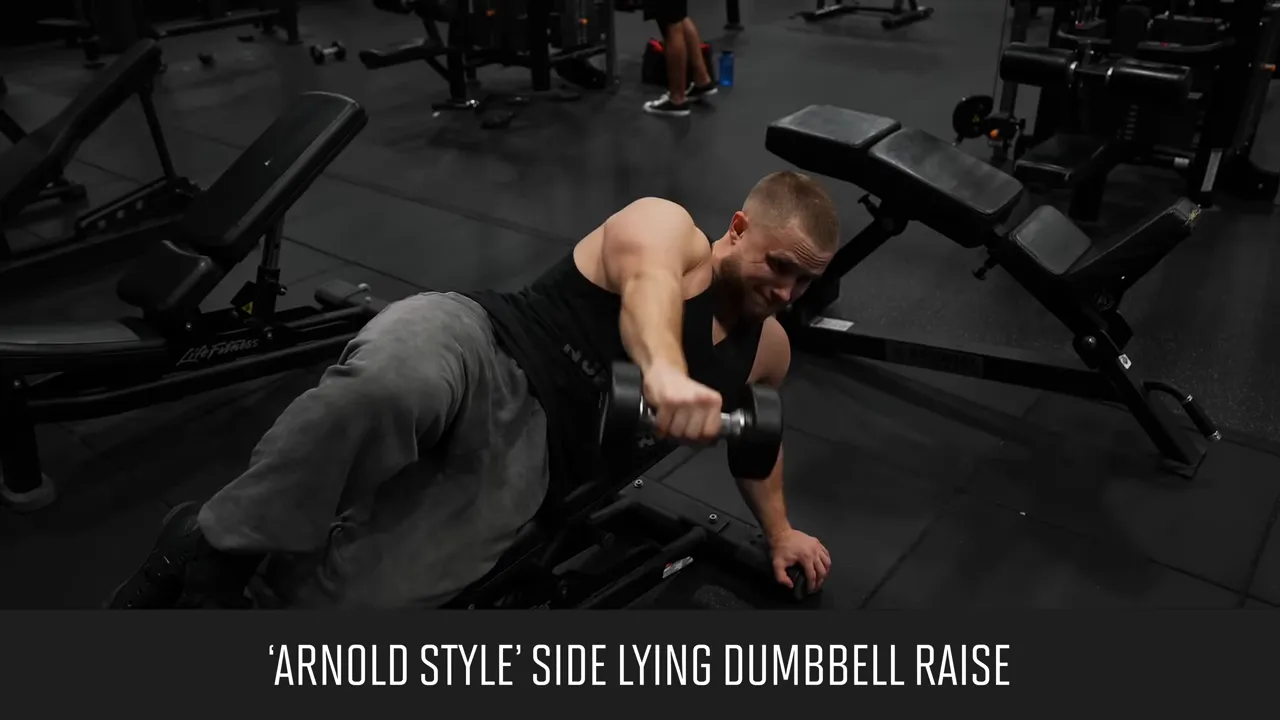
You also get support from the bench, a large range of motion, and a great side-delt pump. It’s a strong option if you want better stretch loading without using cables.
Overhead Presses: Great for Front Delts, Less Complete Than You Might Think
Standing barbell overhead press: B+ tier
A big standing overhead press is seriously impressive. Of all the major barbell lifts, it might be the one that impresses me most.
It also has real muscle-building strengths. You can load the shoulders heavily in the bottom position, progression is easy to track, and mastering the technique is gratifying. Even when adding weight is stubborn, you can often add a rep or improve your execution.
For shoulder hypertrophy, though, I see two limitations.
- It’s primarily a front-delt exercise. The muscle-activation research on shoulder pressing supports a strong anterior-delt emphasis, rather than equally high involvement across all three heads.
- Standing adds a balance demand. Your lower body and core have to keep you stable, which can make the exercise less focused on exhausting the shoulders than a supported alternative.
Neither is a deal breaker. I think the overhead press gets too much hate from some hypertrophy-focused lifters and too much credit from some barbell purists. B+ feels right.
Seated barbell overhead press: B tier
Sitting down addresses much of the balance issue. You can focus more directly on pressing rather than keeping your whole body steady.
But it’s still front-delt dominant. And personally, I don’t find the seated barbell version quite as satisfying as the standing lift. It stays in B tier.
Seated dumbbell shoulder press: A tier
Switching from a barbell to dumbbells improves a few things:
- Setup is usually quicker.
- You can get more range of motion at the bottom and top, especially if you let the dumbbells move toward each other overhead.
- I think the side delts contribute a little more as they help control the dumbbells’ path.
It’s an excellent shoulder-building movement and my next choice when a good machine press isn’t available.
Machine shoulder press: A+ tier and my best front-delt exercise
A good shoulder press machine is my favorite vertical pressing option for hypertrophy. The key word is good: it needs to fit your body and let you lower into a deep, comfortable stretch.
With less coordination required, you can push the delts to failure without worrying as much about losing control of independent weights. On the right machine, I also find the movement feels better than dumbbells.
It’s still primarily a front-delt exercise, but that’s exactly why it wins my front-delt category.
Front raises: D tier
Dumbbell, cable, and machine front raises all land in D tier for the same reason: they’re usually redundant.
If your program already includes chest pressing and shoulder pressing, your front delts are probably getting plenty of work. More front-delt isolation often isn’t where your training time is best spent.
There are exceptions. If your anterior delts genuinely lag behind, or you can’t perform presses, front raises can be useful. That’s why they aren’t an F-tier exercise.
Machine, Cable, and Band Lateral Raises
Atlantis standing machine lateral raise: A+ tier
This machine feels amazing. The resistance is smooth and consistent, and it’s easy to add a rep or a little weight from week to week. I’ve progressed enough on it that I’m getting close to maxing out the stack.
The small drawback is that you can’t bring your arms across your body. That limits the stretch compared with a cable lateral raise or the side-lying dumbbell variation.
It’s very close to S tier, and I still use it every week. But that restriction keeps it at A+.
Seated machine lateral raise: B tier
I still like seated lateral raise machines, but the ones with pads higher on the upper arms don’t feel quite as good to me.
With the pad closer to the shoulder, the shorter moment arm requires more machine resistance to create a similar shoulder demand. On the machine I use, that can make my shoulders feel a bit cranky.
This is partly a fit-and-feel judgment, not a declaration that all seated lateral machines are inferior. For me, it sits between A and B, and I’m being picky with B.
Cable lateral raise: S tier
The cable lateral raise checks every box. It loads the side delt in the stretched position, feels smooth through the movement, and makes progression straightforward.
Set the pulley around the height of your hand in the starting position. The cable produces its greatest turning effect at the shoulder when the cable and your arm form roughly a 90-degree angle. Setting up this way lets you create a high demand near the bottom instead of saving all the difficulty for shoulder height.
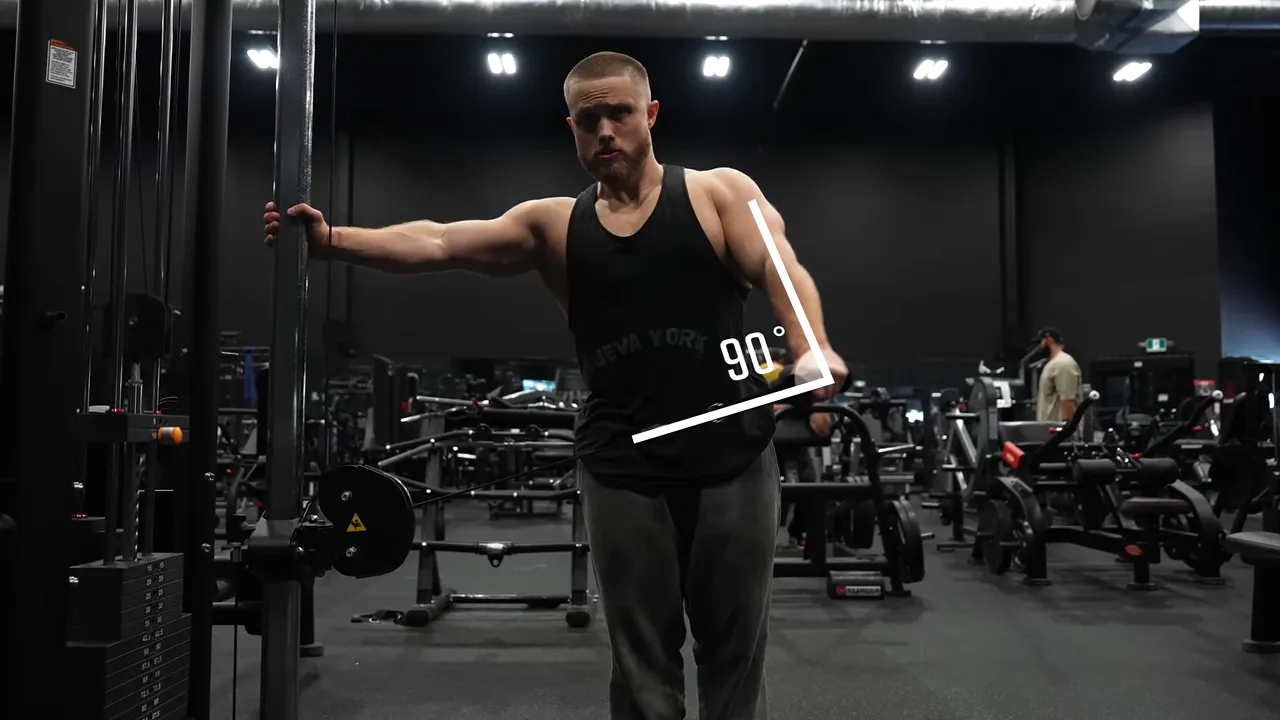
A standard D-handle works great. I personally like wrist cuffs because my forearms otherwise get a pump that distracts me from my delts, even though grip strength isn’t actually limiting the set.
Holding nothing can feel awkward, so I sometimes hold a lacrosse ball while using the cuff. Is it a little gimmicky? Sure. But I love how it feels. You don’t need the ball, or even the cuff, to make this an excellent exercise.
This is my number one side-delt exercise.
Cable Y-raise: S tier
The cable Y-raise gives you an even larger range of motion. Rather than stopping with a conventional lateral raise, sweep your arm up, out, and back into a Y position.
It’s another S-tier option. The only reason it doesn’t take my top spot is that some people find the movement a little more awkward to learn.
Behind-the-back cuffed lateral raise: S tier
This might be the most gimmicky-looking exercise I actually do, but it works incredibly well. Its main advantage over single-arm cable laterals is efficiency: you can train both arms at once.
The setup takes a little practice:
- Attach your wrist cuffs to the two cables.
- Optionally hold a lacrosse ball in each hand.
- Carefully step over one cable while turning so the cables cross behind your body.
- Step forward into position.
- Raise your arms out and slightly forward.
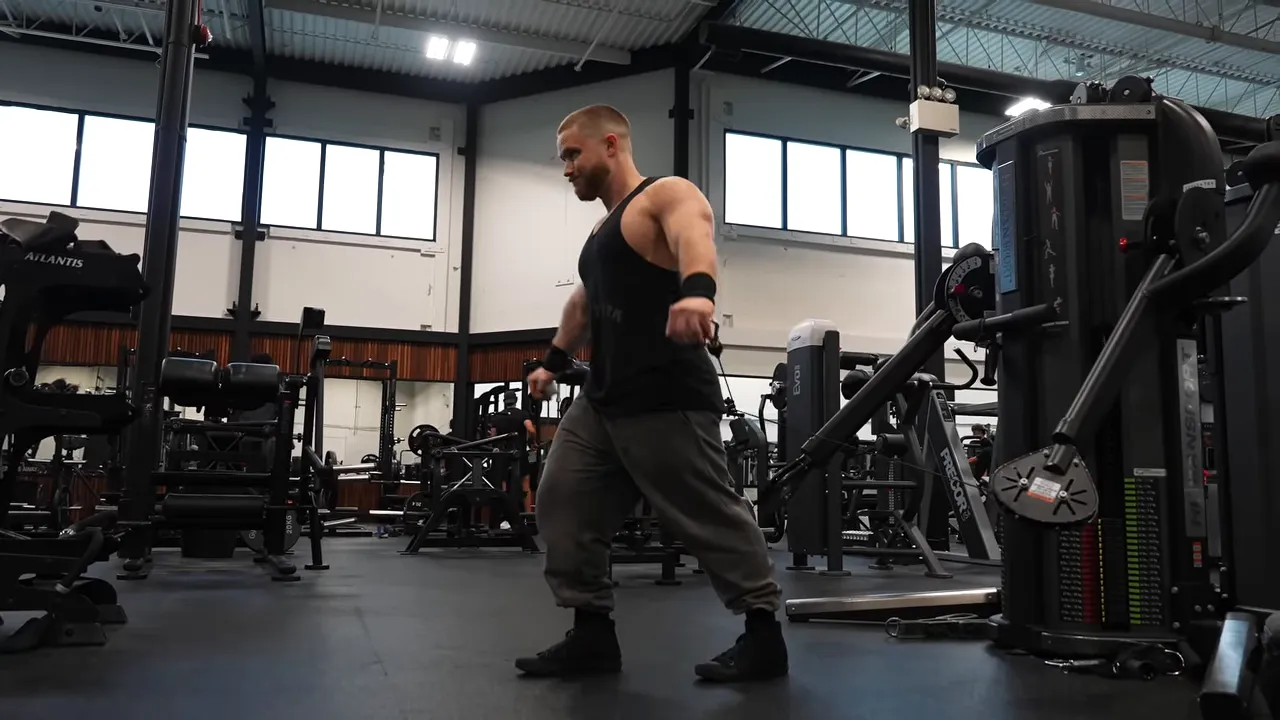
Who cares if it looks a little strange? It provides an excellent shoulder stimulus and lets you finish both sides together. S tier.
Banded lateral raise: C tier
Bands are my least favorite lateral raise option. With the usual setup, there’s little to no resistance at the bottom, then the movement gets hardest at the top as the band stretches.
That gives you the same basic limitation as dumbbells, with an especially top-heavy resistance profile. If a band is all you have, it can still be useful. Otherwise, I’d choose dumbbells, cables, or a machine.
Upright Rows: Better Than Their Reputation
Upright row: B tier
The upright row is overhated. It trains the side delts and upper traps, with some biceps involvement, and I like it as an overall upper-shoulder and trap builder.
My preferred version uses a rope on a cable. That lets me spread the ends outward as I row, rather than locking my hands into a fixed position.
I don’t think upright rows deserve a blanket reputation as a shoulder-wrecking exercise for people with healthy shoulders. That still doesn’t mean you should force a version that causes pain.
As a pure delt builder, its limitation is that the upper traps can take over before the side delts are fully exhausted. That keeps it in B tier, even though I’m a fan of the movement overall.
The Best and Worst Rear-Delt Exercises
Reverse pec deck: A tier, or S tier with a sideways setup
The reverse pec deck provides consistent resistance, and the chest support makes it easy to direct your effort toward the rear delts.
The standard version is excellent. But I prefer sitting sideways and training one arm at a time, because that lets the working arm reach farther across the body for a deeper stretch.
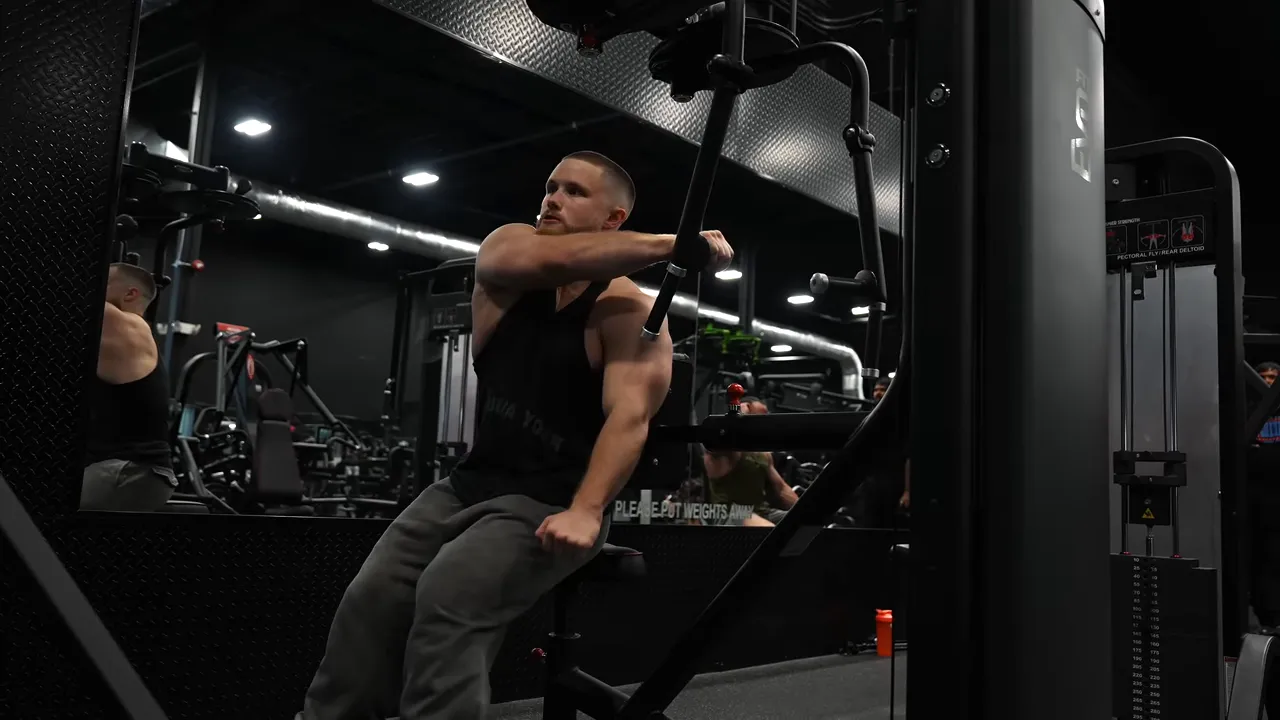
The trade-off is time. You need to train each side separately. To make it more efficient, alternate arms with minimal rest, letting one side recover while the other works.
My instinct puts the standard exercise in A tier. If you can get that sideways position locked in comfortably, it earns S tier.
Rope face pull: A tier
Face pulls can train the rear delts really well, especially with a few setup adjustments:
- Set the rope a little lower.
- Use an underhand grip.
- Externally rotate your shoulders as you pull, finishing in something like a rear double-biceps pose.
The limitation is that your mid traps are going to contribute, no matter how carefully you cue the movement. That isn’t bad if you also want to grow your mid-back, but it can mean the rear delts aren’t the muscle that limits the set.
Still, face pulls offer a good stretch, feel good, and are solid for progressive overload. They deserve A tier.
Bent-over reverse dumbbell flye: B tier
Reverse dumbbell flyes have the same resistance-curve issue as standing dumbbell lateral raises: when the weights hang directly beneath your shoulders, there’s essentially no external shoulder torque in that stretched position.
They’re still a useful option if you don’t have cables or need to get through your session quickly. I do them myself when I’m in a hurry, and they often leave my rear delts surprisingly sore.
But they don’t provide enough loading in the stretch to rank alongside my favorite rear-delt options. B tier.
Reverse cable crossover: S tier and my best rear-delt exercise
The reverse cable crossover combines a huge range of motion with smooth, consistent tension. Crossing your arms at the top lets you get an excellent rear-delt stretch.
A few details make it especially effective:
- Hold the cable ends rather than adding handles. This keeps the crossover smooth and avoids handles clanging together.
- Alternate which arm crosses on top from set to set. That keeps the setup balanced between sides.
- Think about sweeping outward, not yanking backward. That cue helps keep the movement focused on the rear delts.
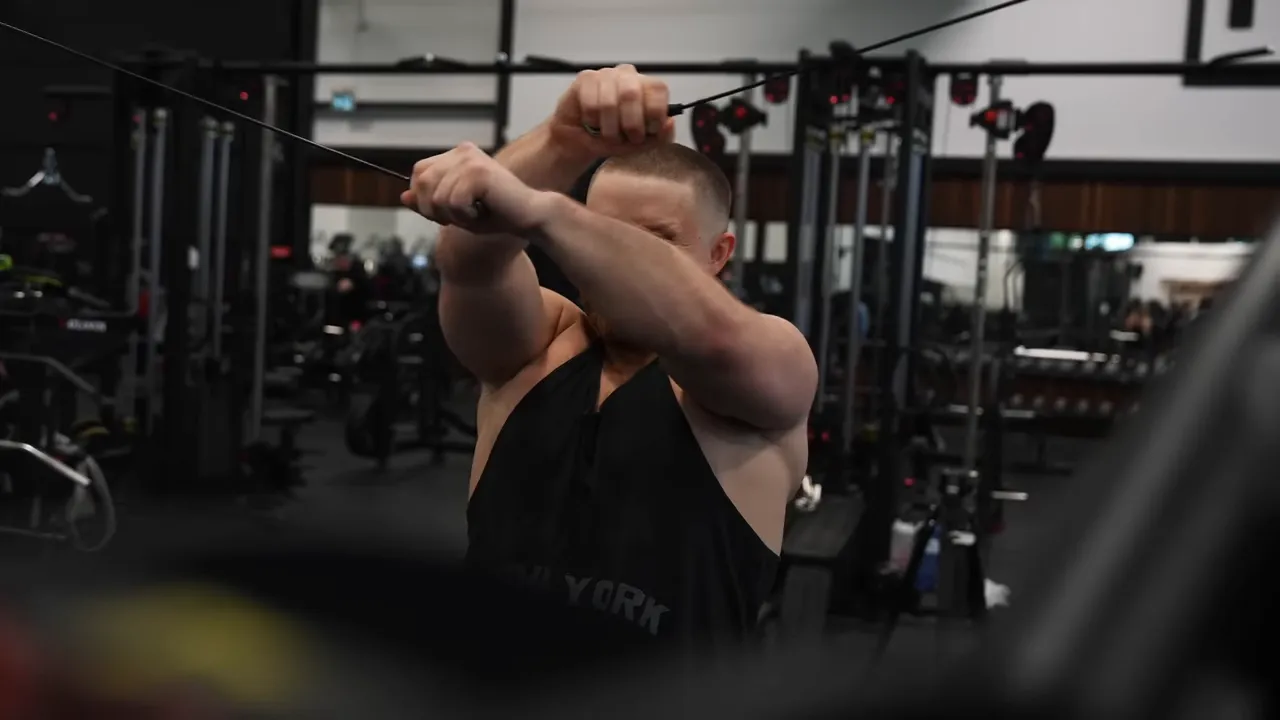
When you get this one right, the connection with the rear delts is excellent. It easily earns S tier and takes my number one rear-delt spot.
The Final Verdict: Best Overall and Worst Overall
My winners for each delt head are:
- Front delts: machine shoulder press.
- Side delts: cable lateral raise.
- Rear delts: reverse cable crossover.
If I have to crown one exercise as the best of the best, the cable lateral raise gets S+ tier. It’s easy to learn, highly effective, comfortable, and straightforward to progress. It checks all my boxes for hypertrophy.
The lowest-ranked exercise is the front raise. Not because it can’t grow muscle, but because it often duplicates work your program already covers. It stays in D tier rather than F because it still has a place for lifters who need direct front-delt work or can’t press.
The bigger lesson is that lower-ranked doesn’t mean useless. I still use several B-tier movements. Equipment access, time, comfort, and your individual weak points all matter. Use the rankings to make better choices, not to convince yourself that an exercise you enjoy suddenly stopped working.
Go Deeper With The Muscle Ladder
For a broader guide to building muscle, my book The Muscle Ladder organizes training into 15 chapters, each representing another rung in the process. It also includes a chapter on nutrition and supplements, an extensive technique section covering fundamental exercises, and 20 training programs for different experience levels.
|