Growing your biceps can make a dramatic difference in how jacked you look in a T-shirt. But with so many curl variations to choose from, which ones actually deserve a place in your routine?
My top pick is the face-away Bayesian cable curl, with the standard 45-degree preacher curl a very close second. At the other end, waiter curls offer a lot of awkwardness without much upside.
That doesn’t mean every other exercise is useless. Most curls can build muscle if you train hard and progress over time. The point of these rankings is to separate the exercises that check almost every box from the ones that make building bigger arms unnecessarily complicated.
Key Takeaways
- The best biceps exercises combine loaded stretch, joint comfort, and straightforward progression.
- Bayesian cable curls and 45-degree preacher curls are my top choices for biceps growth.
- Hammer curls emphasize the brachialis, an important muscle beneath the biceps.
- Modified 21s finish with bottom-half partials rather than full-range repetitions.
Table of Contents
- What Makes a Biceps Exercise Great?
- Standing Free-Weight Curls
- Preacher Curls and Bench-Supported Variations
- Lower-Priority Curls and Chin-Ups
- 21s: A Better Way to Organize the Set
- Cable Curls: Where the Best Overall Exercise Wins
- Cheat Curls vs. Strict Curls
- Hammer Curls, the Brachialis, and Biceps Peak
- The Best Biceps Exercises to Build Around
What Makes a Biceps Exercise Great?
I’m ranking these exercises for muscle-building potential using three main criteria:
- High tension, especially in a stretched position. Feeling a stretch is useful, but loading the muscle in that position matters more.
- A good feel. The exercise should have a smooth resistance profile and shouldn’t cause elbow or wrist pain.
- Simple progression. You need a practical way to add weight or reps over time.
Here’s how to interpret the tiers:
- S tier: My favorites. Do them if you can.
- A tier: Strong exercises I highly recommend.
- B tier: Useful in certain contexts, but there may be better options.
- C tier: Still potentially useful, but not my first choice for most people.
- D tier: Probably not a great option for most people.
- F tier: Generally not recommended.
These rankings combine research, biomechanics, and my own training experience. Not every exercise has been tested head-to-head, so some placements involve more judgment than others.
A Little Biceps Anatomy Goes a Long Way
The biceps have two heads: the short head on the inside of your upper arm and the long head, which contributes more to the appearance of the biceps peak. Underneath them sits the brachialis, another substantial elbow flexor that deserves attention if you want bigger arms.
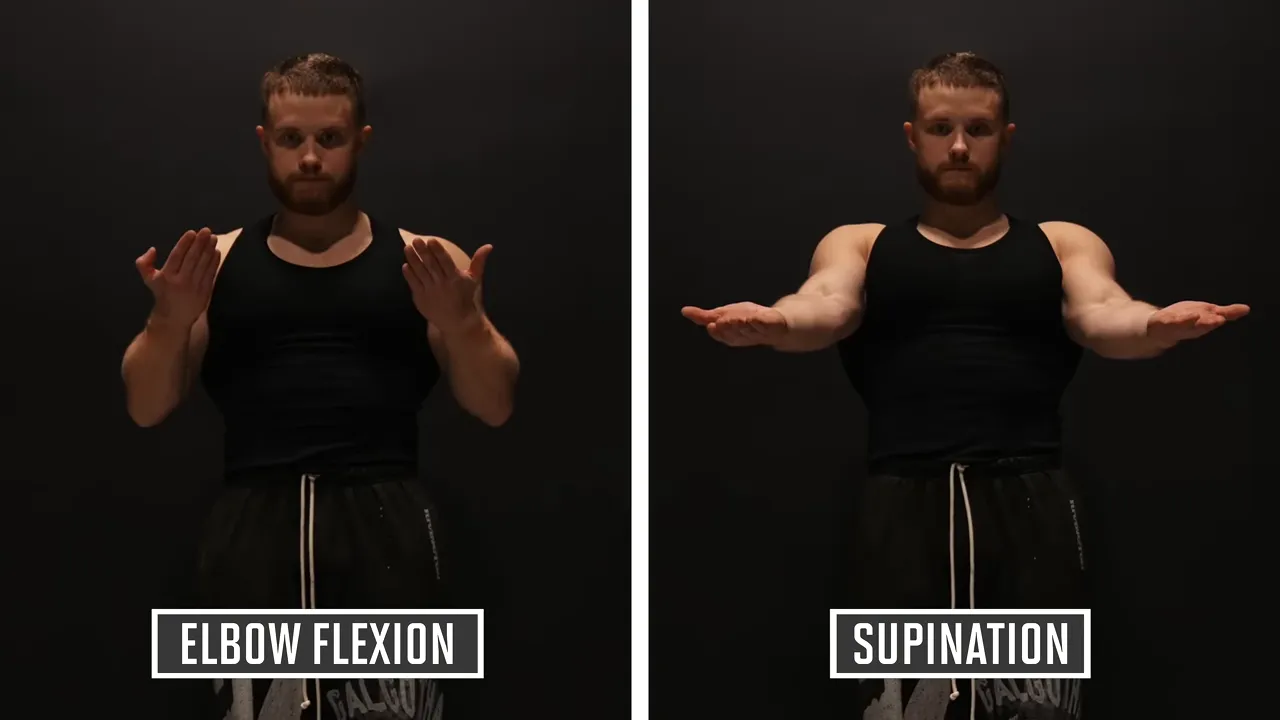
The biceps perform two main functions:
- Elbow flexion: Bending your elbow, as you do during a curl.
- Supination: Rotating your forearm so your palm faces up.
You can feel that second function without any weight. Turn your palm from facing down to facing up and notice your biceps contract. During curls, I like to think about driving through my pinkies to emphasize that supinated position.
Both biceps heads also cross the shoulder joint. Holding your upper arm behind your torso lengthens the biceps at the shoulder, which helps explain why arm position matters when choosing a curl.
Standing Free-Weight Curls
Barbell Curl: B Tier
The barbell curl is a classic for a reason. It’s accessible, simple, and easy to progressively overload with small weight increases.
Its biggest limitation is the resistance profile. The exercise is hardest around the point where your elbow reaches 90 degrees. Above and below that, the external torque drops off. At the very bottom, when the biceps are longest within the movement, there’s essentially no external elbow-flexion torque from the bar.
That’s not ideal, but it doesn’t mean barbell curls won’t grow your arms. Push them hard and progress, and they can absolutely work.
Personally, the straight bar also bothers my wrists. And please don’t occupy a busy squat rack just to curl. There are plenty of places to train biceps, but far fewer places to squat safely. Accessibility keeps this one in B tier.
EZ Bar Curl: A Tier
The EZ bar keeps the simplicity and overload potential of the straight bar while giving your wrists a more comfortable angle. I prefer the outer grip because it puts my hands around shoulder width.
That angled grip sits between fully supinated and neutral. In theory, it may shift some work toward the brachialis and brachioradialis rather than keeping the emphasis entirely on the biceps. I still use the pinky-drive cue to reinforce my intent to supinate.
The resistance curve isn’t perfect, but I really like this as a heavier free-weight movement in the 6 to 8 rep range. Convenience, comfort, and straightforward progression earn it an A.
Standing Dumbbell Curl: Low A Tier
Standing dumbbell curls have the same low-tension bottom position as barbell curls, but they’re convenient and let each arm work independently. That can be helpful when addressing biceps size asymmetries.
I prefer curling both arms simultaneously rather than alternating. Alternating gives each arm a relatively long, unloaded break between reps. Research on rest within a set makes me suspect those repeated breaks may be slightly less favorable for growth, although that isn’t a direct comparison of alternating and simultaneous curls.
I also wouldn’t write off an exercise just because its tension curve isn’t theoretically perfect. Our study comparing lengthened partials with full range of motion in trained lifters made me more cautious about treating any one biomechanical feature as the whole story.
Performed with both arms together, standing dumbbell curls belong in low A tier.
Preacher Curls and Bench-Supported Variations
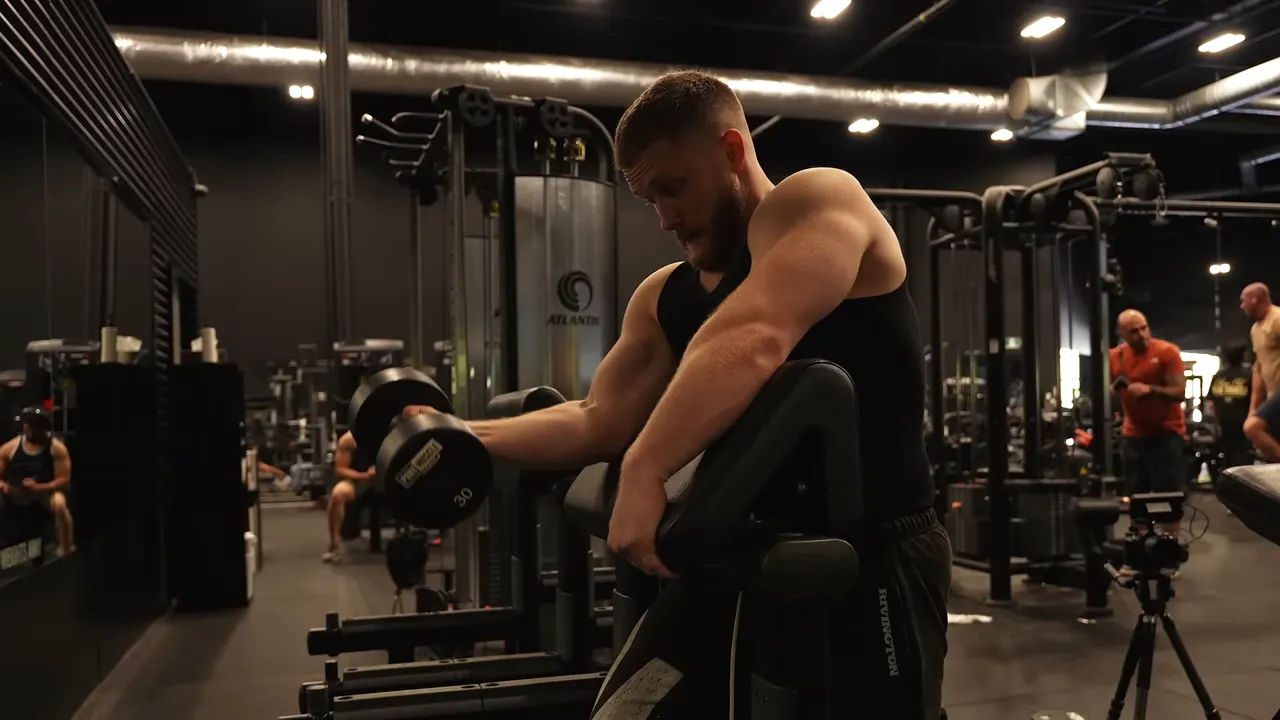
Dumbbell Preacher Curl: S Tier
Putting your upper arm on an angled preacher pad immediately improves the dumbbell curl’s resistance profile. You get meaningful tension near the bottom rather than letting the weight hang directly beneath your elbow.
Your arm is in front of your torso, so this isn’t the greatest possible stretch at the shoulder. But when you lower all the way down, you still get a good stretch at the elbow, combined with high tension.
A loaded stretch seems more important than simply achieving the biggest possible stretch.
A study comparing preacher curls and incline curls found significantly greater distal biceps growth, meaning growth closer to the elbow, with preacher curls. One likely explanation is that preacher curls load the lengthened position better, even though incline curls place the biceps at a longer overall muscle length.
The pad also locks your upper arm into place, making it much harder to cheat. Great tension, stability, and easy progression make this an S-tier exercise.
Incline Dumbbell Curl: Low A Tier
Incline curls place your upper arms behind your torso, giving the biceps a substantial stretch. They’re quick to set up, easy to perform, and still a solid option.
The catch is that the dumbbells provide very little elbow-flexion torque at the deepest stretch. Given the preacher-versus-incline findings, I can’t rank them equally. I still use incline curls occasionally, but they land in low A tier.
Lying Dumbbell Curl: A Tier
Think of this as a more extreme incline curl. Lying back on a flat bench creates a huge stretch, especially near the upper biceps close to the shoulder.
I first tried these after seeing them in Dr. Mike’s arm routine. They look a little wonky, but they felt surprisingly good. Compared with a standard incline curl, I also felt more tension in the stretched starting position.
That’s a personal observation, not proof of superior growth. I’d also skip this variation if the position bothers your shoulders. It’s worth trying if it feels comfortable, and I’m putting it in A tier.
Scott Curl: C Tier
For this ranking, the Scott curl refers to the preacher-style variation with your upper arm supported vertically.
Larry Scott had incredible biceps, but placing your upper arm vertically removes the main advantage of the angled preacher curl: tension near the bottom. The dumbbell hangs beneath the elbow again.
I don’t see a compelling reason to choose it over the standard 45-degree version for muscle growth. C tier.
Flat Bench Curl: Low B Tier
This takes the preacher idea in the opposite direction by supporting your upper arm horizontally. Tension is highest in the most stretched position, then drops as you curl upward.
I used these for a while as a high-rep finisher. The loaded stretch is great, but progression became frustrating. In my experience, you’re largely confined to light weights and higher reps, and I eventually gravitated back to the standard preacher curl.
Useful as a stretch-focused burnout, but not my favorite long-term staple. Low B tier.
Machine Preacher Curl: S Tier
The machine preacher curl gives you an especially stable, locked-in setup. I do these every week, usually working in the bottom half of the range to emphasize the lengthened portion.
That’s how I personally use the exercise, not a requirement that everyone abandon full-range reps. The combination of support and stretch-focused loading makes it an easy S-tier pick.
Lower-Priority Curls and Chin-Ups
Waiter Curl: F Tier
Waiter curls are probably the most gimmicky biceps exercise I regularly see people doing. Supporting a plate or dumbbell head on your palms can crank your wrists into an awkward position, and the setup makes overload unnecessarily limiting.
If you want a little wrist extension to reduce forearm involvement, regular dumbbells still allow that, with more freedom to find a comfortable position.
I’d just use dumbbells. Waiter curls go in F tier and take my pick for worst of the worst.
Drag Curl: C Tier
Dragging your elbows backward as you curl has some theoretical appeal because it lengthens the biceps at the shoulder. But you’re simultaneously shortening the muscle at the elbow.
Those two actions partially offset one another, so total biceps length may not change much throughout the rep. It reminds me of the hamstrings during squats, where movement at two joints limits the overall change in muscle length.
That analogy isn’t direct evidence that drag curls are inferior. There isn’t direct research here to settle the question. Still, I’d favor a standard dumbbell curl over this variation. C tier.
Spider Curl: C Tier
Spider curls put your arms in front of your torso while you lie chest-down on an incline bench. That shoulder position shortens the biceps, and you don’t get a particularly large stretch anywhere in the movement.
The dumbbells can also hit the bench and interrupt your rhythm. They can work, but I think there are better options. C tier.
Chin-Up: B Tier
Chin-ups provide a solid range of motion at the elbow. Of the back exercises, they’re one of my strongest picks for also building the biceps, especially for beginners.
The limitation is that so much back musculature is involved. Your biceps may not be the muscle that limits the set, making chin-ups less targeted than an isolation exercise.
Still, they require only your body weight and somewhere to hang. That accessibility earns them B tier.
21s: A Better Way to Organize the Set
Traditional 21s use this sequence:
- Seven bottom-half reps.
- Seven top-half reps.
- Seven full-range reps.
It’s a fun challenge, but I don’t love the order. You start with the lengthened portion, move to the shortened portion, then try to finish with full-range reps.
I prefer reversing the emphasis so you finish with lengthened partials:
- Seven seated top-half curls. Sitting helps standardize the shortened range.
- Seven standing full-range curls.
- Seven bottom-half curls.
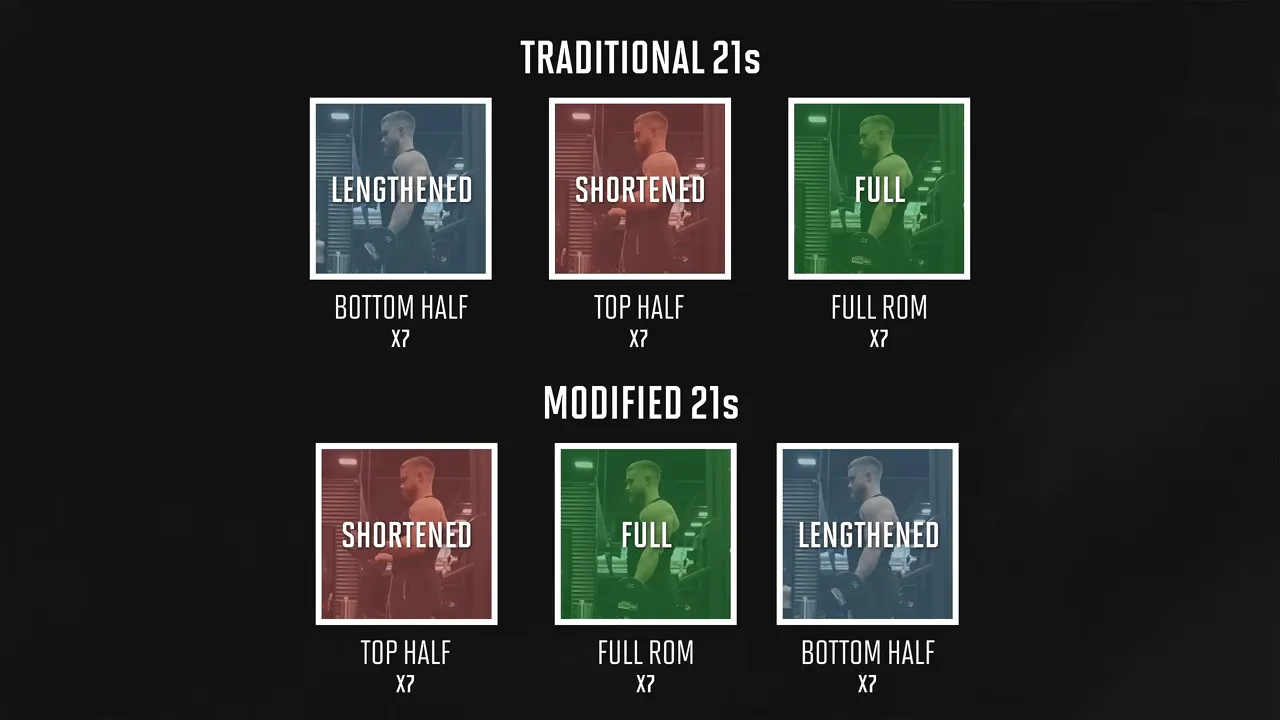
This sequence lets you move into partial reps as fatigue builds and end with repeated work in the lengthened portion. I don’t always stop at exactly seven on the last segment, either. I keep going until I can’t get at least halfway up.
Traditional 21s: high C tier. Modified 21s: low A tier. Same basic ingredients, better organization.
Cable Curls: Where the Best Overall Exercise Wins
Standard Cable Curl: Low A Tier
A standard cable curl gives you a nice, relatively even feeling of tension throughout the movement. It’s easy to use and something I still include periodically.
With your arms at your sides, however, you don’t get much of a prestretch at the shoulder. Good, but not quite great. Low A tier.
Face-Away Bayesian Cable Curl: S Tier and Best Overall
Turn around, face away from the cable stack, and let your upper arms sit behind your torso. Now you combine a substantial biceps stretch with cable resistance that continues to load the movement.
Here’s how I set it up:
- Position the pulleys around hand height.
- Take one or two steps forward.
- Keep your upper arms behind your torso.
- Curl both arms at the same time.
If you don’t have access to a dual-stack cable station, train one arm at a time.
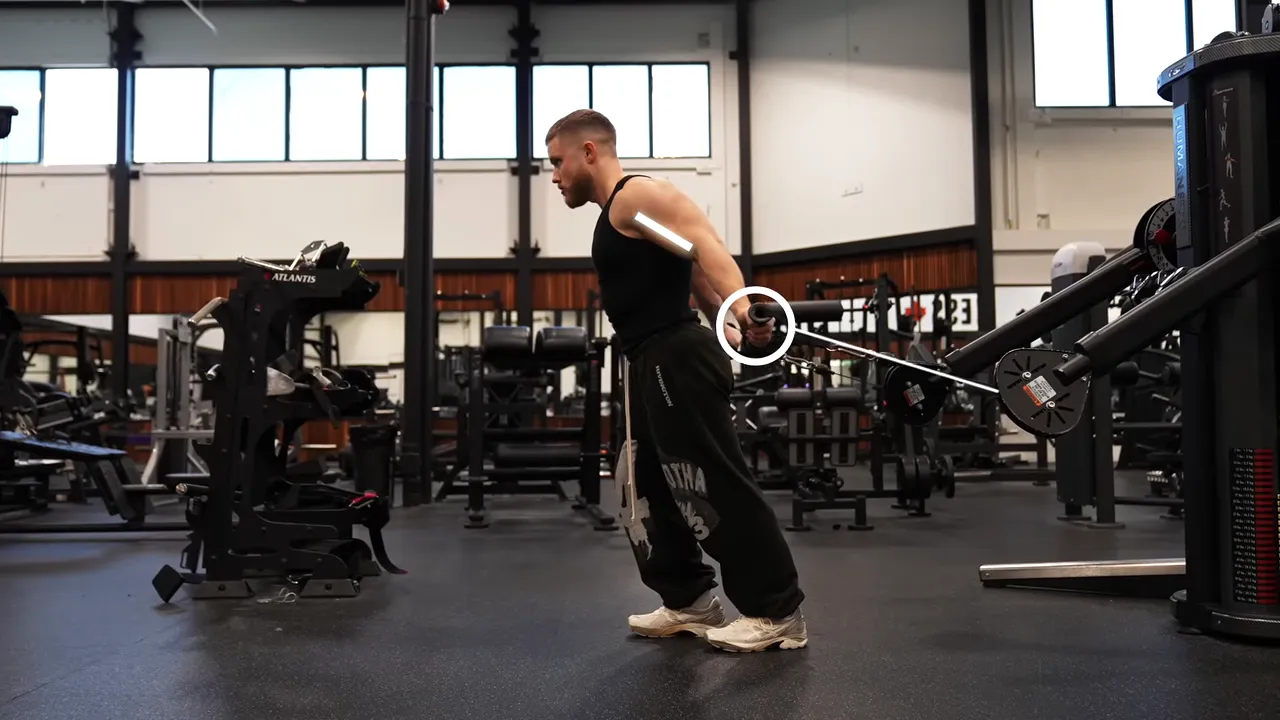
I especially like this exercise for people trying to improve the appearance of their biceps peak because the long head experiences a high degree of stretch and tension. That’s a biomechanical rationale, not proof that you can reshape your genetic muscle structure.
For its combination of stretch, tension, feel, and progression, the Bayesian curl is my best overall biceps exercise.
Higher-Cable Bayesian Variation: A Tier, Provisionally
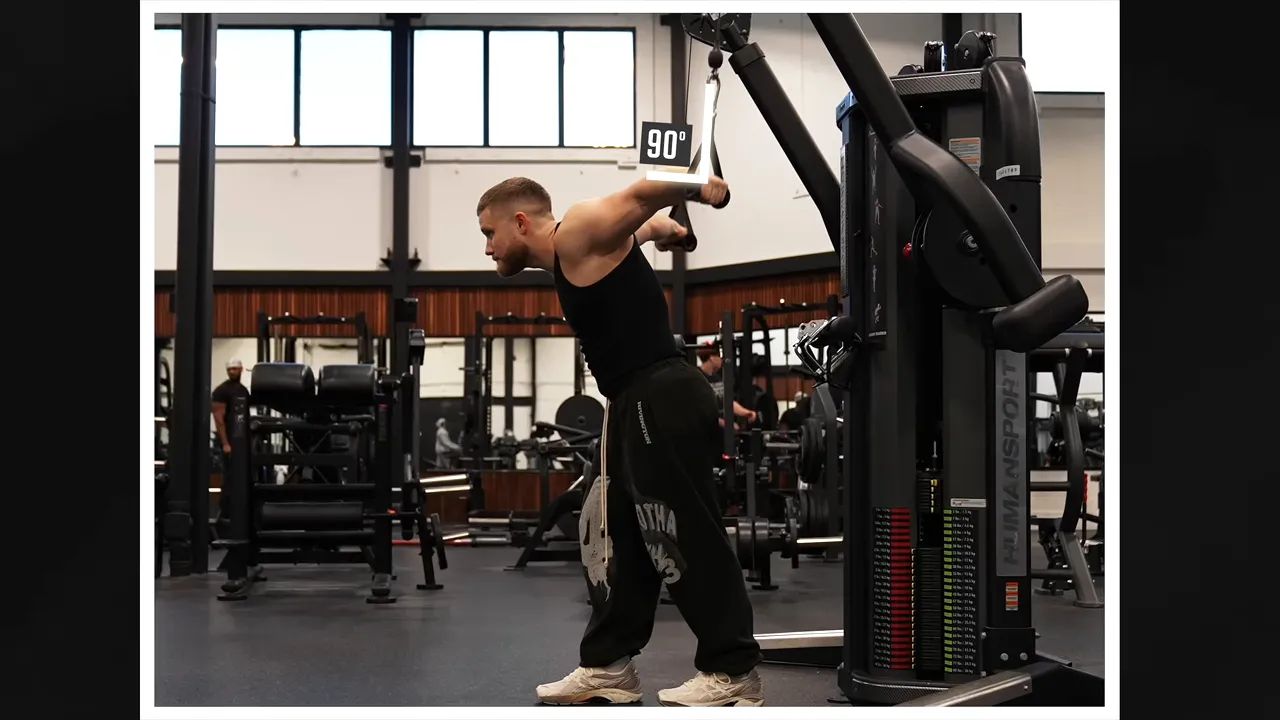
I’ve also experimented with a more unusual version using a higher cable position and a forward torso lean. The goal is to create roughly a 90-degree angle between the cable and forearm while the biceps are in their stretched position.
That geometry increases the external torque right where I want it: near the bottom.
The first attempt felt awkward, but once I found the right cable height, it felt fantastic. I can see an argument for S tier. However, I’d only had it in my rotation for about a month when making this ranking, so I’m keeping it in A tier rather than overhyping it too early.
Cheat Curls vs. Strict Curls
Cheat Curl: Low A Tier for Experienced Lifters
This might be surprising, but I think a properly executed cheat curl can be a good muscle-building exercise.
A small amount of momentum can help you lift a heavier load, which you then resist and control on the lowering phase. It can also help experienced lifters who are overly rigid with technique learn to push a set harder.
The key is keeping the cheating limited. I’m not talking about turning every rep into a full-body heave and dropping the weight afterward. I also wouldn’t recommend it to beginners.
At the time of this ranking, I wasn’t aware of direct hypertrophy research settling strict versus cheating technique, and I was planning to help run that comparison. For now, controlled cheat curls land in low A tier for experienced trainees.
Strict Curl: A Tier
Strict curls take the opposite approach. Brace against a wall with three points of contact:
- Your glutes.
- Your upper back.
- Your head.
That setup reduces assistance from your hips and lower back and makes progression easier to interpret. If your technique stays consistent and you add reps or weight, you can be more confident your elbow flexors are getting stronger.
I suspect strict curls might have a slight advantage over cheat curls, but without direct comparative evidence, that remains uncertain. Both stay in A tier.
Hammer Curls, the Brachialis, and Biceps Peak
Dumbbell Hammer Curl: A Tier
A hammer grip keeps your thumbs pointing up rather than your palms fully supinated. That may reduce the biceps’ relative contribution while shifting more emphasis toward the brachialis.
Unlike the biceps, the brachialis doesn’t supinate the forearm. Its job is to bend the elbow, which makes neutral-grip curls a useful way to train it.
Because it sits beneath the biceps, growing the brachialis may help push the biceps upward and slightly enhance the appearance of a peak. That makes hammer curls my favorite movement category for this particular goal.
To be clear, you can’t change your genetic biceps structure, and there isn’t hard evidence proving that brachialis growth creates a more peaked appearance. It’s a plausible explanation, not a guaranteed result.
Standing hammer curls still have the familiar free-weight limitation of low tension at the bottom. That keeps them in A tier rather than S.
Preacher Hammer Curl: S Tier
Brace your upper arm against an angled preacher pad and you improve the resistance profile while keeping the neutral grip.
You get the brachialis-focused appeal of a hammer curl with more loading near the bottom and less room to cheat. S tier.
Inverse Zottman Curl: High A Tier
This variation pairs two grips within one rep:
- Curl up with a neutral hammer grip.
- Rotate into a palms-up position at the top.
- Lower with a supinated grip.
The idea is to emphasize the brachialis during the lifting phase, then the biceps during the lowering phase.
You can generally lift more with a hammer grip, and you’re stronger during the eccentric portion of an exercise. Combining those features may let you expose the biceps to a little more load on the way down. It’s a smart pairing, and I’m putting inverse Zottman curls in high A tier.
The Best Biceps Exercises to Build Around
If I had to choose just one exercise, it would be the face-away Bayesian cable curl. The 45-degree preacher curl is a very close second, and I think both deserve a place in a biceps routine.
For additional brachialis work, I’d strongly consider a hammer curl, especially the preacher-supported version.
You don’t need every variation here. Prioritize movements that load the biceps well, feel comfortable, and let you make measurable progress. A theoretically perfect exercise isn’t doing much for you if it hurts your joints or you can’t progress it.
For a deeper treatment of science-based muscle building, my book The Muscle Ladder: Get Jacked Using Science brings these principles together. The accompanying Ultimate Exercise Guide, promoted as a preorder bonus, expands on exercise selection across muscle groups, including forearms, glutes, and calves.
|