A back exercise can look impressive, let you move a ton of weight, and still be a pretty mediocre muscle builder. If your goal is bigger lats and a thicker midback, the question is not just how much you can lift. It is how effectively that exercise loads the muscles you are trying to grow.
I’m ranking these movements specifically for back hypertrophy, not total-body strength, athleticism, or how hardcore they look. That distinction matters. I love deadlifts, for example, but that does not automatically make them an elite lat exercise.
The rankings run from S tier, my favorite options, down to F tier, movements I generally would not recommend for building your back. At the end, I’ll give one exercise the S-plus crown and send another to the very bottom.
Key Takeaways
- Prioritize back exercises that combine a loaded stretch, comfortable execution, and straightforward progression.
- Chest-supported rows earn the top ranking for training both the lats and midback.
- Lat pulldowns and cable rows offer excellent muscle-building options with simple load progression.
- Renegade rows rank last because balancing demands limit the back tension you can generate.
Table of Contents
- What Makes a Back Exercise S Tier?
- Renegade Rows and Combination Exercises: F Tier
- Deadlifts and Rack Pulls: Great Strength Does Not Guarantee Great Back Growth
- Pull-Ups and Chin-Ups
- Lat Pulldowns: Some of the Best Back Exercises Available
- Barbell Rows: Useful, but Stability Matters
- Other Row Variations, Ranked
- Face Pulls: A Small Setup Change Makes a Big Difference
- Lat Pullovers and Lat Prayers
- The Best and Worst Back Exercises Overall
What Makes a Back Exercise S Tier?
To earn a top spot, an exercise needs to check three boxes:
- A big stretch under high tension. I want meaningful loading through a range of motion that lets the target muscles lengthen. An exercise that misses both the stretch and the tension is not making the cut.
- It needs to feel good. That means no pain and a reasonably smooth resistance profile. A strong mind-muscle connection and a good pump are welcome bonuses.
- Simple progression. You should be able to add reps or weight over time without turning the exercise into something completely different.
That last point is a basic principle of effective resistance training. The American College of Sports Medicine’s position stand on progression provides broader context on progressively increasing training demands.
Here is how to interpret the tiers:
- S tier: My favorites. Do them if you can.
- A tier: Strongly recommended.
- B tier: Still useful in certain contexts, but there may be better options.
- C tier: Can have value, although most people have better choices.
- D tier: Probably not a great option for most people.
- F tier: Generally not recommended for this muscle-building goal.
These are my rankings using those criteria, not a claim that every exercise has been tested against every other exercise in a head-to-head study. Personal comfort, equipment, and your ability to progress still matter.
Renegade Rows and Combination Exercises: F Tier
Let’s get the worst out of the way. Renegade rows are not a good choice for maximizing back growth.
The floor limits the stretch, and maintaining the plank position creates a substantial balancing demand. Your core and other stabilizing muscles have to work hard, but that does not mean your back receives the greatest possible stimulus.
A plank can be good for your core. A dumbbell row can be great for your back. Combining them waters down what makes the row effective.
The same problem shows up with combinations such as:
- Dumbbell row plus curl.
- Dumbbell row plus press.
- Dumbbell row plus triceps kickback.
The smaller, weaker muscle group usually limits the load or ends the set before your back gets enough work. These combinations can burn calories and train the weaker muscle in the pairing, but as back builders, they all land in F tier.
Deadlifts and Rack Pulls: Great Strength Does Not Guarantee Great Back Growth
Deadlift: C Tier
I’m a big fan of the deadlift for total-body strength. For pure back hypertrophy, though, it does not score particularly well.
Your lats and midback do not get much of a stretch, and your lats and traps are largely holding position rather than moving through an active range of motion. That is isometric work. Personally, I also do not get a great back pump from deadlifts.
They are easy to overload, but an increase in your deadlift can reflect stronger glutes and hamstrings rather than a bigger stimulus to your lats or midback.
Why not rank them even lower? Deadlifts can build your spinal erectors and add thickness to your lower back. That earns them C tier here. On a lower-body ranking, especially with a well-controlled lowering phase, I would be much more generous and consider A or B tier.
Above-the-Knee Rack Pull: F Tier
An above-the-knee rack pull takes the deadlift and removes even more range of motion. That already puts it in a weak position for this ranking.
Then add the practical annoyances: enormous plate requirements, the potential to damage equipment, and a movement that I simply do not find particularly good to perform. It starts as a D-tier candidate and ends up in F tier.
Pull-Ups and Chin-Ups
Wide-Grip Pull-Up: A Tier
Wide-grip pull-ups provide high tension and a deep stretch at the bottom. They can feel great, produce a solid back pump, and offer straightforward progression through more reps or added weight on a belt.
The main downside is the resistance profile. The bottom tends to feel relatively easy, while the top becomes much harder. That makes the movement less smooth than some cable or machine options.
Still, pull-up strength is impressive, and the exercise delivers. A tier.
Neutral-Grip Pull-Up: A Tier
Neutral-grip pull-ups retain the main benefits of the wide-grip version, with slightly more emphasis on the lats in my ranking. They also belong in A tier.
Chin-Up: B Tier
Turning your palms toward you shifts more of the work toward your biceps. Chin-ups remain a great upper-body exercise, but for the back specifically, I place them a little lower at B tier.
Lat Pulldowns: Some of the Best Back Exercises Available
Wide-Grip Lat Pulldown: S Tier
The wide-grip lat pulldown checks every major box: a big lat stretch, smooth tension through the movement, a stable seated position, and easy progression by moving the weight-stack pin.
It also gives you a great combination of lat and mid-trap involvement. You get to sit down, stay secure, and focus on pulling rather than balancing. This is an easy S-tier choice.
Neutral-Grip Lat Pulldown: S Tier
Neutral-grip pulldowns offer the same major advantages while shifting emphasis toward the lats relative to the mid traps. Thinking about driving your elbows down can help reinforce that focus.
They join the wide-grip version in S tier.
Half-Kneeling One-Arm Lat Pulldown: S Tier
This movement gets plenty of attention online for being “optimal,” but it does hold up well against the criteria. It offers a substantial stretch, high tension, a good feel for me, and a clear path to adding reps and then weight.
The main drawback is that it is less stable than a seated pulldown machine. Bracing your free hand against your knee or an incline bench helps solve that problem.
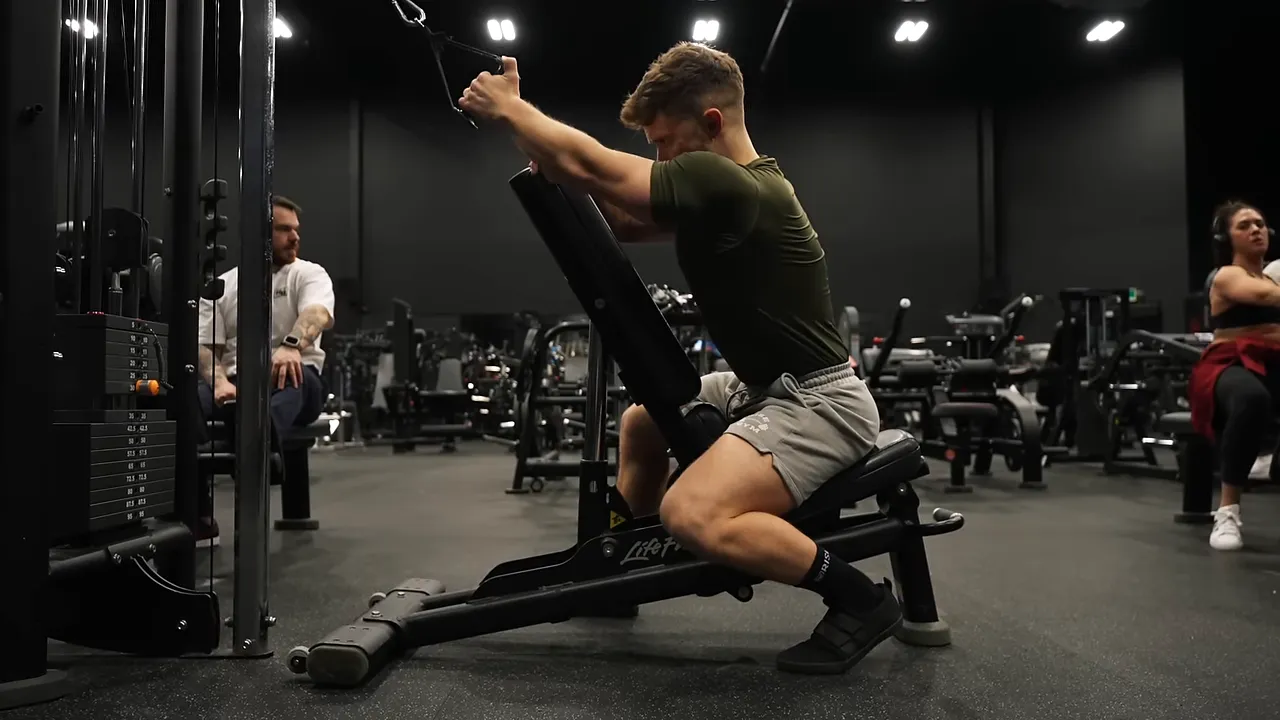
Training one lat at a time also lets you give each side individual attention, which is useful for addressing asymmetries. I could make a case for A tier, but with a good brace, I’m giving it S tier.
Cross-Body Lat Pull-Around: A Tier
The pull-around changes your orientation by about 90 degrees so the cable travels across your body. This creates an even bigger lat stretch than the standard one-arm pulldown.
The trade-off is that many people find it awkward, particularly when first learning it. The stretch is excellent, but the less intuitive feel keeps it in A tier.
Barbell Rows: Useful, but Stability Matters
Standard Barbell Row: B Tier
A standard barbell row stretches your back well, provides high tension, and is easy to progress.
However, you also have to maintain your bent-over position and balance the load. Your calves, glutes, and lower back contribute to keeping you in place. Your back still gets hammered, but those demands make it less focused than a supported row.
It is a good exercise. I just do not think it is the best row, or even the best barbell-row variation. B tier.
Yates Row: C Tier
Named after six-time Mr. Olympia Dorian Yates, this variation uses a more upright torso and looser technique.
That can let you move more weight, but more weight on the bar does not automatically mean more tension on your back. Hip momentum helps move the load, while the upright position reduces the stretch on your lats and mid traps.
Sorry, Dorian. For this specific goal, the Yates row goes in C tier.
Pendlay Row: B Tier
The Pendlay row moves in the opposite direction: a more bent-over torso rather than a more upright one. That position gives the lats more stretch, and the stricter execution makes progression more consistent.
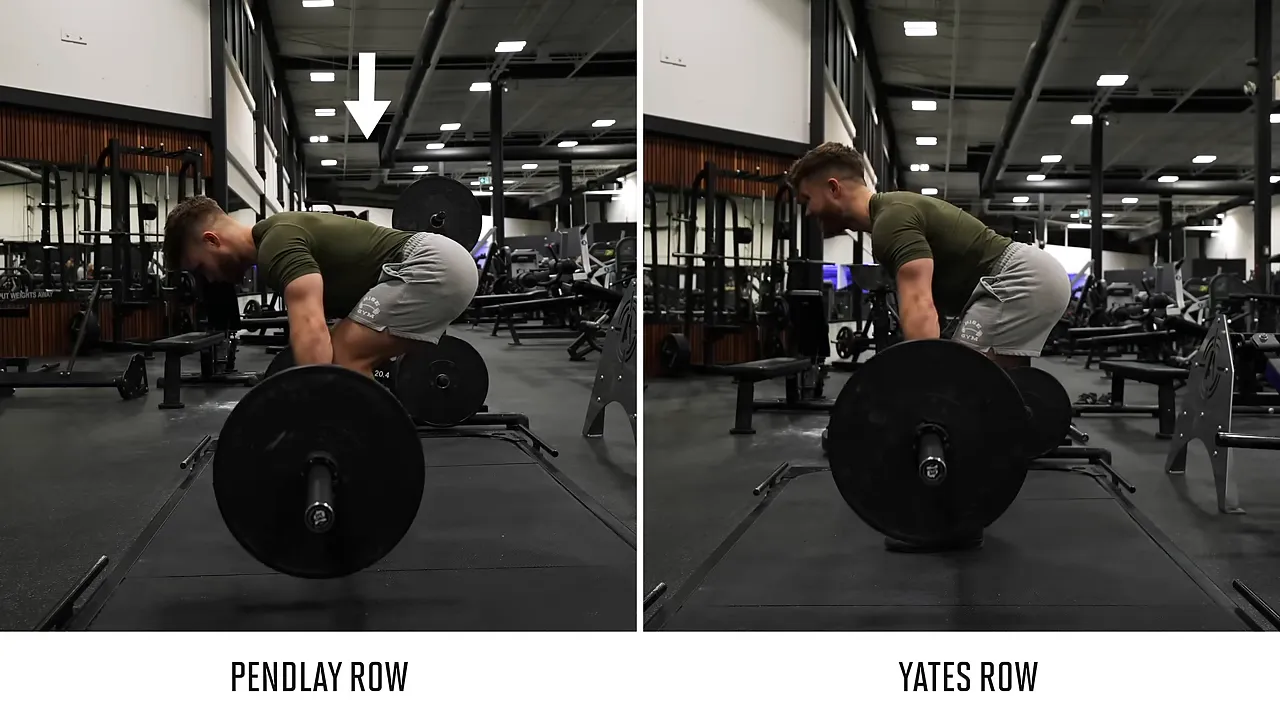
Assuming you control the lowering phase, I put it in B tier. If strength development were a bigger part of the score, I could nudge it into A tier. For pure hypertrophy, the lack of support keeps it below my favorite options.
Deficit Pendlay Row: A Tier
Stand on a raised surface, such as a bumper plate, and you can lower the bar farther than in a standard Pendlay row. That extra range gives your lats more stretch on the negative.
That improvement earns the deficit version A tier.
Other Row Variations, Ranked
Meadows Row: S Tier
Named after the late John Meadows, who taught me a tremendous amount, this is one of my personal favorites.
It provides a huge stretch and absolutely smashes the midback. Brace against your knee and you have a stable position that lets you focus on the working side.
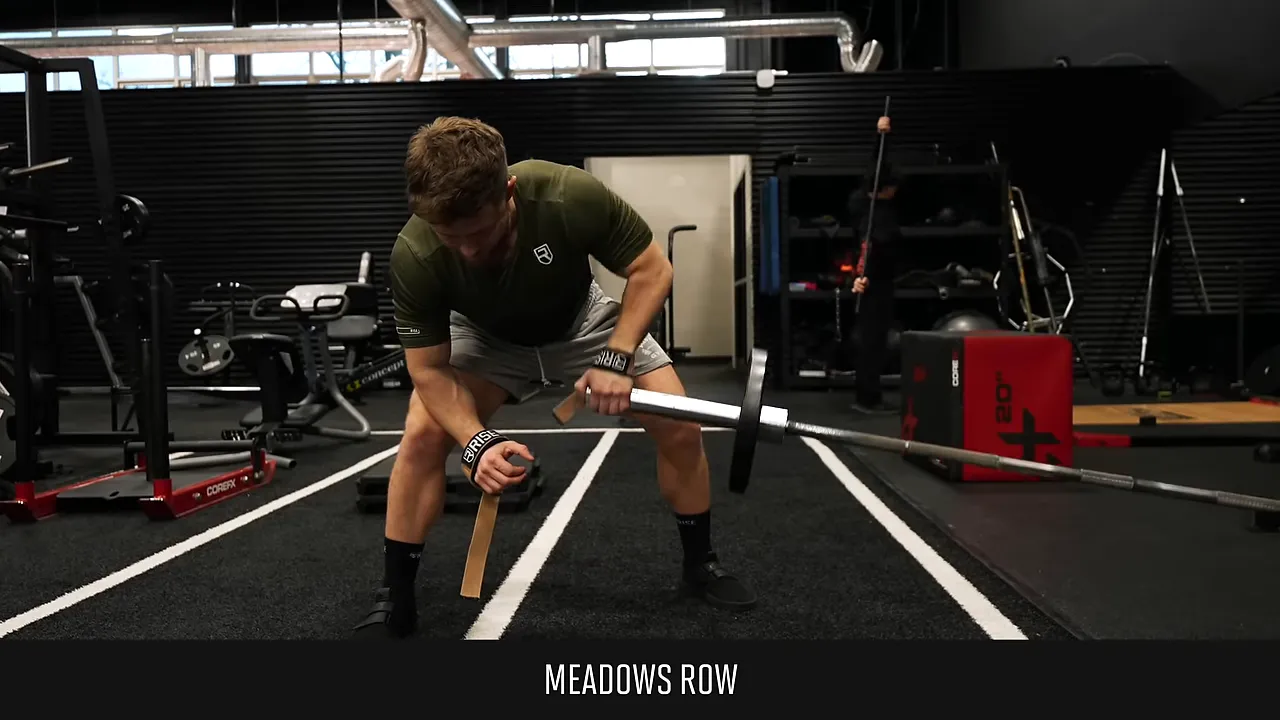
The midback pump is excellent, and working each side individually is another bonus. Comfortably S tier.
Inverted Row: C Tier
Inverted rows involve pulling your body toward a fixed bar rather than pulling a weight toward you. They offer a great stretch at the bottom, and with the right setup, they can feel secure and give you a strong connection with your back.
The issue is progression. Adding weight to your lap can be awkward, even with a training partner. Without external loading, you may eventually need extremely high reps to make the exercise challenging.
High reps are not inherently bad, but once sets climb beyond roughly 30 or 40 reps, I consider this a less appealing muscle-building option. Despite the positives, C tier.
One-Arm Dumbbell Row: A Tier
One-arm dumbbell rows sometimes get a bad rap online. My own experience has been very positive: I have used them myself and with clients for more than a decade without an issue. That is personal experience, not a guarantee for every person, but I do not think the movement deserves blanket dismissal.
They provide a deep lat stretch and feel smooth and stable when you brace against a bench.
The main limitation comes later, when you get strong enough to outgrow your gym’s dumbbells. Many racks stop around 100 pounds, which can put a ceiling on load progression. That knocks them down slightly, but they still earn A tier.
Kroc Row: A Tier
A Kroc row is a dumbbell row performed with looser technique, including some leg drive and momentum during the lifting phase.
I’m normally not a huge fan of loose form. Here, though, the bench brace makes the momentum more controlled and repeatable than in many unsupported movements.
The assistance also helps you get through the difficult top portion while preserving a good stretch at the bottom. The technique purists might not love this one, but I’m putting Kroc rows in A tier.
Freestanding T-Bar Row: B Tier
Few back exercises look more epic, especially when Ronnie Coleman is doing them. Personally, though, I find freestanding T-bar rows a little annoying.
The stretch and tension are good, and adding reps or plates is straightforward. But balance can become an issue as the weight gets heavier. Without a proper landmine attachment, the opposite end of the bar can also lift off the floor.
I’m tempted to go C tier based on feel, but I’ll give them B tier. A little generosity for Ronnie.
Chest-Supported Row: S Tier
Chest-supported rows keep the major benefits of a freestanding row and add the missing ingredient: a stable, secure torso position.
Instead of spending effort maintaining your hinge or keeping your balance, you can focus on loading your back. These are an absolute staple in my approach to bodybuilding.
You do not need one particular machine. Good options include a chest-supported T-bar row, a suitable seated machine, or dumbbell Helms rows with your chest braced against the back of an incline bench.
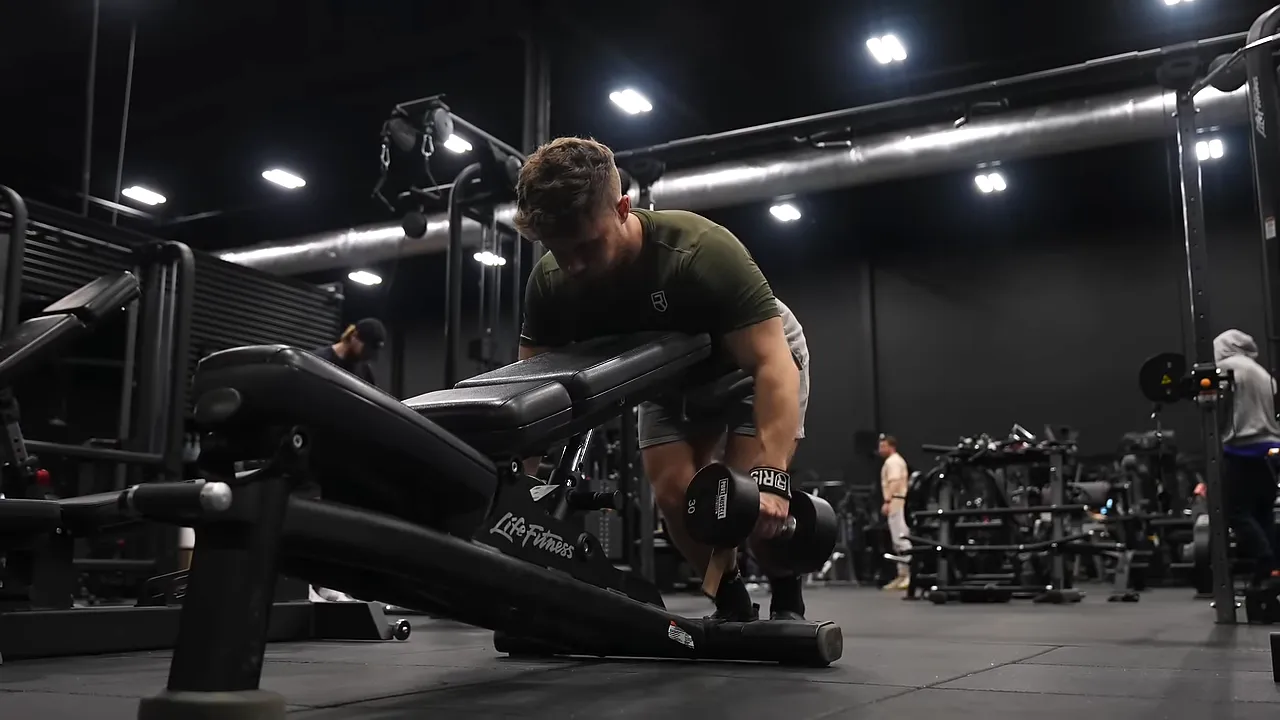
Choose the version that lets you engage your back best. As a category, chest-supported rows belong in S tier.
Close-Grip Cable Row: S Tier
Cable rows are another personal favorite. They may be the best exercise I know for feeling a deep stretch in my lats, particularly when I lean forward during the lowering phase.
They give me an excellent lat pump, and progression is simple: add reps or increase the weight. S tier.
Wide-Grip Cable Row: S Tier
A wider grip shifts some emphasis toward the mid traps, especially when you focus on squeezing your shoulder blades together.
That is not a drawback if midback development is what you want. You retain the main advantages of the close-grip cable row, so the wide-grip version also earns S tier.
Face Pulls: A Small Setup Change Makes a Big Difference
Standing Rope Face Pull: B Tier
Face pulls can stretch the midback well, provided you let your shoulder blades spread apart during the lowering phase. They can also give you a strong mind-muscle connection.
The conventional standing setup is the problem. The cable constantly pulls your body forward, so maintaining balance can become a limiting factor. That makes it harder to apply as much tension as possible to your back.
The standard standing rope face pull goes in B tier.
Seated or Floor-Lying Face Pull: A Tier
Sitting down or lying on the floor removes much of that balancing requirement. You can then progress the exercise with less effort devoted to keeping your whole body in position.
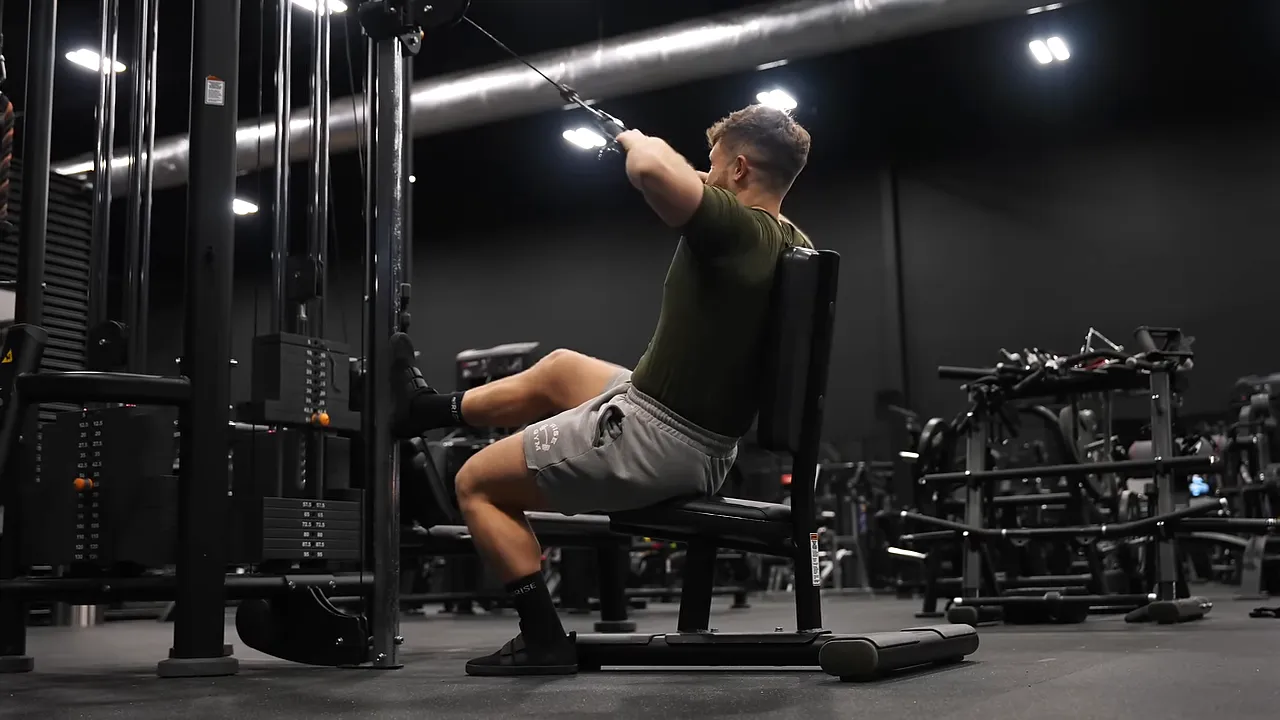
Both variations earn A tier. They are close to S tier, but compared with the other top-ranked movements, I do not find them quite as impressive overall. They are still absolutely worth considering.
Lat Pullovers and Lat Prayers
Cable Lat Pullover or Lat Prayer: A Tier
The cable lat prayer gives you a huge stretch when you bend forward during the negative. It can also produce an excellent connection with your lats.
I prefer it for higher reps. Progression is not quite as straightforward as it is on heavier compound movements, but you can still add a rep here and there before increasing the load.
Some people initially feel their triceps taking over. The cue I like is simple: drive your elbows down. Once you learn to make the lats do the work, this becomes a useful way to add lat-focused volume without much total-body fatigue.
The deep stretch and strong muscle connection earn it A tier.
Dumbbell Lat Pullover: A Tier
The dumbbell pullover uses the same basic movement pattern but has a different resistance profile. Your lats receive much more tension near the stretched bottom position and very little near the top.
I do not see that as a major problem. The stretched portion is likely especially valuable for growth, so I prefer to leave out the very top of the range where the loading drops off.
Performed that way, the dumbbell pullover also belongs in A tier.
The Best and Worst Back Exercises Overall
If I have to choose just one winner, the chest-supported row gets S-plus tier.
It is outstanding for loading both the lats and midback, the support lets you focus on the muscles you want to train, and there are plenty of effective machine and dumbbell variations. You do not have to force yourself into one exact piece of equipment to get the benefits.
At the other extreme, the renegade row takes the bottom spot. For hypertrophy, it simply asks too much of your balance and stability while offering too little opportunity to maximize back tension.
The bigger lesson is not that every exercise below S tier is useless. It is that a good back exercise should let your back be the limiting factor. Prioritize a loaded stretch, a setup that feels good, and progression you can actually measure. An impressive-looking lift is optional. A strong stimulus to your back is not.


