A lot of fitness advice starts with a useful idea and then takes it way too far. Training hard becomes taking every set to failure. Eating enough to grow becomes eating everything in sight. Paying attention to your muscles becomes judging an entire workout by how sore you feel the next morning.
But the opposite mistake happens, too. Once an idea becomes unpopular in evidence-based fitness circles, people sometimes dismiss it completely, even when it still has practical value.
Here’s how I rate 19 controversial training, nutrition, and fitness topics, alongside exercise scientist and competitive bodybuilder Dr. Mike Israetel. We agree on plenty, disagree on a few, and occasionally need a category other than overrated or underrated.
Key Takeaways
- Good technique, hard effort, and progression matter more than chasing a particular training sensation.
- One gram of protein per pound is a useful target, not a universal minimum.
- Recomposition, diet soda substitutions, and maintenance breaks can all have practical value.
- Natural and enhanced lifters still rely on the same fundamental training principles.
Table of Contents
- Training: What Actually Deserves Your Attention?
- Nutrition: Useful Rules vs. Unnecessary Extremes
- Hot Fitness Topics: Myths, Drama, and Gym Etiquette
- The Bigger Lesson: Keep Useful Tools in Their Proper Place
Training: What Actually Deserves Your Attention?
1. Cheat Reps and Ego Lifting: Mostly Overrated
For most of your training, good technique should be the default. Mike’s objection to cheat reps is straightforward: they can shift work away from the target muscle, increase injury risk, and make progress difficult to track.
That last point matters. If you curl more weight this week but use twice as much body movement, did your biceps actually get stronger? It becomes hard to tell.
I do think there’s a narrow exception. On an exercise like a biceps curl, a little momentum near the end of a set might help you complete another rep, followed by a controlled lowering phase. That gives you an extra eccentric contraction you otherwise wouldn’t have performed.
Small, deliberate technique adjustments can have a place. Turning every rep into a full-body heave is still overrated.
2. Muscle Soreness: Overrated as a Requirement, Useful as Feedback
You do not need to get sore to build muscle. A workout can be productive even if you feel completely normal the next day. That’s why I rate soreness as overrated when people use it as a pass-or-fail test for training.
Still, soreness in the muscle you intended to train can be a useful clue that you hit it.
Mike thinks the evidence-based community sometimes overcorrects by treating soreness as meaningless or purely a response to unfamiliar exercise. His argument is that many things associated with a strong training stimulus also tend to increase soreness:
- More training volume and harder effort.
- Training closer to failure.
- Emphasizing the eccentric portion of a rep.
- Training at long muscle lengths.
- Progressively increasing the training challenge.
His practical point is worth considering: if you’re progressing without soreness, there’s no problem. If you’re not progressing and suspect that your training is too easy, the absence of soreness may be one piece of feedback to consider.
Use soreness as a clue, not a growth requirement.
3. Training Each Muscle Once a Week: Viable, but Often Overrated
A traditional bro split trains each muscle group directly just once per week. It can work. The training frequency meta-analysis supports once-weekly training as a viable approach, particularly when weekly volume is accounted for.
But viable and optimal are not the same claim.
Mike’s concern is missed opportunity. Smaller muscle groups, such as the biceps or rear delts, often recover well before seven days have passed. Waiting a full week can mean leaving useful training opportunities unused.
Larger, more demanding muscle groups may need longer between sessions, especially in bigger, stronger lifters. Even then, Mike generally prefers matching training frequency to recovery rather than assigning every muscle the same seven-day waiting period.
My position is a little less absolute: a bro split is a legitimate option, but it shouldn’t automatically be your first choice for maximizing muscle growth.
4. Training to Failure: Properly Rated to Slightly Overrated, With Real Disagreement
My initial answer was that training to failure is overrated. You should know what failure feels like, but that doesn’t mean every set needs to end with an unsuccessful rep.
Then a newer analysis of proximity to failure and muscle growth made me reconsider. It reported a muscle-growth advantage associated with training to failure on average. That shifted my rating toward properly rated to slightly overrated.
My updated view is that taking some sets to failure has value. If you never do it, I think you may be leaving some gains on the table. That still isn’t an argument for taking every set there.
Mike read the same research and came away even more convinced that failure is overrated. His interpretation was that the advantage was concentrated in lower-volume training contexts, with less additional benefit when people were already doing substantial, hard training.
So this is a genuine disagreement about how to apply the findings, not a unanimous verdict.
The common ground: train hard, understand what failure feels like, and don’t assume that exhausting yourself as much as possible is automatically the best program. As Mike points out, the emotional satisfaction of emptying the tank is not the same thing as optimizing results.
5. The Mind-Muscle Connection: Overrated, Not Useless
Feeling a target muscle work can be helpful. The problem is treating that feeling as more important than exercise selection, technique, sufficient loading, effort, and progression.
Mike places the mind-muscle connection well behind those fundamentals. Once you have them in place, focusing on the target muscle becomes a useful refinement.
I agree. You can feel a muscle intensely during a set that is still too easy to provide much stimulus. A strong sensation doesn’t rescue insufficient effort.
Use the mind-muscle connection to improve good training, not to replace it.
6. Muscle Pumps: Properly Rated, or Even Underrated
Pumps are fun. They make training more enjoyable, and they probably have some relationship with the muscle-building stimulus. Most people think pumps are good and enjoyable, so I’d call them properly rated.
Mike rates them as underrated, especially in evidence-based circles. Getting a pump in the intended muscle can help confirm that an exercise is targeting the right area. He also considers it useful feedback about training volume.
Neither position requires making the pump your only goal. It’s simply another piece of information that doesn’t need to be dismissed because it isn’t a direct measurement of muscle growth.
Nutrition: Useful Rules vs. Unnecessary Extremes
7. Dirty Bulking: Overrated
Dirty bulking can be enjoyable, and rapidly gaining weight can come with strength gains. The problem is that the additional fat gain can be vastly disproportionate to the additional muscle gain.
Mike’s take comes from experience. He used to enjoy aggressive bulking, but he regrets the stretch marks and loose skin that came with it. Looking back, he would have preferred staying leaner.
More weight gain is not automatically more productive weight gain. Eating enough to support growth makes sense. Treating unrestricted eating as a muscle-building advantage is where the advice goes off the rails.
8. Natural Testosterone Boosters: Overrated
The key question is not whether an herb can move a testosterone reading. It’s whether the product produces a meaningful, noticeable improvement in muscle mass.
That’s where I’m unconvinced by over-the-counter testosterone boosters.
Mike also questions simplistic explanations of how these products supposedly work. Testosterone production is regulated by feedback mechanisms. A claim that a supplement raises testosterone needs more than a convenient story about one ingredient.
A hormone-related marketing claim is not evidence of better muscle-building results.
9. One Gram of Protein per Pound of Body Weight: Properly Rated
One gram of protein per pound of body weight is a simple, memorable target. Both Mike and I like it, with an important qualification: it’s more than most people need in most circumstances.
Mike sees that small buffer as a feature. With a reasonably balanced diet, it reduces the need to obsess over the quality of every individual protein source.
My practical distinction is:
- When cutting: 1 gram per pound is a good general rule.
- When bulking: around 0.7 to 0.8 grams per pound is likely enough for many people.
So the target is properly rated as a useful rule of thumb, not as a precise minimum below which your gains disappear.
10. Body Recomposition: Underrated for Many People, Limited for Advanced Goals
Body recomposition means building muscle while losing fat. I think it’s underrated because many people in the general population can reasonably expect to achieve both at once.
The idea that everyone must choose between a dedicated bulk and a dedicated cut is too rigid.
Mike agrees that recomping is possible, but he asks a different question: could separate gaining and fat-loss phases get you to the same goal more effectively?
For someone aiming to become exceptionally muscular or exceptionally lean, he thinks dedicated phases eventually become more useful. He suggests that much of the readily available recomp progress may happen within roughly a year of dedicated effort. That’s his practical estimate, not a universal expiration date.
Recomposition is a valid strategy. It just doesn’t have to be your strategy forever.
11. Diet Soda: Underrated
Diet soda gets a lot of criticism that doesn’t match the evidence discussed here. In particular, treating it as equally bad as sugary soda, or worse, misses its usefulness as a replacement.
A systematic review of low- and no-calorie beverages found small improvements in body weight and related outcomes when these drinks replaced sugar-sweetened beverages.
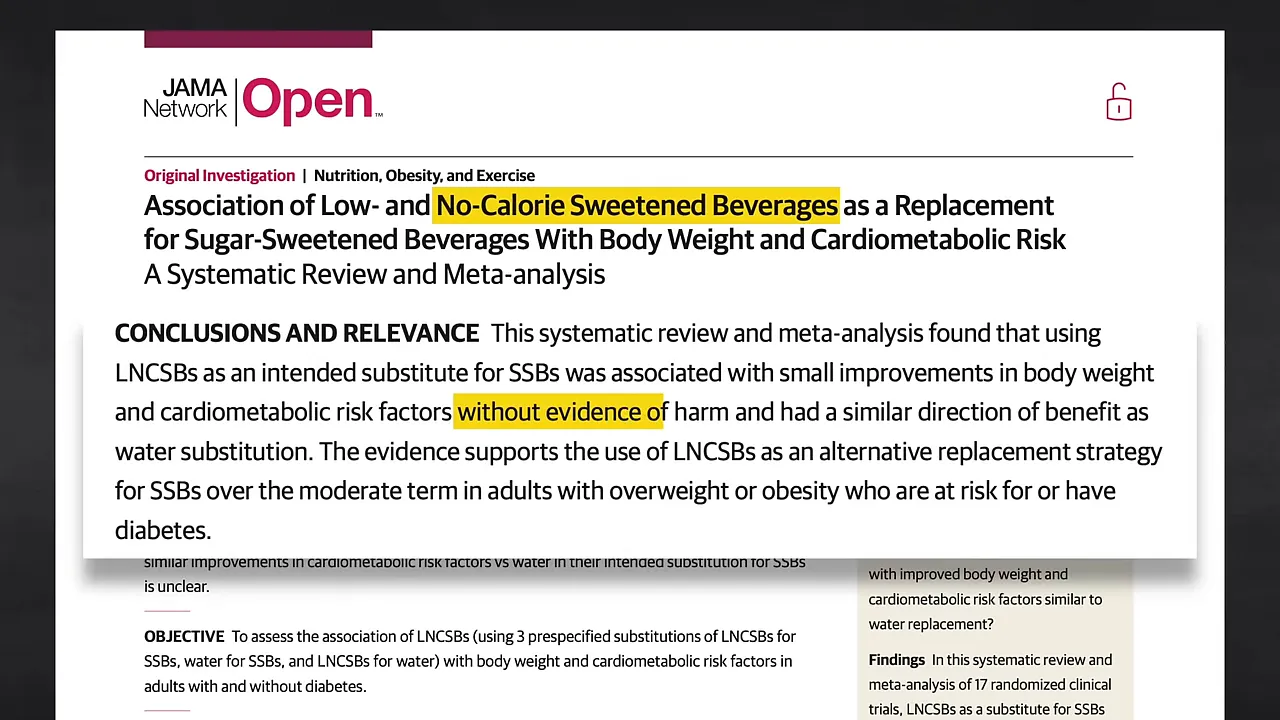
That’s the practical application: swapping regular soda for diet soda can reduce calorie intake without requiring you to give up a drink you enjoy.
I also find it useful for managing cravings and making a fat-loss diet feel more satisfying. It isn’t a magic weight-loss product. It’s an underutilized substitution.
12. Diet Breaks: Underrated
There usually doesn’t need to be a frantic rush to get lean. Taking your foot off the gas occasionally can make the overall process more manageable.
My suggestion is that a week or two around maintenance calories, or sometimes slightly above, can give training a chance to improve and allow muscles to look and feel fuller again.
Mike is thinking about a longer recovery period after substantial weight loss. Rather than trying to lose everything in one uninterrupted push, he suggests losing around 5% to 8% of body weight, then spending two or three months at maintenance before starting another phase.
These are different uses of a break:
- A short pause: one or two weeks away from the calorie deficit.
- A longer maintenance phase: several months to let accumulated diet fatigue settle before more fat loss.
A maintenance phase can be part of a successful fat-loss plan, not evidence that you’ve abandoned it.
13. Clean Eating: Overrated as a Rigid Rule
My biggest issue with clean eating is that people define it differently. Keep tightening the definition and eventually there’s practically nothing left on the menu.
At the extreme, that mindset can encourage disordered eating behaviors. I prefer an inclusive approach: include a variety of foods that support health, including different fruits and vegetables, rather than building an ever-growing list of forbidden foods.
Mike uses a more specific definition. To him, clean eating means mostly avoiding highly processed foods deliberately made to be extremely palatable.
Under that definition, he thinks it can be especially useful during a difficult fat-loss phase. Reducing foods that are particularly easy to overeat can make the diet easier to manage.
I agree with that application. Where we meet is pretty reasonable: reduce highly palatable foods when they make dieting harder, but don’t turn food choices into an all-or-nothing purity test. During maintenance, gaining phases, and even parts of a cut, enjoyable foods can still fit.
Hot Fitness Topics: Myths, Drama, and Gym Etiquette
14. “Natty or Not” Content: Mostly Overrated
Speculating about whether someone uses performance-enhancing drugs on thin evidence can unfairly damage their reputation. From a creator’s perspective, that’s a serious problem.
From the audience’s perspective, there’s often little practical value beyond the drama. The supposed benefit is learning whether someone’s physique is realistic for you. But even if that person is natural, genetic differences mean you can’t assume you’ll look like them.
Mike draws a distinction between speculation and genuine investigative work. Documenting that someone has falsely claimed to be drug-free is different from confidently guessing based on appearance alone.
Evidence-based accountability has value. Unsupported accusations are not the same thing.
15. Natural and Enhanced Lifters Need Completely Different Training: Overrated
The idea that natural and enhanced training operate under completely different principles is an exaggeration.
I raised the obvious qualification with Mike: enhanced lifters can have greater recovery capacity. He agrees, but points out that this isn’t the whole picture.
As someone becomes bigger and stronger, their training can also become more demanding to recover from. In Mike’s view, those competing effects make simplistic rules about enhanced recovery unreliable.
The useful conclusion is not that every lifter should follow an identical program. It’s that the basic training principles still apply. Drug status doesn’t make technique, progression, appropriate volume, or recovery irrelevant.
16. Cold Showers for Muscle Growth: Overrated
Cold showers get promoted with a lot of confidence relative to the evidence for muscle-building benefits. Neither Mike nor I see a compelling reason to treat them as a hypertrophy tool.
There’s also a concern in the opposite direction. The cold-exposure study cited here examined cold-water immersion after resistance training and found reduced muscle-fiber hypertrophy.
That distinction matters: research on post-workout cold-water immersion is not proof that every brief cold shower reduces gains. But it does undermine the blanket claim that getting cold after lifting must improve your results.
If you enjoy the feeling, that’s separate from claiming it builds more muscle. For hypertrophy, the hype is ahead of the support.
17. NoFap and Semen Retention for Gains: Overrated
I’m not aware of convincing evidence that abstaining from masturbation meaningfully raises testosterone over the long term or improves training performance.
Mike’s broader objection is to portraying ordinary sexual behavior as inherently harmful without research support.
That doesn’t mean problematic or compulsive behavior should be ignored. If a behavior is causing distress or interfering with your life, getting appropriate help makes sense. But that is a separate issue from treating semen retention as a muscle-building strategy.
Address an actual problem if there is one. Don’t invent a fitness requirement where the evidence doesn’t support it.
18. “Locking Out Your Knees Is Dangerous”: Overrated as a Warning
Your knees are designed to straighten. A controlled lockout is not the same thing as violently snapping into the end of the movement and relaxing under load.
Mike’s qualifications are important:
- Control the movement into lockout.
- Don’t forcefully snap the joint straight.
- Don’t simply switch off muscular control at the top.
- Recognize that joint laxity conditions may require individual guidance.
My concern is the fragile mindset behind some exercise warnings: the assumption that one slightly imperfect movement will make everything break.
Train with control and respect individual limitations, but don’t treat normal knee extension as inherently dangerous.
19. Filming in Gyms: Underrated, or at Least Overhated
I film training to help educate people, so I obviously think there’s a legitimate place for cameras in gyms.
My support comes with conditions: follow the gym’s rules and respect people who don’t want to be on camera. Filming doesn’t give you permission to disregard everyone else using the space.
Mike takes a more permissive position. He argues that recording is becoming an increasingly normal part of shared spaces as technology develops, and that someone walking through a shot shouldn’t automatically make filming unacceptable. He’s also less bothered by tripods than the people who treat their presence as an outrage.
That’s his view of gym culture, not a universal rule about consent or a gym’s filming policy. My position remains conditional: recording can be useful without disrespecting other people or violating the facility’s rules.
The Bigger Lesson: Keep Useful Tools in Their Proper Place
Overrated doesn’t mean useless. Cheat reps can have a narrow application. The mind-muscle connection can improve a well-executed exercise. Training to failure can be useful without becoming mandatory on every set.
Underrated doesn’t mean magical, either. Diet soda is a useful replacement, not a fat burner. Diet breaks are a way to manage the process, not avoid it. Recomposition works, but dedicated gaining and cutting phases may eventually suit your goals better.
The mistake is letting any one tool take over the whole plan. Prioritize productive training, progression, recovery, and a sustainable diet before getting distracted by the loudest advice in fitness.


