Training to failure, ice baths, creatine, clean eating. Fitness advice has a way of turning useful tools into absolute necessities and interesting ideas into miracle solutions.
But overrated does not always mean useless, and underrated does not mean essential. The question is whether the hype matches the evidence, the size of the benefit, and the practical value.
Here is how I rank 21 controversial topics across training, nutrition, supplements, and popular fitness trends, including a few places where Dr. Layne Norton and I disagree. Those disagreements are often where the most useful nuance lives.
Key Takeaways
- Training close to failure can build muscle without taking every set to failure.
- Total daily protein matters more than rushing to eat immediately after training.
- Creatine monohydrate has strong evidence, but its benefits are modest rather than transformative.
- More fat oxidation or less soreness does not automatically mean better fat loss or muscle growth.
Table of Contents
- Training: Effort Matters More Than Gym Dogma
- Nutrition: Stop Giving Small Details Top Priority
- Supplements: Evidence Beats an Exciting Name
- Hot Fitness Topics: Look at Outcomes, Not Just Mechanisms
- The Bigger Lesson: Match the Tool to the Goal
Training: Effort Matters More Than Gym Dogma
1. Training to Failure: Overrated
You do not need to take every set to the point where another rep is impossible to build muscle. For most of your training, getting reasonably close to failure, usually within a couple of reps, can deliver very similar benefits.
That does not make failure training pointless. Taking a set to failure occasionally helps you calibrate your effort. You might think you have two reps left, then discover you actually have five.
The useful distinction is between training hard enough and insisting that every set must end in failure. The first matters. The second gets more credit than it deserves.
2. Sumo Deadlifts: Underrated
Sumo versus conventional deadlifting is largely an individual decision, not a moral debate about which lift counts.
Layne prefers sumo partly because of his proportions. With long legs, conventional deadlifts put him in a more bent-over position and create considerable lower-back fatigue. Since he also squats a lot, managing that fatigue matters.
From a muscle-activation standpoint, the two variations are more similar than the internet arguments suggest. Neither is automatically the best choice for everyone.
Choose the deadlift variation that suits your build and fits the rest of your training. Sumo is a legitimate option, not a loophole.
3. Full Range of Motion: Useful, but the Stretch Deserves More Attention
This is one where Layne and I initially land on opposite sides, mostly because we are thinking about different people.
Layne calls full range of motion underrated because plenty of lifters cut reps short when the movement becomes uncomfortable. Think about descending into a squat and stopping as soon as your body starts questioning your decisions. Avoiding that deeper position can mean missing an important part of the stimulus.
I lean toward overrated within the more science-focused fitness crowd, where full range of motion sometimes gets treated as sacred. For hypertrophy, the more important detail appears to be loading the muscle in its stretched position and training through the challenging portion of the lift, rather than simply maximizing movement distance.
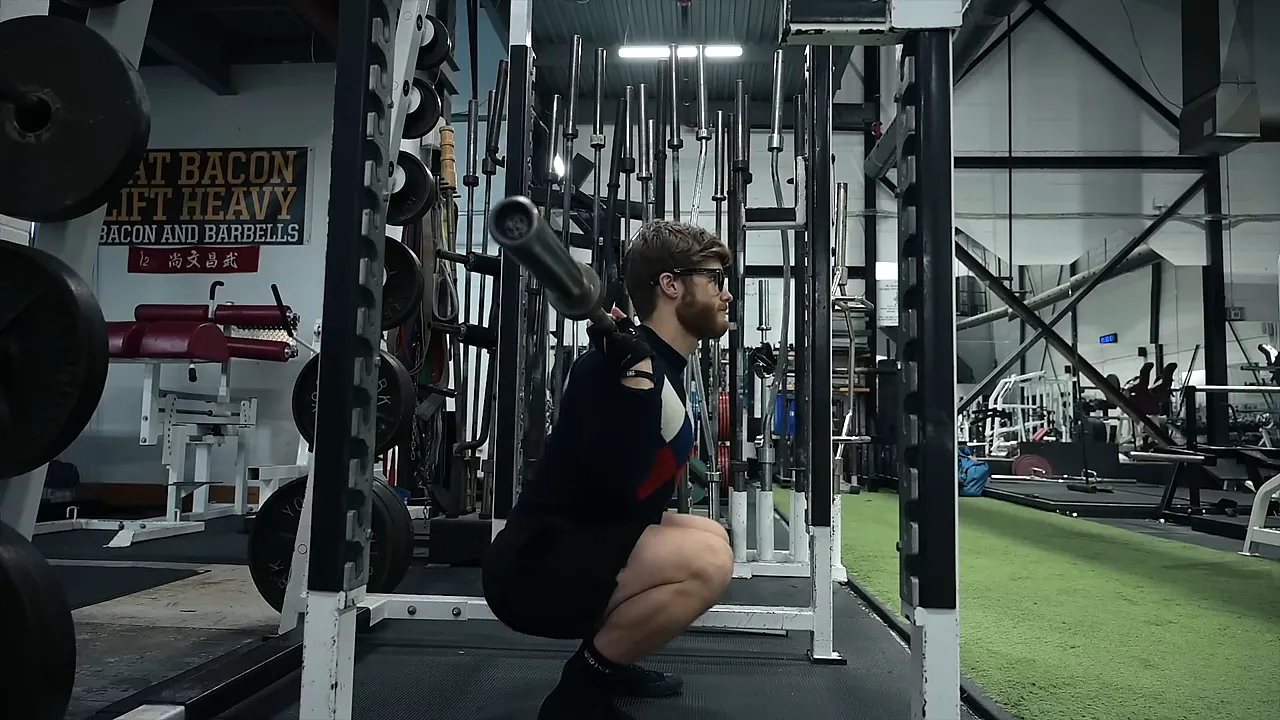
These positions are not really contradictory. Random half reps that avoid the stretch are not the same thing as deliberately emphasizing the lengthened portion of a movement. Full range of motion is a useful general approach, but the reason it works matters.
4. Powerlifting for Bodybuilding: Underrated
Bodybuilders do not need to become powerlifters, but lower-rep training can still build muscle. Varying your rep ranges can be useful, just as powerlifters can benefit from doing some higher-rep work.
There is also a plausible practical benefit: getting stronger may help you use heavier loads when you return to higher-rep training. I would not present that as a proven special advantage of powerlifting, but it is a reasonable programming consideration.
For me, the biggest benefit has often been motivation. As an experienced natural bodybuilder, visible physique changes can be painfully slow. Sometimes you do not see much difference from month to month, or even year to year.
A measurable strength goal gives you another way to track progress. Putting more weight on a squat, bench press, or deadlift can provide an objective win when the mirror is not giving you much feedback.
5. Lifting Straps: Underrated
If your grip gives out before your back does, your grip is deciding how much work your back gets.
That can limit rows, pull-ups, and other pulling exercises. It can also encourage technique changes as you struggle to hold on. Unless you specifically need to develop unassisted grip strength for your sport, straps can be a very useful tool.
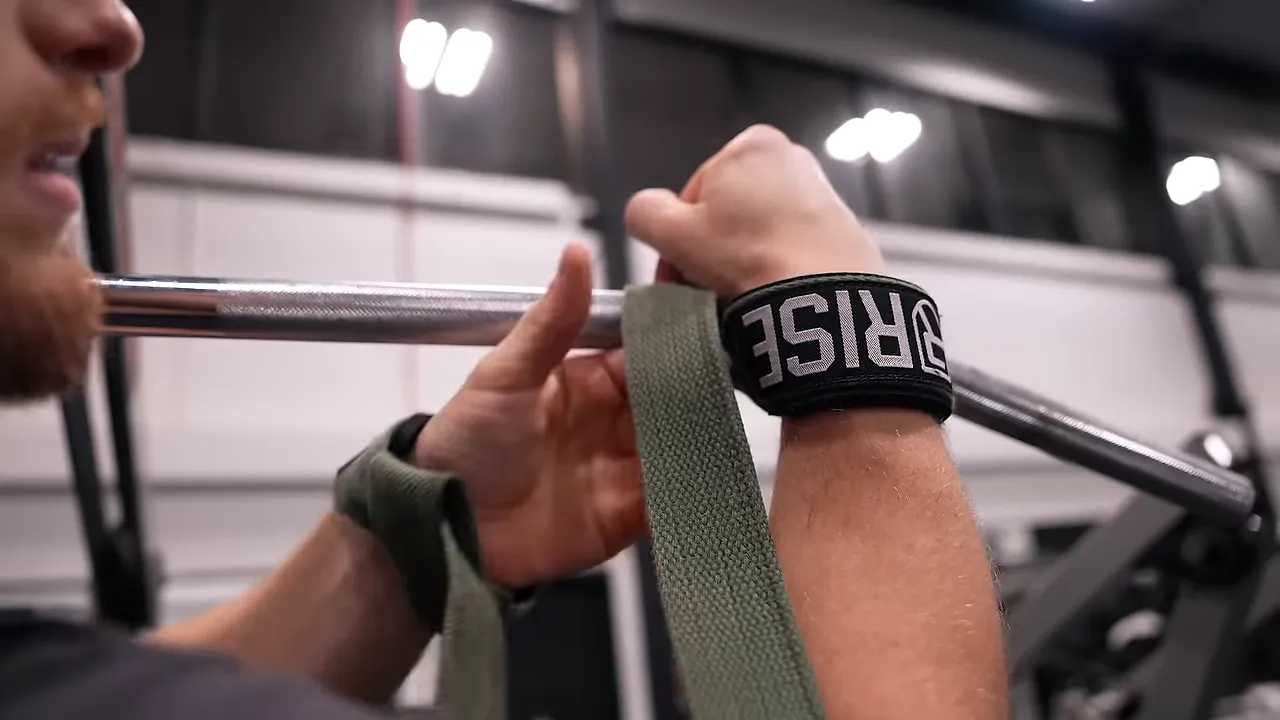
I also find that straps improve my mind-muscle connection with my back. I can focus on the target muscles instead of worrying about my hands opening up.
Using straps for back training does not prevent you from training your forearms separately. You do not have to make every pulling exercise serve both goals at once.
Nutrition: Stop Giving Small Details Top Priority
6. The Post-Workout Anabolic Window: Overrated
Getting high-quality protein and some carbohydrate after training is a reasonable idea. Treating the first moments after your last set as a nutritional emergency is not.
Total daily protein intake matters far more than racing to finish a shake. Missing an immediate post-workout meal does not mean your workout was wasted.
If you eat a meal an hour or two before training, train for an hour or two, and eat again an hour or two afterward, that can fit perfectly well into sensible meal spacing.
The practical goal is to get enough protein across the day, not to panic because you left your shaker bottle at home.
7. Liver and Organ Meats: Overrated
Liver is nutritious. It provides high-quality protein, vitamins, and minerals. The overrated part is the idea that it belongs on a special pedestal or that you need to eat it to have a good diet.
Other foods also provide those nutrients. Fruits and vegetables contribute vitamins and minerals, and there are plenty of alternative protein sources.
If you enjoy organ meats, fine. If you hate liver, you do not need to force it down for gains. A food can be nutrient-dense without being irreplaceable.
8. Detoxing: Overrated
Whenever someone claims a product will detox your body, ask three questions:
- Which specific compounds does it remove?
- How does it remove them?
- What does it do that your liver and kidneys are not already doing?
Those questions tend to expose how vague the promise is.
Detox products are not a shortcut to fat loss, either. Some essentially act as laxatives while encouraging you to eat less. A rapid drop on the scale under those circumstances is not evidence that toxins disappeared or that you lost an equivalent amount of body fat.
9. Kiwifruit: Underrated, Without Being Magical
I am a big fan of kiwis. Layne is less enthusiastic about giving any individual food an underrated label, and his reasoning is fair: no single food is necessary.
Still, compared with the attention apples, oranges, and bananas receive, I think kiwifruit deserves more credit. It tastes good, provides fiber, and is particularly rich in vitamin C relative to its calories. You also have options, including green and SunGold varieties.
There is some research suggesting possible sleep benefits, too. The kiwifruit research makes that an interesting possibility, not a reason to treat fruit like a sleep medication.
My verdict is underrated as a food choice. Layne's caution still stands: liking a nutritious food is different from declaring it essential.
10. Eating Clean: Overrated
First, what does “clean” actually mean?
Ask a vegan and a carnivore, and you may get completely opposite answers. A label that cannot be defined consistently is not a particularly useful way to evaluate a diet.
Even seemingly obvious distinctions, such as high-sugar versus low-sugar diets, do not automatically translate into different body-composition outcomes when calories are matched. That is a body-composition point, not a claim that every dietary pattern is identical in every respect.
The bigger concern is what happens when foods become morally good or bad. Rigid clean-eating rules can contribute to an unhealthy relationship with food.
Evaluate your overall diet and whether it supports your goals, rather than whether every ingredient passes an arbitrary purity test.
Supplements: Evidence Beats an Exciting Name
11. Turkesterone: Overrated
Turkesterone is a great example of social media hype getting ahead of convincing evidence. I suspect sounding a little like testosterone has not hurt its popularity.
But a promising name is not proof of muscle growth. The case for meaningful benefits to muscle protein synthesis, muscle protein breakdown, or actual gains is not convincing enough to justify the hype.
Quality control is another concern. If a product does not reliably contain what its label claims, you cannot even be confident about what you are taking.
Between the uncertain benefits and product-quality issues, this is an easy overrated.
12. Branched-Chain Amino Acids: Overrated for Most Lifters
Layne used to promote BCAAs and included them in a former supplement line. He changed his position as the evidence accumulated. That is exactly how evidence-based practice should work.
The central finding is straightforward: if you already consume enough high-quality protein, adding BCAAs generally does not provide an additional benefit.
There may be narrower applications. For someone eating a vegan diet who struggles to get enough suitable protein, BCAAs could potentially help improve the amino acid profile of their intake. That does not mean vegan diets automatically require them.
There is also some evidence for reduced delayed-onset muscle soreness, although whether that benefit exists independently of adequate total protein intake is unclear.
So I would not say BCAAs are never useful under any circumstances. I would say their usefulness is much narrower than their marketing suggests.
13. Essential Amino Acids: More Complete Than BCAAs, but Often Overrated for the Cost
EAAs have a clear advantage over BCAAs: building muscle tissue requires all nine essential amino acids, not just the branched-chain ones.
They may be convenient if you train early in the morning and do not tolerate much food in your stomach. In that situation, an EAA drink can supply amino acids without requiring a full meal.
Of course, if you take EAAs, you are no longer strictly training fasted. That is not necessarily a problem, but it is worth being clear about.
I see them as closer to properly rated, while Layne leans overrated once cost enters the discussion. The shared conclusion is that they can be useful, but they are not an automatic upgrade over meeting your protein needs through food or a complete protein source.
14. Creatine Monohydrate: Properly Rated to Underrated
Creatine is almost boring at this point, which might be why some people overlook it. Unlike many more exciting supplements, it has decades of research behind its effectiveness and safety.
The International Society of Sports Nutrition position stand on creatine provides a detailed overview of that evidence.
Layne calls it underrated because so many people still do not realize how well supported it is. I lean closer to properly rated: people generally think it works, and it does.
What needs managing is the expectation. Creatine provides a relatively small boost. It is not going to transform your physique overnight.
The basic monohydrate form is the one to choose. There is no good reason here to pay extra for a supposedly more advanced version. A modest benefit with strong evidence is worth more than a dramatic promise with weak support.
15. Testosterone Boosters: Overrated
There are two problems with over-the-counter testosterone boosters.
First, most do not meaningfully increase testosterone. Second, a small increase within the normal physiological range does not automatically produce more muscle growth.
That is very different from the multiple-fold increases associated with anabolic steroid use. You cannot take the muscle-building effects of those much larger changes and assume a supplement producing a tiny hormonal shift will do something comparable.
A product might advertise a change in a lab measurement without demonstrating a meaningful improvement in gains. Those are not the same outcome.
16. Ashwagandha: Underrated, With Measured Expectations
Ashwagandha is more interesting than many supplements because the research suggests possible benefits across several outcomes, including recovery, strength, stress, and potentially muscle mass.
Some studies also report small testosterone increases, but that is not the most compelling reason to care about it.
I am more interested in the evidence suggesting reductions in stress and anxiety symptoms. That does not make it comparable to anxiety medication or a replacement for treatment. It means there is enough here to take seriously rather than dismissing it as just another herb.
Our verdict is underrated relative to the attention it receives, not a claim that everyone needs it.
Hot Fitness Topics: Look at Outcomes, Not Just Mechanisms
17. Ice Baths: Overrated for Building Muscle
Ice baths can reduce delayed-onset muscle soreness and may help with some aspects of recovery. But feeling less sore is not the same as building more muscle.
The major issue for bodybuilders is that regular cold-water immersion after resistance training can blunt muscle protein synthesis and long-term hypertrophy.
That makes ice baths a poor default recovery strategy when maximizing muscle growth is your priority. A recovery method needs to be judged against the adaptation you actually want.
Doing something uncomfortable does not automatically make it productive. Sometimes it is just uncomfortable.
18. Sauna: Overrated for Hypertrophy
Sauna use may have health benefits. There is evidence suggesting a relationship with lower cardiovascular disease risk, and there may be some recovery value.
But that is different from saying it builds muscle or meaningfully improves body composition.
The usual explanation involves heat-shock proteins. It sounds impressive, and the underlying biology is interesting. But a mechanism that could influence muscle protein synthesis does not prove a meaningful increase in muscle mass.
If that mechanism produced a substantial hypertrophy benefit in practice, we would expect to see it in human outcomes. The randomized trials discussed here do not show that increase.
If you enjoy the sauna, you can use it. Just do not confuse a plausible biological explanation with demonstrated muscle growth.
19. Fasted Cardio: Overrated for Fat Loss
Fasted cardio can increase the proportion of fat used as fuel during a workout. That does not mean it produces greater body-fat loss over time.
Fat oxidation during exercise and loss of stored body fat are different things. When calories and exercise work are matched, randomized trials have not shown a meaningful fat-loss advantage from doing cardio fasted rather than fed.
There can also be compensation later in the day. Burning more fat during the session may be followed by burning less afterward, leaving the overall daily picture similar.
If getting out of bed and doing cardio before breakfast suits your schedule and helps you have a better workout, great. Keep doing it. Just recognize that the benefit is convenience or preference, not a special fat-loss effect.
20. Body-Fat Spot Reduction: Overrated
Crunches train your abs. They do not reliably tell your body to remove the fat covering them.
There is not compelling evidence here that you can meaningfully choose where fat comes off by exercising that area. An isolated positive result is not enough to establish a reliable strategy.
Unfortunately, a stubborn area may be one of the last places you lose fat. The practical route is continued overall fat loss, not piling on exercises in the hope of targeting the fat directly above the working muscle.
21. “Toning”: Overrated as a Separate Process
The appearance people call toned generally comes from two things:
- Enough muscle development to create visible shape.
- Low enough body fat for that muscle to show.
You do not need a separate category of training, body wraps, or creams to create that appearance.
If you are worried about becoming more muscular than you want, you can adjust your training once you reach a level of muscular development you like. You do not need to avoid building muscle in the first place.
The goal may be called toning, but the underlying processes are still building muscle, losing fat, or both.
The Bigger Lesson: Match the Tool to the Goal
A lot of these debates come down to confusing one outcome with another: less soreness with more growth, more fat burning with more fat loss, or a small hormonal change with better gains.
The most useful approach is to ask what a method actually accomplishes, how large that benefit is, and whether it helps your specific goal.
Train hard without assuming every set must end in failure. Meet your protein needs without treating meal timing like an emergency. Choose supplements for their evidence, not their names. And give more attention to meaningful long-term results than to whatever looks most hardcore.


