Is obesity a choice? I think the answer is no, at least not in every case, and certainly not in the simple way people often mean it.
That doesn’t mean our decisions have no influence on body weight. It means those decisions happen within a biological and environmental context that can make staying lean relatively easy for one person and incredibly difficult for another.
Calories matter. Behavior matters. But neither tells us how much effort someone has to put in to achieve a particular body weight. To understand that, we need to look beyond willpower.
Key Takeaways
- Genetics, hunger, and spontaneous activity make weight management substantially harder for some people than others.
- Energy balance applies to everyone, but it doesn’t explain why maintaining that balance differs in difficulty.
- Food access, income, social influences, sleep, and mental health all shape susceptibility to obesity.
- Recognizing biological and environmental barriers is compatible with personal agency and sustainable behavior change.
Table of Contents
- The Problem With the “Choice” Argument
- People Don’t Gain the Same Amount of Weight From Overfeeding
- Hunger Isn’t the Same Experience for Everyone
- Other Biological Factors Also Affect Body Weight
- Calories In, Calories Out Still Applies
- The Environment Shapes Our Choices
- Recognizing These Factors Doesn’t Mean Giving Up Control
- So, Is Obesity a Choice?
- Sponsor Note: Building Creative Skills With Skillshare
The Problem With the “Choice” Argument
Imagine two buttons: one labeled “obese” and the other labeled “not obese.” If you gave 100 randomly selected people those options, my guess is that almost everyone would press the second button. People generally know about the potential health risks and social stigma associated with obesity. Virtually no one is choosing it in that straightforward sense.
A more realistic version of the argument is that body weight reflects a lifetime of smaller decisions:
- Fried chicken or grilled chicken?
- Regular Coke or Diet Coke?
- A small order of fries or a supersized portion?
- Getting up to exercise or staying on the couch?
Over time, the cumulative effect of those choices can contribute to obesity. I think that gets us closer to reality. But it’s still incomplete, because the same choices don’t necessarily produce the same results in different people.
The button analogy, which I first heard from Dr. Mike Israetel, is useful precisely because it exposes what the simple “choice” argument leaves out.
People Don’t Gain the Same Amount of Weight From Overfeeding
Consider a 1990 controlled overfeeding study involving 24 participants. Researchers prescribed an extra 1,000 calories on overfeeding days during a roughly three-month protocol, with participants under continuous supervision.
Despite following the same prescribed overfeeding protocol, the participants gained very different amounts of weight. At the low end, someone gained about 10 pounds. At the high end, someone gained about 30 pounds.
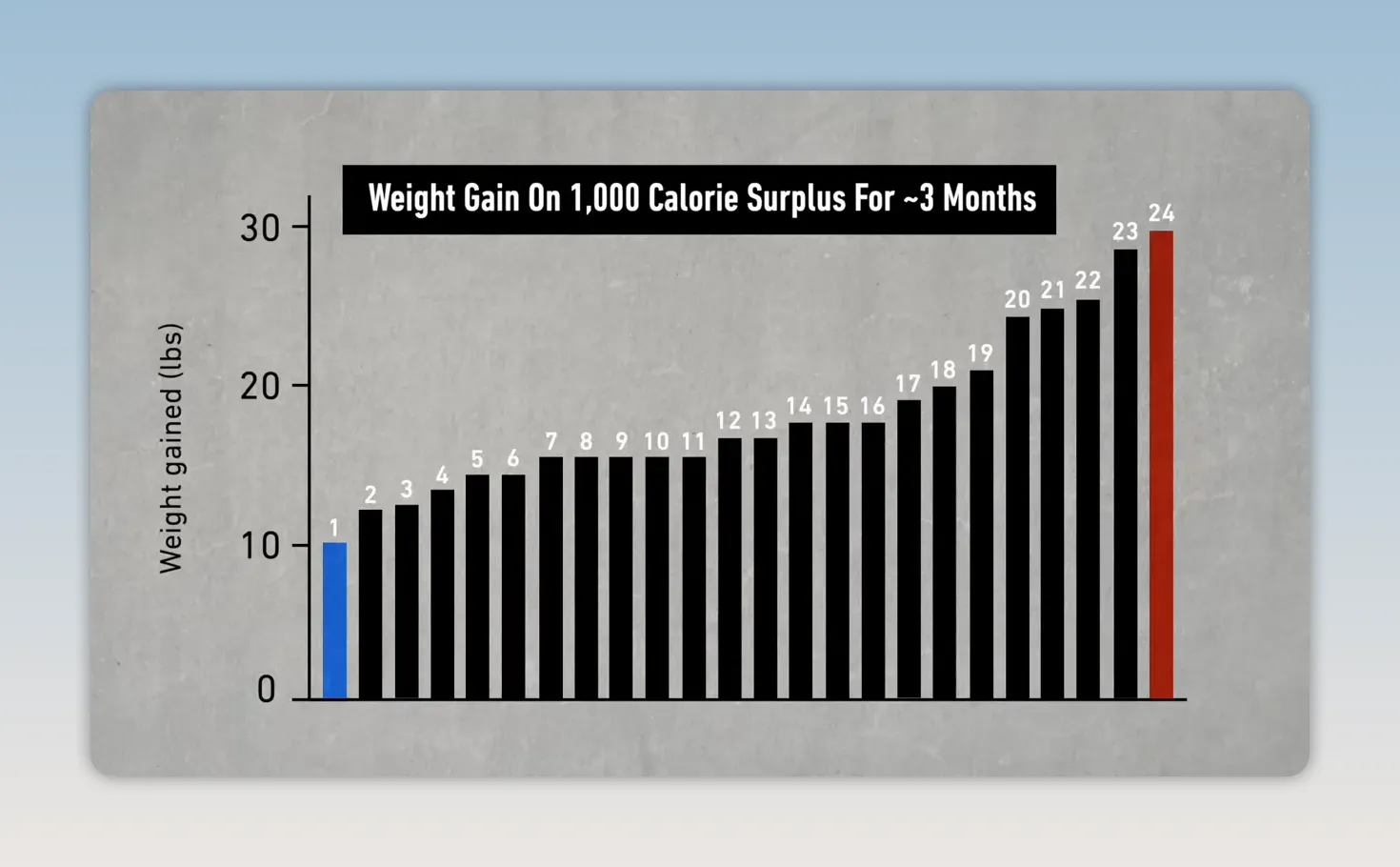
That’s a huge difference, and it wasn’t simply a case of one person deciding to follow the instructions while another didn’t. Several factors can explain this variation, including genetic differences in how people expend energy.
Resting Metabolic Rate Varies Between Individuals
Resting energy expenditure is the energy your body uses while you’re at rest. Even if you spend the day sitting on the couch, your body still burns calories.
A 2018 study on resting metabolic rate illustrates that metabolic equations don’t predict everyone’s expenditure equally well. One person burned roughly 150 calories more per day than predicted, while another burned about 250 calories less.
That’s a difference of about 400 calories per day relative to their predicted values, without either person doing anything to earn it.
To put that in perspective, imagine a small portion of fries containing about 200 calories and a supersized portion containing about 600. The difference is 400 calories.
In a simplified example, someone whose resting expenditure is 400 calories higher could choose the larger portion and end up with the same net energy balance as someone with lower expenditure who chooses the smaller portion, assuming everything else is equal.
The point isn’t that portion sizes don’t matter. It’s that we can’t infer someone’s choices, or their discipline, from their body weight alone.
NEAT Can Make an Even Bigger Difference
Resting metabolism is only one component of daily energy expenditure. We also burn calories through:
- Exercise: deliberate physical activity.
- The thermic effect of food: the energy used to process what we eat.
- Non-exercise activity thermogenesis, or NEAT: movement outside formal exercise, including fidgeting and tapping your feet.
NEAT can vary dramatically between people, potentially even more than resting expenditure.
You can make a conscious effort to move more throughout the day. But much of NEAT is regulated subconsciously, and it’s dynamic. If you deliberately increase one kind of movement, your body may compensate by reducing movement elsewhere.
For someone predisposed to lower spontaneous activity, simply trying to fidget more doesn’t necessarily produce a matching increase in total daily calorie expenditure.
In an eight-week overfeeding study by Levine and colleagues, participants ate an extra 1,000 calories per day. Their changes in NEAT ranged from a decrease of 98 calories per day to an increase of 692 calories per day.
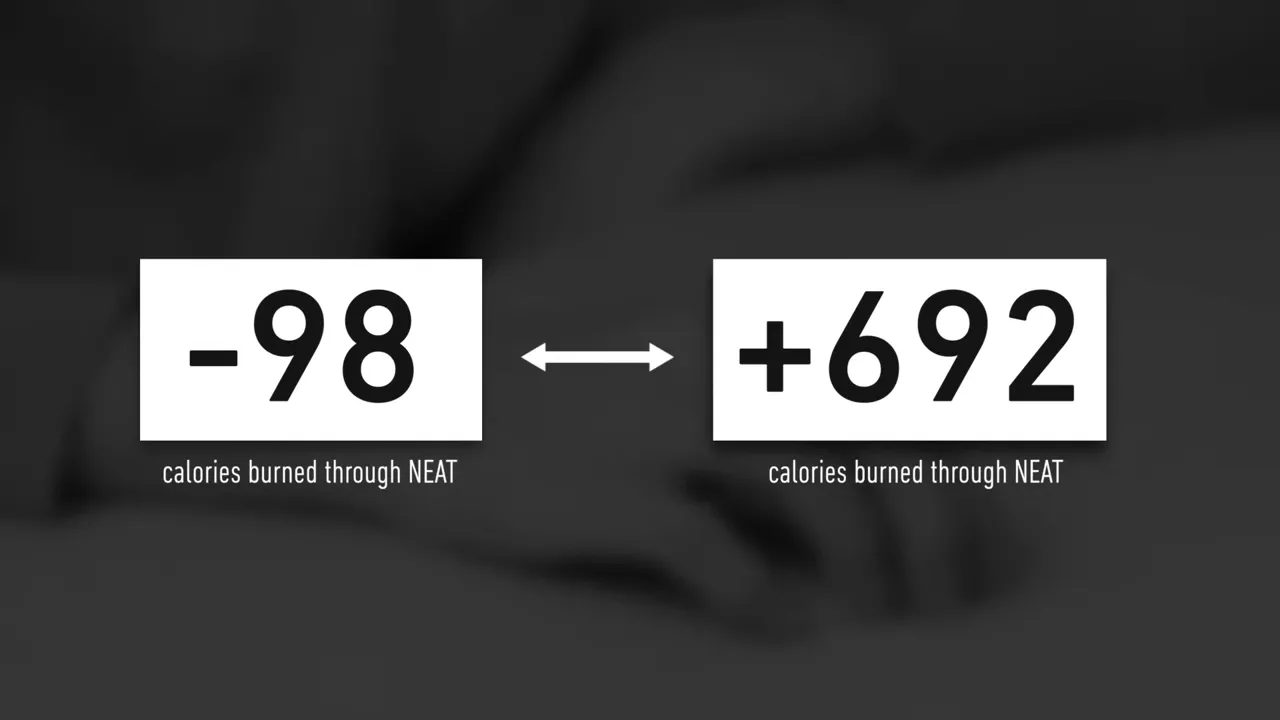
In other words, one participant burned off nearly 700 of those additional calories through increased non-exercise movement. Another actually reduced their movement, adding to the energy their body had to store.
Someone with relatively high resting expenditure and a large NEAT response can eat more while maintaining a lower body weight than someone without those advantages.
This fits with a familiar observation: some people seem to eat whatever they want and stay thin, while others struggle with their weight despite repeated dieting attempts. Those impressions don’t tell us everything about their actual intake, but the research shows that meaningful biological differences exist.
Praising the thinner person’s discipline and criticizing the heavier person’s willpower can completely miss those differences.
Hunger Isn’t the Same Experience for Everyone
Metabolism is only half of the picture. Hunger also varies between individuals.
Some people experience a fairly manageable pattern: hunger falls after a meal and gradually builds as the next meal approaches. Others feel as though they’re constantly fighting an urge to eat, especially while dieting.
A 2013 study comparing hunger after high-fat and low-fat meals makes this distinction clear. On average, both meals suppressed hunger well. But when the researchers separated the average into individual responses, there was enormous variation.
Some people still felt quite hungry after eating. Others felt very full.
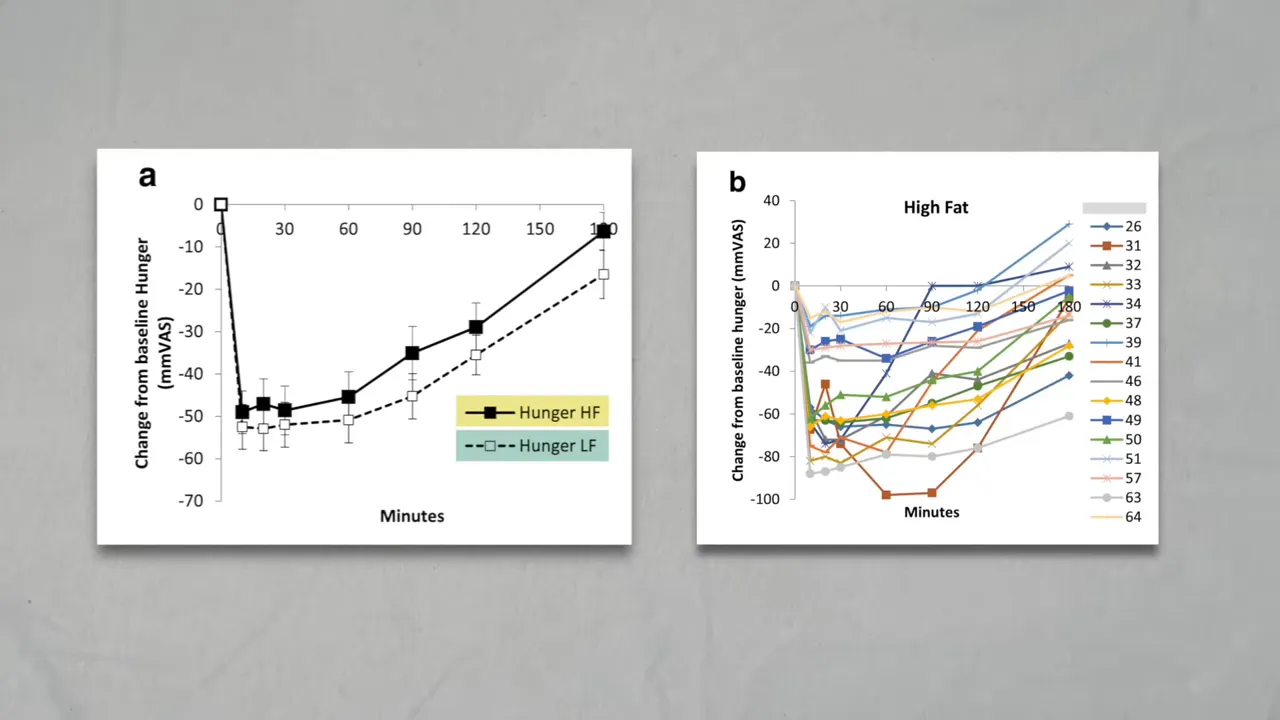
Since hunger naturally drives food intake for most people, this matters. Two people might both decide to stop eating after the same meal, but the person who remains hungry has a much harder decision to sustain.
The behavior may look identical from the outside, while the effort required is completely different. That’s an important distinction whenever we talk about self-control.
Other Biological Factors Also Affect Body Weight
Resting metabolism, spontaneous activity, and hunger aren’t the only influences. A broader discussion of the factors contributing to obesity also needs to include:
- Medications: certain medications can increase appetite or cause water retention, affecting body weight.
- Neuroendocrine conditions: conditions involving hormones and their regulation can influence metabolism and weight gain.
- Pregnancy and menopause: both involve hormonal and metabolic changes.
- Physical disabilities: these can make exercise and non-exercise movement more challenging.
These factors don’t all work in the same way. Water retention, for example, changes scale weight without being the same thing as fat gain. But collectively, they show why an explanation based only on food choices leaves out important context.
Calories In, Calories Out Still Applies
None of this means energy balance only works for some people.
Fat accumulation requires a sustained energy surplus: taking in more energy than the body expends over time. Conversely, a sustained calorie deficit drives fat loss. Controlled metabolic ward research supports the central role of energy balance.
The distinction is between explaining what has to happen for fat gain and explaining why it happens more readily to one person than another.
“They consumed more calories than they burned” describes the energy imbalance. It doesn’t explain their hunger, their spontaneous movement, their medication, their work schedule, or the food available to them.
Energy balance applies to everyone. Avoiding a sustained surplus is not equally difficult for everyone.
The Environment Shapes Our Choices
If obesity were simply a personal decision, why did obesity rates begin rising so sharply around the 1970s? Did people suddenly become less disciplined?
I don’t think that’s a convincing explanation. A more useful one is that the environment changed: highly palatable, calorie-dense foods became more readily available at lower prices.
Biology helps explain why individuals differ in susceptibility. The environment helps explain why more people encounter conditions that encourage weight gain.
Food Availability, Marketing, and Affordability
Our food environment includes more than what’s on a supermarket shelf. It also includes advertising, portion sizes, and price.
Flashier marketing makes high-calorie foods more appealing. Large portions make consuming more energy easier. Relatively inexpensive, energy-dense foods can also be more accessible to people with limited incomes.
People still make decisions within that environment, but the available options and the pressure to choose them aren’t the same for everyone.
Family and Social Influences
The diets of your friends and family also influence what you eat and how easy it is to change.
For an independent adult, eating differently from everyone around them can be difficult. For a dependent child, controlling which foods enter the household may be virtually impossible.
Telling someone to make “better choices” assumes they have meaningful control over the choices available.
Sleep and Work Schedules
Sleep is another important factor, and “just get more sleep” isn’t always realistic. Work schedules and other responsibilities can limit someone’s ability to do that.
A 2017 meta-analysis of shift work found that night-shift work was associated with a 23% higher risk of being overweight.
A 2019 meta-analysis of sleep duration found a dose-response relationship between short sleep and obesity risk. Less sleep was associated with greater risk, with roughly seven to eight hours appearing to be the sweet spot on average.
These are associations, not proof that a particular work schedule determines someone’s weight. But they’re another reason to consider circumstances rather than assuming everything comes down to motivation.
Stress and Depression
Psychological factors matter too.
A 2010 meta-analysis of 14 studies found that psychological stress was a modest risk factor for weight gain. Another meta-analysis published that year found that depression predicted an increased risk of developing obesity.
Again, these findings don’t mean everyone experiencing stress or depression will gain weight. They mean those experiences belong in the discussion, rather than being ignored in favor of a simplistic character judgment.
Recognizing These Factors Doesn’t Mean Giving Up Control
There’s a false choice in this debate: either obesity is entirely someone’s fault, or they have no influence over their body weight at all.
Neither position is necessary.
Even with a lower metabolic rate, greater hunger, or an unsupportive environment, fat loss remains possible through a sustained calorie deficit. But explaining that mechanism is not the same as helping someone maintain it.
Long-term success often requires behavioral changes that make a deficit sustainable. Simply repeating “eat fewer calories” doesn’t address why someone is struggling to do so.
We can acknowledge personal agency while also acknowledging that the difficulty, available resources, and biological resistance vary enormously.
So, Is Obesity a Choice?
My answer is that it’s not a simple choice, and it’s not reasonable to place the entire explanation on the individual.
Some of the disagreement comes down to what we mean by “choice.” If you want to use that word, the most defensible version is that body weight reflects a complex series of choices intertwined with many other complex contributing factors.
That’s very different from saying someone consciously chose obesity, or that their body size reveals how hard they try.
For those of us in health and fitness, the useful response is to understand these influences and show more compassion toward people who are struggling. Rather than making assumptions about their character, we can offer sound, sustainable nutrition guidance when they ask for it.
Understanding why weight management is harder for some people doesn’t undermine the science of fat loss. It makes our advice more realistic, and our treatment of people more humane.
Sponsor Note: Building Creative Skills With Skillshare
Skillshare sponsored the original discussion. It offers classes in areas such as video editing, photography, marketing, and business, along with a community of people developing those skills.
I’ve used it to improve my video production and editing. Even when outsourcing makes sense, understanding the process yourself gives you more control over your creative work. For anyone interested in communicating an offer without sounding gimmicky, I also recommended Jesse Forrest’s course on writing web copy that sells without being cheesy.
|


