For the last two years, I’ve been quietly building something much bigger than my dream gym. It’s where I’ll train, but it’s also a fully equipped muscle research facility where I can run my own experiments.
I’m calling it the Jeff Nippard Muscle Lab. There are four rooms connected by a central lobby: a bright, more strength-focused gym, a darker bodybuilding gym, a podcast studio, and the actual research lab. The research room alone cost more than $300,000.
The machines are awesome. I’m not going to pretend I’m not excited about custom plates and dumbbells with the Muscle Lab name on them. But the real purpose is to bring training, measurement, and science communication into one place. I want to answer questions about building muscle and losing fat, then make the process as accessible and interesting as the results.
Key Takeaways
- The Muscle Lab combines two gyms, a research facility, and a podcast studio.
- Equipment choices prioritize smooth movement, useful range of motion, and adjustable resistance profiles.
- Early shoulder press testing showed substantial side-delt activity, not proof of greater muscle growth.
- DEXA, ultrasound, BIA, and EMG serve different roles in measuring training and body composition.
Table of Contents
- The Light Gym: Strength Equipment and Serious Leg Training
- The Dark Gym: Bodybuilding Equipment That Fits the Job
- What Our Shoulder Press Test Actually Showed
- Chest, Cables, and the Details That Make Equipment Better
- The Muscle Lab: Measuring What Training Actually Changes
- The Experiments I Want to Run
- How I Funded the Facility
- The Final Room: A New Podcast Studio
The Light Gym: Strength Equipment and Serious Leg Training
The lobby has a custom wall art piece made from weight plates, a JN logo mat, and two doors labeled light side and dark side. The light gym has brighter walls, open space, and an industrial, techy feel.
Before getting into the equipment, one thing matters: nothing in either gym or the lab was gifted or sponsored. I picked the pieces I wanted from brands including Eleiko, Atlantis, Prime, and even an old-school Precor machine.
Deadlifts, Squats, and the Basics I Still Want Around
The first thing inside is the deadlift platform. Having my own setup has actually gotten me back into deadlifting more. There’s also a full squat rack because, as a former powerlifter, I couldn’t build a gym without proper free weights.
My main leg exercise right now, though, is the pendulum squat. I’m a huge fan of this movement because it’s quad dominant and feels brutally hard at the bottom of the range of motion. That combination makes it one of my favorite ways to train my quads.
I also wanted a Smith machine, and my criteria were pretty simple:
- A vertical bar path. I personally prefer straight up and down over an angled track.
- Smooth movement. A Smith machine that sticks or needs oil can ruin an otherwise great exercise.
This one checks both boxes, and I’ve been using it pretty much every workout.
A Leg Extension With an Adjustable Resistance Profile
The Prime leg extension is a very close second to the pendulum squat for quad training. Its biggest advantage is that changing where you load the plates changes which part of the repetition feels hardest.
- Bottom loading position: emphasizes the squeeze as you approach lockout.
- Middle loading position: emphasizes the middle of the range of motion.
- Top loading position: emphasizes the stretched position, with the knee more deeply bent.
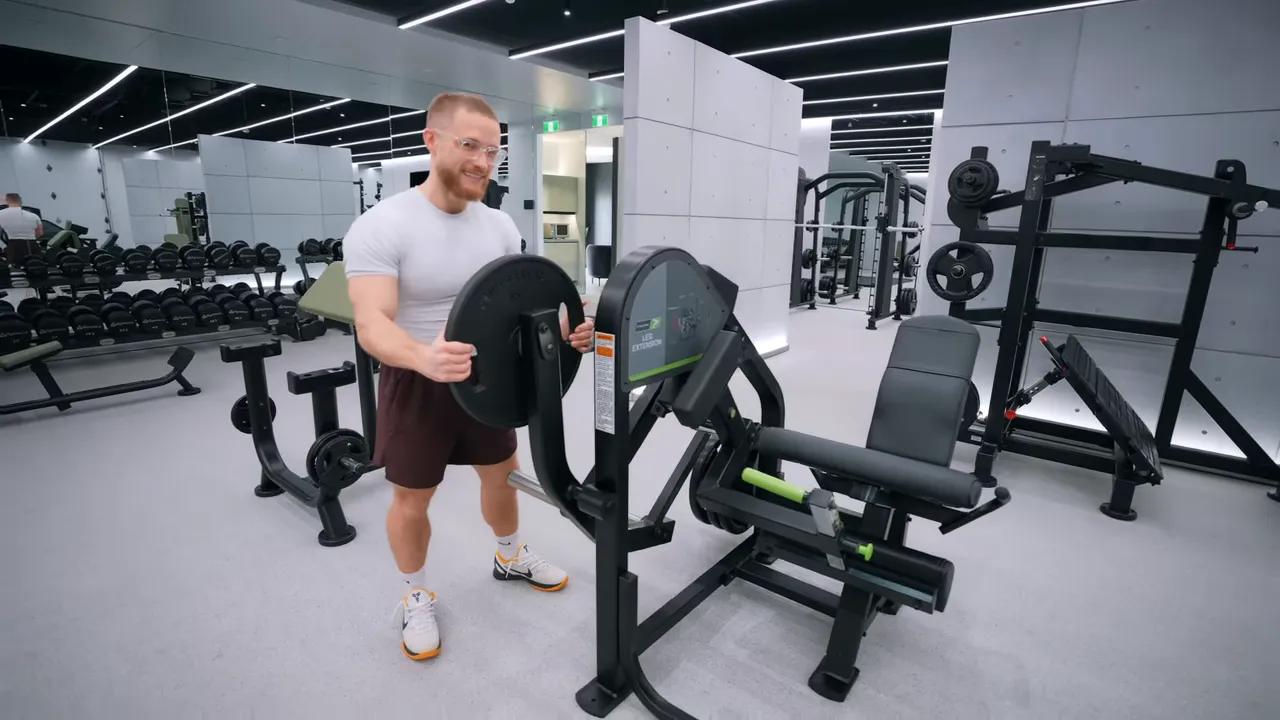
My usual setup is two plates on top and two in the middle, which gets me around 10 reps. That’s my working load, not a prescription for anyone else. The useful feature is being able to adjust the challenge throughout the movement rather than only adding more weight.
This machine also allows a deeper knee angle than any other leg extension I’ve personally used. Setting the seat back opens up even more room to get into that bottom position.
Hip Abduction, Adduction, and Two Ways to Curl
The Atlantis hip abduction and adduction combo handles both glutes and inner thighs. One pad configuration lets you push your legs apart for hip abduction; the other lets you bring them together for hip adduction.
Seat position gives me another adjustment. Moving forward can create more of a stretch, while sitting farther back changes the relationship between the movement and the glute medius fibers. I was showing Jesse James West these options when he came by.
For hamstrings, I have both a seated leg curl and my favorite lying leg curl machine. Why get both? Honestly, sometimes lying down at the start of a workout just feels better.
More importantly, this Prime lying curl has an angled support that puts the hips in a more flexed position than a flatter lying curl. It’s about as close to a seated leg curl position as I’ve found in a lying machine, and it allows a really deep curl.
The adjustable cam also changes the resistance profile. I usually set it between the maximum-stretch and midrange settings.
A Leg Press That Moves in an Arc
Most familiar leg presses move along a straight track, often at about 45 degrees. The Atlantis Pivot Press follows an arc instead.
For me, that path feels more natural. It’s smooth, and I can get nice and deep. That’s a recurring theme with the equipment I chose: I want a movement that fits my body and lets me use the range of motion I’m looking for.
Calves: An Old-School Favorite and a Stable Standing Option
The Precor donkey calf raise is partly a nostalgia piece. Arnold helped make this movement famous, and I still think it’s underrated.
The bent-over hip position can take some stress off the back while the knees remain straight. That lets me get a big stretch through the gastrocnemius, the prominent calf muscle that crosses the knee.
I also have an Atlantis standing calf raise. The grippy foot platform is a small detail that makes a big difference. I feel secure rotating through the balls of my feet, so I can focus on my calves rather than keeping my footing.
I’ve already talked with Larry Wheels about bringing him into the lab for a calf-training study. The idea is to see whether a measured, science-based approach can finally get his stubborn calves growing.
Hip Thrusts and the Top-End Squeeze
The Nautilus Glute Drive is probably my number one glute builder right now. I pause for about one second at the top of every rep.
Unlike many exercises where I’m especially interested in challenging the stretched position, the hip thrust is a movement where I really focus on the glute contraction at the top. My main cue is simple: finish the rep and squeeze, rather than rushing straight back down.
The Dark Gym: Bodybuilding Equipment That Fits the Job
The dark side has more dramatic downlighting, darker finishes, and a bigger bodybuilding focus. It also has several pieces I chose because they give me a specific angle, resistance profile, or stretch that I really like.
Three Rows, Three Reasons to Keep Them
My favorite back piece here is the Atlantis seal row. It’s an old-school movement, but it’s fantastic for training the midback.
With the bench horizontal, I can put a lot of work into my mid traps, rhomboids, and rear delts. This particular bench also adjusts upward. With a more inclined position, I can make the row more lat focused by driving my elbows down and slightly back.
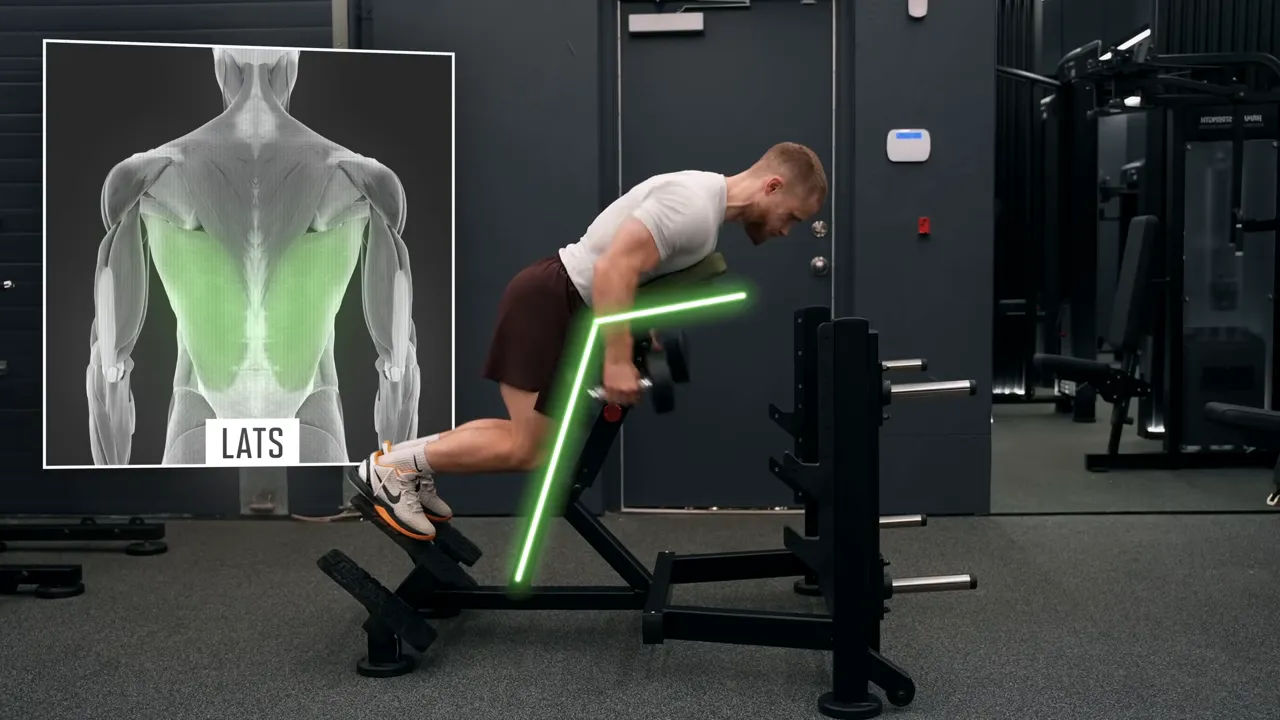
The Prime chest-supported row is a close runner-up. Like the leg extension, it has three loading positions that let me emphasize the squeeze, midrange, or stretch. That gives me options beyond changing the total weight.
There’s also a Gymleco incline T-bar row. I’m still finding the best place for it in the room, but the handle spacing, flare, and overall angle just work really well for my body. Sometimes a piece earns its spot because it fits.
The “Back Extension” I Use for Glutes
The 45-degree back extension is easy to overlook as a glute exercise. The name practically tells you to think about your lower back.
My preferred glute-focused variation uses a rounded upper back while I focus on moving through the hips. The intention is to reduce how much I turn the rep into a back-extension movement and make the glutes handle more of the hip extension.
I’ve been doing this every week on one of my leg days, usually for 12 to 15 reps with a plate held against my chest. The glute connection is excellent for me. If you’ve only thought of this bench as lower-back equipment, it’s worth reconsidering what it can do.
What Our Shoulder Press Test Actually Showed
One question I expected was why I bought a shoulder press machine. If bench pressing already trains the front delts, shouldn’t shoulder work focus mostly on the side delts?
That’s a reasonable question. So Will Tennyson and I used the lab’s EMG equipment to take a closer look.
We placed electrodes over his front, side, and rear delts and measured their electrical activity during the Atlantis shoulder press. The front delts showed high activity, and the rear delts showed very little, which wasn’t surprising.
The surprise was the side delts. They showed very high activity too. In this test, Will’s lateral delt reading was actually higher than his front delt reading. He also noticed a strong side-delt pump immediately after the set.
When I repeated the test on myself, we saw the same general pattern.
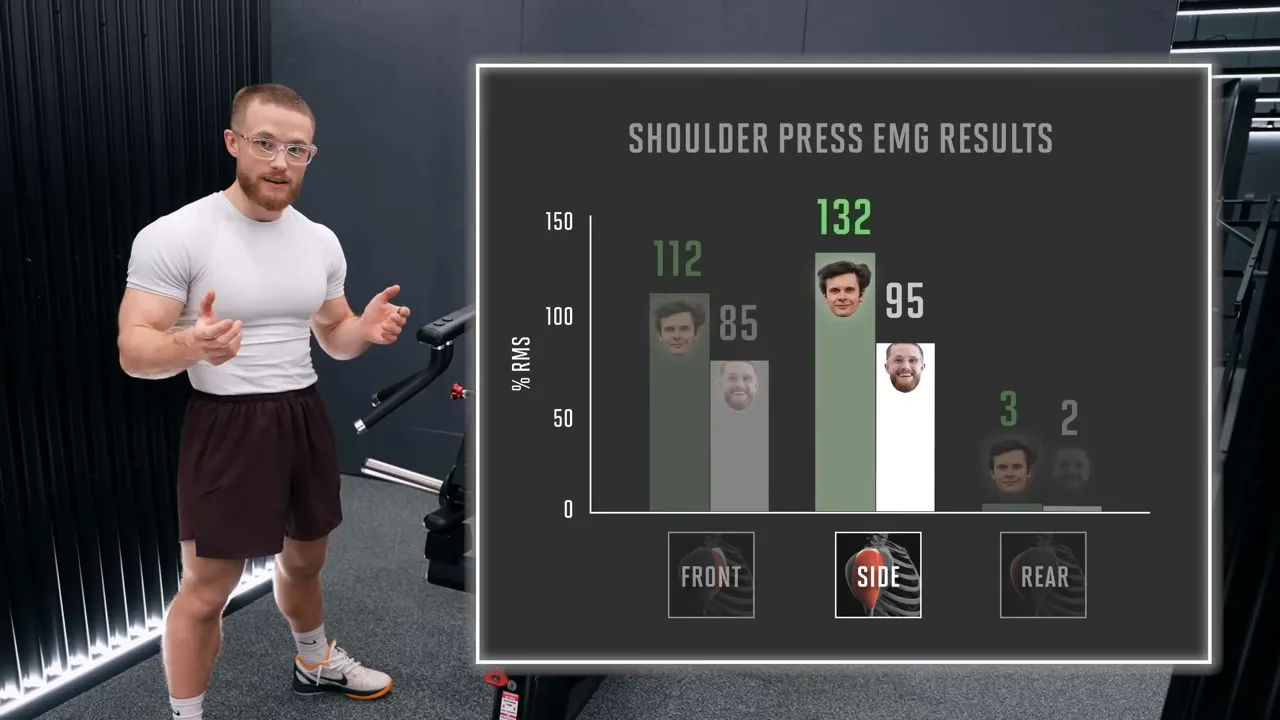
This is not conclusive evidence. Two people using one machine is not enough to settle how everyone should train, and electrical activity is not the same thing as measured hypertrophy.
But it does make me less comfortable dismissing the shoulder press as “just front delts.” At least for Will and me, this machine involved the side delts more than many people might expect. I’m still a fan of including a vertical press.
Lateral Raises and a Sideways Reverse Pec Deck
For direct side-delt work, I picked the Atlantis standing lateral raise. It’s smooth, has a great range of motion, and gives me an alternative to cables or dumbbells.
For rear delts, I prefer a modified reverse pec deck setup: sitting sideways and working one arm at a time.
Facing directly into the machine limits how far the working arm can travel across the body. Sitting sideways lets me begin farther across my torso and use more of the stretched portion of the movement. To me, cutting that part out feels a bit like doing curls only in the top half.
When Will and I tested this variation, rear-delt activity was high. Side-delt activity was much lower, and front-delt activity was lower still. That fits why I like it as a rear-delt isolation exercise, while keeping the same caution about what an EMG reading can prove.
Chest, Cables, and the Details That Make Equipment Better
The dark gym also has a smooth Atlantis lat pulldown and a seated cable row. On the row, I especially like the distance between the seat and pulley because it gives me room to reach forward into a deep lat stretch.
For chest, my favorite is the Hammer Strength incline press. I call it the Phil Heath machine because I remember seeing him use it when I was first getting into bodybuilding. That association definitely helped cement its place in my brain.
I added thick grips to get a little extra range of motion at the bottom, and I’m considering modifying the seat position to bring it forward slightly. I feel like there’s still a little more depth available. For smoothness, though, I absolutely love this press.
The most versatile cable setup I could find was the Nautilus Human Sport Freedom Trainer. Its arms adjust in height and move inward or outward, giving me lots of options for low, high, and differently spaced cable exercises. I use it every upper-body workout.
There’s a treadmill too. It gets considerably less of my excitement than the cable machine.
Lighting Can Completely Change How a Physique Looks
We put a ridiculous amount of work into the lighting. Every light has its own dimmer, and every spotlight can be controlled individually.
That means I can turn off the overhead lighting, leave one spotlight on, and create much deeper shadows across the muscles. I call it thumbnail lighting because the difference is almost comical. It can make me look dramatically leaner without changing anything about my actual body composition.
That’s a useful reminder when comparing physique photos: a change in appearance is not automatically a change in body fat or muscle. Lighting alone can do a lot.
The Muscle Lab: Measuring What Training Actually Changes
The research room is the real reason this project exists. I now have DEXA, ultrasound, BIA, and EMG equipment under the same roof as the training facility.
Each tool answers a different kind of question. Having all of them doesn’t mean every experiment automatically becomes good science, but it gives me the ability to measure outcomes much more directly.
DEXA for Body Fat and Lean Mass
The lab’s GE Lunar DEXA machine cost about $200,000 by itself. It measures body composition, including body fat and lean mass. For background on how the technology works, RadiologyInfo provides an accessible explanation of DXA scanning.
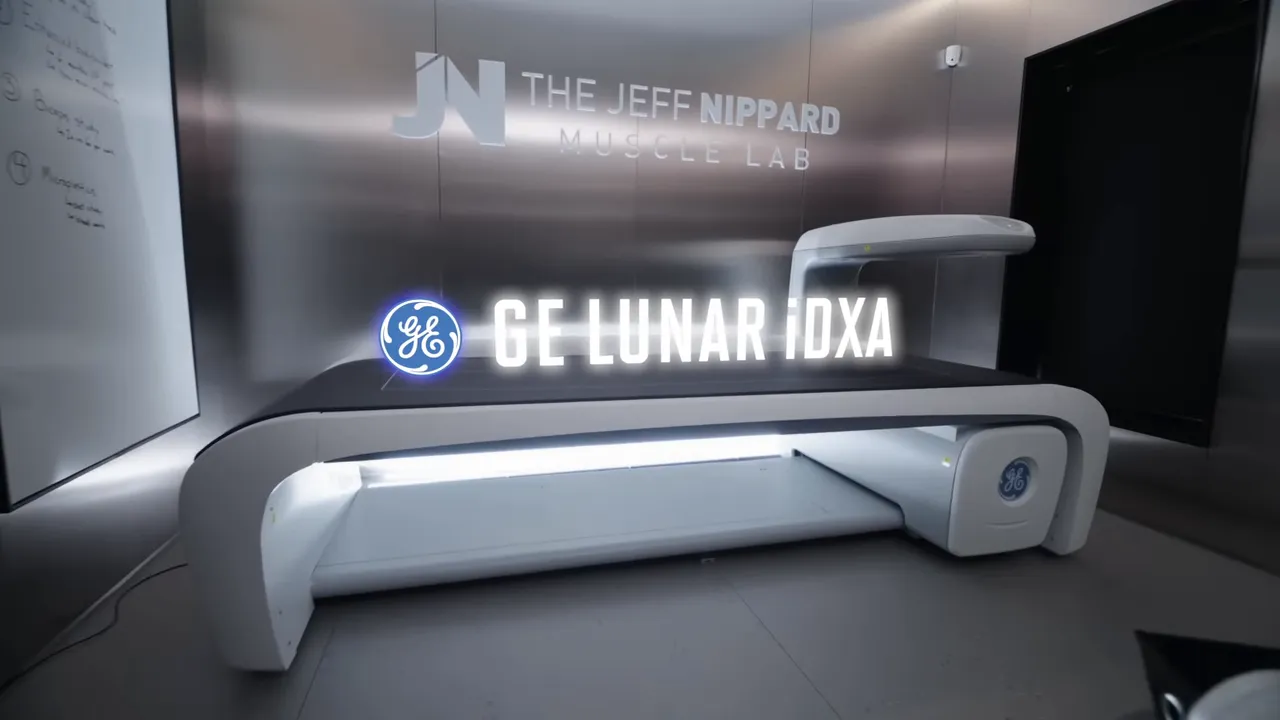
One of my current experiments is finding out whether I can reach single-digit body fat and maintain it year-round without making my life miserable. I’m tracking body fat, muscle-related measurements, hormone levels, and other markers along the way.
My latest DEXA result was 10.3% body fat. The precision estimate I’m working with for this machine is around 0.5 percentage points, so a drop greater than that is the sort of change I’m looking to pick up in this experiment. That estimate is specific to the setup, not a blanket promise that every DEXA reading is accurate to half a point.
DEXA is useful for tracking fat loss. But for the smaller, localized changes I want to investigate in muscle-building experiments, I also wanted something more direct.
Ultrasound for Muscle Thickness
The ultrasound machine lets us image the muscle and measure its thickness in millimeters.
With gel on the probe and the probe placed over the muscle, the image shows the skin, a layer of fat, the muscle tissue, and the bone beneath it. Repeating those measurements over time gives us a way to assess changes in the muscle itself.
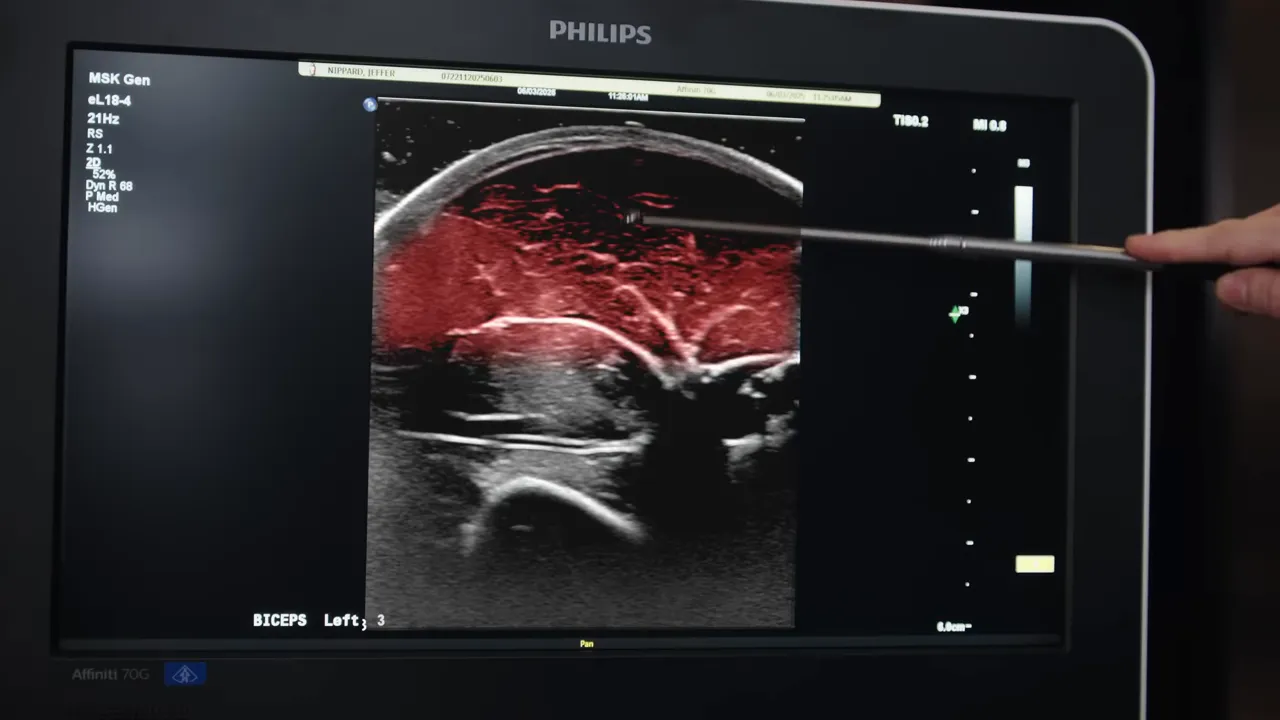
One experiment I want to run compares two training frequencies on my own arms:
- Control arm: train the biceps normally, twice per week.
- Test arm: train the biceps every day for 30 days.
- Measurement: use ultrasound to compare changes in muscle thickness.
That’s a proposed experiment, not a result or a recommendation to start training your biceps daily. The exciting part is being able to test the question rather than argue about it indefinitely.
BIA for Faster Body Composition Check-Ins
I also have an InBody 770 bioelectrical impedance analysis machine, or BIA.
I expect to use DEXA more, but speed matters when you’re bringing in lots of participants. A BIA measurement takes about one minute, compared with roughly 20 to 30 minutes for the DEXA process here.
That makes BIA useful when we need a quick snapshot. It can also help track changes, even though it isn’t interchangeable with every other body composition method.
EMG and the Question I Really Want to Validate
EMG measures electrical activity associated with muscle activation. We’ve already used it for the shoulder press and reverse pec deck tests, but I want to investigate a more fundamental question:
Does higher electrical activity predict greater muscle growth over time?
That relationship is not established well enough to simply rank exercises by their EMG readings and assume the highest number wins. I want to run a validation study comparing the electrical measurements with actual hypertrophy over a longer period.
If the measurements prove useful for that purpose, they could become a much more valuable tool for comparing exercises. Until then, the activation tests are interesting clues, not final answers.
The Experiments I Want to Run
The equipment opens up a long list of questions I’ve wanted to explore.
- Food quality: What would happen to body fat and blood work if twins followed contrasting diets, one based on junk food and the other on foods typically labeled clean, with calories and training matched?
- Stopping steroid use: How much muscle would an enhanced bodybuilder lose over six months after stopping, if training and diet stayed the same?
- Training frequency: Would one biceps grow differently with daily training compared with twice-weekly training?
- Stubborn calves: Can a carefully tracked calf-training intervention produce meaningful growth for Larry Wheels?
- Sustainable leanness: Can I maintain single-digit body fat throughout the year, and what happens to my other measurements?
These are research ideas and ongoing questions, not completed findings. My ambition is to produce high-quality studies that can be submitted for peer review and published in scientific journals, not just entertaining experiments.
Bigger Samples and a Clearer Look at the Process
I’d also love to run studies with hundreds of participants. Small sample sizes are a real limitation in training research, and studies with only eight or 10 people aren’t unusual.
But honestly, advancing the scientific literature wasn’t my main motivation for building this place. I want to make high-quality science more accessible and entertaining.
During the range-of-motion study I worked on in New York, comparing full range of motion with lengthened partials, filming restrictions made that difficult. Even with permission to record participants, faces had to be blurred, and because I wasn’t formally affiliated with the university, I couldn’t film them myself.
That limited how clearly I could communicate what people were actually doing. With this facility, my aim is to document participants going through the protocols and connect those training sessions with their measured results.
Research becomes much easier to connect with when the protocol is more than a paragraph in a paper. I want people to understand what the training looked like, how it was carried out, and what changed.
How I Funded the Facility
Nothing in the lab or either gym was sponsored or gifted. The project was funded through my training programs and MacroFactor.
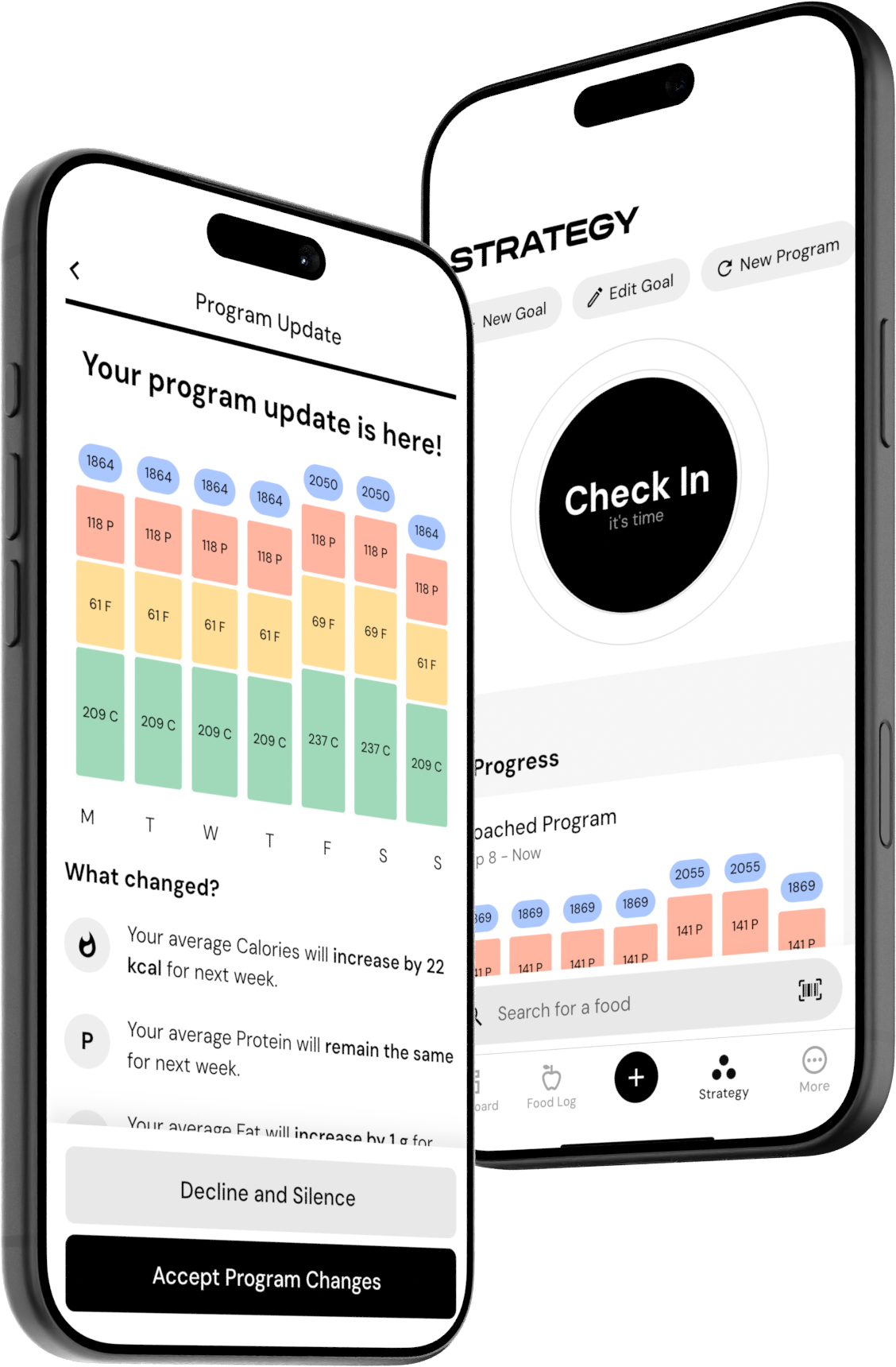
MacroFactor is the nutrition app I help create. You log your body weight and food intake, and its algorithms adjust your diet targets based on your data, providing an adaptive approach rather than leaving you with a static calorie number.
I’ve used it daily during this cut, going from over 20% body fat to just over 10%. For me, it has made dieting much simpler. Tracking macros also gives me room to enjoy meals out and stay flexible without abandoning my goals.
At the time of opening the lab, MacroFactor had more than 350,000 users, with an online community sharing recipes, answering questions, and helping each other stay accountable. A two-week free trial is available with code JEFF.
|
The Final Room: A New Podcast Studio
The fourth room is home to the Jeff Nippard Podcast. My first episode is a conversation with my brother Brad, who joined me in an experiment where we both tried to train as well as possible for a full year.
After two years of planning, construction, equipment decisions, and trying to keep the whole thing secret, the Muscle Lab is finally real.
I now have a place to train hard, test ideas, measure what happens, and explain the science with much more of the process out in the open. The dream gym is exciting. Getting to ask better questions inside it is the part I’m most excited about.


