Can you speed up your metabolism enough to eat more food while still losing fat? Yes, but the strategies that actually move the needle usually aren't the ones getting the most attention.
Building muscle and moving more can meaningfully increase the calories you burn. Drinking green tea, sitting in a sauna, and suffering through an ice bath? The numbers are much less impressive.
The important distinction is between producing a small, temporary increase in calorie burning and helping you lose more fat over time. Those aren't necessarily the same thing. Here's how I'd sort the most popular metabolism strategies into three categories: it works, it might work, and it probably doesn't work.
Key Takeaways
- Building muscle and adding daily movement are more useful than most metabolism hacks.
- Cardio increases expenditure, but energy compensation can partially offset the calories burned.
- Green tea, saunas, ice baths, and frequent meals offer little meaningful metabolic benefit.
- A slower metabolism doesn't prevent fat loss when nutrition and activity habits are consistent.
Table of Contents
- What Does a Faster Metabolism Actually Mean?
- What Works to Increase or Preserve Daily Calorie Burning
- What Might Work, With Important Limitations
- What Probably Doesn't Meaningfully Boost Metabolism
- A Slower Metabolism Doesn't Prevent Successful Fat Loss
- Adjust Your Nutrition to Your Actual Calorie Needs
What Does a Faster Metabolism Actually Mean?
In a fitness context, when we talk about metabolism, we usually mean total daily energy expenditure: how many calories your body burns each day.
Someone with a “fast metabolism” burns more calories and can generally eat more food while maintaining their weight. Someone with a “slow metabolism” burns fewer calories and may need a lower intake to lose weight.
These differences can be substantial. A large study published in Science examined daily energy expenditure in more than 6,000 people from diverse backgrounds. Around a body weight of 80 kilograms, or 176 pounds, the plotted values ranged from roughly 1,400 to 5,700 calories per day.
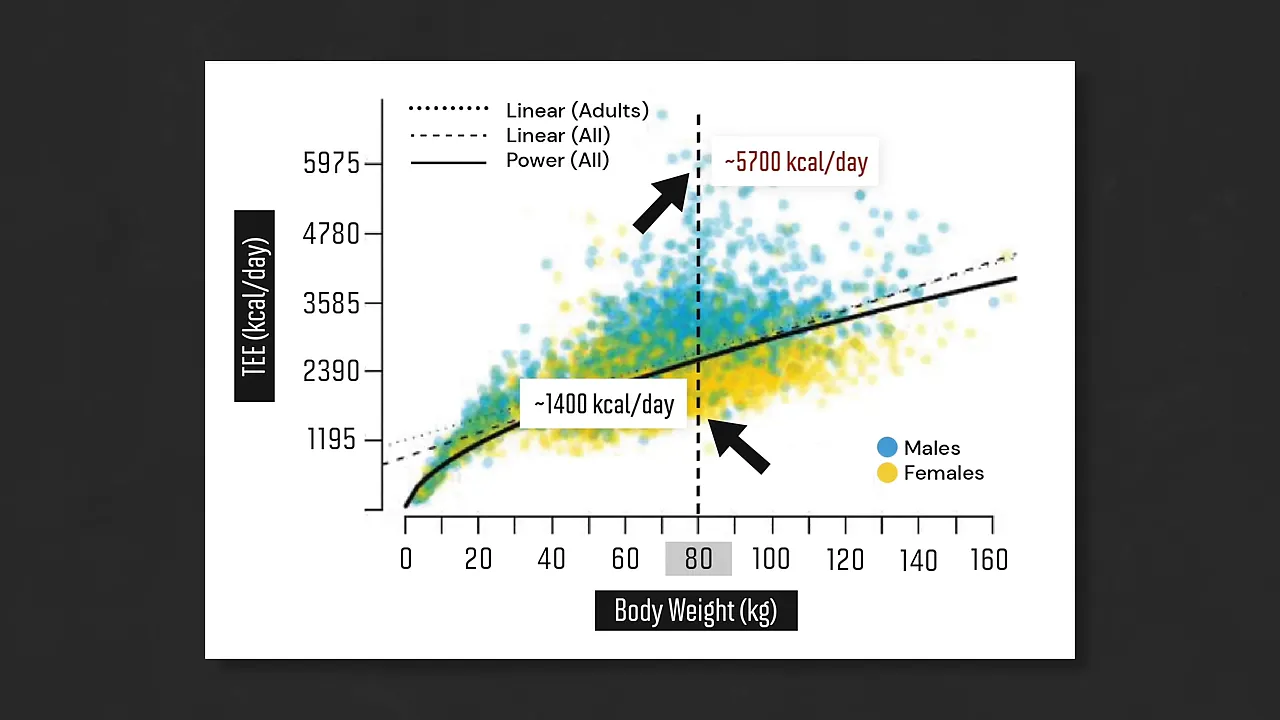
Those are extremes, not calorie targets. And this is total expenditure, not just resting metabolism, so the spread shouldn't be interpreted as a difference in calories burned while doing nothing. Still, it shows why body weight alone can't tell you exactly how much food you need.
If you can increase your expenditure while dieting, you may have room for more food, feel less depleted, perform better in the gym, and retain more muscle. That's worth pursuing. The question is which methods deliver enough benefit to matter.
What Works to Increase or Preserve Daily Calorie Burning
Building Muscle
Muscle is metabolically active, and it burns more calories at rest than fat does. The difference is real, but it isn't magical:
- One pound of fat: approximately 2 calories per day at rest.
- One pound of muscle: approximately 6 calories per day at rest.
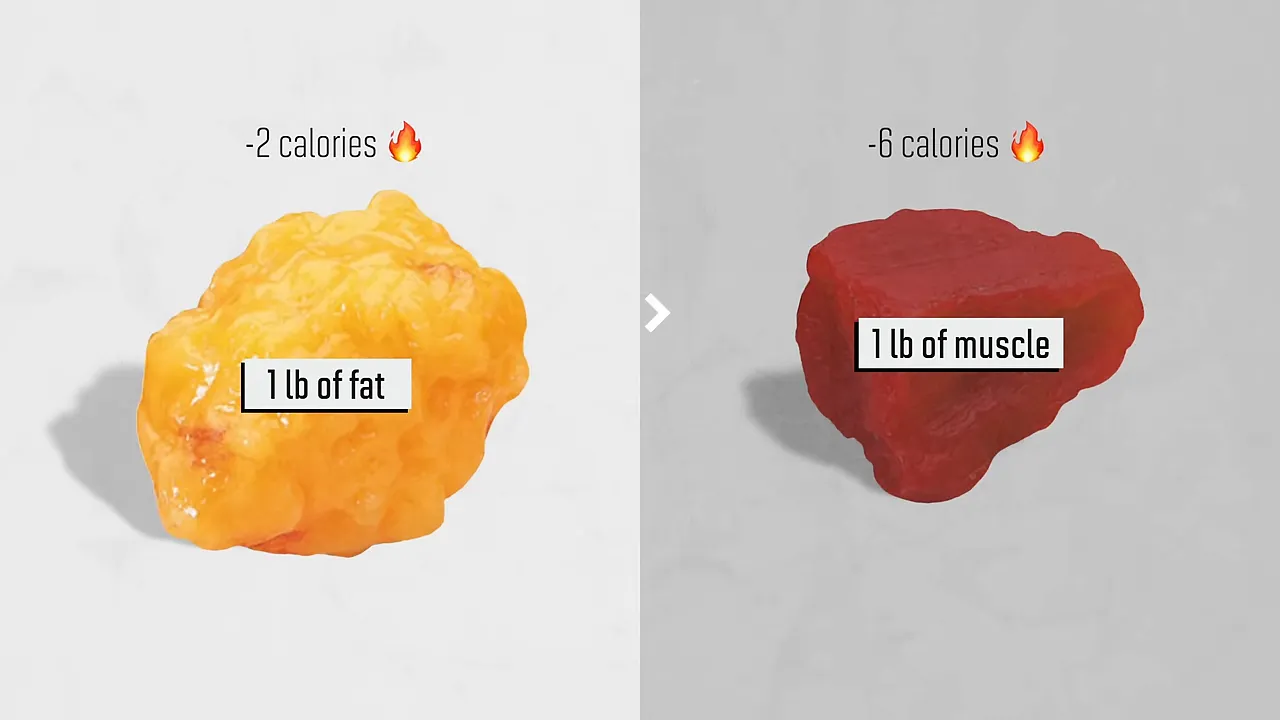
Using my body composition as an example, I estimated that my fat tissue would burn about 24 calories per day at rest, while my muscle would burn about 480. That's a 456-calorie difference between the contributions of those tissues, although I also carry much more muscle than fat.
For a more useful example, imagine you're a relatively new lifter and add 30 pounds of muscle over the next five years. At approximately 6 calories per pound, that would add around 180 calories per day to your resting expenditure, all else being equal.
If you previously burned 2,500 calories a day, that simple estimate would put you around 2,680. That's roughly four extra kiwis' worth of food each day. Not an unlimited buffet, but a meaningful increase that adds up over time.
My verdict: it works. Building muscle is a long-term strategy, not a quick metabolism hack.
Cardio, Even With Energy Compensation
Cardio obviously burns calories. The complication is that the calories burned during a workout don't always translate into an equal increase in your total daily expenditure.
This is called energy compensation. One way it can happen is through a reduction in non-exercise activity thermogenesis, or NEAT. That's the energy you use for movement outside formal exercise, including fidgeting, shifting around, and bobbing your head to music.
Here's a hypothetical example:
- On a normal day, you burn 500 calories through NEAT.
- You add a jog that burns another 500 calories.
- Afterward, you subconsciously move less, reducing NEAT to 350 calories.
- Your net increase is 350 calories, rather than the full 500 from the jog.
The workout still increased your expenditure. It just didn't increase it by as much as you might have expected.
There are large individual differences, but the research estimate discussed here suggests that, on average, 100 calories burned through activity translates into about 72 additional calories of total daily expenditure. That isn't a precise correction factor for every workout or every person.
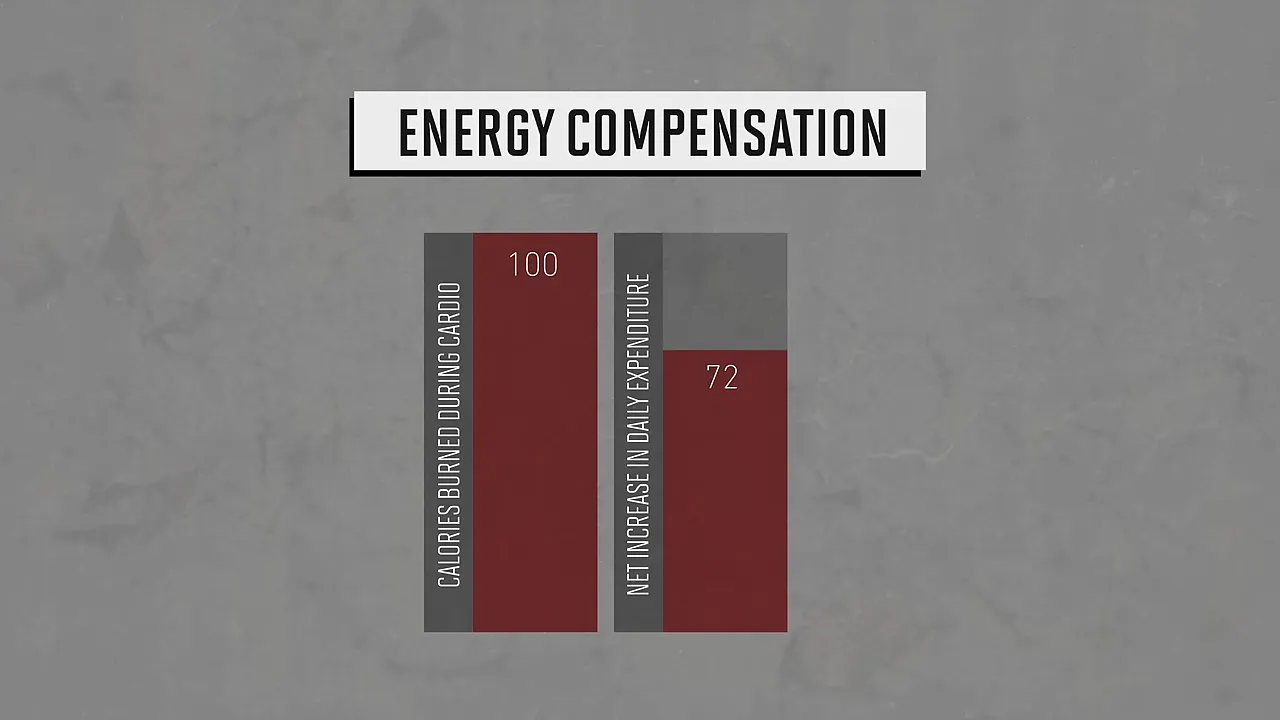
This is why I prefer to use diet as the main tool for establishing a calorie deficit and cardio as a secondary tool. You tend to get less calorie-burning bang for your buck than the workout number suggests.
My verdict: it works. Compensation reduces the effect; it doesn't make cardio useless.
Dieting at a Moderate Rate
This strategy is less about pushing your metabolism higher and more about avoiding an unnecessarily large decline while losing weight.
The more aggressively you cut calories, the more your metabolic rate tends to decrease. Rather than dieting on as little food as possible, a general target is to lose around 0.5% to 1% of your body weight per week.
Pushing well beyond that range can increase the likelihood of a larger metabolic slowdown. More aggressive isn't automatically better, especially if the goal is to keep training well and make the diet manageable.
My verdict: it works as a strategy for preserving expenditure during fat loss.
Adding More Everyday Movement
You don't need to turn every opportunity to burn calories into a formal workout. Small bits of movement throughout the day count, too.
I call this NEAT smuggling: slipping more non-exercise activity into things you're already doing.
- Park farther from the grocery store entrance.
- Take the stairs instead of the elevator.
- Stand up and stretch regularly when working at a desk.
None of these needs to be dramatic. The idea is to make your day more active without relying entirely on another cardio session.
My verdict: it works. It's not flashy, but everyday movement deserves more attention than most metabolism supplements.
What Might Work, With Important Limitations
Drinking More Water
Cold water requires energy to warm up to body temperature. A simple heat calculation puts that at roughly 8 calories per glass, depending on the amount and temperature of the water.
On paper, that sounds like a small metabolic bonus. In practice, I'm not convinced that deliberately drinking more water produces substantially better long-term fat loss through this mechanism.
A tiny increase could be partially offset elsewhere. You might drink more cold water but subconsciously move a little less, leaving a smaller net benefit than the calculation suggests.
I'm also not a fan of forcing huge amounts of water. Excessive intake over a short period can cause hyponatremia, or water intoxication, which can be dangerous.
As a general guide, around 8 to 12 glasses, or 2 to 3 liters per day, is plenty for many people, and thirst can help guide intake. That isn't a fixed prescription for every person or situation.
Water may be more useful for another reason: drinking it with meals can help you feel fuller. If that makes it easier to manage your daily calorie intake, that's a practical benefit even without a meaningful metabolic boost.
My verdict: it might work, but don't force water for the sake of burning a handful of calories.
Spicy Food and Capsaicin
Chili peppers contain capsaicin, a compound with evidence for a thermogenic effect. A meta-analysis of nine studies reported an average increase in energy expenditure of approximately 69 calories per day, but that increase appeared in studies involving participants with a BMI above 25.
That doesn't mean adding a little chili to dinner will automatically burn 69 extra calories.
Take a bowl of green curry chicken and rice. In my example, roughly 0.5 grams of chili pepper provided an estimated 2 milligrams of capsaicin. Extrapolating generously from the research, that might amount to a metabolic boost of around 20 calories at best.
Compared with the roughly 700 calories in the meal, that's pretty small. The findings make capsaicin interesting as a research candidate, but they don't make spicy food a fat-loss shortcut.
I think the more useful effect may be on fullness. I tend to eat more slowly and drink more water with a spicy meal. If that helps me eat fewer calories across the day, it could matter much more than the small thermogenic effect.
My verdict: it might work. The appetite benefit may be more useful than the calorie-burning benefit.
Reverse Dieting
Reverse dieting means gradually increasing calories after a diet, usually with the goal of rebuilding metabolism while limiting weight gain.
I've seen cases where people increased intake by several hundred calories while maintaining their body weight. My main objection isn't that this can never happen. It's that I'm not convinced you need to increase calories so slowly.
After a diet, I generally think it makes more sense to return directly to your estimated new maintenance intake. Once you're there, you can explore more gradual increases and see how your weight responds.
Maintenance is better thought of as a dynamic range than a perfectly fixed number. But that range still has an upper limit. You can't keep adding calories indefinitely without eventually gaining weight.
Eric Trexler's explanation of reverse dieting and the evidence goes deeper into this distinction.
My verdict: it might work, but a prolonged, slow reverse diet doesn't appear necessary just to return to maintenance.
Weighted Vests
Weighted vests are one of the more interesting possibilities. The basic idea is that if I weigh 160 pounds and wear a 20-pound vest, I'm placing a load on my body closer to what a 180-pound person would carry.
There's also a proposed mechanism called the gravitostat: a system that may sense loading on the skeleton and contribute to body-weight regulation. Early research on this loading-sensitive system makes the concept intriguing, but it isn't proof that wearing a vest reliably produces a large metabolic increase in humans.
My friend and natural pro bodybuilder Eric Salazar explored weighted apparel during contest preparation in a case study with James Krieger. He wore a 34-pound vest for approximately 90% of his waking hours and reached a reported body-fat level around 5%.
Compared with previous diets, he reported fewer of the unpleasant side effects associated with getting extremely lean. That's interesting, but a single case study can't establish that the vest caused those improvements.
My verdict: it might work. I'm interested, but I'd like more published research before putting it in the proven category. The case-study protocol isn't a general recommendation to wear a heavy vest all day.
What Probably Doesn't Meaningfully Boost Metabolism
Green Tea
Green tea gets a lot of attention as a metabolism booster. The evidence is much less exciting than the marketing.
A 2021 systematic review identified four studies examining acute metabolic effects. Three found no effect, while one reported a 79-calorie increase in daily energy expenditure.
That positive study included only 10 participants and lasted 24 hours. It's not enough to draw a strong conclusion about lasting fat loss. Two longer-term studies also found no fat-loss benefit.
My verdict: it probably doesn't work as a meaningful metabolism or fat-loss strategy. Enjoy green tea if you like it, but don't expect it to transform your calorie needs.
Sauna
Sweating feels like work, but that doesn't necessarily mean you're burning a meaningful number of additional calories.
A study of thermal exposure found increased oxygen consumption and a heart-rate rise of around 20 to 25 beats per minute. Using those findings to estimate expenditure for a 180-pound person gives approximately:
- Ten minutes in a sauna: 19 calories.
- Ten minutes sitting at room temperature: 14 calories.
- Additional expenditure: about 5 calories.
That's roughly a stick of gum. The relevant number isn't the total calories burned in the sauna; it's the extra calories above what you would have burned anyway.
My verdict: it probably doesn't work as a meaningful metabolic booster. That's a judgment about calorie burning, not every possible reason to use a sauna.
Ice Baths and Cold Plunges
Cold exposure can increase oxygen consumption, and shivering does require energy. But the practical numbers are still underwhelming.
Based on the cold-water immersion research discussed here, sitting neck-deep in cold water for 10 minutes would burn approximately 28 calories, compared with around 14 calories sitting at room temperature.
That's an additional 14 calories. More than the sauna estimate, but not much of a return if your primary goal is fat loss.
My verdict: it probably doesn't work as a worthwhile metabolism strategy. A measurable effect isn't automatically a useful one.
Eating More Frequently
The idea that you need frequent meals to keep your “metabolic furnace” burning doesn't hold up well.
In a 2012 respiration-chamber study, participants ate either three meals or 14 meals per day while consuming the same total calories. Researchers found no difference in daily energy expenditure.
A 2015 meta-analysis of 15 studies also didn't provide convincing evidence that higher meal frequency improves fat loss. An apparent advantage for more frequent meals was driven by one study; removing it made the difference disappear.
My verdict: it probably doesn't work. Choose a meal frequency that helps you manage your intake, rather than adding meals to chase a metabolic boost.
A Slower Metabolism Doesn't Prevent Successful Fat Loss
Even if you implement the useful strategies and still have relatively low calorie needs, you can lose weight.
Research on energy expenditure and body-composition changes helps put metabolism into perspective: having a higher expenditure isn't a guarantee of weight-loss success. People with faster metabolisms can struggle, and people with slower metabolisms can succeed.
The habits more reliably associated with long-term success include:
- Being physically active.
- Regularly monitoring body weight.
- Weight training.
- Making sustainable lifestyle changes.
The takeaway isn't that metabolism doesn't matter. It's that you don't need an exceptionally fast metabolism to get results. Focus on the larger, repeatable behaviors instead of chasing tiny calorie-burning effects.
Adjust Your Nutrition to Your Actual Calorie Needs
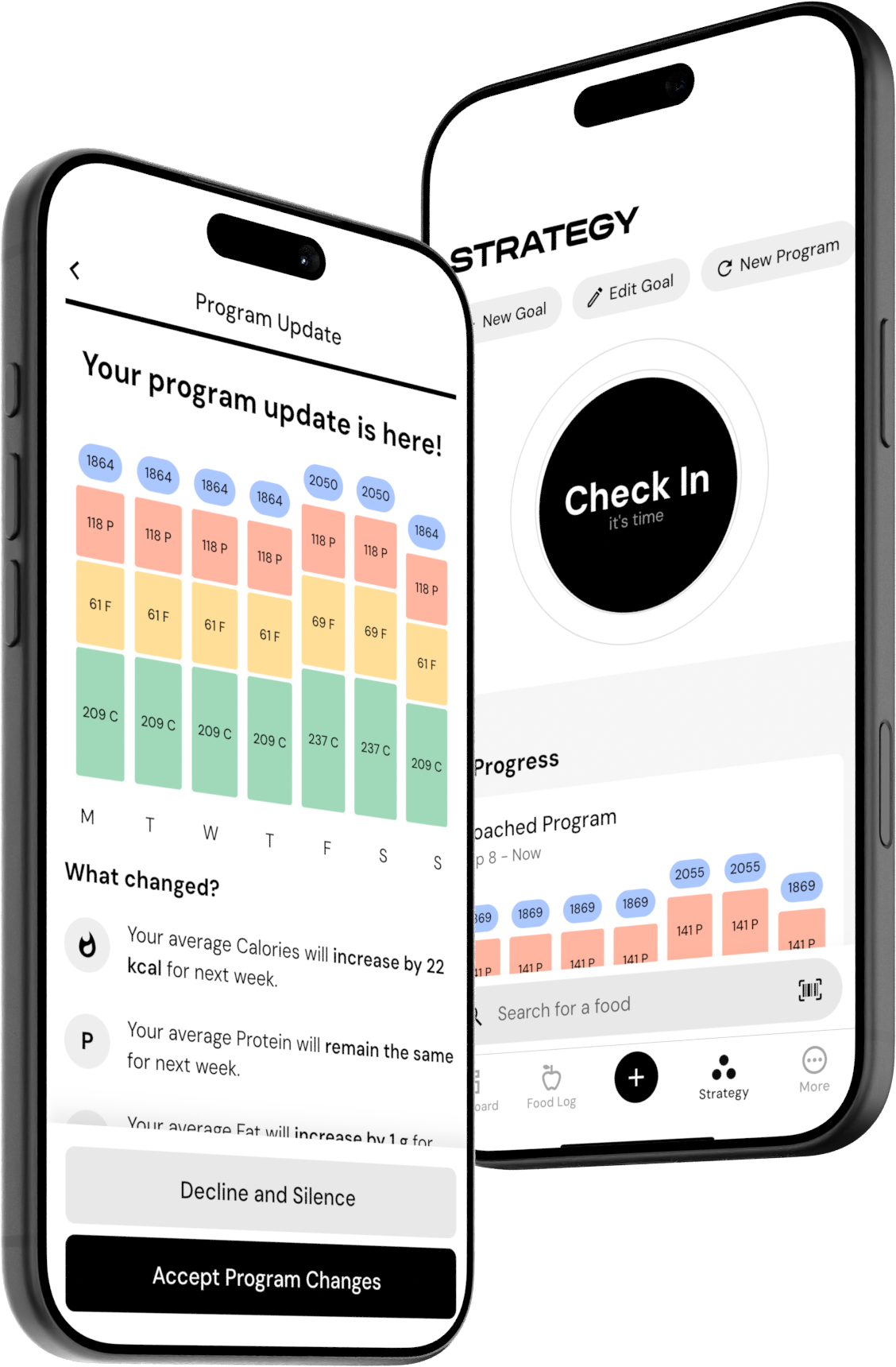
This individual variability is one reason I use MacroFactor to guide my nutrition. I'm a part owner of the app, and I used its algorithms during my own fat-loss phase in which I lost almost 30 pounds.
You log your nutrition and body weight, and the app uses those data to estimate your expenditure and adjust your nutrition targets. Rather than relying only on a calculator or a smartwatch estimate that may be off by hundreds of calories, it responds to your individual weight trend.
It also includes a barcode scanner, tools for quickly logging familiar foods, and an AI Describe feature for estimating meals that are harder to log, such as restaurant food without published nutrition information. We've also expanded the European food database.
Whether you use an app or another tracking method, the principle is the same: let your own results guide adjustments. Build muscle, stay active, avoid unnecessarily aggressive dieting, and spend less energy worrying about whether your tea burns another few calories.
|