Getting lean for a wedding, a photo shoot, or a fitness event is a different goal from getting lean and staying lean. The first has a finish line. The second needs an approach you can keep using after the diet is over.
That distinction matters because weight regain is common. A six-year follow-up of 14 Biggest Loser participants found substantial regain after their dramatic initial weight loss. In that group, half had returned to at least their starting weight.
A systematic review on weight loss maintenance showed a similar pattern across eight studies: participants lost weight during the intervention, but every study reported some average regain afterward. Some groups eventually exceeded their starting weight.
That does not mean your diet is doomed. It means that losing fat is only part of the job. If you want lasting results, you need to understand the basics, make the process sustainable, and have a plan for what happens next.
Key Takeaways
- Combine a sustained calorie deficit with weight training and sufficient protein to support muscle retention.
- A slower diet can leave more room for normal life and make maintenance feel easier.
- Use enjoyable activities and supportive surroundings to build habits that outlast motivation.
- After your cut, move to estimated maintenance and use weight trends to refine your intake.
Table of Contents
- How Fat Loss Works, and Why It Slows Down
- Strategy 1: Diet Slowly Enough That You Can Live Normally
- Strategy 2: Build Habits That Work When Motivation Drops
- Strategy 3: Have a Post-Diet Plan Before the Cut Ends
- A Tool for Both Fat Loss and Maintenance
How Fat Loss Works, and Why It Slows Down
Fat loss requires a sustained calorie deficit: consuming fewer calories than you burn. You take in calories through food, and you expend them in four main ways.
- Resting energy expenditure: the energy needed to keep your body functioning, including keeping your heart beating.
- Exercise activity thermogenesis: the calories you burn during deliberate exercise.
- Non-exercise activity thermogenesis, or NEAT: everyday movement outside exercise, such as standing up, typing, and fidgeting.
- The thermic effect of food: the energy used to digest and process what you eat.
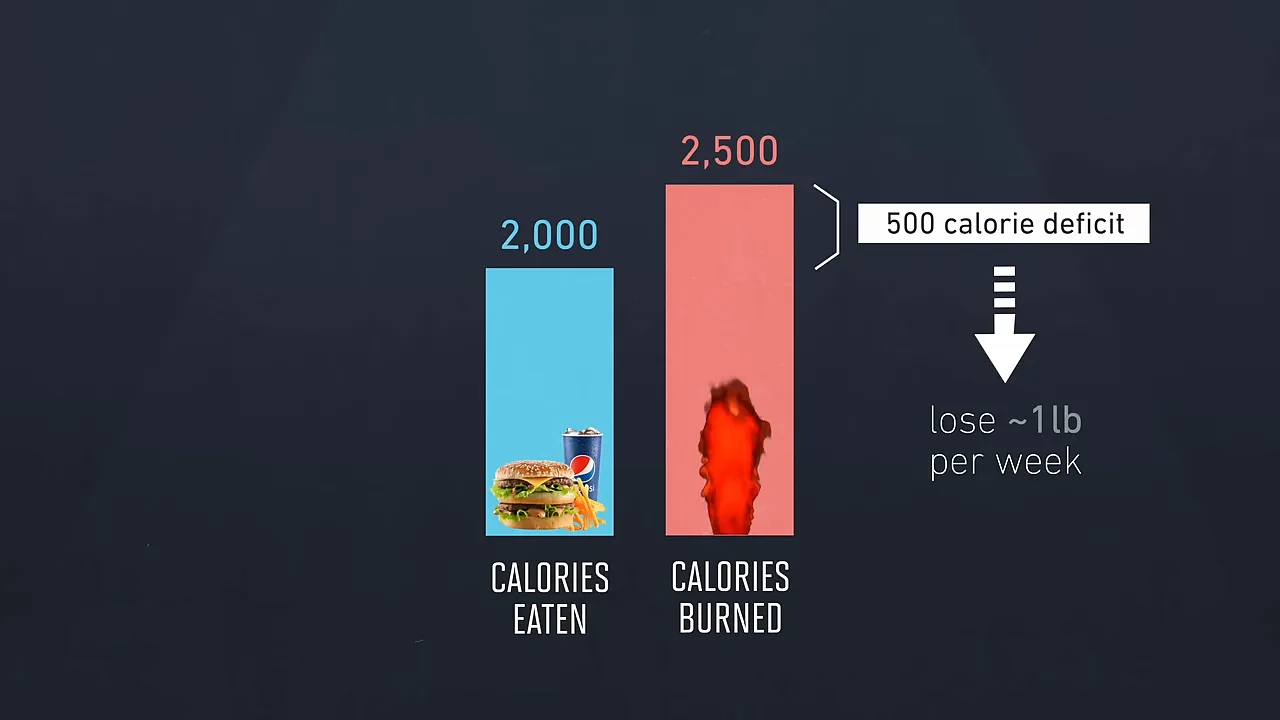
Suppose those components add up to 2,500 calories per day. Eating 3,000 calories would put you in a 500-calorie surplus. Eating 2,000 would put you in a 500-calorie deficit.
As a rough starting estimate, sustaining a 500-calorie daily deficit can produce about one pound of weight loss per week. But there is an important catch: the number of calories you burn changes as you lose weight.
Your Starting Deficit Will Not Stay the Same Forever
As you diet, your body becomes smaller and your energy expenditure tends to fall. Several changes contribute:
- A smaller body generally requires fewer calories at rest.
- Exercise can cost less energy as your body becomes lighter and more efficient.
- You may move and fidget less without noticing.
- Eating less food means spending less energy digesting it.
These changes, including metabolic adaptation, mean that the 500-calorie deficit you started with may become a smaller deficit after a few weeks or months. Some adaptations can begin within days.
So, if weight loss slows, it does not automatically mean you have failed. You may need to lower your intake a little further to maintain your intended rate, or simply accept that the process will take longer.
The Three Foundations of a Good Cut
For losing fat while supporting muscle mass, I would prioritize three things:
- A sustained calorie deficit to drive fat loss.
- Weight training to help preserve muscle.
- Enough protein to support muscle retention.
A useful daily protein target is 1.6 to 2.2 grams per kilogram of body weight, or about 0.7 to 1 gram per pound.
Beyond those foundations, there is plenty of room for preference. Meal frequency, meal timing, and the specific foods you emphasize do not need to follow one rigid formula.
This is where popular diets often miss the bigger picture. A crash diet can make the scale drop quickly, but it can also increase muscle loss and make the eventual return to normal eating harder. Avoiding every restaurant and social event may reduce temptation temporarily, but it can strain relationships and make your diet feel impossible to sustain. Cutting out entire food groups can create nutritional gaps and intense cravings.
The question is not just whether an approach causes weight loss. It is whether it helps you build a life in which maintaining that loss feels manageable.
Strategy 1: Diet Slowly Enough That You Can Live Normally
The usual science-based cutting recommendation is to lose approximately 0.5% to 1% of your body weight per week. At 200 pounds, that means roughly one to two pounds per week. Losing 20 pounds would therefore take about 10 to 20 weeks.
I still think that is a reasonable general target. But there can be benefits to going even slower.
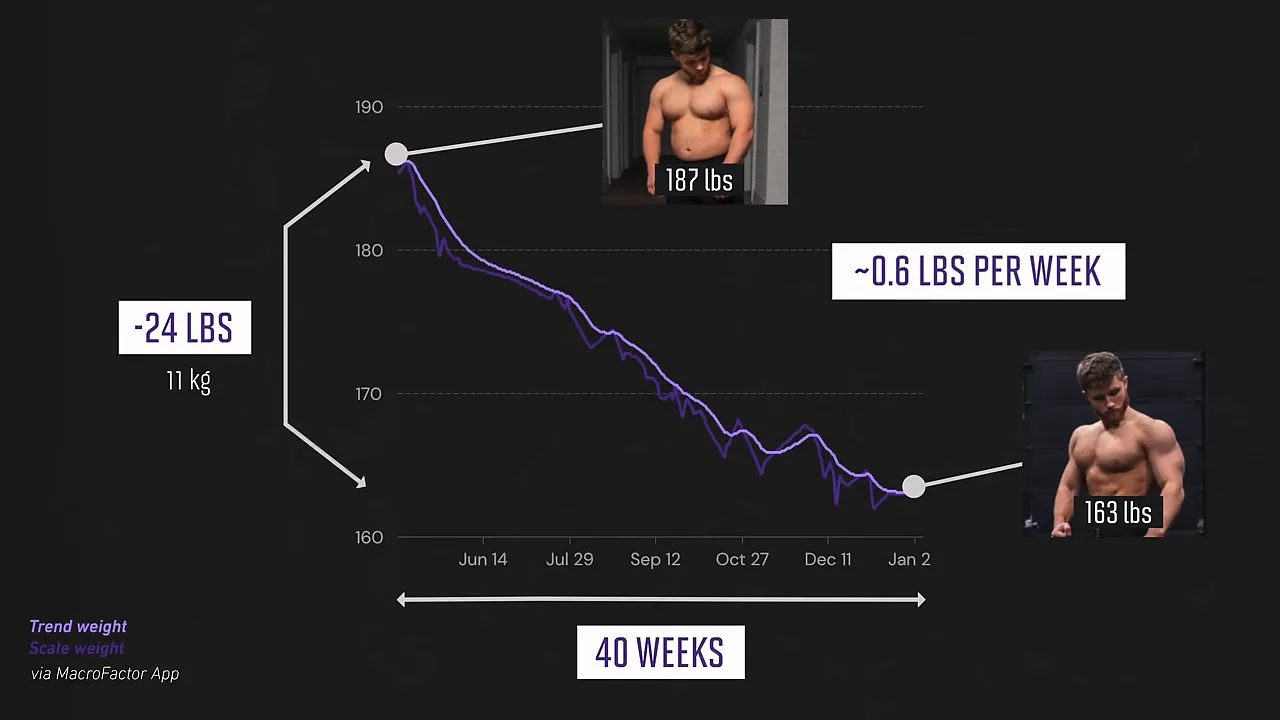
During my own cut, I went from 187 pounds to 163 pounds, or about 85 kilograms to 74 kilograms. That was a loss of 24 pounds over 40 weeks, averaging around 0.6 pounds per week.
And honestly, taking my time made it feel ridiculously easy compared with a more aggressive diet. I still ate at restaurants, went out with friends, and enjoyed pizza and sushi. The slower pace gave me room to be much more relaxed about the process.
Zoom Out When Your Weight Spikes
My weight did not move down in a perfectly straight line. When friends visited Toronto in August, we ate out almost every night, and my weight rose by two or three pounds that week. In November, while visiting Stephanie in New Orleans around Thanksgiving, I gained about four pounds.
Those increases look much less dramatic when you put them inside a nine-month trend. They were interruptions, not the end of the process.
That mindset helps during the diet, but it also prepares you for maintenance. If getting lean never feels like an extended period of deprivation, you are less likely to reach your goal desperate to abandon everything you have been doing.
The extra time can be worth it if the result is easier to keep.
Choose a Tracking Approach You Can Sustain
A practical starting point for a conventional cut is about 20% below your current maintenance calories. Maintenance is the intake that keeps your body weight roughly stable. From there, use your actual weight trend to assess whether the pace is appropriate.
You do not necessarily need to track every calorie, though. There are several workable approaches:
- Track body weight and make mostly lower-calorie food choices. For some people, straightforward changes are enough to get things moving.
- Use intermittent fasting if it makes eating less easier. Treat it as an optional tool, not a requirement.
- Loosely track calories and protein. You can keep the main targets in view without micromanaging carbohydrate and fat numbers.
I often use that last approach. If I eat a specialty sushi roll without an exact nutrition listing, I might estimate it at 500 or 600 calories and move on. That is an estimate for that meal, not a universal calorie count for sushi.
The point is that tracking does not need to become a second job. For me, a flexible approach takes around five minutes a day.
Pick a Realistic Level of Leanness
A slow diet cannot make every body-fat target sustainable. Trying to maintain around 6% body fat year-round is not a realistic expectation for most men. At sufficiently low levels, sleep, libido, energy, and mood can suffer, while food starts occupying far too much mental space.
As broad reference ranges, many men may find something around 10% to 20% body fat maintainable, while for women the range may be roughly 18% to 28%. These are not promises or mandatory targets.
Your genetics and starting point matter. Someone who has spent years at a much higher body-fat level may find a particular endpoint harder to maintain than someone who is naturally leaner.
Someone else’s comfortable 8% might be your comfortable 18%. That is okay. The right endpoint is one you can sustain without sacrificing your quality of life, not simply the lowest number you can reach.
Strategy 2: Build Habits That Work When Motivation Drops
Motivation is useful, but it is not a reliable long-term plan. Eventually, the excitement of starting a diet wears off. When that happens, habits can keep your routine moving without requiring a fresh burst of willpower every day.
Two of my favorite techniques are temptation bundling and changing your environment.
Use Temptation Bundling
Temptation bundling means pairing something you already enjoy with something that supports your goal. The enjoyable activity makes the less appealing activity more rewarding right now.
I enjoy true-crime video essays. Cardio is not nearly as naturally appealing to me. Combining the two makes me much less tempted to skip the cardio.
Some of my bodybuilder friends do something similar by playing video games during cardio at home. If Sunday meal prep is the habit you are trying to establish, you could save your favorite podcast for that time.
You are not trying to force yourself to love every part of the process. You are making the useful behavior easier to repeat.
Make Your Environment Support the Goal
Your everyday surroundings can either make your habits easier or constantly work against them. A few small changes can remove a surprising amount of friction:
- If you consistently overeat a particular food: consider leaving it at the store rather than repeatedly testing your willpower at home.
- If you stress-eat at night: keep alternative ways to unwind nearby, such as books, puzzles, or video games.
- If morning phone scrolling makes you miss the gym: leave your phone in another room and use a separate alarm clock.
Notice the difference between this and declaring an entire food group forbidden. You are identifying specific situations that repeatedly trip you up and adjusting those situations.
The goal is to make your routine feel more automatic, especially later in the diet when your initial motivation is no longer doing all the work.
Strategy 3: Have a Post-Diet Plan Before the Cut Ends
This is probably the most neglected part of getting lean and staying lean. Reaching your goal weight does not finish the job. It changes the job.
Instead of trying to lose more weight, you now need to practice maintaining it.
Avoid the Two Common Post-Diet Mistakes
The first mistake is having no plan. Motivation drops, old eating habits return, and body weight gradually creeps upward until you are back where you started.
The second mistake is more common in the science-focused fitness crowd: an unnecessarily meticulous reverse diet.
Reverse dieting means gradually raising calories from your deficit intake toward maintenance over several weeks or months. I do not generally recommend dragging out that transition. It can prolong hunger and restriction when you no longer have a reason to keep losing weight.
If the goal is no longer weight loss, move to your new maintenance intake rather than deliberately remaining in a deficit.
Move to Maintenance, Then Refine It
Your new maintenance intake will take some trial and error to identify. As a rough starting estimate, it may be around 200 to 600 calories above your intake at the end of the cut.
For example, if you finish the diet eating 2,000 calories a day, you might move directly to approximately 2,200 to 2,600 calories. The correct number depends on your actual energy needs and the deficit you were running, so treat the range as a starting estimate rather than a prescription.
Once you are near maintenance, you can gradually explore whether you can eat more while keeping your average body weight stable.
Think of maintenance as a dynamic range, not one fixed number. In an illustrative case, you might initially maintain at 2,600 calories but eventually find that an intake closer to 3,000 also supports a stable average weight under your current conditions.
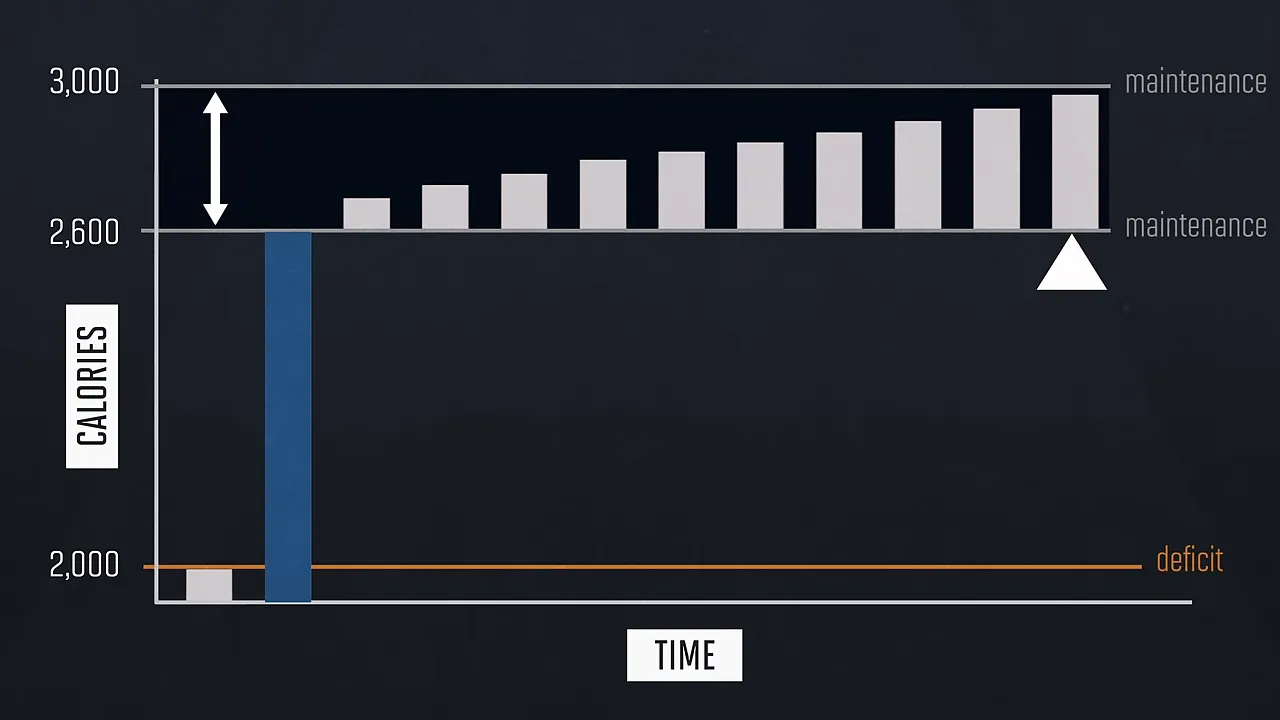
The practical process is simple:
- Raise your intake to your estimated new maintenance level.
- Monitor your average weight trend from week to week.
- If your weight is still roughly stable, consider adding some calories.
- Use the resulting trend to judge whether the higher intake still supports maintenance.
This does not need to become another long, drawn-out diet. It is also not a special metabolism-boosting trick.
The main benefit is that eating more, while still maintaining your weight, can make the routine feel less restrictive. More food can also support better training performance, which is especially useful if you plan to move into a lean gaining phase.
Keep Some Form of Feedback
Even if you stop tracking calories, continuing to monitor body weight can help you stay connected to your new goal. Research on self-monitoring weight has associated regular weighing with better long-term weight maintenance.
That does not mean you need to weigh yourself every day. I usually recommend at least two or three weigh-ins per week during maintenance, as long as doing so does not cause emotional stress.
The purpose is feedback, not judgment. You are looking for the broader trend so that a gradual return to old habits does not go unnoticed.
A Tool for Both Fat Loss and Maintenance
MacroFactor is another tool you can use to put these principles into practice. I am a part owner of the app and have been involved in its development since day one, so I want to be transparent about that relationship.
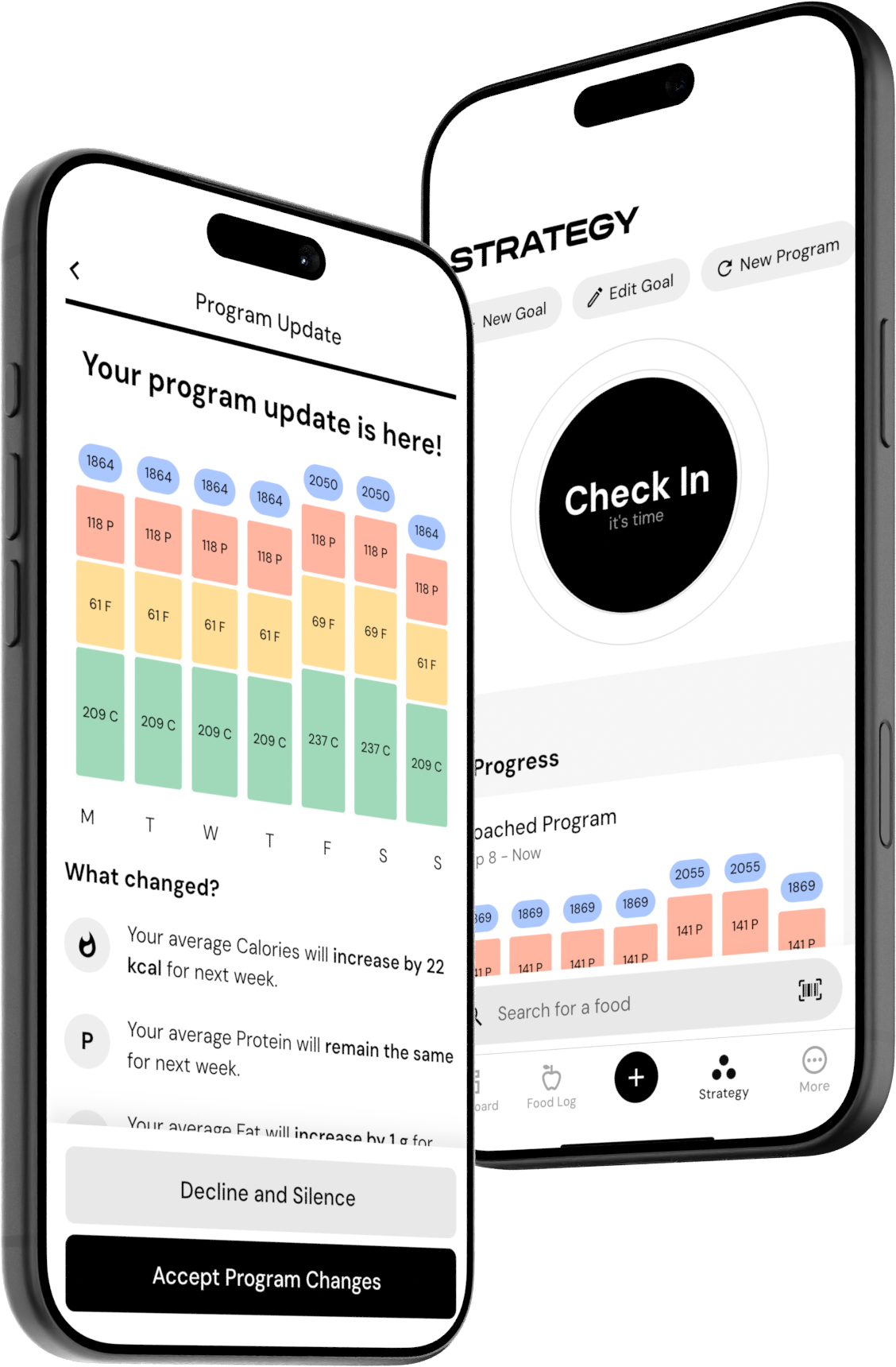
It combines food logging with nutrition coaching. Its algorithms use your logged intake and weight data to estimate changes in energy expenditure, then adjust intake recommendations through individual weekly check-ins.
Importantly, it was designed for maintenance as well as weight loss. Its dynamic maintenance mode is intended to help keep your weight within about two pounds above or below your goal weight, rather than treating the end of a cut as the end of the plan.
The food logger is built to be fast, and the approach allows for occasional missed logging days rather than demanding a perfect record. There are also active Facebook and Reddit communities where you can ask questions, share progress, and find accountability.
Whether you use an app, loose tracking, or simpler food choices, the bigger principle stays the same: choose a sustainable pace, build repeatable habits, and treat maintenance as an active goal. Getting lean is not just about what you can tolerate for a few months. It is about creating a routine you do not feel desperate to escape.
|