Can you get just as jacked spending $10 a day as you can spending $10,000?
Back when I was competing in bodybuilding, I had to build my physique on a strict budget. But plenty of athletes and celebrities credit expensive meals, elite coaching, and luxurious recovery routines for their results. How much of that spending actually helps you build muscle?
I put both approaches to the test over two days. On Monday, I had $10 to cover four meals, training, and supplements. On Tuesday, I had a $10,000 budget for a Michelin-trained chef, a world-class hypertrophy coach, and some seriously luxurious recovery treatments.
Two days obviously cannot establish a difference in muscle growth. But they can reveal what the extra money buys you, and whether those benefits are necessary. The biggest lesson: building muscle can be surprisingly affordable when you spend on the fundamentals.
Key Takeaways
- My budget routine covered four meals, supplements, gym access, coffee, and nutrition tracking for $8.92.
- Affordable staples can support muscle growth without luxury ingredients when calories and macros meet your goals.
- Quality coaching can improve technique and effort, but an elite trainer is not essential.
- Luxury recovery is optional; prioritize hard training, appropriate nutrition, and sleep first.
Table of Contents
- Start With Foods That Give You More Nutrition for Your Money
- My Four Healthy Budget Meals
- Keep Supplements Simple and Cheap
- You Do Not Need an Expensive Gym to Build Muscle
- The Budget Day Total: $8.92
- What Does a $10,000 Fitness Budget Actually Buy?
- Elite Coaching Was the Most Interesting Upgrade
- Delivery and Meal Prep Buy Convenience, Not Special Gains
- Luxury Recovery Is Still Optional
- What Is Actually Worth Spending Money On?
Start With Foods That Give You More Nutrition for Your Money
For my budget day, I planned four meals costing roughly $2 each. That would leave a little room for gym access and a few basic supplements.
Before shopping, I compared foods at Walmart by their cost for a consistent amount of protein, carbohydrate, or fat. That is more useful than comparing package prices alone. A cheap-looking package is not necessarily a cheap source of the nutrient you need.
Here were some of the best protein deals I found, priced per 40 grams of protein:
- Lentils: $0.66. The cheapest protein source on my list.
- Skim milk: $0.81. An inexpensive source of high-quality protein.
- Chicken breast: $1.07. A particularly useful option when you want plenty of protein without many extra calories.
- Whey protein concentrate: $1.52. Sixth on the list, and still a very affordable, convenient option.
There is an important catch: cost per gram of protein does not tell you everything about a food. Some inexpensive protein sources come with substantially more calories. That may be fine when you are trying to gain weight, but if you are cutting, leaner sources can make it easier to hit your protein target within your calorie budget.
For carbohydrates, white rice, brown rice, and oats were the cheapest options I found. Bananas were the cheapest fruit. For fats, sunflower seeds and peanut butter tied as the most affordable choices, with many nuts also offering decent value.
These were the prices for my shopping trip, not universal prices. Your local costs will differ, but the method still works: compare foods by what they contribute to your diet, then build meals around the best-value options.
My Four Healthy Budget Meals
Meal 1: Peanut Butter Protein Smoothie for $1.50
My breakfast was a low-cost peanut butter protein smoothie with 48 grams of protein. The ingredients were simple:
- 1.5 cups milk
- 2 tablespoons peanut butter
- 36 grams whey protein
- 1 banana
- 21 grams oats
Blend everything together and you have an easy breakfast built almost entirely from the inexpensive staples above. Milk and whey provide high-quality protein, while the oats, banana, and peanut butter round out the meal.
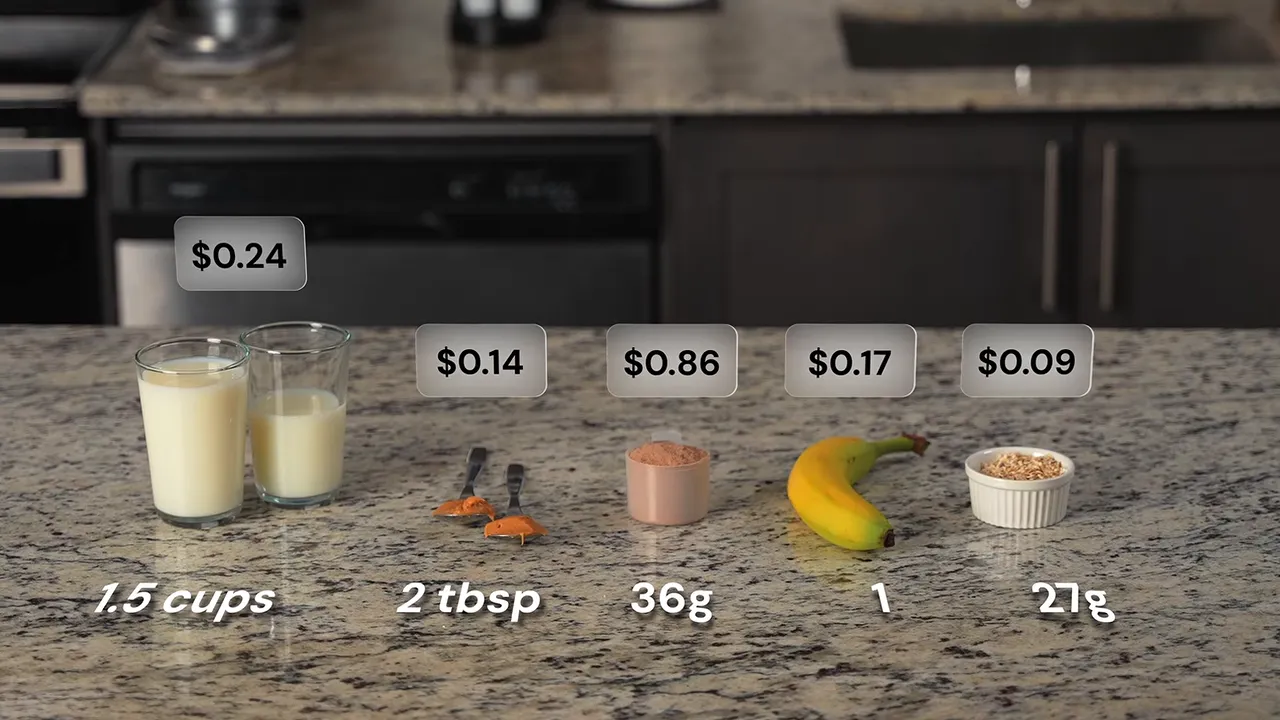
At $1.50, breakfast left me with $8.50 for the rest of the day.
Meal 2: High-Protein Chicken Wrap for $2.01
For my pre-workout meal, I made a chicken wrap using:
- Chicken breast
- Brown rice
- Spinach
- Cheese
- Salsa
- Sour cream
- One large whole wheat tortilla
The real time-saver here is cooking the chicken in bulk. Once your chicken and rice are ready, assembling the wrap only takes a couple of minutes. You can also make it the night before and take it to work.
This is what budget meal prep should look like: affordable ingredients, enough variety to make them enjoyable, and a preparation process you can repeat. You do not need every meal to be plain chicken and rice in a container.
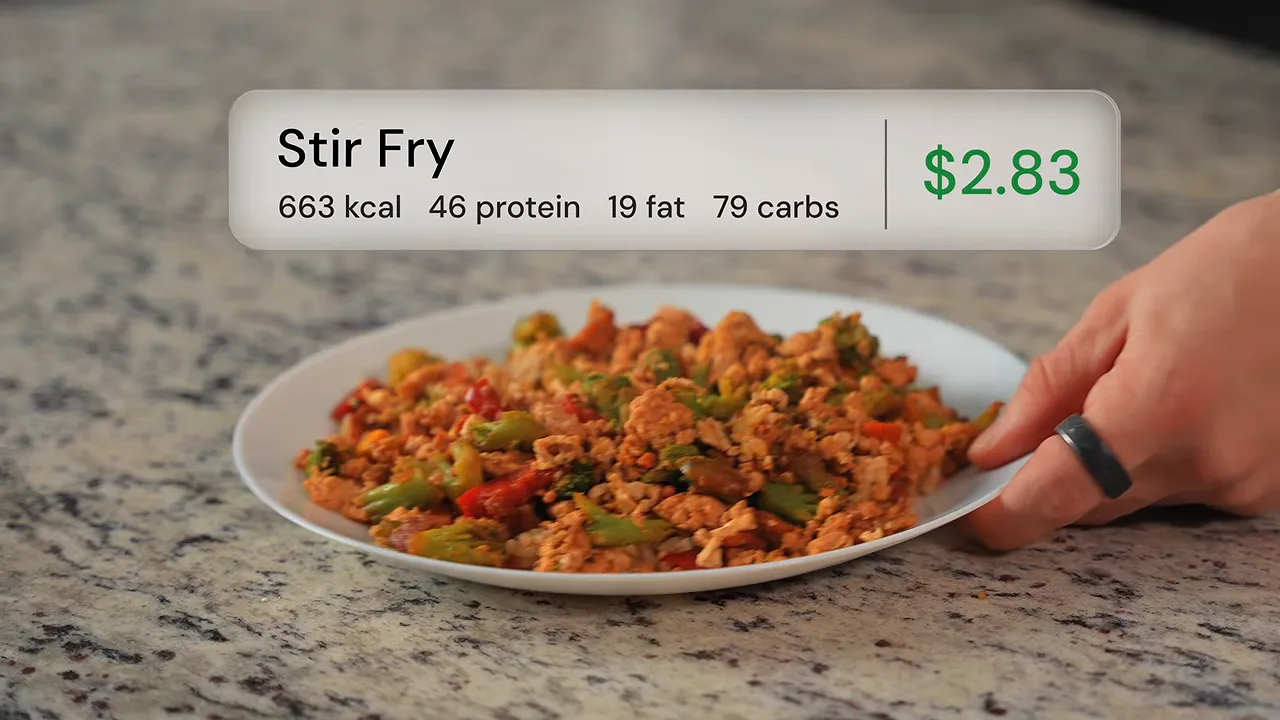
Meal 3: Turkey and Vegetable Stir-Fry for $2.83
After training, I made a simple stir-fry with lean ground turkey, mixed frozen vegetables, soy sauce, brown rice, and an egg.
It was my most expensive budget meal, but probably also the most nutrient-dense. It provided 46 grams of protein, along with carbohydrates, fats, and a substantial serving of vegetables.
You are not necessarily in a rush to eat immediately after your workout. Coming home and having a solid whole-food meal about an hour later was perfectly reasonable for this routine.
And do not overlook frozen vegetables. When vegetables are ranked by cost per serving of carbohydrate, they can look expensive simply because you need a huge amount to get that many carbs. That does not make them poor-value foods. It means their main role in the meal is different from rice or oats.
Buying canned or frozen vegetables can help keep costs down. Frozen vegetables can also retain nutrients very well, sometimes better than fresh produce that has spent a long time in transit or on a shelf. This research comparing fresh and frozen vegetables provides useful context for why fresh is not automatically more nutritious.
Meal 4: Peanut Butter Yogurt Dip With Apples for $1.60
My final meal was a high-protein peanut butter dip made with Greek yogurt, peanut butter, and honey. On the side, I had apple slices with a pinch of cinnamon and a serving of sunflower seeds.
The whole meal supplied 27 grams of protein for $1.60. It also brought back two of the cheapest fat sources from my shopping comparison: peanut butter and sunflower seeds.
It felt more like a satisfying evening snack than a restrictive bodybuilding meal, which matters. A low-cost diet still needs to be something you actually want to eat.
Keep Supplements Simple and Cheap
With breakfast, I took 5 grams of creatine for $0.15 and a multivitamin for $0.05.
Creatine is one of the few supplements I would prioritize on a tight budget. It is both well-supported and inexpensive, particularly when purchased in bulk. The International Society of Sports Nutrition’s creatine position stand reviews the evidence supporting its use.
The multivitamin is less essential. If you eat a generally healthy diet, you probably do not need one. I still take one as a bit of nutritional insurance, but it is not the reason a muscle-building diet works.
Before training, I also compared three caffeine options:
- Standard pre-workout supplement: about $0.50 per serving in my comparison.
- Coffee: about $0.25 per serving.
- Caffeine tablets: about $0.05 each.
I chose coffee about 30 minutes before my workout. A study comparing a multi-ingredient pre-workout with caffeine alone found no additional performance benefit from the multi-ingredient product under the conditions tested.
That does not mean every pre-workout formula is identical. It does mean you should not assume you need a long ingredient list to have a productive session.
You Do Not Need an Expensive Gym to Build Muscle
For the budget day, I trained legs at Fit4Less. Using a $10 monthly membership as the comparison, gym access worked out to roughly $0.33 per day.
Budget gyms are worth investigating in your area. Options in the US and Canada include chains such as Planet Fitness, Crunch, and Fit4Less, although the actual membership price and available equipment depend on the location.
You can also train at home. In my comparison, resistance bands cost about $40 and a pull-up bar about $30. Spread across the first year, that is approximately $0.19 per day.
I personally prefer free weights and machines because they give me more options. But bands can still get the job done, especially for a beginner. The important distinction is between equipment that lets you train effectively and equipment that simply makes the environment more luxurious.
A Time-Efficient Workout Can Still Be Hard
If you need to get in and out of the gym in about 45 minutes, you do not have to cram in endless sets. A simple approach is:
- Choose one or two exercises for each muscle you are training.
- Perform one or two hard working sets per exercise.
- Push those sets to failure where appropriate, rather than filling the workout with easy sets.
The point is not that everyone needs to train this way forever. It is that a short session can still provide a substantial hypertrophy stimulus when the effort is there.
I had a great leg workout at the budget gym. Nothing about the experience made me think I needed a premium membership to make excellent gains.
The Budget Day Total: $8.92
Here is where the money went:
- Peanut butter protein smoothie: $1.50
- Creatine and multivitamin: $0.20
- Chicken wrap: $2.01
- Coffee: $0.25
- Daily share of gym membership: $0.33
- Daily share of MacroFactor subscription: $0.20
- Turkey and vegetable stir-fry: $2.83
- Yogurt dip, apple, and sunflower seeds: $1.60
Total: $8.92. That covered all four meals, training access, supplements, coffee, and the nutrition app I used to track my food.
These are portion costs and daily allocations, not the amount you would need to purchase every full package or membership upfront. The plan relies on buying ingredients and using them across multiple meals and days.
I tracked my meals in MacroFactor, which I helped create. I am obviously a bit biased, but I find it useful for keeping nutrition organized. It is an optional convenience, not a requirement for making the budget meals work.
What Does a $10,000 Fitness Budget Actually Buy?
The next day, I increased the budget by a factor of 1,000. The goal was not just to eat more expensive food. It was to see whether elite support and premium recovery could offer something the budget routine could not.
A $74 Float Tank Session
I started with my first sensory deprivation float. The water has a high salt concentration so you float easily, and it is set near skin temperature. The enclosed pod is dark and designed to minimize sound.
At first, it felt pretty trippy. After about 15 minutes, though, I could feel my body relaxing completely.
From that single experience, I could understand why someone might enjoy floating as part of a recovery routine. But feeling relaxed is not the same as demonstrating greater muscle growth. At $74, I would consider it an optional relaxation tool, not an essential training expense.
A $2,500 Personal Chef
Next, I hired Wallace Wong, a Michelin-trained chef and Top Chef Canada competitor. He cooked for five hours at $500 per hour, bringing the service cost to $2,500.
I sent Wallace the macros I wanted for each meal, and he surprised me with the dishes. That was a pretty awesome arrangement.
For breakfast, he made oyakodon, a Japanese chicken, egg, and rice bowl. Basically, a bro meal with significantly better culinary execution. It delivered 46 grams of protein, and the ingredients cost only $6.46.
That distinction is important: the ingredients themselves were reasonably affordable. Most of the luxury cost came from having an exceptional chef do the planning and cooking.
Make the Oyakodon Yourself
Wallace’s single-serving recipe uses:
- 1 boneless, skinless chicken breast, thinly sliced
- ¼ white onion, sliced
- 1 large egg, whisked
- 1 stalk green onion, thinly sliced
- ½ cup dashi, chicken broth, or vegetable broth
- 1 tablespoon mirin, optional
- 1 tablespoon soy sauce
- 1 teaspoon sugar or a suitable sugar-free sweetener
- 1 teaspoon sesame oil
- 1 cup cooked Japanese short-grain rice
- Toasted sesame seeds, optional
- Mix the broth, mirin, soy sauce, sesame oil, and sugar until the sugar dissolves.
- Add the sauce and sliced onion to a small frying pan and bring to a boil.
- Add the chicken in an even layer, cover, and cook until the chicken is cooked through and the onions are tender.
- Remove the lid and slowly drizzle the beaten egg into the remaining liquid.
- Reduce the heat, cover, and cook the egg to your preferred consistency.
- Serve over the rice and top with green onion and optional sesame seeds.
For my pre-workout meal, Wallace made seafood risotto with lobster, scallops, shrimp, high-protein rice, and truffled caviar. It was legitimately one of the best meals I have ever had. The ingredients cost $18.62.
Lobster was also the most expensive protein source in my shopping comparison. Delicious? Absolutely. Necessary for better gains than chicken? No.
More Expensive Supplements, but Still a Short List
Even with the luxury budget, I did not suddenly need a mountain of supplements. With breakfast, I took a multivitamin containing ashwagandha, fish oil, vitamin D, and 5 grams of creatine monohydrate. I used creatine pills for convenience.
I also visited a supplement store and asked for its most expensive pre-workout. The recommendation was Mammoth Pump, priced at $65.99 per tub, or about $0.87 per scoop.
That was still a small expense compared with the chef and coaching. But a higher price tag alone gave me no reason to expect a meaningfully better workout than I could get with coffee.
Elite Coaching Was the Most Interesting Upgrade
For my back workout, I hired Joe Bennett, the Hypertrophy Coach. Joe has worked with elite bodybuilders including Chris Bumstead, Flex Lewis, and Shaun Clarida, as well as Hollywood actors.
His rate was $700 per hour. We spent three hours together on training, shoulder mobility, and posing, for a total of $2,100.
The workout included five exercises, and Joe gave me useful cues on every one.
1. Lat-Focused Cable Row
I already thought about driving my elbows down. Joe added another cue: keep them more tucked in.
That small change made a noticeable difference. I am usually able to feel my lats well in the stretched position, but this helped me connect with them much better in the shortened position too.
2. Pull-Ups
On pull-ups, Joe had me slow down toward the bottom of the movement and control the stretch while keeping my elbows from flaring out so much.
The movement became noticeably harder. More importantly, the adjustment helped me feel my lats doing the work.
3. A Back-Focused Deadlift Variation
We used something between a conventional deadlift and a Romanian deadlift. Compared with my usual Romanian deadlift, I allowed slightly more knee bend and continued lowering until my torso was roughly parallel to the floor.
For me, that variation absolutely lit up my spinal erectors.
4. Chest-Supported Machine Row
Joe’s main cue was simple: keep your chest up throughout the row.
Historically, I had allowed my upper back to round forward over the pad because I thought it gave me a better stretch. Joe explained that, for the target we were working on, this could shift more of the stretch toward the spinal erectors rather than improving the midback stimulus.
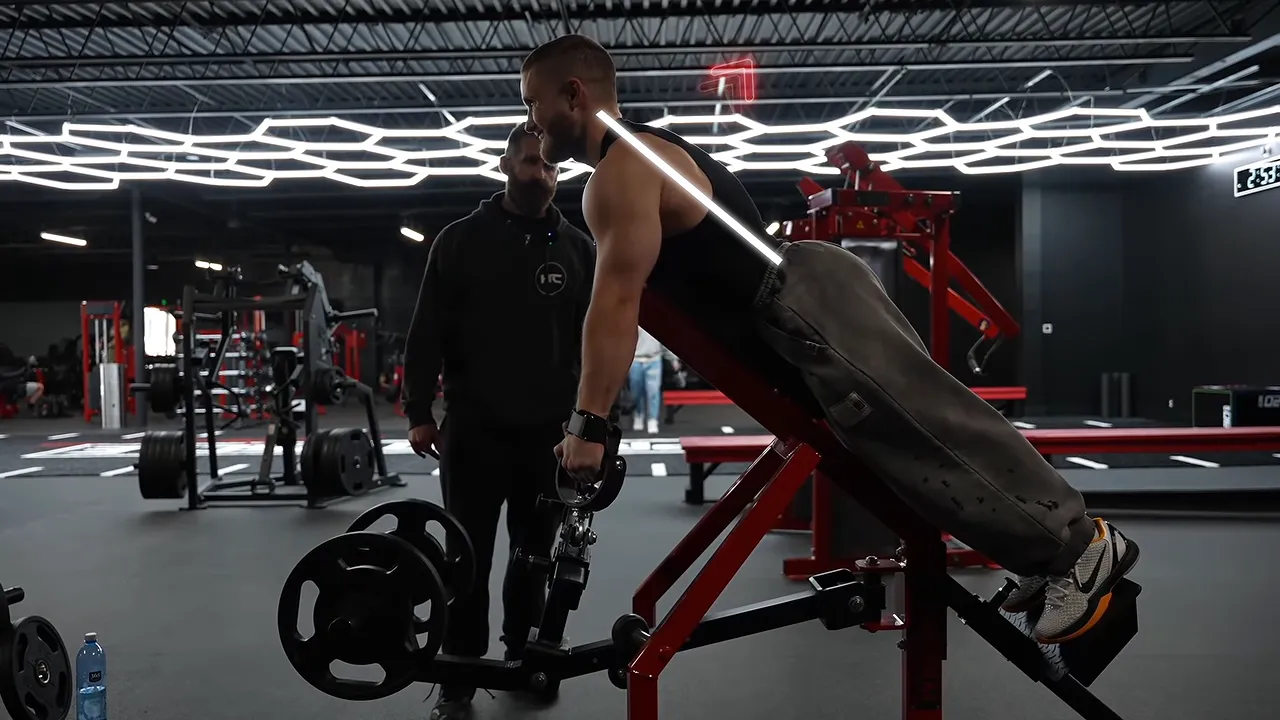
Keeping my chest up helped me connect with my midback better. Counterintuitively, I also felt a better stretch in that specific area without rounding forward.
On the final set, Joe deliberately changed the technique to extend the set. After the regular rowing work, we alternated rounding over the pad with extending upward. That added spinal movement really challenged my erectors. It was a separate intensity technique, not the position he wanted for the standard rowing reps.
5. Incline Cable Pullover
For the final exercise, we used an incline bench to create a stable setup for cable pullovers.
Joe had me let my shoulder blades rise at the top, then focus on pulling down and sweeping through the movement. Again, the value was not some secret exercise. It was precise feedback applied to my technique.
Delivery and Meal Prep Buy Convenience, Not Special Gains
After training, I ordered a chicken pita wrap through DoorDash. I wanted roughly 500 to 600 calories and 35 to 40 grams of protein.
The wrap came to $34.47: $15.23 for the meal, $4.24 for delivery, and a $15 tip.
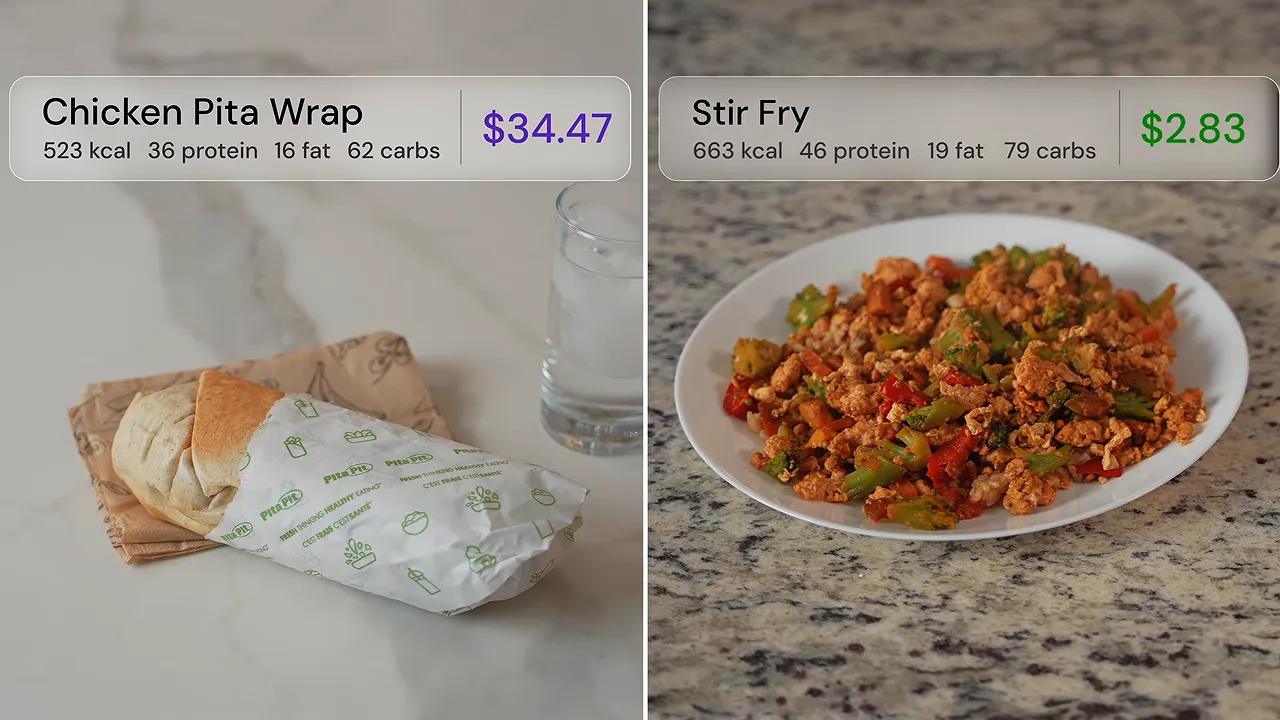
There is nothing about that delivered pita that makes it inherently better for gains than the $2.83 stir-fry from the previous day. The main advantage was that I did not have to cook.
My final meal was a $10.44 salmon dish from a local meal prep service, with rice, broccoli, mushrooms, and onions. This is something I use fairly often for convenience. It costs more than buying the ingredients in bulk and cooking them myself, but it saves time.
Luxury Recovery Is Still Optional
Before dinner, I visited a luxury spa for a custom $1,000 package. It included deep tissue massage focused on my back and legs, plus a facial with massage techniques I had never experienced before.
It was relaxing. So was the float tank. But I still view these treatments as supplementary rather than mandatory.
I also ended up roughly $4,000 under the luxury budget. Rather than spend the remainder on random recovery hacks without enough science to justify their price, I went back to the gym and gave $4,000 to someone who followed my work.
Having money left over was part of the lesson. There is a limit to how many useful things you can buy for a single day of fitness.
What Is Actually Worth Spending Money On?
Here is how I would separate the useful upgrades from the essentials.
- A chef improves taste and reduces effort. Wallace made macro-friendly meals taste incredible, which could make dieting easier to stick with. But if calories and macros were matched, I would expect similar gains from the budget meals.
- A good coach can improve execution and motivation. Joe exceeded my expectations. His feedback helped me connect with the target muscles and get more out of individual exercises.
- Delivery and meal prep save time. They can make a routine easier to maintain, but they do not make the food inherently more anabolic.
- Premium recovery can help you relax. That can be enjoyable and useful, but it should not be confused with a requirement for building muscle.
Coaching has the strongest case as a performance-focused luxury. Research on supervised resistance training supports the potential for better results with a trainer, including greater muscle growth in the study I referenced.
Still, it is hard to quantify what training with Joe over the long term would add to my results. I suspect that if you can learn good technique and push yourself hard independently, some of that gap may narrow over time. There is enough quality information available for free to learn the basics without hiring an elite coach.
For recovery, start with the inexpensive options. A walk outside costs nothing, and research on recovery methods includes support for active recovery. Sleep does not require a treatment fee either, and it is probably the single best place to focus your recovery efforts.
Train hard, train smart, and eat the right amount of calories and protein for your goals. Those fundamentals matter far more than whether your meal contains lobster or your recovery routine includes a luxury spa.
The expensive day was more luxurious. It was not a thousand times more effective. You can work toward building an impressive physique on a modest budget, and your approach does not need to be perfect to work.
|