A proper bulk is not an excuse to eat everything in sight. It is a deliberate muscle-building phase: eat slightly more than you burn, train seriously, and gain weight slowly enough to keep fat gain under control.
I committed to a proper bulk for nearly a full year, starting January 1, with optimized training and nutrition. It was my first serious bulk in a long time, and I made more progress than I had in years. DEXA scans and ultrasound measurements both showed meaningful muscle growth. The exact results were still part of an ongoing case study at McMaster University, so I wasn’t ready to share a final number, but the progress exceeded my expectations.
If building muscle is your main goal and you have never really committed to a bulk, I strongly encourage you to consider it. The key is finding the middle ground between an old-school dirty bulk and staying at maintenance forever.
Key Takeaways
- Start with a 5% to 10% calorie surplus and adjust based on your rate of weight gain.
- Beginners can gain weight faster than experienced lifters while keeping a lean bulk productive.
- Eat 0.7 to 1 gram of protein per pound of body weight daily.
- Hard resistance training drives muscle growth, while moderate cardio supports conditioning during a bulk.
Table of Contents
- Why Bulk Instead of Maingaining?
- Set a Slow, Realistic Rate of Weight Gain
- How Many Calories Should You Eat on a Bulk?
- Set Your Bulking Macros
- My Full Day of Eating on a Bulk
- Train Like You Mean to Build Muscle
- Should You Do Cardio on a Bulk?
- Which Supplements Are Worth Considering?
- Make Your Bulk Measurable
Why Bulk Instead of Maingaining?
Bulking means eating more calories than you expend, creating a calorie surplus. Your body weight increases, and the goal is to direct as much of that gain toward muscle as possible.
Maingaining takes a different approach: maintain roughly the same body weight while adding muscle. Body recomposition similarly involves gaining muscle while losing fat. Both are possible. You can build muscle at maintenance, and even in a calorie deficit, if your training provides a strong enough stimulus.
But possible is not the same thing as optimal for maximizing muscle growth.
Your body has other priorities besides getting jacked. It needs energy to keep your organs functioning and your immune system working. A surplus provides additional resources for the energy-demanding process of building new tissue, rather than asking your body to do more with a limited energy budget.
In an eight-week study in untrained subjects, groups following the same training plan consumed either roughly 2,500 or 4,300 calories per day. The higher-calorie group gained more fat-free mass, without a measurable increase in fat in that experiment.
That does not mean you should copy their calorie intake. They were new lifters, and fat-free mass is not identical to muscle tissue. Research and practical recommendations involving experienced lifters paint a less magical picture: bulking can support muscle growth, but fat gain becomes an important trade-off.
That is where people often go wrong. A dirty bulk can build muscle, but it can also add far more fat than necessary. After a bad experience, some lifters swing to the opposite extreme and never allow their weight to increase again.
You do not need an enormous surplus. You need a controlled surplus paired with productive training.
Set a Slow, Realistic Rate of Weight Gain
The speed at which you gain weight is one of the biggest factors determining how much fat you add. Muscle growth takes time. You cannot force-feed it into happening faster.
Useful monthly targets for a lean bulk are:
- Beginners: gain approximately 1% to 2% of body weight per month.
- Intermediate and advanced lifters: gain approximately 0.5% to 1% of body weight per month.
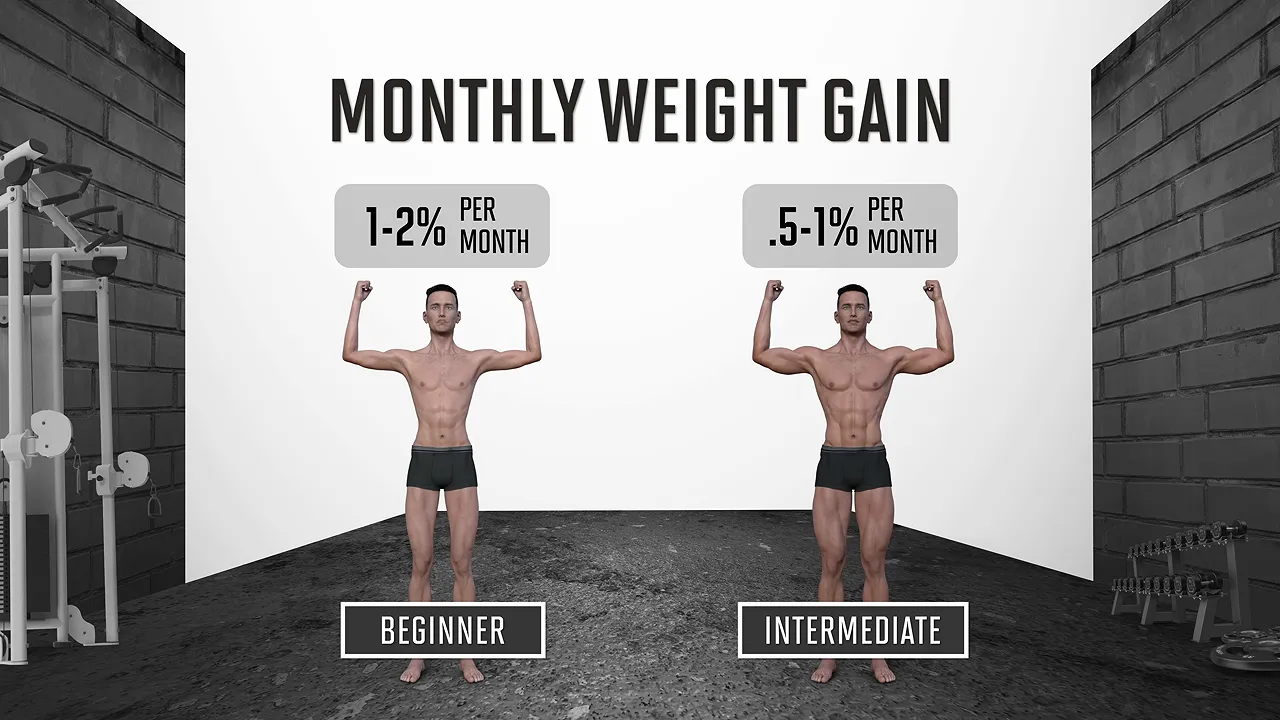
For example, if you weigh 170 pounds and have trained consistently for about two years, gaining roughly 1 to 2 pounds per month is a reasonable rounded target. Over a year, that would mean approximately 12 to 24 pounds of total weight gain.
That sounds slow because it is supposed to be slow.
A beginner with favorable genetics may gain almost entirely lean mass under the right circumstances. Someone closer to their natural muscular potential should expect a less favorable split. An advanced lifter might gain roughly half lean mass and half fat, although individual results vary substantially.
In my opinion, some fat gain is an acceptable trade-off for making real progress rather than spinning your wheels. You can follow the bulk with a cut. If you lose weight relatively slowly, keep training intelligently, and eat enough protein, you should retain most of the muscle you built.
How Many Calories Should You Eat on a Bulk?
Old-school dirty bulks can push intake 50% to 100% above maintenance. For a natural lifter, that is generally a recipe for rapid fat gain, not proportionately faster muscle growth.
Instead, start with a calorie surplus of about 5% to 10% above maintenance. This is a practical starting point consistent with the recommendations discussed in research on off-season bodybuilding nutrition.
I maintain my weight at around 2,800 calories per day. For my bulk, I increased that to approximately 3,000 calories. Then I adjusted intake depending on whether I was gaining too quickly or too slowly.
Estimate Your Maintenance Calories
If you do not know your maintenance intake, multiply your body weight in pounds by 14 to 18 to get a rough starting range. It is an estimate, not a precise measurement of your metabolism.
The more individualized approach is to track your food intake and body weight, then use your weight trend to evaluate the estimate. If your weight is stable, your average intake is probably close to maintenance. If it is moving up or down, adjust accordingly.
The process is straightforward:
- Estimate your maintenance calorie intake.
- Add approximately 5% to 10%.
- Track your intake and body weight consistently.
- Adjust calories up or down based on your rate of weight gain.
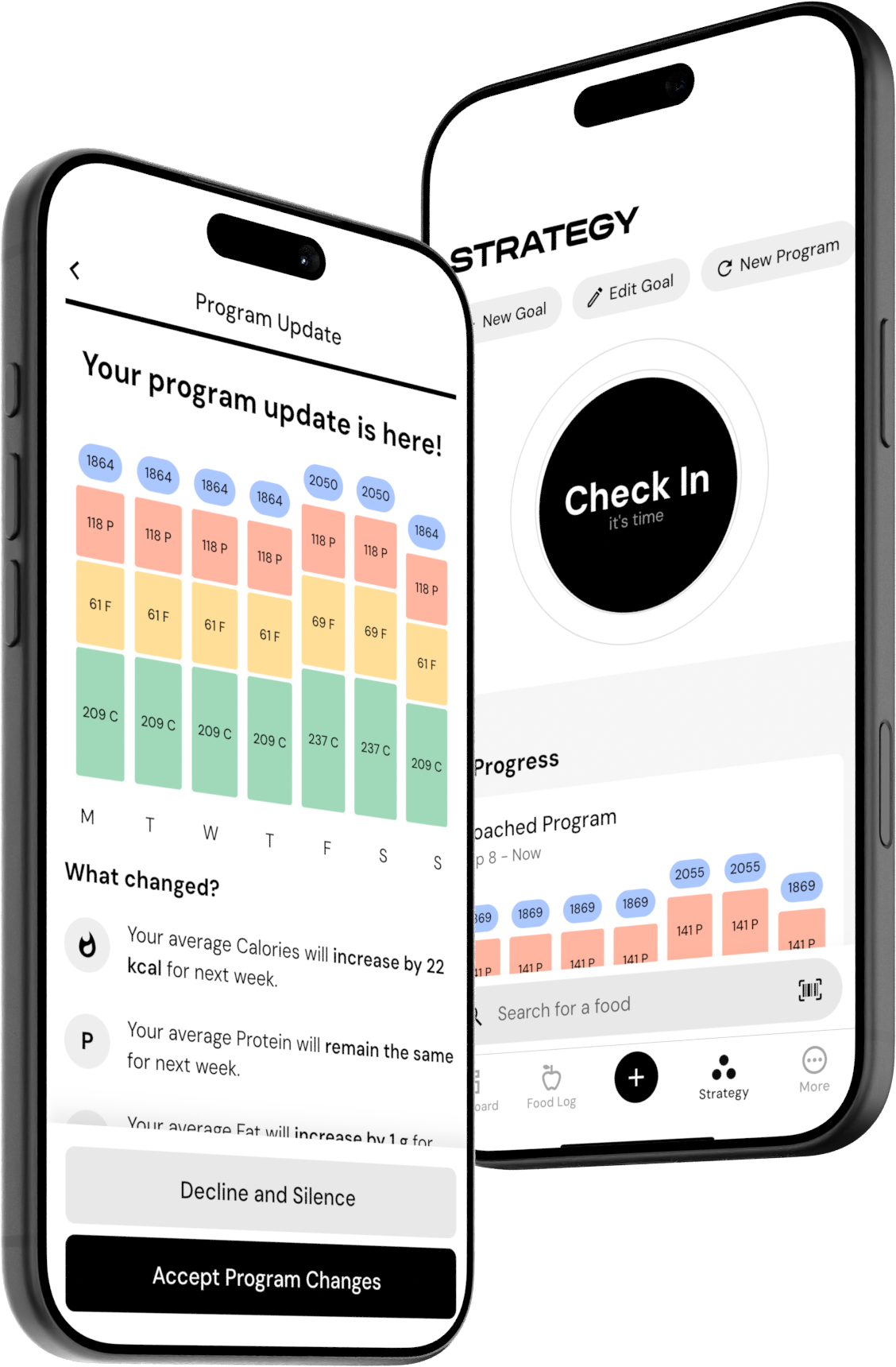
I use MacroFactor to manage this process. I am a part owner and helped develop the app. It uses logged food intake and weight data to estimate energy expenditure and updates calorie targets as your needs change throughout the bulk.
Set Your Bulking Macros
Hitting your calorie target matters, but getting those calories entirely from doughnuts and ice cream is not the plan. Set protein and fat first, then fill the remaining calories with carbohydrates.
Protein: 0.7 to 1 Gram per Pound
Aim for 0.7 to 1 gram of protein per pound of body weight per day. That is plenty for a bulk and aligns with the broader findings of research on protein intake and resistance training.
At 180 pounds, that gives me a range of 126 to 180 grams per day. I usually eat around 170 grams.
Fat: 20% to 30% of Total Calories
I am not a fan of either very low-fat or high-fat bulks. Too little dietary fat can negatively affect testosterone, while a high-fat diet can make it easier to overshoot your calorie target.
Dietary fat is also stored as body fat more directly than carbohydrates, which must undergo conversion through de novo lipogenesis to become fat. That does not make carbs unlimited or mean total calories stop mattering. It is simply another reason I prefer a moderate fat intake rather than pushing fat extremely high.
Aim for about 20% to 30% of total calories from fat. On a 3,000-calorie diet, that works out to roughly 65 to 100 grams per day. I usually land around 80 grams.
Carbohydrates: Fill the Remaining Calories
Once protein and fat are set, the remaining calories come from carbs. My approximate daily targets look like this:
- Calories: 3,000.
- Protein: 170 grams.
- Fat: 80 grams.
- Carbohydrates: 400 grams.
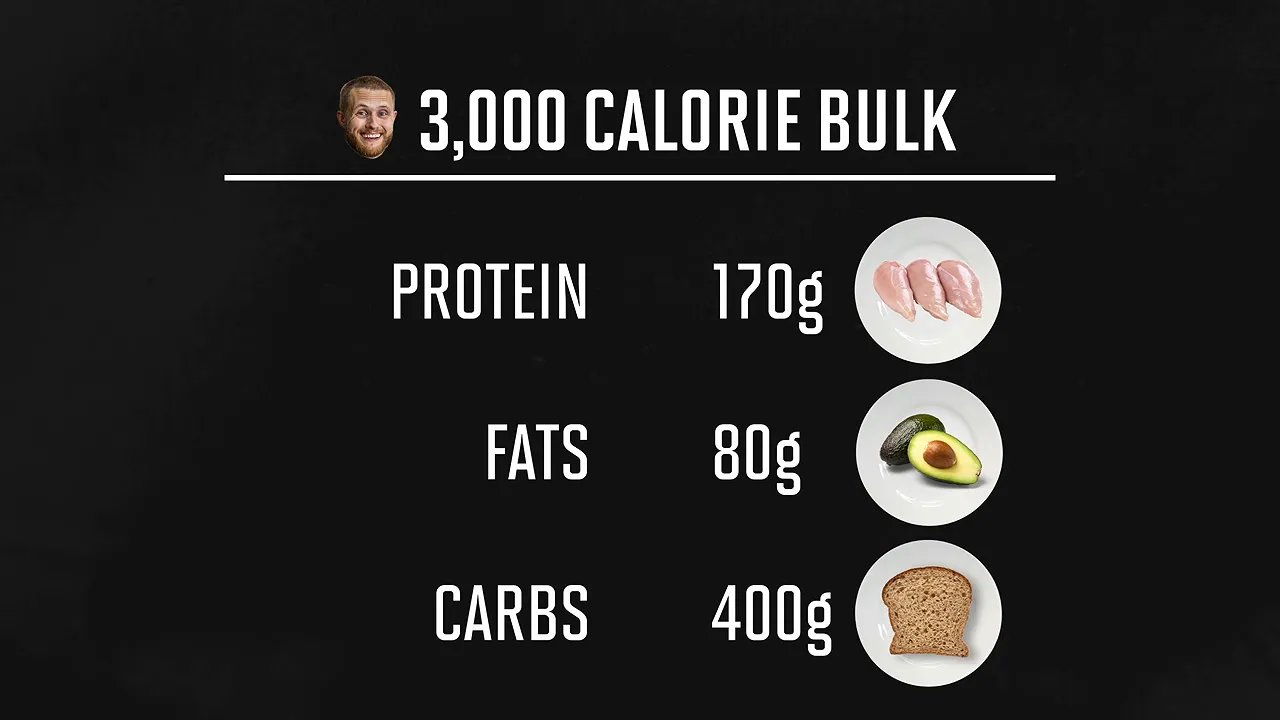
Those are my numbers, not universal targets. Your calories depend on your maintenance needs, and your protein target depends on your body weight.
My Full Day of Eating on a Bulk
A good bulking diet can be structured without being rigid. I keep the earlier part of my day fairly consistent and give myself more flexibility in the evening.
Morning: Coffee, Then Breakfast
I typically wake up around 7:30 a.m. and have coffee or an energy drink. I lean toward coffee as the healthier default because it contains antioxidants and has a large body of research examining its health associations. I also think energy drinks can fit in moderation.
I am not usually hungry immediately after waking, so breakfast happens around 10 a.m.:
- 1 cup of egg whites and 1 whole egg.
- 1 slice of turkey bacon.
- Mushrooms, onions, and spinach scrambled into the eggs.
- 15 grams of shredded cheese on top.
- 60 grams of oats with almond milk.
- 100 grams of blueberries.
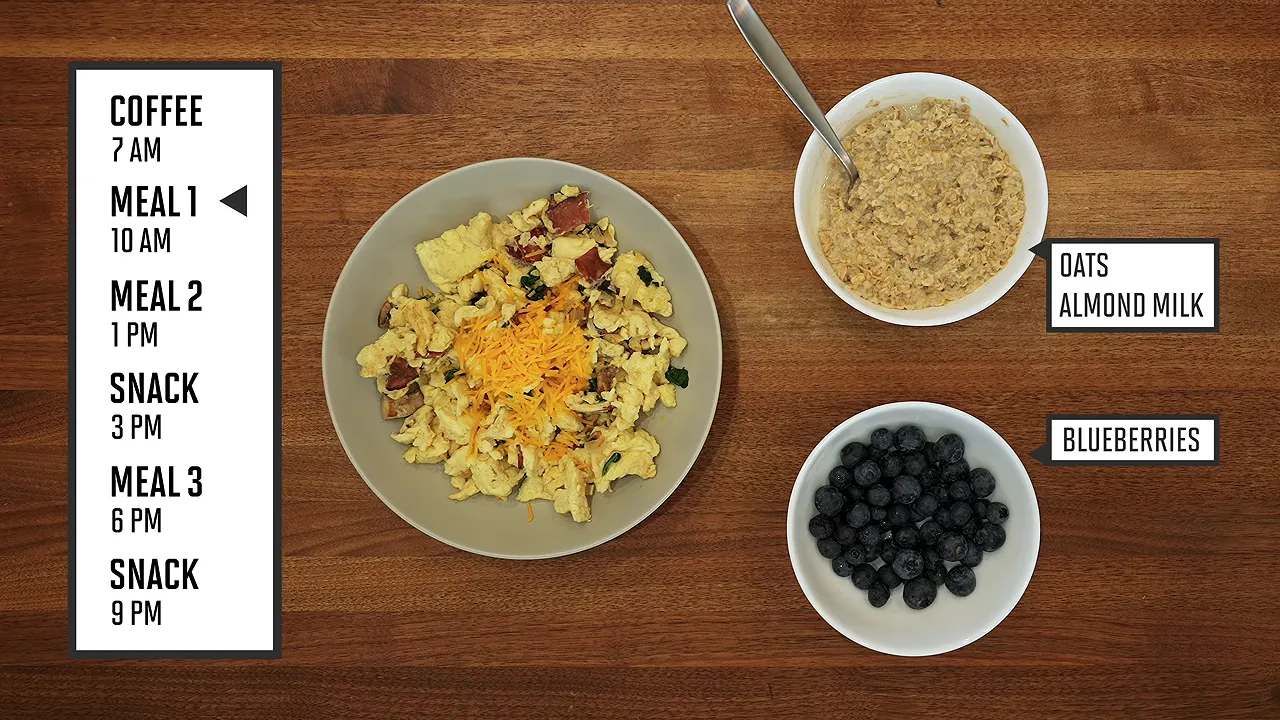
I take most of my morning supplements with this meal. If I do not have time to cook, a protein shake and oats are my quick alternative.
Pre-Workout Meal
Around 1 p.m., I have:
- 100 grams of lean ground turkey.
- Jasmine rice.
- Greek yogurt, shredded cheese, and sriracha.
- A kiwi and 100 grams of blackberries.
After that, I have a pre-workout supplement and train about an hour later.
After Training
My post-workout food is simple: a protein shake and a banana.
Dinner and Evening Snacks
Dinner varies. Sometimes it is a pita, a burrito, sushi, or Thai food. A common home-cooked option is chicken, potato, sour cream, and broccoli, with roasted sunflower seeds on the side for some healthy fats.
Before bed, I often have Greek yogurt with honey and peanut butter, plus popcorn. If I have calories left over, I might include candy or chocolate.
Tracking macros gives you room to be flexible. You can build most of your diet around nutritious foods while still including foods you enjoy, provided they fit your daily totals.
Train Like You Mean to Build Muscle
Extra calories do not replace hard training. They support it.
One of the worst mistakes you can make is to loosen up your training effort because you are bulking. I have made that mistake myself. Without a strong muscle-building stimulus, you make it much easier for the weight you gain to be fat rather than muscle.
Your approach should match your experience level.
Beginners: Learn Technique and Effort
If you are in your first year, focus on learning the basic exercises and pushing yourself hard while maintaining good form.
The split is not the most important decision yet. A body-part split, push/pull/legs, upper/lower, or full-body plan can all work. Pick something you enjoy and can follow consistently.
Aim to train at least three days per week. Four or five days can be a useful option if that suits your schedule and recovery.
Intermediates: Add Productive Volume
With roughly one to three years of hard training, you can start doing more volume than you did as a beginner. But effort still matters more than simply accumulating sets.
A useful general range is 8 to 15 sets per muscle per week. Larger, more complex muscle groups such as the back may tolerate more work than smaller or less complex areas.
At this stage, moving away from a once-weekly body-part split can help you distribute your sets more effectively. Push/pull/legs, upper/lower, or full-body training can reduce the temptation to cram too much work into one session and turn the later sets into junk volume.
Advanced Lifters: Consider Specialization
If you have trained hard and intelligently for more than three years, a bulk can be a good opportunity to specialize in one or two muscles.
Rather than increasing volume everywhere, add approximately 20% to 40% more work for the muscles you want to prioritize. If your shoulders currently get 15 sets per week, increasing that to around 18 to 20 sets is a practical example.
Lengthened partials, myo-reps, and other advanced techniques may also help you chase those smaller marginal gains. They are refinements, though, not substitutes for the basics.
Should You Do Cardio on a Bulk?
For most people, yes. The blanket idea that cardio kills your gains relies heavily on outdated or low-quality interpretations of the evidence.
Cardiovascular fitness matters for your health, and it can also help your lifting. If your conditioning is poor, your heart and lungs may become the limiting factor during a demanding leg session before your leg muscles receive all the work they could handle.
How much extra cardio you need depends partly on your daily activity:
- A physically active job: construction work or serving may already provide enough activity that additional cardio is less necessary.
- A desk job: some deliberate cardio is probably a good idea.
I usually do two or three moderate-intensity sessions per week, often through brisk walking or light basketball. The point is to stay in good cardiovascular shape while supporting your resistance training, not to avoid all activity outside the weight room.
Which Supplements Are Worth Considering?
Keep the basic supplement plan simple:
- Creatine: 5 grams daily.
- Protein powder: as needed to reach your protein target.
- Caffeine: consider around 200 milligrams before training, provided it does not interfere with your sleep.
On my bulk, I also used a few supplements aimed more at general health and nutrient adequacy than directly at muscle growth.
Fish Oil
I take six capsules of my fish oil product each morning, providing a total of 2 grams of combined EPA and DHA. Capsule strength varies, so the EPA and DHA content is more useful than the capsule count.
Omega-3 research covers cardiovascular health, inflammation, brain function, and anxiety. Those are the broader health reasons behind my choice, rather than treating fish oil as a shortcut to bigger muscles.
Magnesium and Vitamin D
I take magnesium before bed. Low magnesium status has been associated with lower testosterone and poorer sleep, both relevant to supporting a productive muscle-building phase.
I also supplement vitamin D because I do not get much sunlight. Low vitamin D has been linked with lower testosterone. The goal is to avoid inadequate nutrient status, not assume that taking more will push testosterone above normal.
A Multivitamin and Caution With Ashwagandha
I take a basic multivitamin in the morning and have also used 600 milligrams of ashwagandha root.
However, I do not think the safety data are strong enough to recommend ashwagandha broadly. If you are considering it, review the evidence and safety information rather than assuming that something marketed as natural is automatically harmless.
These are my personal choices, not a required shopping list. Consult a qualified medical professional before starting an exercise program or making supplement decisions that may affect your health.
Make Your Bulk Measurable
The best bulk is not the one with the most food. It is the one that gives you enough energy to grow, keeps your weight gain controlled, and supports consistently hard training.
Start with a modest surplus. Hit your protein target. Keep dietary fat moderate, fill the rest with carbs, and stay active. Then adjust based on what your body weight and training are actually doing.
If you want help managing the nutrition side, MacroFactor is what I used throughout my own bulk. It estimates your energy expenditure from your logged intake and weight, updates your nutrition targets, and lets you track calories, macros, vitamins, and minerals. You can try it free for two weeks using code JEFF.
|