A great physique tells you someone is doing a lot of things right. It does not tell you every exercise, technique, or piece of advice they offer is optimal.
That distinction matters. You can respect Ronnie Coleman as arguably the greatest bodybuilder ever and still ask whether his training could have been more productive or less punishing. You can appreciate a creative exercise without pretending it has a stack of studies behind it.
Dr. Mike Israetel and I agree on most of the big principles, but we do not always land on exactly the same technique recommendations. Those differences are useful. The goal is not to catch successful lifters doing something wrong. It is to work out what you can actually apply to your own training, and what probably deserves less attention.
Key Takeaways
- Great physiques demonstrate successful training, not proof that every technique is optimal.
- Prioritize effort, recoverable volume, controlled range of motion, and consistency before chasing novel exercises.
- Exercise variations should match your target muscles, equipment, stability, and training goals.
- Hunger management supports calorie control rather than replacing the importance of energy balance.
Table of Contents
- Ronnie Coleman: Great Results Do Not Prove Perfect Training
- Steroids and TRT: Separate Medical Treatment From Physique Expectations
- Sam Sulek: Excellent Effort, With a Few Technique Tradeoffs
- Chris Bumstead: Slow Negatives, Triceps Mechanics, and the Value of a Squeeze
- Lean Beef Patty: Stability First, Then Extra Stretch
- Athlean-X’s Omni Crossover: Unusual Is Not Automatically Wrong
- Jay Cutler: Repeatable Reps and Exercise Intent
- Greg Doucette’s Leg Press: Depth, Foot Position, and a Stable Base
- Does Science-Based Training Distract From Training Hard?
- Cold Plunges: Optional, Not a Requirement for Success
- Nutrition: Hunger Matters Because Calories Matter
- Extreme Bench Arches and the “Reverse Press”: Context Changes the Verdict
- Gym Inclusivity Is One Thing We Should Not Overcomplicate
Ronnie Coleman: Great Results Do Not Prove Perfect Training
Mike stands by his position that Ronnie could potentially have built bigger quads with fewer injuries using a more scientific approach. That is not an insult to Ronnie. It is an acknowledgment that even historically great performances can leave room for improvement.
I am especially sympathetic to the injury side of that argument. Ronnie pushed several demanding variables very high at once:
- Load: extremely heavy weights.
- Effort: very hard sets.
- Volume: a large amount of training.
My concern is the combination, not simply the fact that he lifted heavy. Dorian Yates also trained heavy, but used substantially less volume. Looking at one variable in isolation misses how the whole program fits together. Of course, that does not establish exactly what caused any particular injury.
Could he really have grown noticeably bigger quads?
This is where I am a little more cautious. Genetics, performance-enhancing drugs, and years of hard training already explain a huge amount of Ronnie’s development. Additional optimization might have added relatively little. Would that difference even be visible? We cannot know.
Mike’s counterargument is that we also do not know how far Ronnie’s training was from his individual optimum.
Consider a purely hypothetical example. If someone could recover from 25 hard quad sets per week but performed 22, the difference might be modest. If their recoverable capacity were much higher than the amount they actually performed, there might be more growth left on the table.
That is the idea behind maximum recoverable volume: the most training you can recover from while still adapting productively. It is not a universal set target.
The weekly training volume research discussed here suggests that higher volumes can sometimes produce additional hypertrophy, with diminishing returns. Mike also points out that very high volumes may be productive for certain muscles over short periods when overall fatigue is not the limiting factor. That is not a recommendation for everyone to jump to 30 or 40 sets.
The honest conclusion is that better results were possible, but the size of that improvement is speculative. “He was the champion” is a reason to respect his accomplishments, not a reason to stop thinking.
Steroids and TRT: Separate Medical Treatment From Physique Expectations
The Tren Twins are right to discourage casual steroid use
The Tren Twins’ warning that almost nobody should casually start taking steroids is a message I broadly support. Beyond the money and commitment involved, the side effects can affect the very things someone hoped to improve.
One of the strongest deterrents is the potential mental health impact. If you already know how unpleasant anxiety can be, the possibility of making it worse should matter. Acne and accelerated hair loss can also be very real concerns, including for young adults.
Mike adds concerns about cognition and the developing brain, along with the possibility that some steroids can prematurely limit height growth in people who are still growing. The important point is not to turn those concerns into a precise age cutoff or a personal risk calculator. It is that young people have additional reasons not to treat steroid use casually.
Low testosterone deserves medical evaluation, not an influencer prescription
Mike O’Hearn’s advice contains a reasonable core: if you have clinically low testosterone, get evaluated by a doctor. If a qualified clinician recommends testosterone replacement therapy, that is a medical decision.
But “your number is low, so you should be on something” is too simple. A social media clip cannot determine whether you need treatment. The testosterone reference data linked with this discussion provide context, not a substitute for individual assessment.
There is also a difference between restoring testosterone to a normal physiological range and taking supraphysiological doses for bodybuilding. Proper replacement therapy is not the same thing as a professional bodybuilder’s drug regimen.
Mike makes a useful qualification: medically managed TRT may still change someone’s muscle-building environment. Some people end up toward the upper end of the normal range, and externally supplied testosterone does not fluctuate in exactly the same way as natural production in response to sleep, nutrition, and stress. That still does not mean TRT will make someone enormous.
Enhanced does not automatically mean impressive
The discussion involving Derek from More Plates More Dates and Joe Rogan highlights another important reality: some natural lifters look better than some people taking steroids.
Steroids can be powerful, but their effects are relative to your starting point, and responses vary substantially. Training response varies genetically. Drug response does too.
One unintended consequence of emphasizing how effective steroids can be is that people start expecting a cycle to turn them into a professional bodybuilder. When that does not happen, the temptation is to take more. That can mean escalating harm while chasing an unrealistic outcome.
Neither someone’s physique nor their drug status tells you the whole story about the other.
Sam Sulek: Excellent Effort, With a Few Technique Tradeoffs
Smith machine squats: impressive does not have to mean maximally heavy
Sam’s five-plate Smith machine squat set is genuinely good. I rated it about 9.5 out of 10. This is not a case where the entire movement needs rebuilding.
Mike’s main criticism is the load. He would rather see Sam create a similarly demanding set with less weight, reducing the absolute loading on his connective tissues. His suggested alternatives were roughly 365 or 405 pounds rather than five plates per side.
That is an optimization argument, not a claim that a heavy squat is automatically bad. For muscle growth, the question is whether you need that much weight to get the job done.
Barbell rows: momentum needs a purpose
Sam’s rows, generally in the six-to-eight-rep range with some lengthened partials at the end, are perfectly recognizable as solid gym training. Mike and I both like the partial reps in the stretched portion.
Mike would still tighten up several things:
- Brace the core more firmly and reduce unnecessary wobbling.
- Reach a deeper bottom position.
- Potentially reset briefly on the floor if the setup allows it.
- Use a deliberate amount of torso movement rather than uncontrolled heaving.
There is a reasonable argument for using momentum to lift a heavier weight and then controlling the eccentric, or lowering phase. But the controlled lowering is doing important work in that argument. Throwing a weight up and letting it fall is not the same technique.
Mike is open to the possibility that assisted lifting followed by a slow eccentric could be productive. His reservation is the stimulus-to-fatigue ratio: how much useful muscle-building work you get relative to how much the technique beats you up.
If a demanding technique adds a lot of fatigue, an extra set of cleaner reps might be the simpler solution.
Chris Bumstead: Slow Negatives, Triceps Mechanics, and the Value of a Squeeze
Incline dumbbell presses: excellent control with practical benefits
Chris Bumstead’s incline pressing with 140-pound dumbbells is a great example of controlled technique. His lowering phase lasts about four seconds.
Mike’s tweaks are small: bring the dumbbells slightly outside the chest rather than onto it, where comfortable, and consider a one-to-two-second pause at the bottom to emphasize the stretch.
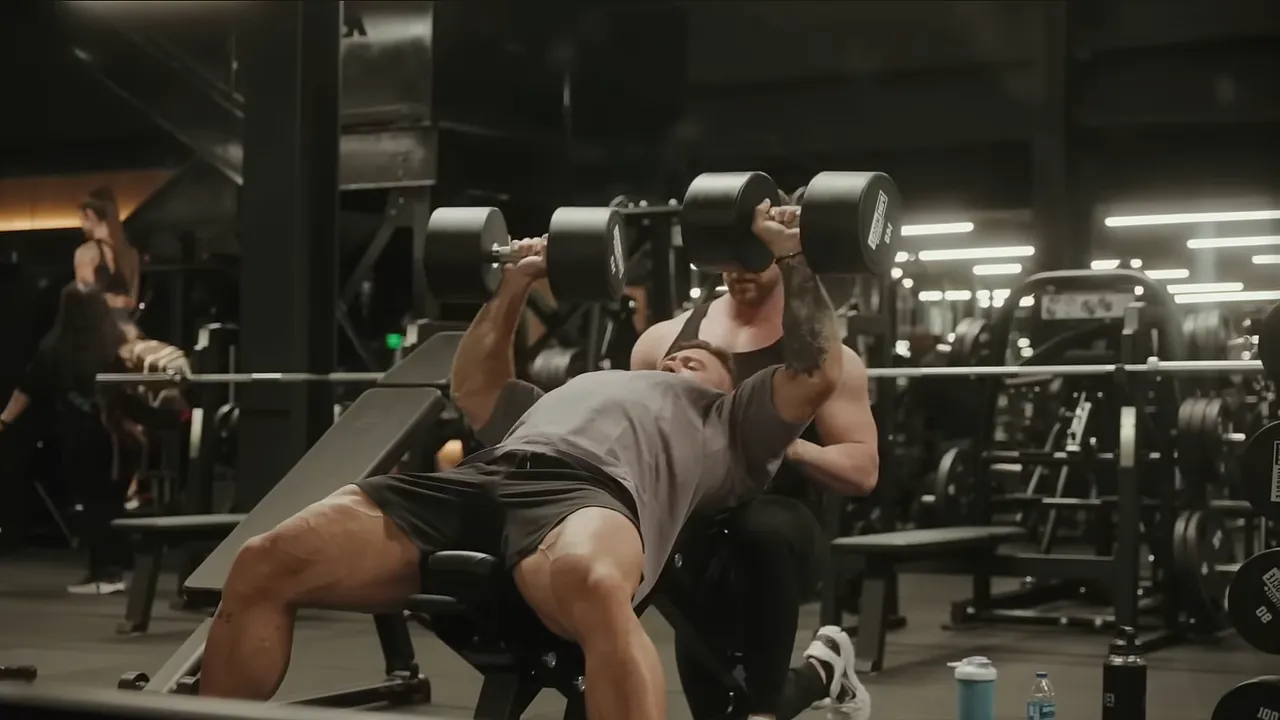
I usually prefer a faster eccentric, around one or two seconds, while still controlling the weight. But there is a practical reason for very strong lifters to slow things down.
If Chris used a faster lowering phase, he might need much heavier dumbbells to make the set comparably challenging. At some point, those dumbbells are unavailable, awkward to get onto the knees, or difficult to position without assistance.
A slower negative can make an exercise harder without making the equipment harder to manage. That is a good strategy, even if it is not mandatory for everyone.
Decline dumbbell skull crushers: the stretch is only part of the equation
Mike is less enthusiastic about decline dumbbell skull crushers. His concern is the resistance at the bottom: the position may feel stretched without the leverage making that stretched position as demanding as he would like.
He prefers a flat-bench variation that better maintains a challenging lever arm as the weights travel behind the head. The key distinction is between placing a muscle in a long position and loading it effectively there.
The decline version can still be a useful variation. Grip comfort also matters. Mike notes that some people find a parallel dumbbell grip uncomfortable at the elbows and prefer angling the dumbbells roughly 45 degrees instead.
The broader lesson is to consider the bench angle, arm position, resistance, and comfort together, rather than assuming an exercise is optimal because it produces a stretch.
T-bar rows: do not throw out the squeeze
Chris pauses in the contracted position on his T-bar rows. On paper, Mike generally favors emphasizing the stretch, but he sees a place for this approach.
The back is not one muscle. It is a collection of muscles, and a deliberate squeeze can help someone connect with the scapular retractors and other midback musculature they are trying to train.
I agree. Enthusiasm for lengthened training can go too far if it turns into dismissing the contraction altogether. A top pause might not be the default choice for maximizing every aspect of back growth, but it can be a useful tool for a specific target.
Lean Beef Patty: Stability First, Then Extra Stretch
Leaning forward on seated hamstring curls
I like Lean Beef Patty’s forward lean on seated hamstring curls, and I often use it myself. Hip flexion can place the hamstrings in a more stretched position.
But that benefit has to be weighed against stability. If leaning forward leaves you sliding around or struggling to stay locked into the machine, I would generally favor a secure position that lets you push hard.
Mike’s experience is similar. On one machine, leaning forward feels excellent. On another, the machine’s structure gets in the way and leaning back feels much stronger.
There is no need to turn this into a universal rule. Try both positions on the machine you actually use, then judge comfort, stability, and your ability to train the hamstrings effectively.
Bottom pulses on squats
Patty’s squat variation adds a small pulse near the bottom before completing a full rep. For bodybuilding, I like it. It creates more work in the deeply flexed position, where the quads and glutes are stretched.
For powerlifting, specificity changes the recommendation. Full competition-style reps should remain central if the goal is a bigger competition squat.
The pulsing version could still work as an assistance exercise, particularly for someone who struggles near the bottom. It is a useful variation, not a replacement for practicing the lift you compete in.
Athlean-X’s Omni Crossover: Unusual Is Not Automatically Wrong
The Omni crossover sets one cable high and the other low. One arm travels upward across the body to emphasize the upper chest, while the other travels downward to emphasize the lower chest.
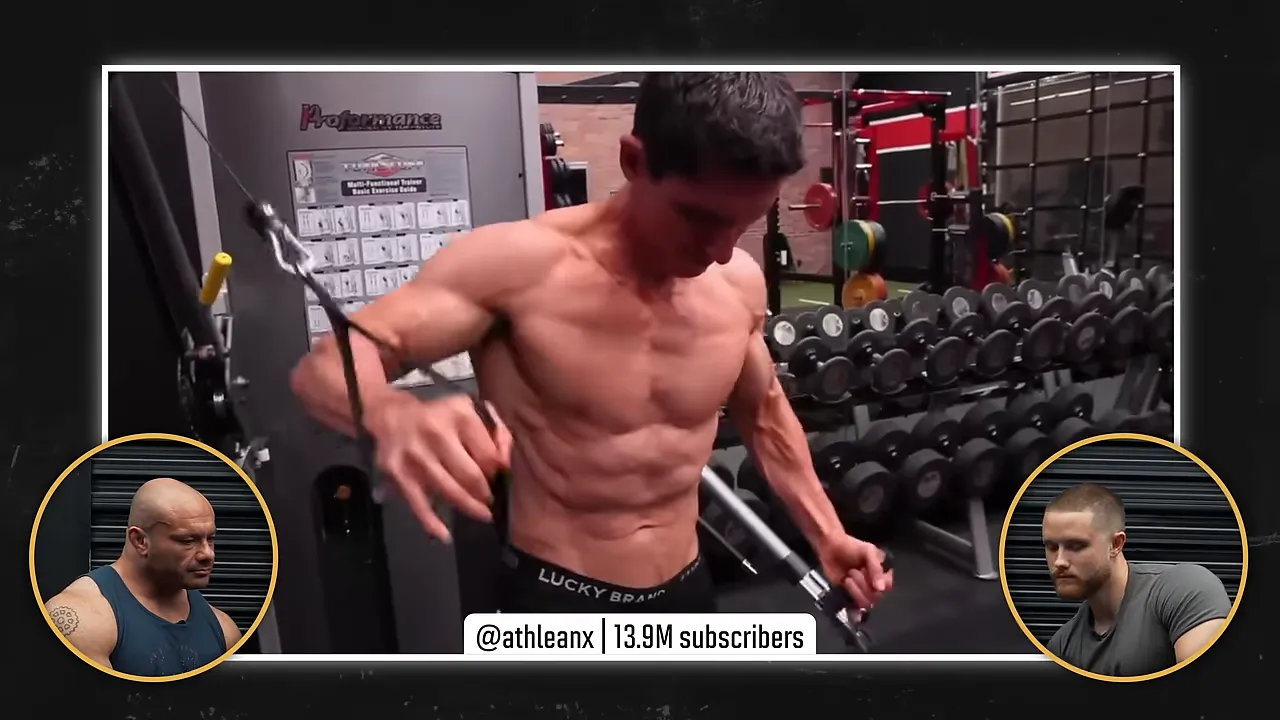
It looks a little odd. That does not make it ineffective.
Mike’s assessment is straightforward: if you switch sides appropriately, train hard, perform it consistently, and track progression, there is nothing obviously wrong with it. It is also not a secret solution to every chest-training problem.
I prefer a simpler approach I call a cable crossover ladder:
- Set the cables high and fly downward for the first set.
- Move them to a middle position for the second set.
- Set them low and fly upward for the third set.
Mike prefers longer periods of emphasis, dedicating months to one chest region while keeping the others on the back burner. That gives him a longer runway to progress a particular movement.
These are different organizational choices. What matters is that the variation fits a plan you can repeat and progress, rather than existing purely because it looks novel.
Jay Cutler: Repeatable Reps and Exercise Intent
Wide-grip pulldowns: excellent midback work
One of the most impressive things about Jay Cutler’s training is how similar his reps look. He is under control, and his execution is repeatable.
Mike also likes the small pauses Jay takes at the top of his pulldowns. He briefly stays in the stretched position, catches his breath, and gets more reps. A slightly slower eccentric might improve the set, but that is a minor criticism.
My main qualification concerns the target muscle. A wide grip does not automatically mean a wider back.
Jay uses a wide grip, some backward lean, and substantial scapular retraction. I would treat that as a strong midback or upper-back pulldown variation.
If your priority is the lats, I would generally try:
- A closer, neutral grip.
- A more upright torso, especially at the top.
- A full overhead reach for a substantial lat stretch.
- A focus on driving the elbows down.
- Only a small backward lean, roughly 10 to 15 degrees, to clear the face.
This is not “Jay’s pulldown is bad.” It is “choose the execution that matches what you want the exercise to do.”
Incline barbell presses: the critiques are tiny
Jay’s 405-pound incline barbell pressing is also excellent. He brings the bar all the way down to his chest, which is notable given how often very large bodybuilders shorten their pressing range.
A little more eccentric control and perhaps a pause would be reasonable tweaks. But we are talking about a tiny refinement, not a fundamental correction.
Greg Doucette’s Leg Press: Depth, Foot Position, and a Stable Base
Greg’s leg press, coached by Eric Janicki, uses controlled lowering and substantial knee flexion. Those are strong starting points. It is also worth noting that a coached variation may not represent how Greg normally trains.
Mike would like more combined knee and hip flexion. His suggestion is to let the knees travel slightly outside the chest, toward the shoulders, to create room for a deeper bottom position and more glute involvement alongside the quads.
I like the relatively low foot position for encouraging knee flexion and quad loading. The tradeoff is that the foot position still needs to be stable.
It appears Greg may rise slightly onto his toes, although the angle makes that difficult to judge confidently. Neither Mike nor I normally uses that approach. Mike’s preference is to keep the heels firmly planted so you can produce force from a secure base.
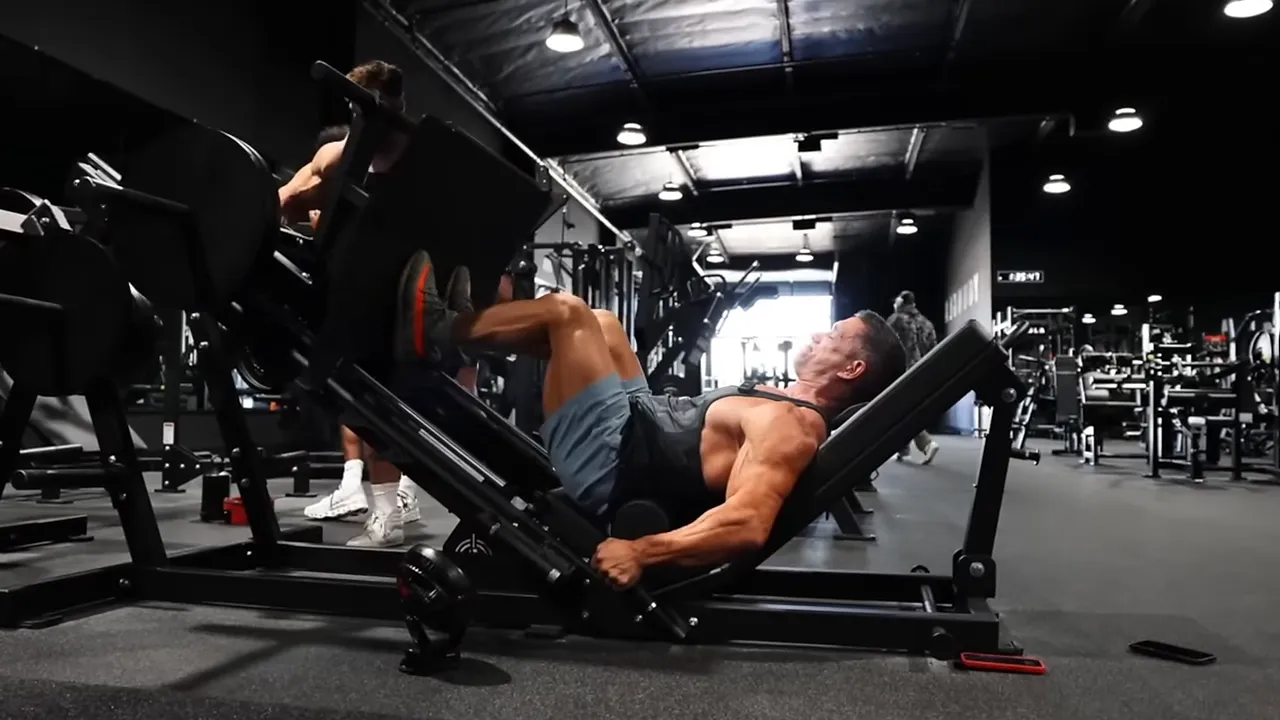
A heel-raised variation can be treated as a different exercise rather than automatically dismissed. But for the standard leg press, our preference is a deep, controlled range that you can achieve comfortably with stable foot contact.
Does Science-Based Training Distract From Training Hard?
Seth Feroce’s criticism has a valid target
Seth Feroce argues that people can get lost in nuance when they should be consistent, train hard, and master the basics. I think that criticism is fair when it describes someone changing their program every two weeks because a new exercise appeared online.
There is a big difference between understanding a useful idea and collecting random modifications.
If you can explain why a change belongs in an already sound plan, great. If you are experimenting deliberately, also great. If you are constantly rebuilding everything around the influencer of the week, that is probably not helping.
What bothers me is when every unusual exercise gets labeled “science-based.” I like novel exercises. That does not mean there is direct scientific evidence on them.
For many specific back-training recommendations, for example, we are applying anatomy, biomechanics, and indirect evidence rather than relying on a long-term comparison of the exact variations being discussed. Those are useful tools, but they should not be presented as certainty.
A clever exercise is unlikely to rescue a program that is missing the fundamentals. Before obsessing over small exercise-selection differences, pay attention to:
- Effort and proximity to failure.
- How much training volume you perform and recover from.
- Range of motion and control.
- Training frequency and consistency.
Most common exercises work. Experiment to find which ones work well for you, but do not mistake novelty for a breakthrough.
Eric Bugenhagen: strength matters, but causality matters too
Eric’s argument that bigger lifters tend to train hard and get stronger contains something useful. Many excellent natural bodybuilders are very strong.
Mike’s qualification is that getting stronger and getting bigger are not identical processes. More muscle generally increases strength potential, but strength can also improve through neural adaptations without substantial muscle growth.
That means a bigger number on the bar does not automatically prove a bigger hypertrophy stimulus.
You also do not need to live in very low rep ranges. Jay Cutler is an obvious example of someone who built an enormous physique while doing much of his work around 10 to 15 reps.
My point is that, as you grow and become stronger, your old weights eventually become too easy. You then need to add load or reps to keep the sets sufficiently challenging. If you want to remain within a practical hypertrophy rep range, you cannot keep using the same weight forever.
The useful synthesis is simple: progress your performance on controlled, sufficiently hard sets, rather than chasing weight at any cost.
Cold Plunges: Optional, Not a Requirement for Success
Andrew Huberman’s recommendation to accumulate uncomfortable cold exposure raises a broader question: how much benefit does this habit really add?
Mike understands the appeal. Cold exposure is difficult, stimulating, and may leave people feeling relaxed afterward. Some people also like practicing deliberate discomfort.
But if the goal is to do difficult things that improve your life, hard training already gives you that challenge while also improving fitness and body composition.
I am more critical of the hype. If a cold plunge helps you feel motivated or productive, that is a perfectly reasonable personal benefit. What I do not buy is presenting it as a missing key to success that everyone needs.
For fat loss, the calorie-burning payoff is also underwhelming. In a calculation I previously made for an ice-bath example, the extra expenditure was only around 10 calories. That is not a universal value for every exposure, but it illustrates why I would not make cold plunges a fat-loss priority.
Recovery claims deserve scrutiny too. The hot-versus-cold exposure research discussed here suggests hot exposure may have advantages over cold exposure in the post-workout context studied. It does not establish one recovery method as universally best.
If you enjoy cold exposure, fine. If you hate it and are only doing it because you think you have to, you can stop treating it as essential.
Nutrition: Hunger Matters Because Calories Matter
Dave Asprey’s “calorie myth” argument misses the distinction
There is a useful point inside the claim that hunger matters more than calories: a plan that leaves you ravenous may be very difficult to sustain.
Someone can successfully eat less for a while, become extremely hungry, and then compensate by eating more later. That is a real practical problem.
But it does not make calorie balance a myth. It explains why maintaining a calorie deficit can be difficult.
Hunger management and energy balance are not competing explanations. Hunger influences how much you eat, which influences calorie balance. A dietary approach that improves appetite control can help precisely because it makes an appropriate intake easier to maintain.
You do not need to choose between taking hunger seriously and accepting that calories affect body weight.
Sam Sulek’s cereal: judge the whole diet
Is cereal acceptable during an offseason? Yes. Mike’s answer goes further: it can fit during contest preparation too, provided it does not create hunger-management problems.
For body composition, calories and macronutrients do most of the heavy lifting. A food does not become incompatible with getting lean simply because it is breakfast cereal.
That does not mean overall diet quality is irrelevant. An extremely restrictive or poorly varied diet can leave nutrient gaps. The answer is to build a nutritionally adequate diet, not to panic about one bowl of cereal.
Many cereals in the United States are fortified with vitamins and minerals. They are not automatically nutritionally empty. Include vegetables and other foods that round out your intake, meet your calorie and macro targets, and evaluate how the diet affects hunger.
The useful question is not whether a food looks “clean.” It is whether the overall diet supports your goals and nutritional needs.
Extreme Bench Arches and the “Reverse Press”: Context Changes the Verdict
An extreme bench arch can look ridiculous and still represent skillful execution under a particular competition rulebook.
Mike respects the lifter’s ability to exploit the rules. I also support rule changes that require more meaningful depth, including the elbow-depth requirements discussed for some federations. Both positions can coexist.
Judge a competition attempt by the rules in force at the time. Then have a separate discussion about whether those rules create the kind of lifting you want the sport to reward.
The unusual “reverse press” is a different kind of example. The lifter’s mobility is impressive, and the movement appears to combine scapular retraction with elbow extension, prompting some joking about training back and triceps together.
But an impressive mobility display is not automatically a programming recommendation. You can appreciate a strange movement without needing to add it to your next workout.
Gym Inclusivity Is One Thing We Should Not Overcomplicate
Noel Deyzel’s message to a discouraged beginner is exactly the kind of gym culture I want more of: you belong here, and things can get better.
Mike shared an example of his wife taking a friend, who had been overweight and was getting leaner, to a hardcore gym in Las Vegas. Rather than feeling judged, she received encouragement from several big lifters. The experience challenged her expectations of what that environment would be like.
That does not mean every gym or every lifter is welcoming. Complaining about New Year’s beginners is still common, and it sends a pretty contradictory message.
You cannot criticize someone for being out of shape and then resent them for entering the place where they can work on it.
We can debate rep tempo, grip width, stretch emphasis, and exercise selection. Those are worthwhile details. But the foundation is still people showing up, training consistently, and feeling welcome enough to keep going.
Use science to improve the basics, not to replace them. And make room for the next person learning those basics.


